

What if the best fleet-washing plan is the one that fits your operation, not simply the one that leaves every vehicle spotless? In Omaha, road grime and buildup can make a hard-working fleet look neglected, while coordinating in-house cleaning takes staff time away from other work. Fleet washing Omaha businesses can plan around their vehicles, cleaning needs, and schedules instead of treating every fleet the same.
The right service scope depends on what you operate and what the grime calls for. Road film on delivery vehicles may need a different approach from grease on heavy equipment, and a useful washing cadence should account for how often vehicles are used and where they work.
This guide explains what to consider when planning fleet washing, from vehicle types and cleaning requirements to scheduling with less disruption. No Pressure Power Washing brings more than 30 years of Omaha-area experience to fleet and equipment washing, using biodegradable, non-toxic cleaning solutions. You’ll also learn how to describe your fleet’s needs clearly when requesting an estimate, so the conversation can start with the vehicles, buildup, and work schedule that matter to your business.
Key Takeaways
- Match fleet washing to vehicle condition and cleaning priorities, rather than assuming every vehicle needs the same attention.
- For fleet washing Omaha businesses can plan effectively, consider visible buildup, degreasing needs, and how service timing fits daily operations.
- Separate routine fleet cleaning needs from heavy-equipment cleaning so each asset gets an appropriate service scope.
- Before requesting an estimate, list the vehicles, note the buildup, identify access needs, and set priorities.
Why Omaha Businesses Add Fleet Washing to Their Maintenance Plan
Road grime and residue can build up gradually, until commercial vehicles look poorly maintained or routine cleaning becomes a recurring job that staff struggle to fit into the workday. In the Omaha area, changing conditions can affect what collects on vehicles: wet or muddy routes may leave splashes and dirt, while seasonal road residue can cling to exterior surfaces. A fleet’s routes, use, and visible condition are more useful guides to cleaning needs than a one-size-fits-all schedule.
Professional fleet washing can make sense when cleaning several vehicles in-house takes time away from core work, or when regular buildup needs more focused attention. Consider professional fleet washing when grime repeatedly returns, cleaning falls behind, or your team needs a more consistent way to maintain vehicle presentation.
Signs your Omaha fleet may need professional cleaning
Look beyond a light coating of ordinary dust. Road film that dulls the vehicle’s appearance, residue that collects around lower panels, and oily or greasy buildup are signs that a quick rinse may not address the cleaning need. Pay attention to repeated patterns: if vehicles return from similar routes with comparable buildup, or the wash backlog keeps growing, that’s a practical reason to reassess how cleaning fits into operations.
- Visible road grime: Dirt and road film are noticeable across vehicle exteriors or gather in hard-to-clean areas.
- Persistent residue: Buildup remains after routine cleaning or includes grease that calls for degreasing.
- Recurring backlog: Staff can’t keep several vehicles clean without disrupting other tasks.
For example, a commercial vehicle used on wet or dusty routes may need attention sooner than one that’s used less often. The aim isn’t to wash every vehicle on an arbitrary timetable, but to respond to actual condition and cleaning demands.
What fleet washing can and cannot do
A professional wash addresses surface grime and helps vehicles present a cleaner, more cared-for appearance. It can also support routine upkeep by making accumulated dirt and residue easier to see during a visual walkaround. No Pressure Power Washing focuses on road-grime removal and degreasing for fleet and equipment washing in Omaha.
Washing has limits. It doesn’t repair a vehicle, assess its mechanical condition, or replace scheduled maintenance. A clean exterior shouldn’t be treated as evidence that a vehicle is road-ready; mechanical concerns belong with qualified maintenance professionals. Likewise, washing alone shouldn’t be presented as a promise of corrosion prevention, higher resale value, longer asset life, or guaranteed savings.
When road grime or heavier buildup is difficult to address safely, professional cleaning is a practical option. The right plan begins with the vehicles’ condition and the work they do, then accounts for how cleaning can fit into business operations without making upkeep another unmanaged task.
What Omaha Fleet Washing Covers: Road Grime, Degreasing, and Equipment
Fleet washing is the professional cleaning of commercial vehicles to address exterior grime and buildup from regular use. On Omaha-area routes, vehicles can collect dust, mud, road film, and other residue that varies with weather, route conditions, and how frequently each vehicle is used. The goal is to address the visible cleaning needs of the fleet, not to apply the same scope to every vehicle.
No Pressure Power Washing focuses on removing road grime and degreasing. Those needs can differ across a fleet: one vehicle may mainly have a layer of road film, while another has more noticeable greasy residue. Describing the difference helps set practical cleaning priorities and gives an estimate discussion useful context.
Fleet washing focuses on commercial vehicles; general commercial property washing focuses on fixed surfaces such as buildings or pavement. Keeping those scopes distinct helps businesses describe what they need rather than treating every exterior-cleaning task as the same job.
Road grime and routine fleet cleaning
Regular vehicle use can leave visible dirt along exterior panels, around lower sections, and on other exposed surfaces. Instead of relying on a fixed assumption about how often every unit needs cleaning, assess each vehicle’s condition and role. A vehicle that is used frequently or represents the business in customer-facing work may take priority over one with lighter buildup or less immediate use.
- Note condition: Identify vehicles with obvious road film, mud, or accumulated residue.
- Set priorities: Consider which vehicles are most important to upcoming work or presentation.
- Describe the soil: Distinguish general road grime from areas with greasy buildup.
This simple inventory gives a clearer picture of the fleet’s cleaning needs. It also helps keep expectations realistic: the appropriate scope depends on the condition and type of buildup, so a particular finish or removal result shouldn’t be assumed in advance.
When heavy equipment needs a different cleaning focus
Machinery and commercial vehicles can accumulate different kinds of soil because they perform different work. A vehicle used for transport may mainly need attention to road grime, while equipment used in demanding work may have more concentrated residue or degreasing needs. These distinctions matter when describing the assets and the buildup, since heavy equipment may call for a different cleaning focus than the fleet’s road vehicles.
No Pressure Power Washing also provides heavy equipment cleaning. For specialized or difficult-to-clean machinery, professional service is a sound choice; avoid assuming that the same approach suits every surface or asset.
To prepare for an estimate, note which vehicles need routine grime removal and which equipment has heavier or greasy buildup. You can request an estimate for fleet or equipment washing with those details in hand.
How to Evaluate Fleet Washing for Your Omaha Business
A useful evaluation begins with what the vehicles need and how cleaning fits into the workday. Consider fleet size alongside visible buildup, degreasing concerns, vehicle availability, and access coordination. The number of vehicles matters, but it doesn’t tell the whole story: a smaller group with varied cleaning needs may require more planning than a larger set in similar condition.
Use this comparison to organize priorities before discussing fleet washing services. It’s a guide for sorting needs, not a fixed schedule or a promise that every vehicle will require the same scope.
Vehicle condition
Cleaning priority
Operational timing
Light, even road film
Routine appearance and upkeep
Group with other vehicles if access allows
Visible, accumulated grime
Address before the cleaning backlog grows
Consider upcoming use and vehicle availability
Greasy or heavier residue
Describe degreasing needs separately
Coordinate access around the work schedule
Match cleaning priorities to fleet condition
Sort vehicles by condition rather than treating the fleet as a single unit. For example, vehicles with light road film may be a lower priority than those with heavier residue or a more immediate presentation need. This distinction helps explain the scope clearly and keeps expectations grounded in what’s visible. A regional example, the Nebraska fleet washing case study, can also provide context for the kinds of considerations involved in fleet cleaning.
Account for operations, access, and service scope
Vehicle availability and access affect how a cleaning plan can fit into business operations. Identify which vehicles can be made available, any practical access constraints, and periods when units are committed to work. No Pressure Power Washing offers fleet washing on recurring or per-visit arrangements, allowing the discussion to reflect whether your need is ongoing or occasional without assuming a particular turnaround or service location.
Before requesting an estimate, gather a concise snapshot: fleet size, vehicle condition, areas with greasy buildup, access considerations, and priorities. That information helps focus the conversation on the work involved rather than a generic wash plan. It can also clarify whether the immediate need is routine cleaning, degreasing, or a combination across different vehicles.
If you’re considering fleet washing Omaha businesses can plan around their operations, share those details with No Pressure Power Washing to discuss your needs and request an estimate.
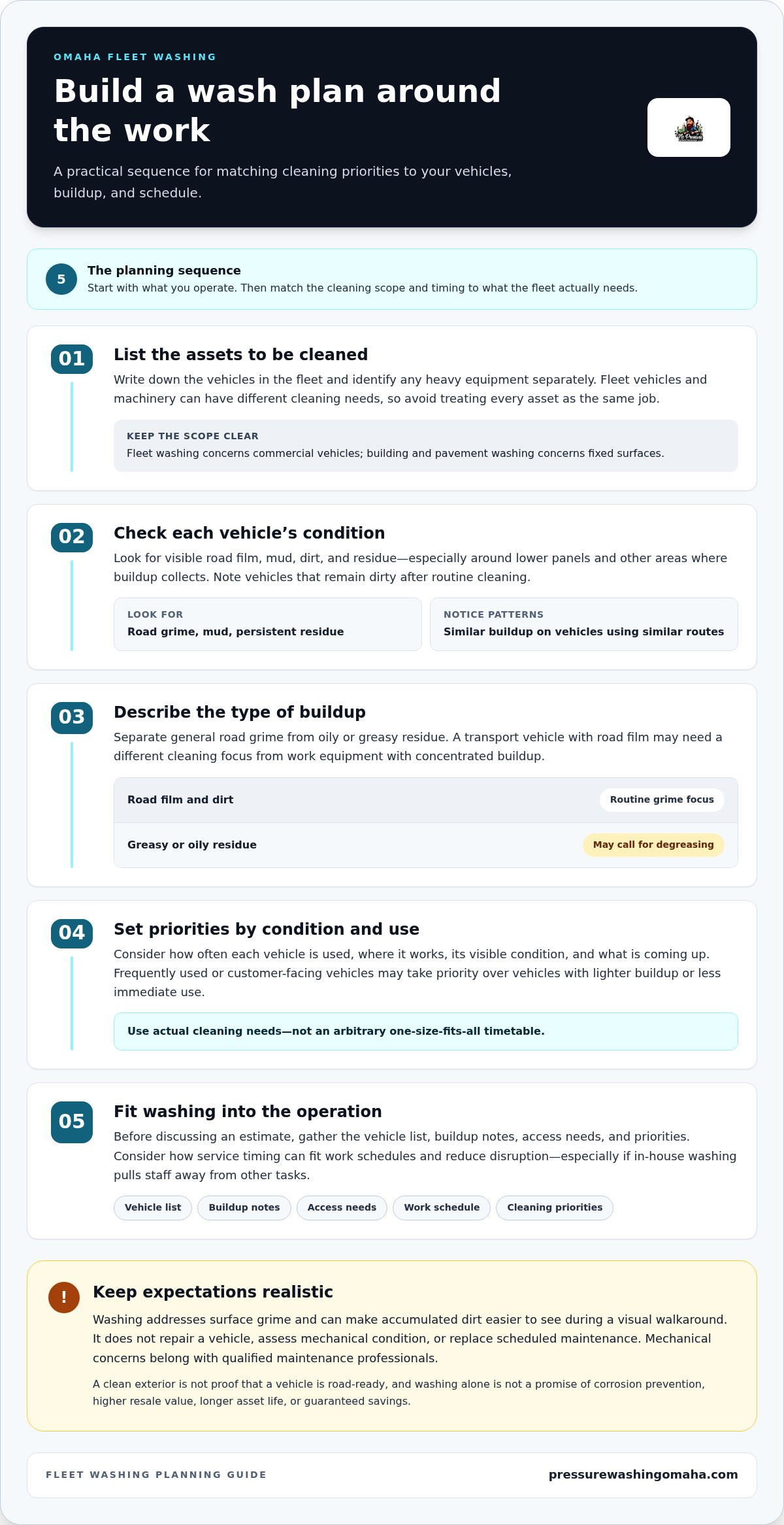
Plan a Fleet Wash Around Omaha-Area Routes and Work Schedules
A clear plan helps connect cleaning needs with the realities of keeping vehicles in service. Before requesting an estimate, gather a simple fleet snapshot and identify how route commitments, vehicle access, and priorities may affect coordination. This preparation is useful whether your business operates in Omaha or nearby communities such as Papillion, Elkhorn, Gretna, and Bellevue.
Use this sequence to organize the details:
- List the vehicles. Note the fleet size and distinguish commercial vehicles from any heavy equipment with different cleaning needs.
- Describe the condition. Record visible road grime, accumulated residue, and any areas where degreasing is a concern.
- Identify access needs. Note where vehicles are ordinarily kept and any practical constraints that could affect access or coordination.
- Set priorities. Flag vehicles with the most pressing appearance or cleaning needs, and identify which must remain available for work.
Specific information makes the service discussion more useful. For example, saying that several vehicles have routine exterior grime while a few have heavier greasy buildup gives a clearer picture than describing the entire fleet as simply “dirty.” The Nebraska fleet washing case study offers additional context on fleet washing in the region.
Prepare fleet details before requesting an estimate
Along with fleet size and condition, share the type of buildup you’ve noticed, any degreasing concerns, and your preferred timing. If some vehicles are used more heavily or have higher visibility in daily operations, include that distinction. A free estimate can then begin with the practical scope of your fleet’s needs, rather than assumptions about identical treatment for every vehicle.
These notes don’t need to be complicated. A short vehicle list and a few observations can help clarify which units need attention first and what access coordination may involve. For fleet washing Omaha businesses can plan around real operating requirements, this preparation helps connect the cleaning discussion to the way vehicles are actually used.
Coordinate cleaning with daily operations
Consider route schedules, vehicle availability, and any access constraints before setting priorities. If vehicles return at different times or must be ready for specific work, identify those details early. A business may choose to prioritize units with heavier buildup or those scheduled for customer-facing use, while keeping other vehicles in normal rotation. The plan should remain flexible; timing and coordination depend on the operation and the details of the service.
Request a free estimate with your fleet details and preferred timing to begin a focused discussion about the work.
Choose No Pressure Power Washing for Fleet Washing in Omaha
A good fleet-washing conversation starts with your priorities: which vehicles need attention, what condition they’re in, and how cleaning can fit into your work. No Pressure Power Washing provides fleet and heavy-equipment washing for Omaha-area businesses, with an approach shaped around the assets and needs described for the estimate.
The company uses biodegradable, non-toxic cleaning solutions as part of its cleaning approach. Those terms describe the solutions used; they aren’t a promise of zero environmental impact or suitability for every surface and setting. Sharing any particular concerns about your vehicles helps keep the service discussion specific and expectations clear.
Local experience and a careful cleaning approach
Choosing a local service means discussing your fleet’s actual condition and operational priorities with a business that works in the Omaha area. No Pressure Power Washing serves commercial fleets and equipment, and uses biodegradable, non-toxic solutions. Clear information about your vehicles helps shape a practical estimate discussion, while specialized or risky cleaning work is best handled by professionals.
What to include in your next step
For a useful starting point, describe the number of vehicles, their general condition, which assets have priority, and any access or timing considerations that affect your operation. If your fleet includes equipment with different cleaning needs, include that as well. You don’t need to create a detailed technical inventory; concise observations can help frame the scope of the conversation.
No Pressure Power Washing offers free estimates online or by phone. Once you’ve outlined your priorities, the estimate discussion can focus on the work you’re looking to plan, without assuming every vehicle needs the same treatment.
Explore fleet washing services and take the next step when you’re ready to discuss your fleet’s needs.
Make Fleet Cleaning a Planned Part of Operations
A practical next step is to decide who in your business will keep fleet-cleaning priorities visible as vehicles and work demands change. A brief check-in during routine fleet planning can help prevent cleaning from becoming an issue only after buildup is hard to ignore. Keep the process simple: note changing priorities, then revisit them when route demands or vehicle use shift.
That steady approach can make fleet washing Omaha businesses arrange more deliberate, because the conversation starts with current needs rather than assumptions. You don’t need a complicated maintenance system to get started. A clear description of the fleet and the work ahead is enough to begin discussing an estimate that fits your situation.
A well-planned cleaning routine starts with one useful decision. Take that step when you’re ready, and keep your fleet’s upkeep moving forward with confidence.
Frequently Asked Questions
How often should a business schedule fleet washing in Omaha?
There’s no single washing interval that suits every Omaha fleet. Frequency depends on how vehicles are used, how quickly visible buildup returns, and which units matter most for daily work or customer-facing duties. Review their condition through the year, then adjust your plan as routes, weather, and operating demands change. A vehicle used heavily on wet or muddy roads may need attention sooner than one used less often.
What information should I provide when requesting a fleet washing estimate?
Share the number of vehicles, their general condition, and whether road grime, greasy residue, or both are the main concerns. Include preferred timing and any operational details that may affect access to the vehicles. For example, note if some units are needed for scheduled work while others are available. These details help frame a useful estimate discussion. No Pressure Power Washing offers free estimates online or by phone.
Can fleet washing include heavy equipment?
Yes. No Pressure Power Washing offers both fleet washing and heavy-equipment cleaning. Equipment can collect different kinds or amounts of buildup than road vehicles, so describe the assets separately rather than treating everything as one group. Mention visible residue and any degreasing concerns when requesting an estimate. That gives the discussion a clearer starting point without assuming that one cleaning scope or outcome fits every vehicle and machine.
Does fleet washing remove grease as well as road grime?
No Pressure Power Washing’s fleet and equipment washing focuses on road-grime removal and degreasing. The appropriate scope depends on the type and amount of buildup, so describe where greasy residue appears and how extensive it is when requesting an estimate. Cleaning needs can vary from vehicle to vehicle. No particular result should be assumed for every stain or contaminant, especially when the buildup differs across the fleet.
What should a business consider before scheduling fleet washing?
Consider which vehicles will be available, how they can be accessed, which cleaning needs take priority, and what timing best fits your operations. Businesses in Omaha, Papillion, Elkhorn, Gretna, Bennington, Bellevue, Valley, and Wahoo can use these details to plan a practical service discussion. Identify any vehicles committed to scheduled work so operational priorities are clear. Timing and coordination depend on the needs of the business and the service scope.
Are biodegradable cleaning solutions used for fleet washing?
Yes. No Pressure Power Washing uses biodegradable, non-toxic solutions as part of its cleaning approach for fleet washing. Those descriptions don’t establish zero environmental impact or guarantee that a solution is suitable for every surface or setting. If a vehicle has a particular material or cleaning concern, include that information when discussing the work. This helps keep expectations grounded in the assets and buildup involved.


