

What if the wrong cleaning approach leaves a restaurant patio looking worse or makes it harder to welcome diners? Restaurant patio cleaning Omaha operators can rely on starts with the surface, not just the visible grime. Concrete and pavers have different features, and the surface’s condition, the type of buildup, foot traffic, and access all shape a practical cleaning plan.
A fresh, welcoming outdoor seating area matters, but cleaning also needs to fit around staff and customers. This guide explains how professional exterior cleaning takes the patio material and restaurant operations into account. You’ll learn what to look for, how concrete differs from pavers, and what to coordinate before work begins.
No Pressure Power Washing brings more than 30 years of Omaha-area experience to commercial concrete and paver cleaning. The company uses biodegradable, non-toxic cleaning solutions and takes a surface-conscious approach. The sections below cover practical considerations for restaurants in Omaha and nearby communities, from identifying the patio material to planning access around service.
Key Takeaways
- A clean patio supports a welcoming first impression, while visible dirt, spills, and organic buildup can make outdoor seating feel neglected.
- Restaurant patio cleaning Omaha should account for whether the surface is concrete or pavers, its condition, and the type of buildup.
- Pressure alone doesn’t determine whether a cleaning method is suitable. The surface and cleaning technique both matter.
- Before cleaning, coordinate patio access with staff and plan around customer areas and restaurant operations.
- A surface-conscious assessment helps guide the work and set practical expectations for the result.
Why Restaurant Patio Cleaning Matters for Omaha Businesses
A patio is part of a restaurant’s welcome. Guests see the entrance, tables, walking surface, and surrounding outdoor area before they sit down. Food and drink marks, tracked-in dirt, and dark organic buildup can make the space feel overlooked, even when the rest of the dining area is tidy. Regular attention to the patio helps keep it looking ready for service.
Omaha restaurants contend with ordinary outdoor wear: windblown dirt and foot traffic can leave grit near entrances, while spills may create visible marks around tables. Damp or shaded areas can develop organic buildup. These conditions don’t automatically call for an aggressive treatment. They do make it important to consider the material and its condition before choosing a cleaning approach.
What guests notice on an outdoor dining patio
Guests may spot a sticky-looking drink stain, dirt tracked across a walkway, or discolored concrete around table legs. A few noticeable marks can make the whole seating area seem less cared for, particularly beside clean furniture or a tidy entrance. Maintaining the exterior surface helps keep the patio welcoming, without promising a particular effect on customer numbers, reviews, or revenue.
Patio cleaning complements indoor janitorial work, but it doesn’t replace it. The patio is an exterior surface. Floors, restrooms, kitchens, and food-contact areas need their own cleaning routines. Keeping those responsibilities separate helps managers plan exterior maintenance without confusing it with indoor sanitation.
Why patio surface condition matters
Concrete and pavers aren’t interchangeable. A concrete slab has a continuous surface; pavers are separate units with joints where dirt and organic material can collect. Even patios made from the same material can need different care if one is lightly soiled and the other has set-in stains or more extensive buildup. Cracks, wear, or previous repairs can also affect how a surface responds to cleaning.
For a concrete patio, commercial concrete cleaning is a relevant exterior-surface service. Paver areas need attention to both the individual units and their joints. Identifying those differences helps avoid treating every patio as the same job and supports careful property maintenance.
That distinction matters for restaurant patio cleaning Omaha businesses need: the goal is to address visible grime while respecting the material beneath it. No Pressure Power Washing provides commercial exterior cleaning for concrete walkways and pavers, using biodegradable, non-toxic cleaning solutions. For restaurants in Omaha, Papillion, Elkhorn, Gretna, Bennington, Bellevue, Valley, and Wahoo, identifying the patio surface is a useful first step toward planning the work.
How Omaha Restaurant Patio Cleaning Works on Concrete and Pavers
Restaurant patio cleaning is exterior-surface care guided by the material and its condition. Instead of applying one fixed method to every outdoor dining area, the work starts by considering what the patio is made of and what needs attention. A concrete slab, a paved seating area, and a surface with older staining each have different details to account for. That context helps shape the work and keeps the patio’s existing condition in view.
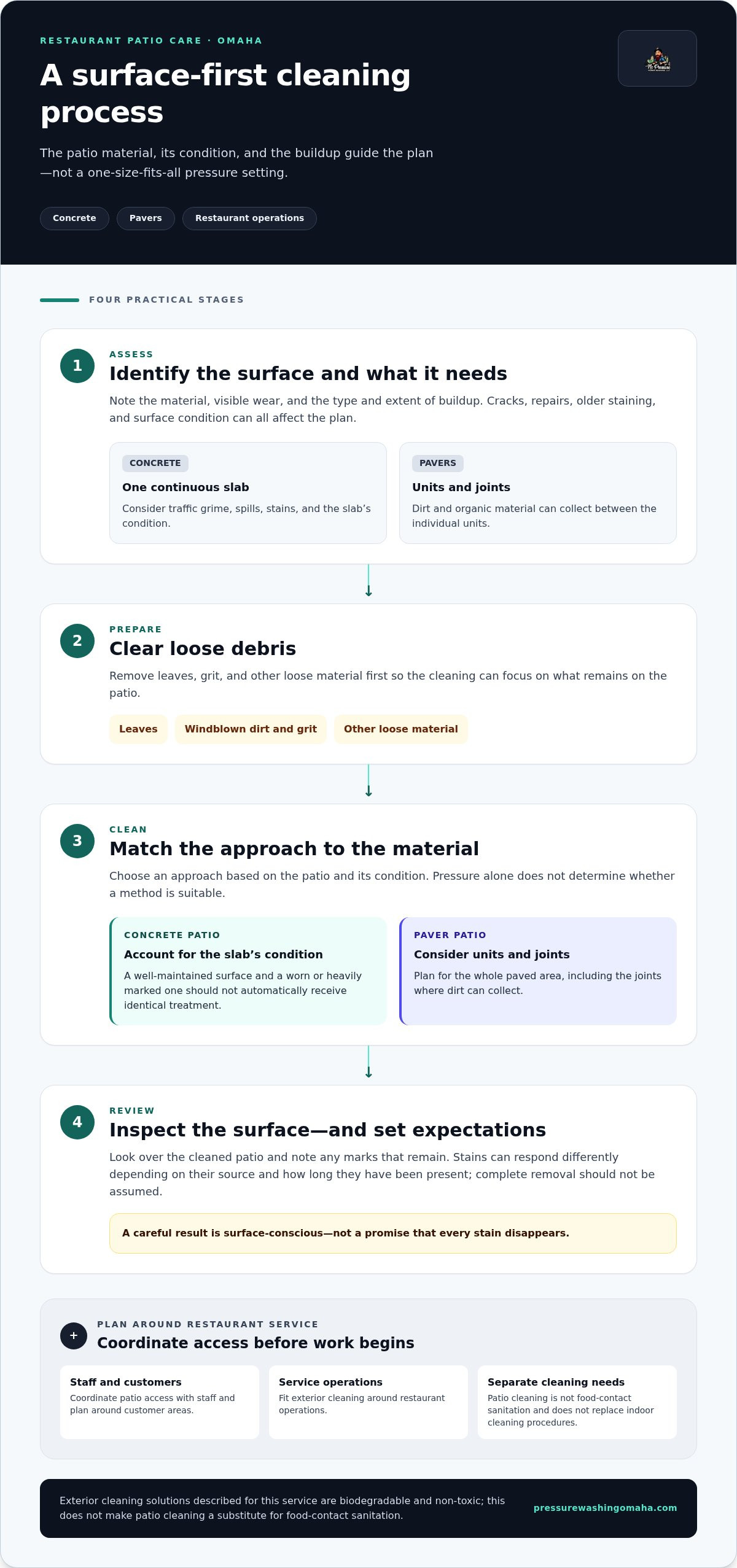
A typical cleaning process moves through a few practical stages:
- Assess the surface. Identify whether the patio is concrete or pavers, note visible wear, and locate the type and extent of buildup.
- Address loose debris. Clear leaves, grit, and other loose material so the cleaning can focus on what remains on the surface.
- Clean with the material in mind. Choose an approach based on the patio and its condition, rather than assuming one pressure setting or solution suits every area.
- Review the result. Look over the cleaned surface and note any marks that remain. Some stains may persist, so complete removal shouldn’t be assumed.
No Pressure Power Washing uses biodegradable, non-toxic cleaning solutions for exterior cleaning. This describes the solutions used on exterior surfaces, not food-contact sanitation. Patio cleaning doesn’t replace a restaurant’s separate procedures for tables, kitchen areas, or other food-contact surfaces.
Cleaning a concrete restaurant patio
Concrete can show traffic grime, spills, and stains, but the slab’s condition influences the cleaning plan. A well-maintained patio and a worn or heavily marked one shouldn’t automatically receive identical treatment. Stains may also respond differently depending on their source and how long they’ve been present. For hard patio surfaces, commercial concrete cleaning provides exterior surface care without promising that every mark will disappear.
Cleaning pavers without overlooking their joints
Pavers have individual units and joints, so cleaning needs to account for the whole paved area, not just the broad faces of the stones. Dirt can collect between units, and the joints contribute to the patio’s overall appearance. Surface-aware work takes these details into consideration. The material and condition of the paved area remain central to planning the cleaning.
Because the right plan depends on the surface and the buildup, restaurant patio cleaning Omaha businesses need benefits from a project-specific assessment. Careful exterior cleaning accounts for the patio and the work it requires instead of assuming every outdoor dining area needs the same treatment. If you’re planning to clean a concrete or paver patio, share the details of the space to help shape a practical plan.
Will Pressure Washing Damage a Restaurant Patio in Omaha?
It can if the cleaning approach doesn’t suit the surface. Pressure alone doesn’t determine whether a method is appropriate. The patio material, its condition, the type of buildup, and how the cleaning is carried out all matter. A sound concrete area and a worn section with visible damage shouldn’t automatically be treated alike.
For restaurant patio cleaning Omaha businesses can rely on, an assessment-led approach is more useful than assuming stronger pressure means better cleaning. The goal is to address exterior grime while considering the patio’s existing condition. No single setting or method is right for every outdoor dining surface, and an assessment can help inform the work without guaranteeing that damage is impossible.
What affects the risk of patio surface damage?
Age and wear can change how a surface responds. Cracks, loose or uneven pavers, eroded joints, and prior repairs are details to note before cleaning begins. Material matters too: a continuous concrete slab and separate pavers have different surface features. The type and extent of grime or staining also affect the plan, since not all buildup responds in the same way.
There isn’t one pressure level or cleaning technique to recommend for every patio. A method that may suit one area could be unsuitable for another, even within the same restaurant space. A professional should consider visible wear and the surface type rather than rely on a blanket assumption about pressure.
When professional patio cleaning is the sensible choice
Professional help makes sense if the surface is fragile, already damaged, or difficult to identify. Large commercial patios can also be challenging to clean evenly without equipment suited to the work. Inconsistent passes may leave visible differences across the area, and rushing over uncertain or worn sections can create avoidable concerns.
An assessment helps match the cleaning plan to concrete or pavers and their condition. No Pressure Power Washing provides commercial exterior cleaning for both types of surface, with careful workmanship and project-specific planning. For a restaurant patio, that means treating the outdoor surface as its own job, not applying an indoor cleaning routine or a one-size-fits-all method.
If you’re unsure what a patio is made of or can see cracking, loose sections, or signs of wear, don’t experiment with pressure washing. Leave the assessment and cleaning to professionals familiar with exterior surfaces. Cleaning can’t reverse existing damage or guarantee that every stain will come out, so the surface’s condition should guide expectations.
How to Prepare an Omaha Restaurant Patio for Exterior Cleaning
Preparation helps keep patio cleaning organized around your restaurant’s operations. Before work begins, identify the cleaning area, note how staff and guests move through it, and decide which items can be moved. A patio beside an active entrance may need a different access plan from a separate courtyard. The patio’s layout and condition also shape the cleaning plan, so preparation should make room for a site-specific approach.
Coordinate timing, access, and outdoor seating
Choose a work window that minimizes interference with normal service, then share the plan with staff who manage seating and entrances. Point out patio entryways, tables, and nearby pedestrian routes so access needs are clear. Move chairs, tables, décor, and personal belongings out of the planned work area where practical. Clear communication helps prevent staff from setting up outdoor seating where cleaning is underway.
A useful preparation sequence for managers is:
- Map the area. Identify the patio sections to be cleaned, entrances, and routes staff or guests may need to use.
- Coordinate with the team. Let relevant staff know which areas need to stay clear and when outdoor seating will be unavailable for the work.
- Move loose items. Store movable furniture and personal items outside the planned work area where practical.
- Discuss site conditions. Note surface wear, stains, tight access points, and sections that may need particular attention.
Plan a practical patio maintenance routine
Between professional cleanings, routine sweeping can keep loose debris from accumulating, while prompt attention to spills may help prevent long-standing marks. These simple tasks don’t replace exterior surface cleaning, but they help staff notice changes in the patio’s condition. Reassess the area when visible grime or organic buildup returns instead of relying on a fixed schedule that may not fit how the patio is used.
Restaurant patios vary. A covered seating area, an exposed walkway, and a paved courtyard can collect different debris and see different levels of foot traffic. That’s true for restaurants in Omaha and nearby Papillion, Elkhorn, Gretna, Bennington, Bellevue, Valley, and Wahoo. A practical plan accounts for the surface, access, and operating needs of the individual property.
For restaurant patio cleaning Omaha managers can plan with confidence, a clear description of the patio and its access points helps set practical expectations before work begins. No Pressure Power Washing provides commercial exterior cleaning for concrete and pavers, with careful workmanship and project-specific planning. Preparing the space helps the cleaning team focus on the exterior surface while restaurant staff manage customer areas and service operations.
Arrange Restaurant Patio Cleaning in Omaha with a Surface-Conscious Plan
A good patio cleaning plan starts with the property, not a preset method. Concrete and pavers have different surface features, and wear, staining, and accumulated grime can change what makes sense. The restaurant’s operating schedule matters too: access routes and outdoor seating affect how the work area is planned. Sharing these details helps shape an approach around the patio rather than treating every outdoor space alike.
No Pressure Power Washing provides commercial concrete and paver cleaning for exterior surfaces. Its Omaha-area experience informs project planning, while careful workmanship keeps attention on the material and its condition. The goal is practical exterior care, not a promise that every stain will disappear or every patio needs the same treatment.
What to share when requesting an estimate
A few clear details can help describe the patio’s scope and operational needs. You don’t need to diagnose the surface or choose a cleaning method. Focus on what you can observe and how the restaurant uses the area.
- Surface type: Say whether the patio is concrete, pavers, or a combination of materials.
- Visible condition: Point out areas with grime, spills, stains, organic buildup, cracks, or other signs of wear.
- Access considerations: Describe entrances, narrow routes, nearby pedestrian paths, and furniture or other items that may need to be moved.
- Service needs: Explain the restaurant’s preferred work window and any limits on when outdoor seating can be unavailable.
These details help clarify the job. A mixed patio, for example, may have a concrete walkway leading to paver seating. Mentioning both surfaces helps ensure the discussion accounts for the whole exterior area. Noting a busy entrance or fixed seating also clarifies access needs during planning.
Get a patio cleaning plan for your property
Restaurant patio cleaning Omaha businesses need should be tailored to the surface, its condition, and the restaurant’s operating needs. A professional assessment connects those factors to relevant commercial exterior services, including paver cleaning for paved areas and concrete cleaning for hard patio surfaces. The approach depends on the site and shouldn’t be assumed in advance.
No Pressure Power Washing serves Omaha and nearby communities, including Papillion, Elkhorn, Gretna, Bennington, Bellevue, Valley, and Wahoo. When requesting an estimate, share the surface type, visible buildup, access details, and preferred work window. That gives the request useful context and helps frame a practical plan for the property.
Make Your Patio Ready for the Next Season
Before planning service, look over your outdoor seating area and note which sections guests use most, where access is tight, and which work window would least affect daily operations. Those details turn restaurant patio cleaning Omaha from a general maintenance task into a plan that fits how your restaurant serves guests.
With more than 30 years of Omaha-area experience, No Pressure Power Washing can help plan exterior care for commercial concrete and paver surfaces. Share what you’ve noticed and how the patio is used so the estimate process can start with the property’s practical needs in view.
A well-planned patio refresh can help your outdoor space feel ready to welcome guests. Request an estimate from No Pressure Power Washing to plan cleaning for your restaurant patio.
Frequently Asked Questions
Can pressure washing damage a restaurant patio?
Yes, an unsuitable cleaning approach can damage a patio. Prior repairs, coatings, or weathering may not be obvious at a glance, so mention any known surface work before cleaning begins. Areas that look uniform may have different histories or conditions. If you’re unsure what has been applied or repaired, don’t experiment with a pressure washer. Have a professional assess the area first.
How often should a restaurant patio be professionally cleaned?
Use the patio’s visible condition as your cue rather than setting a calendar interval. Check high-traffic routes, table areas, and spots beneath planters or near downspouts, where dirt or moisture may collect. If those areas remain presentable, routine upkeep may be enough for now. If buildup returns, consider professional cleaning. Weather exposure and actual use mean needs vary from one restaurant to another.
What is the difference between cleaning a concrete patio and pavers?
Concrete is generally a continuous slab, while pavers are separate units with joints between them. If the patio changes material at a border, threshold, or path, point out that transition during the site assessment. For example, a concrete apron may lead into a paver seating area. Mentioning repairs or sections replaced over time helps ensure the plan accounts for the full layout.
Can a restaurant keep serving customers while its patio is being cleaned?
Possibly, but uninterrupted service can’t be promised. Before planning the work, decide whether the patio can be taken out of use as one area or whether adjoining spaces must remain accessible. A manager can identify service entrances and staff routes that may not be obvious to someone unfamiliar with daily operations. Sharing those details helps the work plan reflect how the restaurant functions.
Are biodegradable cleaning solutions suitable for restaurant patio cleaning?
No Pressure Power Washing uses biodegradable, non-toxic solutions for exterior cleaning. Those descriptions don’t mean every solution suits every surface, or that patio cleaning sanitizes the area. Restaurant staff should continue their established procedures for tables and food-contact surfaces. Include details about the exterior surface and visible buildup when describing the patio so they can inform the cleaning plan.
Does No Pressure Power Washing clean restaurant patios in Omaha-area communities?
Yes. No Pressure Power Washing serves Omaha and nearby communities, including Papillion, Elkhorn, Gretna, Bennington, Bellevue, Valley, and Wahoo. For restaurant patio cleaning Omaha businesses request, include the property’s location and whether the outdoor area is attached to the building or set apart in a courtyard. Those details help frame the exterior cleaning request around the property.
How do I prepare my restaurant patio for professional cleaning?
Assign a staff member to handle access questions and changes to the seating plan. Photos can help show details that are difficult to describe, such as where surfaces meet or where furniture sits close to a walkway. Note which items can be moved and share the preferred work window. These details help the cleaning plan reflect the restaurant’s layout without requiring staff to choose a cleaning method.


