

Agricultural equipment cleaning in Wahoo, NE, should be planned machine by machine. The right approach depends on the equipment’s materials, electrical components, and areas that need attention. Cleaning a tractor’s exterior can also make visible surfaces easier to examine during routine maintenance inspections.
Farm equipment works through dust, mud, crop residue, and changing conditions, so cleaning calls for care. The goal is not just to improve appearance, but to remove buildup without overlooking sensitive components or hard-to-reach areas.
This article explains what affects cleaning needs for farm machinery, trailers, combines, and seasonal equipment. You’ll learn what to consider when arranging a cleaning, why pesticide application equipment requires particular care, and how professional heavy equipment cleaning can fit into your maintenance plans.
Key Takeaways
- Cleaning needs vary by machine, materials, electrical components, and areas requiring attention, so assessment should guide the approach.
- Thorough tractor cleaning can make it easier to spot areas that may need attention during routine maintenance inspections.
- Consider where dust, mud, and crop residue collect on machinery, trailers, and harvest equipment when planning cleaning.
- Use pre-season and post-harvest cleaning to account for how equipment is used and when it will be stored or returned to work.
- Heavy equipment cleaning can help when farm machinery needs a more thorough, equipment-focused clean.
Farm machinery and agricultural trailer cleaning
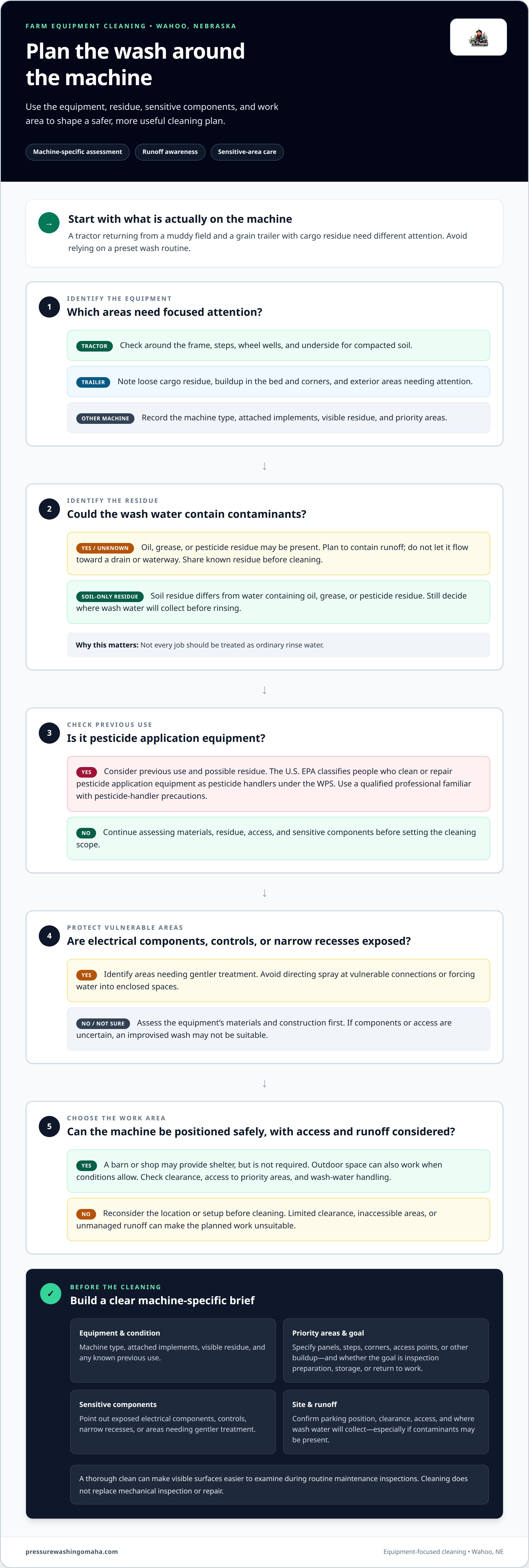
Start with the machine’s condition, not a preset washing routine. A tractor returning from a muddy field may have packed soil around its frame, steps, and wheel wells. A grain trailer may need attention to its cargo bed, corners, and exterior instead. Cleaning needs vary with the equipment, its materials, electrical components, and the areas requiring attention.
Before deciding how to handle wash water in Nebraska, identify what the runoff may contain. Soil-only residue differs from water containing oil, grease, or pesticide residue, so don’t treat every job as ordinary rinse water. Plan to contain runoff where contaminants may be present, rather than letting it flow toward a drain or waterway.
Pesticide application equipment needs particular care. The US Environmental Protection Agency classifies people who clean or repair pesticide application equipment as pesticide handlers under EPA’s WPS. This makes it important to consider the equipment’s previous use and any residue before washing.
For agricultural equipment cleaning near Wahoo, NE, choose a service suited to the machine and the areas needing attention. A suitable wash location has room to position the equipment and manage runoff. A barn or shop may provide shelter, but outdoor space can also work when conditions allow. Assess access, equipment clearance, and runoff handling, not just proximity.
Prepare farm equipment carefully before cleaning. Park it securely, remove loose debris, and identify electrical components, controls, and areas that need gentler treatment. Avoid directing spray at vulnerable connections or forcing water into enclosed spaces. If pesticide application equipment is involved, use a qualified professional familiar with pesticide-handler precautions.
- For a tractor, inspect around steps, wheel wells, and the underside for compacted soil.
- For an agricultural trailer, remove loose cargo residue, then address bed corners and exterior buildup.
- Before rinsing, note sensitive components and decide where wash water will collect.
These steps help match the cleaning method to each machine, whether it’s a field tractor or a grain trailer working near Wahoo.
A shop or barn is preferred but not required for No Pressure Power Washing’s on-location farm equipment cleaning. Choose a space where the machine can be positioned safely and the areas needing attention are accessible. Before the cleaning, share details about the equipment, its condition, and any known residue so the approach can suit the job. Consider runoff handling when choosing the work area, especially if the equipment may carry oil, grease, or pesticide residue.
A clear plan helps prevent avoidable adjustments during a cleaning. Identify where the machine can be parked, which surfaces need focused work, and whether sensitive electrical components or controls call for gentler treatment. For trailers, note buildup in the cargo bed and corners; for tractors, point out packed soil around the frame, steps, or wheel wells. If pesticide application equipment is involved, mention its previous use so appropriate handler precautions can be considered. A barn or shop may be preferred, but the location and plan should suit the equipment and allow responsible wash-water handling.
Cleaning needs and project assessment
For agricultural equipment cleaning in Wahoo, NE, define the desired result for each machine. A tractor being prepared for a maintenance inspection may need visible buildup removed from access points. A trailer being readied for another load may need its cargo-contact surfaces addressed. Distinguishing these goals helps clarify whether the job calls for targeted cleaning or a general exterior wash.
Next, identify the residue and where it sits. Dry dust across a panel differs from wet soil packed near a hinge or grease around a service area. Residue behind a step may need targeted attention, while dust across a broad surface can be addressed over a larger area. The residue, surface, and access all shape the work.
Assess the machine’s construction before setting the scope. Exposed controls, electrical components, painted surfaces, and narrow recesses can each require different care. Note which areas need protection and which can be reached safely. A compact tractor with attached implements, for example, may have less access around its frame than a trailer with open side panels.
- Record the machine type, such as a tractor, grain trailer, or implement.
- Describe visible material, such as field soil, dust, grease, or crop debris.
- Identify priority areas, such as steps, panels, trailer corners, or access points.
- State the goal, such as inspection preparation, storage, or return to work.
Site conditions also affect the plan. A machine parked inside a barn may have limited clearance around its tires or attached equipment. An outdoor area may offer more room but needs a plan for where rinse water will go. If cleaning several machines, assess access and work areas individually rather than assuming one setup suits every unit.
Some projects call for professional expertise. Unknown residue, hard-to-reach areas, or sensitive components can make an improvised wash unsuitable. For larger machinery, heavy equipment cleaning may fit the scope when the job requires equipment-focused care. Cleaning should not replace mechanical inspection or repair.
A useful assessment connects the machine’s condition and priority areas with the intended result. For example, listing a trailer’s cargo bed and side panels separately gives the cleaning team a clearer scope than a general request to wash it. This detail helps tailor agricultural equipment cleaning in Wahoo, NE, to the actual equipment and task.
Combine and harvest equipment cleaning
A combine collects crop dust, chaff, and plant material across its working areas. Residue can gather near the header, feeder house, grain tank, and exterior panels. A focused cleaning plan follows the combine’s layout rather than treating it like a flat-sided vehicle. The crop handled and the machine’s condition help determine which areas need attention.
Begin by identifying visible accumulations and access limits. Dry chaff near a panel differs from damp plant matter caught around an opening. Note where residue collects, whether it is loose or compacted, and which parts need close inspection. Combine components and electrical areas also affect the cleaning approach, so don’t assume one method suits every surface.
Prepare harvest equipment for cleaning according to the manufacturer’s instructions. Shut down and secure the machine, then allow hot areas to cool as directed. Keep clear of moving parts, and don’t reach into enclosed spaces to remove debris. If buildup is difficult to reach or the cleaning procedure is unclear, use a qualified professional.
- Inspect the header and feeder house for visible crop material.
- Look across the grain tank and exterior for dust or residue.
- Identify guards, openings, controls, and electrical areas requiring care.
- Separate accessible surface cleaning from work requiring specialized access.
These observations help define the scope. A combine with scattered surface dust may need different treatment from one with compacted residue around a guarded area. Cleaning can make visible surfaces easier to examine, but it doesn’t replace maintenance or mechanical inspection. Keep those tasks separate.
Harvest conditions affect the residue left behind. A machine used in different crops may carry different plant material, and damp debris can cling differently from dry dust. Record the crop residue and its location when describing the job. This gives the cleaning professional a clearer picture than a general request to wash the combine.
After cleaning, visually review accessible surfaces. Look for remaining material around the header, feeder house, grain tank, and panels. If residue remains in an enclosed or sensitive area, don’t force access or direct a strong spray into it. Follow the equipment maker’s instructions or leave the work to a qualified technician. An area-by-area approach helps keep harvest equipment clean without treating every component alike.
Pre-season and post-harvest cleaning
Before spring fieldwork, prepare stored equipment for its next task. A planter coming out of storage may have dust on exposed surfaces, while a tractor used in wet conditions may carry dried soil. Inspect each machine before cleaning, noting residue near guards, attachment points, and accessible openings. This keeps seasonal work focused instead of relying on one routine for every machine.
After harvest, remove loose crop residue before equipment goes into storage or changes jobs. A combine may carry chaff around accessible exterior areas, while a grain trailer may retain kernels or plant material in its cargo bed. Focus the cleaning on what the equipment handled and where material remains.
To limit the transfer of weeds and crop diseases, remove soil, seeds, and plant material from equipment before moving between fields. Focus on tires, tillage tools, and crop-contact areas. An exterior rinse alone may not clear residue from recesses, so follow the equipment maker’s guidance for areas that are difficult to access.
- Group equipment by its upcoming task and visible residue.
- Remove loose plant material from accessible surfaces before washing.
- Pay attention to soil-contact and crop-contact areas before field transfers.
- Plan where wash water and loosened residue will collect.
Timing can make cleaning more manageable. Wet soil left on a tire or implement can dry and cling, so address visible buildup before storage or relocation. For example, cleaning a tillage tool before moving it to another field helps avoid carrying clumps of soil between work areas.
Use the pre-season review to identify areas needing closer attention before the machine returns to work. Cleaning can make surfaces easier to examine, but it doesn’t replace a maintenance inspection. If a guard or enclosed component limits safe access, follow the manufacturer’s cleaning instructions instead of forcing entry or directing spray inside.
For a farm with several machines, plan the cleaning around each machine and its use. A grain trailer, planter, and combine collect different materials and have different access points. Record the intended next task and visible residue for each machine. This keeps seasonal cleaning focused and helps reduce avoidable movement of field debris.
Seasonal equipment cleaning
Seasonal cleaning follows equipment use, storage, and the next job. A planter coming out of storage may carry dust, while a mower returning from wet ground may have soil beneath its deck. These conditions call for different attention. Match the plan to the machine’s current residue, exposed components, and upcoming work.
How often should agricultural machinery be cleaned? Clean it when residue builds up, after especially dirty work, and before storage or moving between fields. The machine’s use and condition matter more than a fixed calendar interval: a dusty tractor and a mud-covered implement won’t need identical attention.
At a seasonal changeover, inspect equipment before washing. Check contact surfaces, attachment points, guards, and areas where material has collected. A mower deck with dried grass needs a different approach from a sprayer carrying possible chemical residue. Follow the manufacturer’s cleaning guidance for enclosed parts and sensitive components.
- After muddy work, address soil on tires, frames, and lower surfaces.
- After mowing, remove loose grass from accessible deck surfaces.
- Before storage, clear residue from exposed areas and review the machine’s instructions.
- Before field transfer, remove soil and plant material from contact points.
Prepare equipment for storage with care, since residue can remain trapped around hinges, guards, and attachment points. For example, dried plant matter on a mower’s accessible exterior may be harder to remove later. Clean accessible areas, then let surfaces dry before covering or storing the machine, following the manufacturer’s instructions.
Seasonal changes also affect where equipment works. A tractor moving from a muddy field to a gravel yard may carry clinging soil on its tires and frame. Removing visible soil before relocation helps limit the transfer of field debris. For weed or crop-disease concerns, focus on soil and plant material carried between fields rather than relying on an exterior rinse alone.
Keep the process specific to the equipment. A grain trailer between uses, a mower at season’s end, and a tractor returning to work each have different cleaning priorities. Record the machine, visible buildup, and intended next use. If access to a sensitive or enclosed area is difficult, use a qualified professional rather than forcing entry or directing spray inside.
No Pressure Power Washing: Heavy Equipment Cleaning
No Pressure Power Washing provides Heavy Equipment Cleaning for farm machinery that needs dedicated exterior care. The service can suit equipment with substantial surface buildup or machines that are awkward to clean with basic farmyard tools. It treats cleaning as a distinct task, separate from mechanical maintenance.
Consider professional cleaning when equipment is difficult to reach safely or its size makes routine cleaning impractical. A loader, for example, may have broad exterior surfaces and elevated areas that are challenging to clean evenly. The appropriate scope depends on the machine’s condition, materials, and parts requiring care.
Before the work, define the desired result. Some projects focus on removing visible exterior grime; others prioritize particular areas that affect the machine’s appearance or use. Clear priorities help set realistic expectations. Cleaning can improve accessible surfaces, but it does not repair worn parts, diagnose mechanical faults, or replace manufacturer-directed service.
Heavy equipment cleaning may be a good fit when:
- Large machinery has accumulated exterior buildup beyond a quick rinse.
- Equipment size or access makes an ordinary cleaning approach difficult.
- A machine needs a focused cleaning before storage or a change in use.
- The task calls for professional attention to the equipment’s exterior.
Professional exterior cleaning isn’t the right solution for a mechanical problem, internal component cleaning, or work requiring specialized repair. For those needs, follow the equipment manufacturer’s instructions and use an appropriately qualified technician. Keeping cleaning and repair tasks separate prevents a wash from being mistaken for a substitute for service.
When planning heavy equipment cleaning in Wahoo, describe the machine and the result you want. Distinguish, for example, between general exterior cleaning and a request focused on a particular surface or access area. This context helps shape the job around the equipment instead of assuming every machine needs the same treatment.
For farm machinery that calls for professional exterior cleaning, contact No Pressure Power Washing to discuss Heavy Equipment Cleaning.
Frequently Asked Questions
Is mobile agricultural equipment washing available in Saunders County, Nebraska?
Mobile washing for farm equipment in Saunders County depends on whether the job site and machine fit the service, so request an estimate for your location and equipment. For agricultural equipment cleaning in Wahoo, NE, No Pressure Power Washing lists Heavy Equipment Cleaning and Fleet Washing, with Wahoo among its service-area communities. Cleaning uses low-pressure soft-washing and biodegradable, non-toxic cleaning agents. Coverage also includes Omaha, Papillion, Elkhorn, Gretna, Bennington, Bellevue, and Valley.
What are the best methods for cleaning tractors and combines?
Follow the equipment manufacturer’s cleaning guidance, remove loose soil before applying cleaner, and avoid concentrated high-pressure streams. On a combine, check areas around guards and moving components for trapped crop residue, and keep water away from openings and electrical connections as the manual directs. No Pressure Power Washing cleans heavy equipment with low-pressure soft-washing and biodegradable, non-toxic cleaning agents, helping owners in Wahoo and nearby communities arrange professional care for tractors and combines.


