

The strongest fleet-washing opportunity may be an organization that needs vehicles cleaned on a dependable schedule, rather than a one-time wash. Commercial fleet cleaning contracts can turn that recurring need into planned work, with terms shaped around vehicle types, wash frequency, cleaning scope, and each site’s conditions.
Finding those clients takes more than offering a wash. Fleet managers need a service plan that fits vehicle operations, while a cleaning business needs clear terms for what gets cleaned, when service takes place, and how the work is priced. A useful agreement puts these expectations in writing before the first visit.
This guide explains where fleet-cleaning opportunities arise, how to approach pricing by vehicle and frequency, and what to include in the scope. It also covers adapting an agreement for depots, yards, workshops, and other facilities, so the service works for both the site and the fleet.
Key Takeaways
- Shape agreements around each facility’s access, drainage, vehicle movement, and site procedures.
- Set schedules and pricing according to vehicle type, operating conditions, and cleaning frequency.
- Define which vehicles and equipment are covered, and distinguish routine washing from additional cleaning tasks.
- Look for recurring opportunities with organizations that operate fleet facilities or need on-site service.
- Compare providers by the clarity of their scope, schedule, staffing plan, and agreement terms.
Customizing cleaning agreements for different facilities
A useful agreement reflects how each site operates, not just how many vehicles it holds. Specify access, drainage controls, vehicle movements, site inductions, and the tasks crews may perform.
An Omaha-area depot where vehicles return overnight needs a different service window from a workshop with equipment moving throughout the day. Record where washing can take place, which areas must remain clear, and how site access works. These details help prevent cleaning from interrupting fleet movements. A facility near Bellevue or Papillion may need its own access and movement plan, too.
Institutional customers may use formal bid processes and facility-specific scopes. For example, a custodial-services notice for a fleet department may cover two facilities, requiring separate site schedules, access details, and task lists. A proposal should distinguish building custodial duties from vehicle washing, then describe each service separately. Naming the spaces and tasks prevents “custodial services” from being interpreted too broadly.
Set a renewal process that allows the schedule to reflect actual fleet needs. Twelve months is a common initial term for commercial cleaning contracts, and automatic renewal may occur in twelve-month increments. Review performance after the first few service cycles, then adjust frequency or site procedures if operations have changed. A written termination-for-convenience clause may require 30 to 60 days’ notice.
Compliance and Wastewater Handling
Compliance and wastewater handling mean defining applicable insurance, licensing, environmental obligations, and procedures for wash water. Drainage controls and disposal arrangements can affect whether work can proceed at a facility. Requirements depend on the jurisdiction and work performed, so the agreement should identify applicable coverage and approvals. It should also assign responsibility for wastewater capture, handling, or reclaim, and state the associated cost separately when a customer site requires reclaim.
Contract Risks and Terms
Contract terms set the written boundaries for service, payment, renewal, and cancellation. Before signing, clarify which assets and tasks are included, what is excluded, when crews may enter, and how missed visits are handled. Specify the agreement’s duration and the written notice required to end it. Commercial cleaning agreements often use a twelve-month initial term, with renewal in twelve-month increments. Clearly assigned responsibilities help prevent disputes when site conditions or fleet needs change.
To evaluate fleet-cleaning companies serving Omaha, Elkhorn, or Gretna, compare the written scope, schedule, site-access plan, and wastewater responsibilities. A clear proposal explains how the crew will perform the agreed work at your facility.
Pricing by vehicle type and wash frequency
A useful service price reflects vehicle size, cleaning needs, frequency, and site conditions. Match these factors to fleet operations to set a workable schedule.
Pricing by Vehicle Type
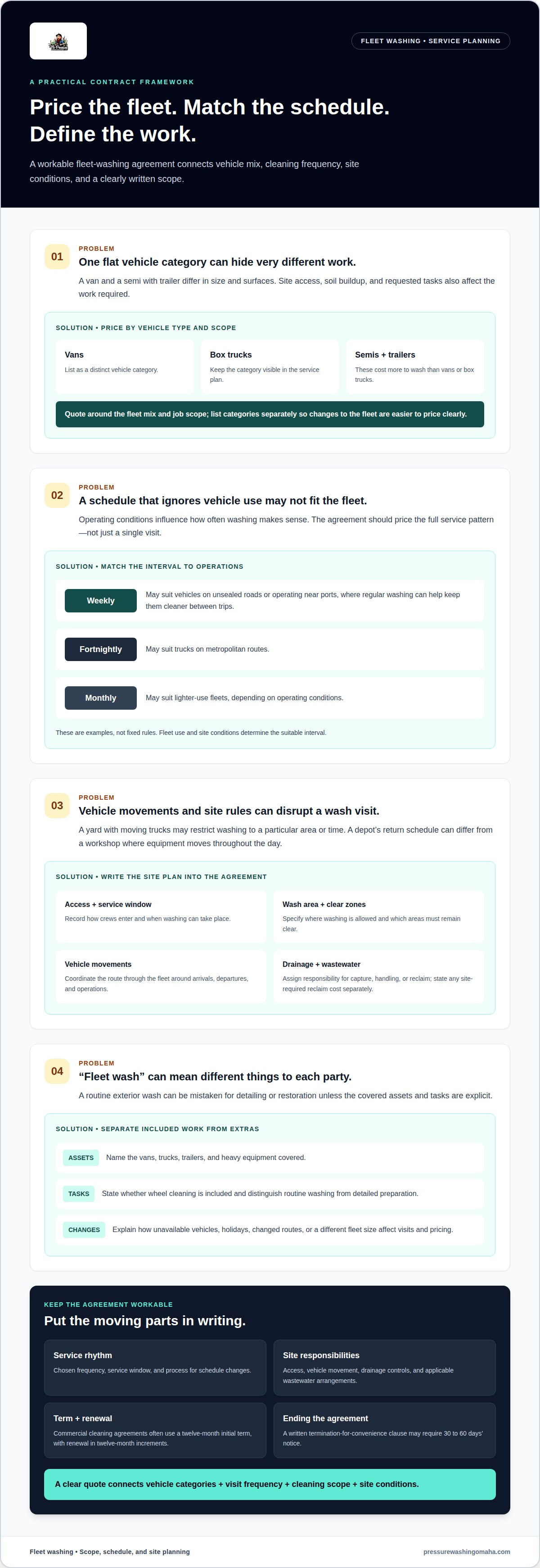
Vehicle-based pricing accounts for the time and work required for each asset. A van and a semi with trailer differ in size and surfaces, so semis and trailers cost more to wash than vans or box trucks. The service price depends on the fleet mix and job scope, and is provided after a quote request.
For example, a fleet with delivery vans and heavy trucks can list each vehicle category separately, making the agreement easier to adjust if the fleet changes. Site access, soil buildup, and requested tasks also shape the work. Clear categories help managers understand what the quoted service covers and reduce confusion when vehicles are added.
Frequency affects the work required at each visit and the number of scheduled visits. A weekly wash may keep vehicles on unsealed roads or near ports cleaner between trips. Trucks on metropolitan routes may suit a fortnightly schedule. Monthly service may suit fleets with lighter use, depending on operating conditions.
Wash Frequency and Service Schedules
A wash schedule specifies how often service occurs and when crews can access the fleet. Weekly service requires different planning from monthly service. For example, a depot can schedule recurring work when vehicles return, while managers coordinate access around departures and vehicle movements.
Commercial fleet cleaning contracts should state the chosen frequency, service window, and process for schedule changes. The agreement can specify weekly, fortnightly, monthly, or another suitable interval. Define how holidays, unavailable vehicles, or changed routes affect a scheduled visit, so both parties understand the plan.
Build the quote around the full service pattern, not a single wash. A fleet washed weekly may need a consistent route through its vehicle lineup, while a monthly visit may involve heavier accumulated soil. List vehicle categories alongside visit frequency; this makes it easier to price changes separately if fleet size or usage shifts.
Liability and access details also shape a practical schedule. For instance, a yard with moving trucks may limit washing to a designated area or time window. Include those operating constraints in the scope, then align the service plan with site access and the required cleaning tasks.
Cleaning scope for vehicles and heavy equipment
A clear scope names every asset and task covered by the agreement. This prevents a routine exterior wash from being mistaken for detailing or restoration work.
Start with an asset list that separates vans, trucks, trailers, and heavy equipment. Identify which vehicles receive recurring exterior washes, then specify whether wheel cleaning is included. For example, a trailer may be covered for an exterior wash, while detailed preparation remains outside the routine visit. Explicit categories help crews perform the agreed work consistently across the fleet.
State whether the following tasks are included, excluded, or quoted separately:
- Exterior washing: Identify the vehicles and equipment included in each recurring visit.
- Wheel cleaning: Specify whether wheels are part of the standard wash.
- Degreasing: Define whether it applies to equipment, selected areas, or neither.
- De-waxing: Record whether this specialized task is included.
- Detailed preparation: Separate it from routine washing unless the scope expressly includes it.
Heavy equipment may need a different scope from road vehicles. A machine used in unusually harsh conditions could require additional degreasing or a post-project clean. Quote those tasks separately rather than assuming they are part of recurring exterior washing. This distinction helps when a project leaves equipment with heavier buildup than usual.
Cleaning can also make visible issues easier to notice. A wash may reveal fluid leaks, damaged decals, cracked guards, or worn safety markings. These observations can alert a fleet manager to a concern, but cleaning does not replace mechanical inspection. The agreement should describe cleaning work, not imply that the crew performs repairs or technical inspections.
For a mixed fleet, a scope table can connect each asset category to its covered tasks. For instance, list trucks for exterior washing and equipment for exterior washing, with degreasing quoted separately. Include a process for adding an asset or requesting a post-project clean. That way, a new trailer or a machine returning from harsh conditions has a defined path into the service plan.
Before work begins, document the included assets, recurring tasks, exclusions, and separately priced extra services. This gives the fleet manager and cleaning crew a shared reference when an unusual request arises.
Keep the asset schedule alongside the service description so changes in fleet composition do not create uncertainty about coverage. The contract can identify each covered category and specify whether wheel cleaning, degreasing, de-waxing, and detailed preparation are included. Listing tasks outside routine service as additional requests helps prevent assumptions at the site.
Recurring exterior washes can remain the baseline, while additional detailing, degreasing, or post-project cleans can be quoted separately when equipment has been used in unusually harsh conditions. This lets the crew address heavier buildup without treating every visit as restoration work. It also gives the fleet manager a clear way to request work beyond the scheduled wash and confirm its scope before cleaning begins.
Fleet-services cleaning contract opportunities
Fleet-service work can come from organizations that need vehicles cleaned where they are parked. A well-defined agreement can replace irregular washing with planned, repeat service.
Mobile cleaning brings the work to a depot, transport yard, workshop, or worksite. This can spare fleet staff from sending vehicles to an off-site wash facility. For example, a logistics operator can schedule cleaning at its yard while vehicles are already there. This approach is especially practical when moving vehicles off-site disrupts daily operations.
Institutional customers and logistics companies can provide substantial recurring-work opportunities. A school district or logistics company can anchor an estimated $80K-$150K in annual recurring revenue for a fleet-washing business. This is a business revenue estimate, not a service price or a guaranteed contract value. The likely fit depends on fleet needs, service scope, and how the work is awarded.
Public procurement can also create opportunities at fleet facilities. A janitorial-services bid may cover buildings used by a fleet department, while vehicle washing remains a separate scope. Read the requested tasks carefully: custodial work inside a facility and washing its vehicles are different services. A proposal should address the requested work and make each distinct scope easy to understand.
A business might replace its current arrangement when the schedule no longer matches vehicle operations, covered assets have changed, or site procedures cause repeated service problems. For example, a growing logistics fleet may need additional visits or a different service window. A written proposal can show how a revised scope addresses those needs, including access, drainage controls, and vehicle movements.
Where an institution is considering an annual agreement, a 90-day trial can offer a defined period to assess the working arrangement. Set the trial scope, schedule, and review points in writing. After the first service cycles, fleet managers can assess whether access works, visits fit operations, and the cleaning plan reflects actual use. A renewal should carry forward the terms that work and revise those that don’t.
For operators pursuing these opportunities, clear documentation matters as much as finding a prospect. Keep the proposed tasks, facility details, schedule, and renewal terms aligned with the customer’s request. This gives an institution or logistics company a concrete basis for evaluating the service and deciding whether to change its current arrangement.
What should businesses look for when comparing fleet cleaning providers?
Compare proposals against the same fleet inventory and operating needs. A quote for delivery vans alone cannot be fairly compared with one covering vans, trailers, and heavy equipment. Give each provider the same asset categories, requested tasks, and site details. This makes differences in scope visible before price becomes the deciding factor.
Check each proposal for precise service boundaries. One provider might include wheel cleaning in routine washes, while another lists it separately. Check whether degreasing, detailed preparation, and post-project cleaning are included or excluded. For example, if a truck returns from a muddy worksite, the written scope should clarify whether that changes the planned service.
- Schedule: Compare the stated service window and how it fits vehicle movements.
- Staffing: Look for the number of crew members assigned to perform the work.
- Tasks: Match included cleaning duties against exclusions and separately priced work.
- Agreement: Review the term, renewal process, and written cancellation notice.
Ask how the crew will work around a busy yard. A provider may schedule service early in the morning, after hours, or on weekends. The written agreement should identify when workers may be on the premises. Compare the schedule with dispatch times and vehicle availability, not just a preferred calendar slot.
Clarify how providers handle site-specific conditions. For example, a depot may have controlled drainage, restricted access, or required site inductions. A useful proposal explains how the service plan accommodates these conditions. Compare the proposed wastewater approach when customer-site reclaim is required, and note whether that work is priced separately.
Ask what insurance applies to the work and which exclusions affect responsibility for damage. The contract should also describe cleaning tasks, exclusions, agreement duration, and crew size. These details let managers compare actual service commitments rather than rely on broad promises. A provider that clearly explains its scope gives the fleet team a firmer basis for evaluating operational fit.
Finally, compare how each provider handles changes. If a vehicle is unavailable or a facility changes its access process, the agreement should explain how schedule adjustments are managed. A side-by-side review of scope, staffing, site procedures, and terms helps identify meaningful differences between proposals.
No Pressure Power Washing: Fleet Washing
No Pressure Power Washing provides Fleet Washing for businesses that need vehicles cleaned at their facilities. It can suit a business organizing recurring service, identifying which vehicles need attention, or revisiting a cleaning arrangement that no longer fits its operations.
Start with a clear description of the fleet and the work required. For example, identify the vehicle groups to be cleaned and distinguish routine exterior washing from specialized requests. This helps shape an agreement around the actual fleet rather than a broad label that leaves the work unclear. It also gives managers a practical basis for discussing a service plan.
Facility conditions influence how the plan works in practice. A depot, transport yard, or worksite may have specific access arrangements and vehicle movements. The written scope can describe where washing takes place and how service fits the facility’s operations. Where drainage controls or wastewater handling matter, include those responsibilities in the agreement rather than relying on informal assumptions.
Fleet Washing may suit an organization that wants recurring vehicle care at its own facility or needs service terms to reflect a changing fleet. For instance, managers may revise the covered vehicles as operations shift. A defined scope can also separate routine exterior washing from additional tasks, such as detailed preparation or degreasing, so each request has a clear place in the arrangement.
Before discussing service, a business can outline its needs in a short working brief. Useful details include:
- The vehicle groups that need cleaning
- The preferred service interval and access window
- Facility conditions that affect where work can take place
- The routine tasks and any additional work to define separately
- How the agreement should address operational changes
This information helps connect day-to-day fleet needs with the proposed service. It can also clarify whether a facility has restricted access or a mix of vehicle types that calls for distinct scope descriptions. Businesses responsible for nearby property upkeep may also coordinate separate driveway cleaning or deck cleaning, while keeping those tasks distinct from fleet service.
To discuss Fleet Washing for your business, contact No Pressure Power Washing.
Frequently Asked Questions
What is a commercial cleaning contract?
A commercial cleaning contract is a written agreement defining the services, schedule, responsibilities, payment terms, and duration. Commercial fleet cleaning contracts apply those terms to vehicle cleaning, clarifying which assets receive service and what work is covered. For example, a delivery company might document a recurring exterior wash for its vans while handling specialized cleaning under separate terms. Clear wording gives both parties a shared reference if operations change.
What services are typically included in commercial fleet cleaning contracts?
Fleet agreements commonly cover recurring exterior washing of specified vehicles, while tasks such as degreasing, wheel cleaning, or detailed preparation may be included or handled separately. The exact scope depends on the fleet’s needs. For instance, a business operating trucks and heavy equipment can distinguish routine vehicle washing from a post-project equipment clean. This helps prevent an occasional intensive task from being mistaken for standard service.
How much do commercial fleet washing contracts cost per vehicle or visit?
Fleet washing may be priced per visit or as recurring service, with the amount based on the work requested. No Pressure Power Washing provides Fleet Washing in Omaha, Papillion, Elkhorn, Gretna, Bennington, Bellevue, Valley, and Wahoo. Pricing depends on vehicle types, cleaning scope, frequency, and site conditions, and is provided after a quote request. The company offers a free estimate; no single amount applies to every fleet.
What factors affect commercial fleet cleaning contract pricing?
Pricing depends on vehicle size and condition, the number of assets, cleaning frequency, and the work included. Site layout matters, too: a spread-out yard or limited wash access may affect how service is organized. For example, a fleet with mixed vehicle types and occasional heavy-soil jobs has different needs from similar vehicles receiving routine exterior washes. More specialized tasks can be scoped separately.
How do fleet cleaning companies structure recurring contracts and service schedules?
Recurring agreements usually define a service interval, access window, covered assets, and the process for handling schedule changes. Visits may be set weekly, every other week, monthly, or at another interval suited to vehicle use. A manager could choose a consistent weekday when vehicles return to the depot. The agreement can also explain how missed visits, unavailable vehicles, or changes in fleet operations affect future service.


