

That high-powered rental machine sitting in your driveway might be the fastest way to turn a simple weekend chore into a multi-thousand-dollar siding replacement. It's completely understandable to feel frustrated when green mold and algae start climbing your walls, making a beautiful home look neglected. You want a clean exterior, but you're also rightfully worried about forcing water behind your panels or cracking a window seal. If you've been wondering, "can you pressure wash vinyl siding" safely, the answer depends entirely on the method you choose.
We've spent over 30 years protecting homes in the Omaha area, and we've seen firsthand how traditional high-pressure washing can ruin the very surfaces it's meant to clean. In this article, you'll discover why aggressive water pressure is often the enemy of your home's structural integrity and how professional soft-wash methods preserve your property's value. We'll break down the dangerous confusion over PSI settings, the hidden risks of DIY ladder work, and the specific techniques that keep your siding looking new without risking rot or structural damage.
Key Takeaways
- Learn why the answer to "can you pressure wash vinyl siding" is technically yes, but doing so with high pressure often leads to costly structural damage and voided warranties.
- Understand the "No Pressure" philosophy that uses specialized, biodegradable detergents instead of brute force to safely eliminate organic growth.
- Discover how high-pressure jets can strip factory-applied UV protective coatings, which leaves your siding vulnerable to premature fading and Omaha's harsh weather.
- Identify common biological invaders like green algae and Gloeocapsa Magma that require targeted chemical treatment rather than high-impact water.
- Evaluate the significant safety risks of DIY ladder work on slippery surfaces compared to professional, ground-based cleaning techniques.
The Risks of Pressure Washing Vinyl Siding: Can vs. Should
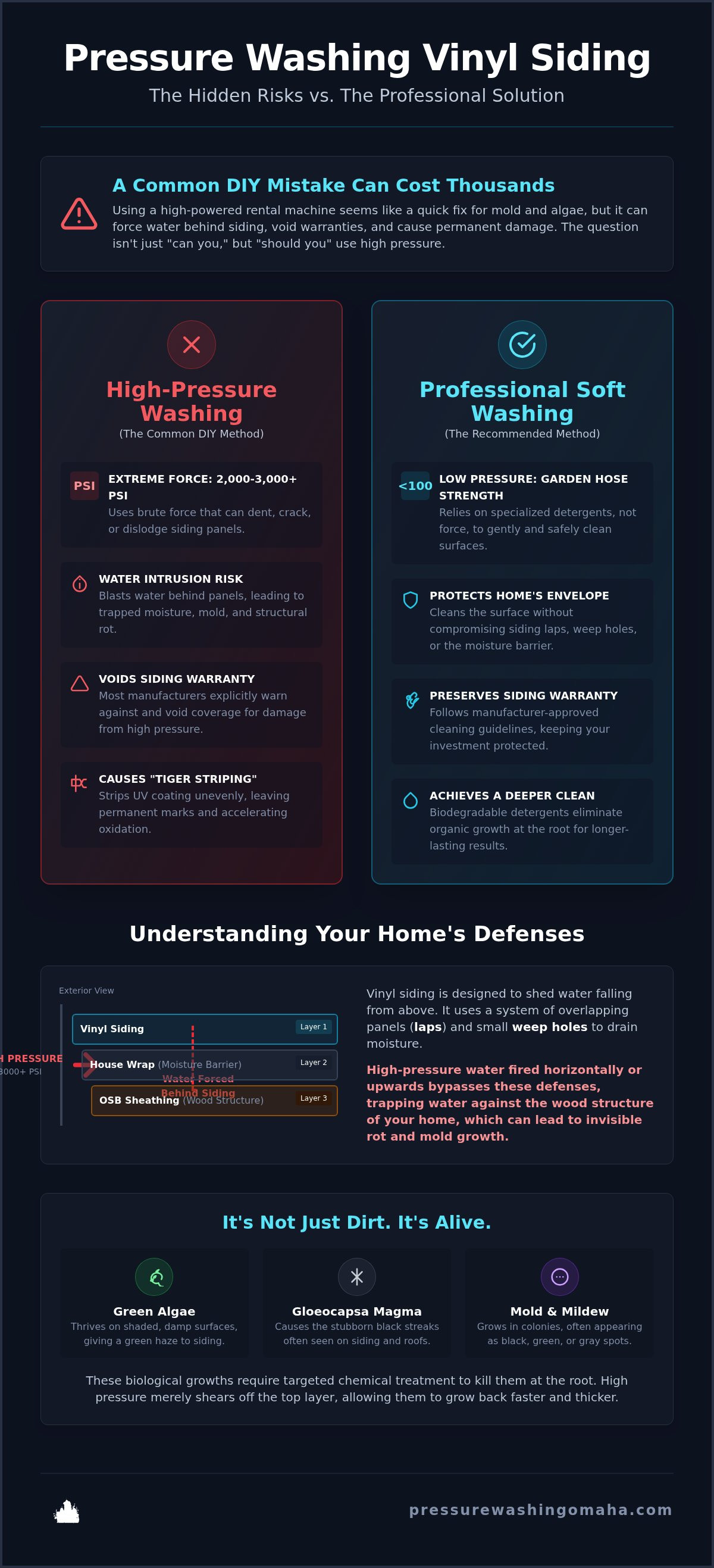
Technically, the answer to can you pressure wash vinyl siding is yes; however, just because a machine is capable of the task doesn't mean it's the appropriate tool for the job. Most homeowners see a pressure washer as a magic wand for grime. In reality, it's a high-impact tool that can easily overwhelm the physical defenses of your home. Vinyl siding is plastic exterior siding that utilizes an interlocking system of panels designed to shed water through the simple force of gravity. It's built to withstand rain falling from above, not a concentrated jet of water fired horizontally or upward at 3,000 PSI. Hydrostatic pressure occurs when the force of a concentrated water stream overcomes the physical gaps between siding panels, pushing liquid into areas where it cannot naturally escape.
Understanding Siding Laps and Weep Holes
The design of vinyl siding relies on "lapping," where each panel overlaps the one below it. This overlap is your home's first line of defense against the elements. Every panel also features small openings called weep holes along the bottom edge. These holes are vital because they allow any condensation or moisture that manages to get behind the siding to drain out safely.
When you use a standard pressure washer, you risk forcing water directly into these weep holes or under the lap joints. Once water is trapped behind the vinyl, it has nowhere to go. This creates a dark, stagnant environment that is perfect for mold and mildew growth. Over time, this hidden moisture can lead to structural rot that remains invisible until the damage is severe. It's a risk that simply isn't worth the convenience of a fast, high-pressure clean.
The 'Should' Factor: Preserving Your Home's Envelope
A house is more than just its outer skin. Behind your siding sits a critical moisture barrier, often called house wrap, which protects the OSB (oriented strand board) sheathing of your walls. High-pressure water can easily tear through aged house wrap or saturate the wood underneath. In our 30 years of experience in the Omaha area, we've seen how aggressive DIY cleaning can compromise this protective envelope.
The goal of professional house washing is to achieve a pristine look without sacrificing structural health. It's about precision rather than power. If you focus only on removing the green algae and ignore the potential for internal water damage, you're trading a temporary cosmetic fix for a long-term structural nightmare. Real home maintenance means respecting the limitations of your building materials and choosing methods that support long-term durability.
Why High Pressure Fails: From Voided Warranties to Structural Damage
Many homeowners don't realize that using a standard gas-powered pressure washer, which often operates between 2,000 and 3,000 PSI, can actually void their siding warranty. Most siding manufacturers found in Omaha homes explicitly warn against high pressure because the material isn't designed for such intense, concentrated force. When people ask, "can you pressure wash vinyl siding," they're often thinking about the immediate removal of dirt, but they overlook the long-term health of the material. High-pressure jets do more than just blast away grime; they can strip the factory-applied UV protective coating directly from the vinyl. Aggressive cleaning physically abrades the surface of the siding, which significantly accelerates the natural oxidation process.
This is why Professional House Washing prioritizes the chemical balance of cleaning solutions over the raw power of the machine. By using the right biodegradable agents, we can achieve a deeper clean without risking the integrity of the plastic itself. If you're unsure about the current state of your home's exterior, it's always safer to speak with a local expert before pulling the trigger on a high-pressure rental.
Surface Oxidation and 'Tiger Striping'
One of the most common visual failures we see in the field is "tiger striping." This occurs when a high-pressure nozzle is moved unevenly across the siding, leaving permanent, jagged clean marks that contrast sharply with the surrounding oxidized areas. Once the finish is etched by water, the vinyl becomes more porous and loses its smooth sheen. This rougher texture actually attracts dirt and organic growth much faster than the original factory finish. In the intense Nebraska sun, stripping this finish leads to premature fading and makes the panels brittle, which significantly shortens the lifespan of your siding.
The Hidden Danger: Trapped Moisture and Mold
Beyond the visible surface, the structural risks of high pressure are even more concerning for the longevity of your home. Water forced behind the siding by a high-pressure stream doesn't evaporate quickly because there's very little airflow within the wall cavity. This trapped moisture creates an ideal breeding ground for wood rot on the underlying sheathing. In some cases, the water can even seep into the interior wall cavity, damaging insulation and drywall. This type of damage often goes completely unnoticed until a homeowner starts a major renovation or notices a persistent mold smell inside the house.
The Professional Standard: What is Soft Washing?
When homeowners ask if can you pressure wash vinyl siding, we often explain that soft washing is the safer, more thorough evolution of that process. Soft washing represents the "No Pressure" philosophy that we've championed for over 30 years in the Omaha area. Instead of relying on high-velocity water to blast away dirt, this method utilizes low-pressure pumps that deliver water at under 100 PSI. This pressure is comparable to a standard garden hose, ensuring that your home's delicate exterior remains completely protected. The real cleaning power comes from sophisticated chemistry rather than physical force. For a detailed breakdown of how these methods differ, you can explore our guide on Soft Wash vs Power Wash: Which Is Right for Your Home?
How Biodegradable Cleaners Kill Mold and Algae
The core of the soft-wash system is the use of professional-grade, biodegradable surfactants. These solutions are non-toxic and specifically formulated to be safe for Omaha landscaping, pets, and local wildlife. We apply these cleaners to the siding and allow them to "dwell" for a specific period. During this time, the solution works to break down the biological bond between the organic growth and your home. Unlike high pressure that merely haircuts the algae, soft washing kills the spores at the root. Once the bond is neutralized, a gentle, low-pressure rinse carries away the debris without any risk of forcing water into the wall cavities or under the lap joints.
Comparing Pressure vs. Soft Wash Results
Choosing the right method is about more than just a clean look; it's about the long-term health of your property. High-pressure washing is a high-risk gamble that often yields only temporary results because it fails to sanitize the surface. Soft washing provides a deeper, more enduring clean that keeps your home looking fresh for a longer duration. Consider these primary differences:
- Safety: Soft washing carries zero risk of cracking vinyl or stripping UV coatings.
- Effectiveness: By sanitizing the surface, soft washing prevents the rapid return of green algae and mold.
- Industry Standards: Soft washing is the only method recommended by the Asphalt Roofing Manufacturers Association (ARMA) for delicate surfaces, and we apply those same high standards to every house washing project we undertake.
By prioritizing gentleness and precision, we ensure that your siding remains a durable barrier for your home. It's a methodical approach that values craftsmanship over speed, giving you peace of mind that your investment is in expert hands.
Assessing Your Omaha Home: DIY Risks vs. Professional Care
Omaha's unique climate, with its humid summers and damp springs, provides a fertile breeding ground for biological growth. You've likely seen the unsightly black streaks of Gloeocapsa Magma or the fuzzy green patches of algae on the north side of your house. When facing these stains, many homeowners wonder, "can you pressure wash vinyl siding" themselves to save a few dollars. While the urge to DIY is strong, the physical and environmental risks often outweigh the potential savings. If you're determined to use your machine, it's far better suited for Driveway and Concrete Cleaning, where the risk of structural damage is significantly lower.
The Danger of Ladders and Wet Siding
Fall injuries remain a leading cause of home maintenance accidents across the United States. Attempting to clean a multi-story home while perched on a ladder is inherently precarious, especially when you introduce soap and water. The high-pressure wand produces a significant "recoil" effect that can easily knock an unbalanced operator off their feet. OSHA safety standards for working at heights emphasize the need for proper fall protection and training to prevent catastrophic injuries. Our team eliminates this risk by utilizing specialized telescoping equipment, allowing us to perform thorough house washing from the safety of the ground.
Environmental Responsibility and Runoff
Many DIY enthusiasts reach for harsh household bleaches or unrefined chemicals that can decimate the surrounding landscape. These substances often find their way into local Omaha storm drains, carrying pollutants into our shared waterways. Professionals prioritize environmental stewardship by using EPA-compliant, biodegradable solutions that are specifically formulated for exterior cleaning. We also employ a critical "pre-wetting" technique, where we saturate your grass and garden beds with fresh water before and after the cleaning process. This creates a protective barrier for your plants, ensuring that the only thing disappearing from your property is the grime.
Choosing a Local Omaha House Washing Specialist
Selecting the right partner for your home maintenance is just as critical as choosing the cleaning method itself. While you might still be weighing the question, "can you pressure wash vinyl siding," the real concern is whether the contractor you hire understands the physical limits of your home's exterior. A true specialist brings 30+ years of experience in the Omaha metro area to every job site. This longevity isn't just a number; it represents three decades of understanding how Nebraska's fluctuating temperatures and humidity levels impact building materials.
Verification is a vital step in your search. You should ensure that any company you consider uses dedicated soft-wash equipment rather than a standard pressure washer with the "pressure turned down." A professional soft-wash system is built specifically to deliver cleaning solutions at low volumes, whereas a high-pressure machine can still produce dangerous PSI spikes even with a wider nozzle. Accountability is the cornerstone of a good relationship. You must ensure your chosen specialist is fully insured and familiar with the local building nuances in Papillion, Elkhorn, and Gretna. A professional house washing estimate should always include a thorough inspection of your siding's current condition to identify any pre-existing cracks or loose panels before work begins.
The Value of Local Expertise
Local specialists possess a deep understanding of the specific organic growth patterns that plague our region. We know exactly how the intense summer sun interacts with the north-side shade to create stubborn algae colonies. This neighborly approach means we treat your property with the same meticulousness we'd apply to our own homes. By maintaining direct communication with the business owner, you ensure that the person responsible for the results is the one personally invested in your satisfaction. It's a level of personalized care that national chains simply cannot replicate.
Ready to Restore Your Home's Curb Appeal?
A clean home is a protected home. Don't allow mold and algae to slowly eat away at your property's finish and your family's investment. While some still ask "can you pressure wash vinyl siding," professional soft washing provides a "like-new" look without the risk of the expensive repair bills that often follow high-pressure accidents. It's the most conscientious way to maintain your home's value while ensuring its structural integrity remains intact for years to come.
Get a Free House Washing Estimate Today
Protecting Your Home's Long-Term Value
Maintaining your home's exterior shouldn't come at the cost of its structural integrity. While the question of can you pressure wash vinyl siding often leads homeowners to reach for high-pressure rentals, the mechanical reality of siding favors a gentler approach. Choosing professional soft washing ensures that you eliminate organic growth at the source without forcing water behind your panels or stripping away essential UV protections.
Our team brings 30+ years of Omaha experience to every project, utilizing eco-friendly, non-toxic solutions that protect your landscaping and pets. As fully insured local specialists, we take pride in a "No Pressure" philosophy that preserves your warranty and your peace of mind. Investing in the right cleaning method today prevents the costly structural repairs that follow high-pressure accidents tomorrow.
We look forward to helping you restore your home's beauty safely and effectively.
Frequently Asked Questions
Can I use a pressure washer on vinyl siding if I use a low-pressure tip?
Yes, but you must exercise extreme caution. Even a low-pressure tip can deliver too much force if the operator gets too close or uses an incorrect angle against the panels. The mechanical design of siding is meant to shed water falling from above. Using a pressure washer, even on low settings, risks pushing water into the lap joints. Soft washing is always the preferred method for long-term safety.
What is the green stuff on my siding and is it dangerous?
The green growth is typically algae or moss, which thrives in Omaha's humid climate. While it doesn't eat vinyl siding like it might wood, it traps moisture against the surface and can spread to your deck or roof. If left untreated, it becomes a slip hazard on walkways and can eventually lead to mold growth inside your wall cavities if moisture is forced behind the panels during an improper cleaning attempt.
Will pressure washing my house void my siding warranty?
It very well might. Many siding manufacturers explicitly state that using high-pressure water can void the product warranty. They view the intense force as misuse because it can strip factory coatings or cause physical cracking. When people ask, "can you pressure wash vinyl siding," they often don't realize that a single cleaning session could leave them financially responsible for future material failures. Professionals use soft washing to avoid this risk entirely.
How often should I have my vinyl siding professionally cleaned in Omaha?
We generally recommend a professional cleaning every 12 to 24 months. Omaha's seasonal shifts and humidity levels accelerate organic growth, especially on the north and east sides of homes. Regular maintenance prevents algae from becoming deeply embedded in the vinyl's texture. Homes in Gretna or Elkhorn that are near construction sites or open fields may require more frequent attention due to increased dust and organic debris accumulation on the siding.
Is soft washing safe for my pets and my garden plants?
Yes, our soft-washing process uses biodegradable, non-toxic solutions designed with safety in mind. We take extra precautions by pre-wetting all surrounding landscaping in Papillion and Bellevue yards to ensure plants don't absorb the cleaning agents. We also perform a thorough post-rinse of the entire area. While the solutions are safe, we always recommend keeping pets indoors during the actual application process as a standard safety measure for your peace of mind.
What happens if water gets behind my vinyl siding during cleaning?
Trapped water creates a stagnant environment that leads to mold and wood rot on your home's sheathing. Vinyl siding is an interlocking system with weep holes meant to drain condensation, not a high-pressure jet. If water is forced behind the panels, it can saturate the house wrap and eventually seep into your wall cavities. This is the primary reason we advocate for a gentle cleaning philosophy to protect your home's structural integrity.
Can I clean my house siding myself with a garden hose?
You can certainly rinse off loose dust and cobwebs with a garden hose, but it won't kill organic growth. Algae and mold have microscopic roots that cling to the vinyl's surface. A garden hose lacks the specialized surfactants needed to neutralize these spores. Without professional-grade cleaners, the green stains will likely return within a few weeks because the biological core of the growth was never actually eliminated by a simple water rinse.
How long does a professional soft-wash house cleaning take?
Most residential projects in the Omaha metro area take between two and four hours to complete. The exact duration depends on the square footage of the home and the severity of the organic growth. We prioritize thoroughness over speed, ensuring that every lap joint and corner is treated correctly. Our ground-based equipment allows us to move efficiently while maintaining the high standards of care we've upheld for over 30 years.


