

A blocked downspout can turn roof runoff into a problem at the foundation, but the cost of clogged downspout service in Omaha depends on what’s causing the blockage and whether the system needs repair or runoff redirection. The price depends on the condition of the gutters and downspout, access to the affected area, and the work needed, and is provided after a quote request. Clearing a simple obstruction is different from correcting damaged drainage components.
It’s reasonable to want a clear explanation before arranging service, especially when water is spilling over or pooling beside your home. This guide explains what an inspection looks for, how cleaning and repairs restore flow, and what can affect the cost. You’ll also learn how downspout extensions help direct water away from the foundation, and when a drainage problem may involve more than a clog.
Key Takeaways
- The cost depends on the blockage, the condition and accessibility of the drainage system, and whether repairs or runoff redirection are needed; pricing is provided after a quote request.
- An inspection can help distinguish a debris obstruction from damaged gutters or downspouts, which may need repair to restore proper flow.
- For an urgent clog, the response depends on the service circumstances; overflowing water and pooling near the foundation are signs to describe when requesting service.
- Clogged or damaged drainage components can expose the roof, exterior, interior, foundation, and surrounding grounds to water damage.
- Downspout extensions can direct runoff away from the foundation, while No Pressure Power Washing offers related exterior cleaning services such as house, deck, driveway, and concrete cleaning.
Inspection, repair, and drainage restoration process
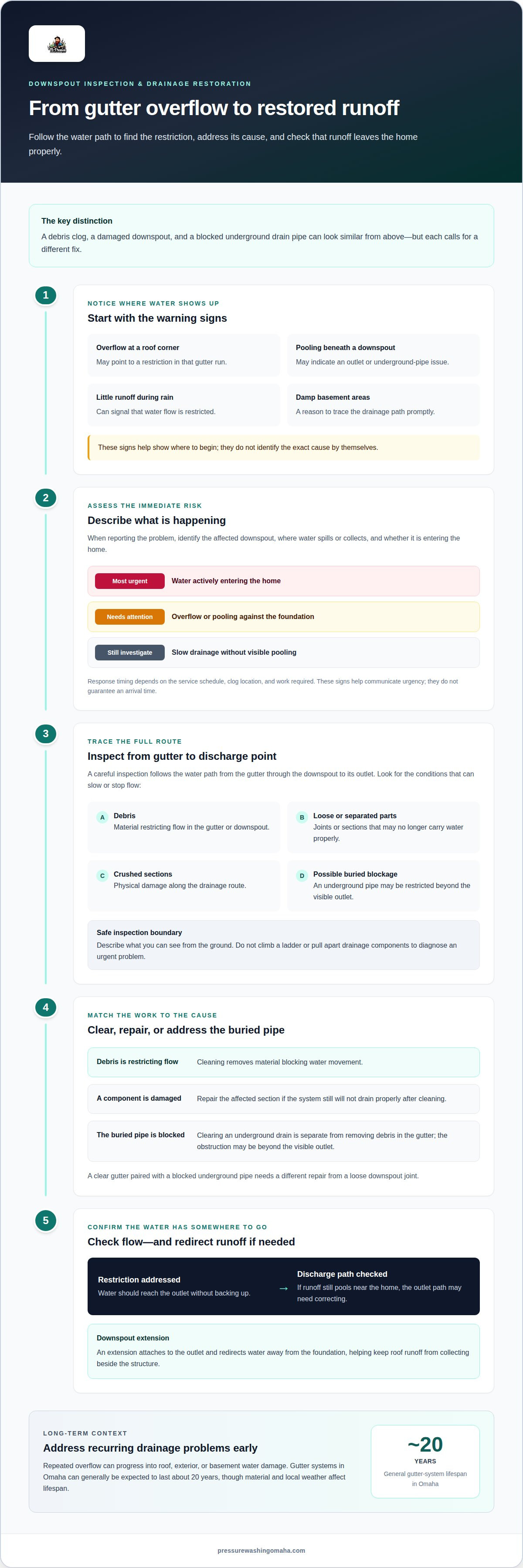
A careful inspection follows the water from the gutter to the downspout outlet, locating where flow slows or stops. The repair then addresses the cause, whether debris, a damaged section, or a blocked underground drain pipe.
Drainage Warning Signs
Look for water spilling over the gutter, little runoff coming from a downspout during rain, or water collecting beside the house. Each sign can point to a different restriction, so note where the overflow occurs.
Overflow near a roof corner may indicate a blockage in that gutter run, while pooling beneath the downspout can signal an outlet or underground-pipe issue. Damp basement areas are another reason to trace the drainage path promptly. These signs don’t identify the exact cause, but they help show where to begin.
Urgent Clog Response
Response timing depends on the service schedule, the location of the clog, and whether water is actively entering the home. When requesting service, describe the affected downspout, visible overflow, and any pooling near the foundation. Those details help establish the urgency and identify the areas that need attention first.
Water entering the home or collecting beside a basement wall deserves prompt attention because continued overflow can worsen water damage. A clog that isn’t currently spilling may still need attention, especially if rain is forecast or the outlet remains blocked. Active water intrusion is more urgent than a slow drain without visible pooling.
Inspection and Drainage Restoration
Start at the gutter and follow the drainage route to the discharge point. Look for debris, separated joints, crushed or loose sections, and water marks from repeated overflow. Check whether the downspout directs runoff away from the foundation or releases it beside the home.
Cleaning removes material restricting flow; repairs address components that still won’t drain properly afterward. If the downspout connects to an underground drain pipe, the blockage may be below grade. Clearing that pipe is separate from removing debris in the gutter, since the obstruction may be beyond the visible outlet.
After the restriction is addressed, observe whether water reaches the outlet without backing up. If runoff still pools near the house, the discharge path may need correcting. Downspout extensions attach to the outlet and redirect water away from the foundation, helping keep roof runoff from collecting beside the structure.
The final decision depends on what the inspection finds. A clear gutter paired with a blocked underground pipe needs a different repair from a loose downspout joint. Gutter systems in Omaha can generally be expected to last about 20 years, though material and local weather affect lifespan. Addressing drainage problems early can help prevent repeated overflow from progressing into roof, exterior, or basement water damage.
How quickly can an Omaha downspout service respond to an urgent clog?
Response timing depends on the immediate risk, the work required, and the service schedule. A downspout overflowing against a basement wall needs more urgent attention than a slow outlet with no water collecting near the house. Describing the problem clearly helps establish its priority without assuming every clog needs the same response.
Start with what you can see from the ground. Is water entering the home, spilling from the gutter, pooling beside the foundation, or simply draining slowly? These details help distinguish active water intrusion from a drainage issue that still needs attention but isn’t causing immediate damage.
When describing a blockage, give specific observations instead of just saying the downspout is clogged. For example, explain that water pours over one gutter corner during rain or collects beside a basement window. Mention whether one side of the house or several downspouts are affected. A clear description helps pinpoint where to focus.
- Active water entry: Describe where water enters and whether it is reaching a basement, wall, or interior space.
- Overflow location: Identify the gutter edge or downspout where water spills out.
- Runoff pattern: Note whether water pools beside the foundation or flows away from the home.
- Possible underground blockage: Explain if the downspout connects to a buried drain and water backs up at its outlet.
Access and the likely source also affect how the work can be scheduled. A visible obstruction near a ground-level outlet is different from a blockage that may sit inside a buried drain pipe. If the gutter is difficult to reach or a damaged section needs attention, the work may require a broader inspection rather than a quick clearing visit. Don’t climb a ladder or pull apart drainage components to diagnose an urgent problem.
Omaha weather can change how urgent the problem feels. During rainfall, a blocked downspout may send roof runoff over the gutter or toward the house. After rain stops, pooling, damp basement areas, or fresh water marks can show where the system failed. Describe what happened and where, even if the water has stopped moving.
Fast attention matters most when water is actively entering the home or collecting against the foundation. For a slow drain without visible overflow, arrange service before the next rainfall worsens the problem. The distinction is not a guarantee of a particular arrival time; it helps communicate the damage risk and the work involved.
To make the next step straightforward, share the affected location and the clearest signs of water movement through the service request form. A focused description helps direct attention to the right part of the drainage path, whether the issue is at the gutter, downspout, or underground outlet.
What damage can a clogged downspout cause to an Omaha home or foundation?
A clogged downspout interrupts the route roof runoff takes away from an Omaha home. Water may spill over the gutter, run down exterior walls, or collect beside the foundation. The concern depends on where the water goes: a puddle near a basement wall differs from overflow against roof edges or siding.
Trace visible water marks from the gutter to the ground. Staining below a roofline, soil washed from a planting bed, or a puddle beside one corner can show where runoff escapes. These clues matter because water repeatedly following the same path exposes the same building materials and ground to moisture.
The U.S. Government Publishing Office notes that missing or damaged drainage-system components can contribute to damage affecting roofs, structures, exterior walls, interiors, or surrounding grounds. A clogged outlet can disrupt drainage in a similar way, preventing runoff from leaving the roof system as intended. The location of overflow helps explain the potential damage.
At the roof edge, backed-up water can overflow instead of moving through the gutter and downspout. Water spilling behind a gutter or across roof edges may reach areas the drainage system is meant to protect. Look for staining or recurring wet areas below the same roof section to help pinpoint where water leaves its normal route.
Repeated runoff can leave dirty streaks on exterior walls and keep nearby surfaces wet. For example, water from a blocked downspout may run toward a window, doorway, or lower wall. Water near a basement wall or floor suggests the drainage path needs prompt attention. The indoor symptom may be away from the blockage.
Ground conditions offer another useful clue. A depression or channel in the soil beneath a downspout can show where water repeatedly lands. If runoff collects beside the foundation, the soil immediately around the home stays exposed to that discharge instead of receiving water farther away. Note whether pooling occurs below one outlet or along a wider section of the house.
- Roof and gutter: Look for overflow or repeated wet marks beneath one roof edge.
- Exterior walls: Watch for runoff streaks below a gutter joint or downspout.
- Basement: Note dampness near a wall or floor, especially below an affected outlet.
- Surrounding grounds: Observe pooling, washed soil, or a channel beneath the discharge point.
These observations help distinguish a drainage symptom from its possible source. Water below a gutter corner may indicate overflow, while pooling at the bottom of a downspout may mean runoff isn’t moving away from the house. Neither clue alone proves the exact fault, but together they show where the drainage route needs attention.
For an Omaha home, the practical priority is to prevent continued discharge against vulnerable areas. A professional inspection can trace the route from the gutter through the downspout and outlet, then identify whether cleaning, repair, or redirected runoff addresses the problem. This is especially important when water marks appear indoors or pooling remains beside the foundation after rain.
Gutter services
Gutter service may involve debris removal, downspout cleaning, or changing where runoff exits. The right work depends on what interrupts drainage. Leaves at a gutter opening call for cleaning, while a loose connection may need repair. Identifying the difference keeps the work focused on the issue.
Omaha homeowners should have their gutters cleaned at least twice per year. Cleaning removes material that collects in the channel and near downspout openings. If water still backs up after debris is cleared, the restriction may be farther along the system. An assessment can distinguish that from a gutter that simply needs routine cleaning.
A useful inspection follows the water’s route from the gutter toward its discharge point. Water backing up while the gutter fills suggests a restriction somewhere along that route. If water exits freely but leaves a muddy area beside the house, the outlet location may be the concern. Each symptom points to a different part of the drainage setup.
Gutter guards help keep leaves and debris out of gutters, reducing maintenance and supporting system performance. They don’t remove material already inside the gutter or confirm that a downspout is clear. Debris can remain near an opening even when guards cover the gutter, so cleaning and inspecting the route address separate issues.
Downspout extensions attach to the pipe’s end and redirect water away from a home’s foundation. They can help when water exits too close to the house, but they won’t clear an obstruction inside the pipe. The outlet needs to carry water properly before its discharge location can help. The right service depends on whether the problem involves flow, the outlet, or both.
For clogged downspout service in Omaha, the work should match the drainage issue. Gutter cleaning removes debris, while repairs address damaged or disconnected components. If water reaches the outlet but collects nearby, redirecting runoff may be more relevant than further cleaning. Keeping these tasks distinct clarifies what the proposed work is meant to correct.
When describing the problem, note which gutter is affected and where water appears after rain. A muddy patch beneath one outlet differs from water spilling over a gutter edge. If runoff has left marks on a roof edge, roof cleaning may address surface buildup after the drainage issue is resolved. Streaks on siding or concrete are separate cleaning concerns, not evidence that the downspout is clear.
Once drainage is functioning, exterior cleaning provided by No Pressure Power Washing can address visible residue left behind. House washing may suit exterior siding, while concrete cleaning applies to stained concrete surfaces. These services treat surface appearance; they don’t replace gutter cleaning or drainage repair.
Once any underlying blockage is resolved, downspouts are ready to function normally. Downspouts are enclosed gutter pipes that run vertically from the roof to the base of a home. Omaha homeowners should check that their downspouts are free from blockage so water can flow out.
No Pressure Power Washing
No Pressure Power Washing can help clean exterior surfaces after a drainage problem leaves visible runoff marks or residue. If water has streaked siding, house washing addresses the home’s exterior, while concrete cleaning can help with staining on a driveway or walkway. Deck cleaning is another option when runoff leaves marks on an outdoor deck.
Exterior cleaning treats surface buildup; it doesn’t clear a clogged downspout or repair drainage components. Address the water route separately, then consider cleaning affected surfaces. No Pressure Power Washing cleans home exteriors, decks, and driveways.
Take the Next Step Toward a Dry, Clean Exterior
Before planning exterior cleanup, address the drainage issue itself. Cleaning can improve the appearance of runoff marks, but it won’t clear a blocked downspout or correct water flowing toward the home. For clogged downspout service in Omaha, describe where water backs up and which exterior areas show staining. That gives the conversation a useful starting point.
No Pressure Power Washing offers house washing, deck cleaning, and driveway cleaning for exterior surfaces that need attention. These services can be a practical next step after drainage work, especially when runoff has left marks on siding, a deck, or concrete. Choose the surface that needs cleaning, keeping drainage work and exterior washing distinct.
Once you understand the water route and identify the affected surfaces, you can make a clearer plan for your home.
Frequently Asked Questions
How Much Does This Great Service Cost?
The work required depends on factors such as gutter debris, access to the affected area, and whether the system needs repair. No Pressure Power Washing provides a free, no-obligation estimate for its services. Describe the affected side of the house and the visible drainage issue to clarify whether you need gutter cleaning or another exterior cleaning service.
How do I make sure I choose the right Omaha gutter services company?
Choose a service that clearly explains its scope and how it relates to the drainage problem. Gutter cleaning removes accumulated debris, while a damaged pipe or buried drain may require repair beyond surface cleaning. Describe the symptoms and review the proposed work before it begins, so you understand what it addresses.
What are some at-home gutter maintenance tips?
From the ground, look for sagging gutter sections, loose downspout connections, and visible debris at outlets. After rainfall, note where runoff exits and whether it leaves fresh marks on siding or soil. Keep track of recurring problem areas, such as a corner that overflows during storms. Avoid climbing ladders to reach high gutters; professional cleaning is safer for hard-to-access rooflines.
Which Omaha companies offer clogged downspout cleaning and repair?
No Pressure Power Washing offers gutter cleaning in Omaha and nearby communities, including Papillion, Elkhorn, Gretna, Bennington, Bellevue, Valley, and Wahoo. This service can remove debris restricting flow through the gutter system. A damaged downspout or underground pipe is a separate issue, so describe the symptoms and affected location when discussing service.
What is the average cost to unclog a downspout in Omaha?
There isn’t a single average price for every Omaha home. The scope depends on the blockage location, access, and whether the work involves debris removal or additional drainage repair. A clog at an accessible outlet differs from one inside a buried pipe. No Pressure Power Washing provides a free, no-obligation estimate for its services rather than publishing a fixed price for every situation.
Do Omaha gutter-cleaning companies charge extra for downspout flushing or repairs?
The work in the estimate depends on whether the issue involves more than gutter cleaning. Removing debris from a gutter differs from clearing a downspout or repairing a damaged section. Review the described scope before work starts so you understand what it includes. No Pressure Power Washing provides a free, no-obligation estimate for its services.
How do professionals diagnose and clear a clogged downspout?
Trace the drainage route from the gutter toward the outlet, looking for debris, separated joints, and signs of backup. Identify whether the restriction is in the gutter, vertical pipe, or a connected underground drain before choosing a clearing method. Water backing up at a buried outlet points to a different location than debris at the gutter opening.
What are signs that a downspout is clogged or damaged?
Common clues include a downspout releasing little water during rain, water spilling over a nearby gutter edge, or runoff pooling below the outlet. A loose connection, visible dent, or separation between pipe sections can also disrupt flow. Compare the affected outlet with another downspout during rainfall. A difference can help identify which part of the system needs closer attention.


