

Turnover involves more than preparing the inside of a rental. Exterior cleaning for property managers in Omaha helps keep building surfaces and entrances presentable as tenants move out and new residents arrive. It also gives property teams a practical way to include exterior upkeep in their maintenance plans.
A clean entrance and exterior can shape a prospective tenant’s first impression, while grime on walls, concrete, and other surfaces can make a property look neglected. The right cleaning approach depends on the surface, the buildup, and how much foot traffic the area receives.
When a tenant moves out, exterior cleaning has to be planned around the next arrival: entrances may need attention, but walls, concrete, and other surfaces do not all call for the same approach. Coordinating the work with occupancy and the buildup helps property teams keep shared spaces presentable as residents change.
Key Takeaways
- Coordinate exterior cleaning with move-outs and incoming occupancy so visible areas are addressed as part of turnover planning.
- Match the cleaning approach to the surface, the type of buildup, and how much traffic the area receives.
- Build recurring exterior upkeep into property maintenance plans, adjusting priorities as conditions around the building change.
- Use the condition and use of entrances and walkways to guide which shared areas need attention first.
- Set pressure-washing intervals around observed buildup and property needs rather than relying on one schedule for every building.
Preparing properties for tenant turnover or occupancy
Turnover cleaning should include exterior areas tenants see before entering a Nebraska rental. Add building walls, shared concrete, and the main entrance to the move-out inspection. A clean unit can still feel neglected if soil remains on the front steps. Planning exterior cleaning for property managers in Omaha means coordinating this work with interior turnover tasks before new tenants arrive.
For apartment rentals, start with a walkthrough of visible surfaces. Note grime on siding, residue near entry doors, and stains on shared walkways. Group areas by surface and access needs to schedule work with fewer disruptions. A building with several entrances may need separate work windows to keep tenant access clear.
Vacation rental turnovers often involve a tight handoff between guests. Include the exterior entrance in the changeover plan, especially where frequent arrivals leave marks on concrete. If a walkway has visible buildup, schedule professional cleaning before the next check-in, not during guest arrival. Coordinate access details and timing with the cleaning team.
When choosing an Omaha exterior cleaning company, compare its method for each surface, tenant-access plan, and defined work area. No Pressure Power Washing uses soft-washing with biodegradable, non-toxic cleaning agents to clean exterior surfaces without high-pressure damage. The approach should account for the buildup and foot traffic rather than treating every wall or walkway alike.
What insurance, licensing, and safety requirements apply to exterior cleaning contractors in Omaha, Nebraska? Requirements depend on the work and applicable rules, so avoid assuming one license covers every job. Before work begins, document insurance details, work boundaries, and precautions for residents, vehicles, and nearby landscaping.
Which Omaha companies offer exterior cleaning for property managers? Look for Omaha exterior-cleaning companies that handle building surfaces and shared access areas. Compare each proposed scope with the property’s needs, such as cleaning a stained concrete entrance without adding unrelated turnover tasks.
Exterior cleaning requires care around tenant belongings, vulnerable landscaping, and surfaces that need a gentler method. Runoff near a planted bed, for example, can disturb soil, while an unsuitable cleaning approach can damage a delicate finish. Professional exterior cleaning for property managers in Omaha should account for the surface, buildup, nearby residents, and drainage before work starts. These precautions help managers plan turnover without overlooking the exterior.
During turnover, keep condition records that distinguish existing wear, cleaning needs, and any damage observed. Omaha, Nebraska, has 79,900 rental units in apartment complexes. For managers overseeing multiple buildings, a consistent checklist can help track which entrances, walls, and shared concrete need attention before occupancy. Keep exterior-cleaning notes with the move-out condition record, and confirm that runoff and access precautions are addressed before the work is complete.
Nebraska landlords must return the security deposit balance and provide a written itemization of deductions within 14 days after a tenancy ends. Keeping the cleaning scope and condition notes clear can support an orderly handoff and help managers separate routine exterior work from any documented concerns. Share relevant records with the person responsible for the property, and verify that completed work matches the agreed scope before the next tenant arrives.
Cleaning exterior walls and surfaces
The safest professional method depends on the surface, the buildup, and nearby activity. For property managers, that means assessing each area before selecting a cleaning approach.
Surface-Specific Cleaning Methods
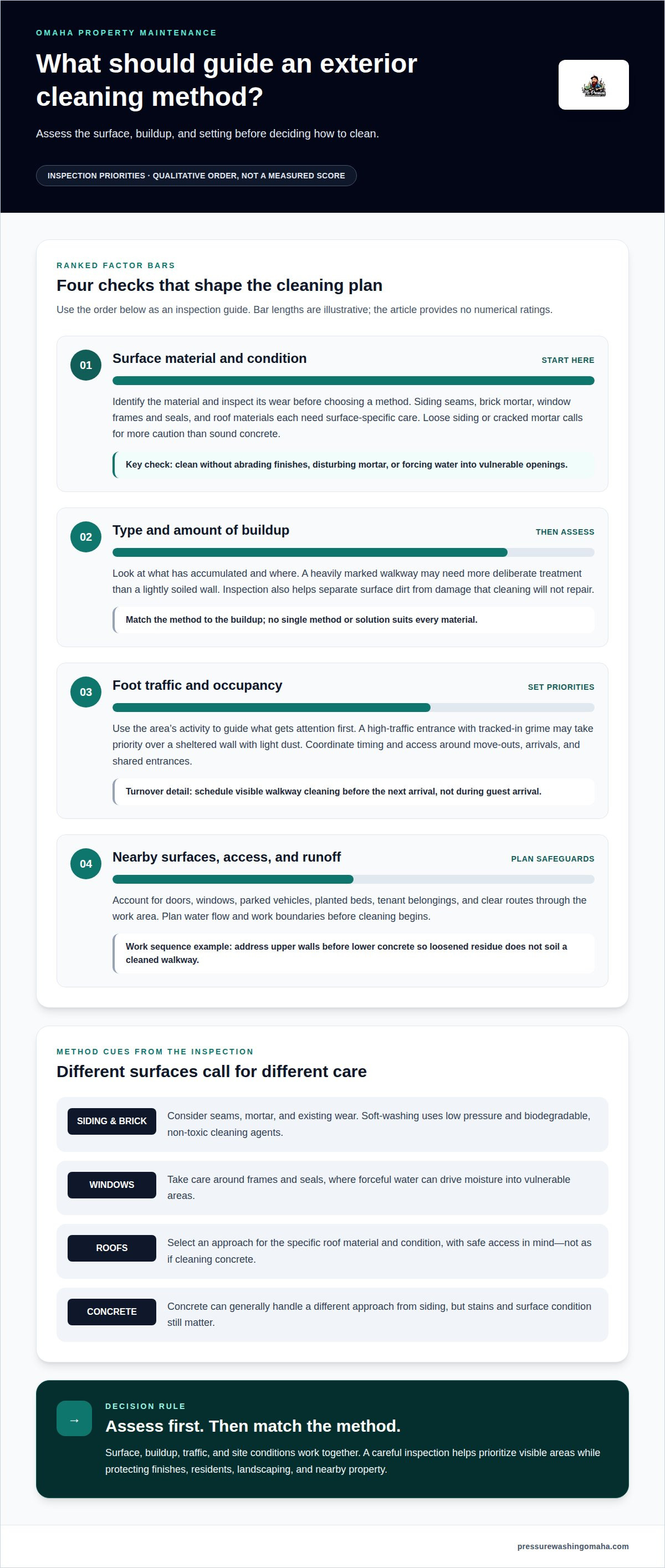
Siding, brick, roofs, windows, and concrete respond differently to cleaning methods and agents. A professional begins by identifying the material and inspecting its condition. Loose siding or cracked mortar, for example, calls for more care than sound concrete. The assessment also considers foot traffic, nearby entrances, and places where runoff could reach landscaping or tenant belongings.
For siding and brick, the method should account for seams, mortar, and existing wear. Windows need care around frames and seals, where forceful water can drive moisture into vulnerable areas. Roof surfaces require attention to material and condition, as well as safe access. A professional roof cleaning approach should be selected for the specific roof rather than treated like concrete washing.
Concrete can generally handle a different approach from siding, but stains and surface condition still matter. A heavily marked walkway may need a more deliberate treatment than a lightly soiled wall. No single method or solution suits every material. The goal is to remove buildup without abrading finishes, disturbing mortar, or forcing water into openings. Soft-washing uses low pressure and biodegradable, non-toxic cleaning agents.
Choosing Methods for Exterior Surfaces
Effective exterior cleaning for commercial properties starts with evaluating the surface, the buildup, and the area’s foot traffic. That assessment guides the method and helps prioritize work. A high-traffic entrance with tracked-in grime may need attention before a sheltered wall with light dust. A detailed inspection also helps distinguish surface dirt from damage that cleaning won’t repair.
Professionals can then organize work by material and location. For example, they may address upper walls before lower concrete so loosened residue doesn’t soil a cleaned walkway. They also consider nearby doors, windows, parked vehicles, and planted beds when planning water flow and access. At occupied buildings, the work area and timing should account for tenants entering and leaving.
Before cleaning, the property team can identify priority surfaces and share access details. The professional’s assessment determines how each area should be treated. Afterward, a visual review of the walls, edges, and adjacent surfaces helps spot remaining buildup or unintended residue. No Pressure Power Washing uses low-pressure soft-washing and biodegradable, non-toxic cleaning agents, with the method tailored to the surface rather than applied uniformly.
Planning exterior cleaning as part of property maintenance
Build routine cleaning into the maintenance calendar, using surface condition and tenant activity to set priorities. For exterior cleaning for property managers in Omaha, account for winter temperatures and the risk of runoff freezing.
For quotes across multiple properties, provide each address, a list of surfaces, priority areas, and access details. Grouping similar work can help organize scheduling across the portfolio.
Cleaning Frequency for Properties
Apartment buildings and commercial properties don’t all need the same pressure-washing schedule. Property managers can track visible buildup during regular site inspections, then prioritize areas where grime is accumulating or people pass frequently. A sheltered wall may stay clean longer than an exposed entrance. Let surface condition and traffic guide the routine instead of assigning every building an identical interval.
Keep a maintenance record for each property. Note which surfaces were cleaned, what buildup was present, and whether it returned quickly. Recurring dirt near a busy loading entrance, for example, may call for closer monitoring than light dust on a low-traffic side wall. These records help refine future scheduling based on actual conditions.
Quotes and Multi-Property Coordination
A useful quote starts with a clear scope for each address. Organize properties by surface type, visible buildup, and access needs, then identify priority areas such as public entrances or shared walkways. Photos can show conditions between site visits. Notes about occupied areas and access restrictions help define the work for each property.
For a portfolio, a shared schedule can reduce conflicts with tenant access and other maintenance. Group nearby locations or similar work while keeping each property’s condition distinct. A building with stained concrete may need a different plan from one with lightly soiled walls. Keep one record of approved areas, timing, and site-specific access details.
Seasonal planning also means allowing for weather changes. Freezing temperatures can make wet surfaces hazardous if runoff freezes, so account for conditions before starting and adjust timing when needed. Managers can prioritize inspections during colder periods and plan suitable work windows. Record postponed areas on the calendar, then revisit them when conditions allow.
Routine exterior care works best as a documented property task, not an isolated response to visible grime. For exterior cleaning for property managers in Omaha, a maintenance log, clear property scopes, and occupancy-aware scheduling help align priorities with each building’s use and condition.
Cleaning building entrances and walkways
At an Omaha apartment entrance, tracked soil can collect where the walkway meets the door. A professional assessment identifies the surface, buildup, foot traffic, and nearby drainage. Those details help determine the method and work sequence. They also reveal where residents may need an alternate route while the entrance is being cleaned.
Concrete steps and walkways often show dark traffic lanes, spills, or grime beside door thresholds. The cleaning approach should suit the concrete’s condition and avoid directing runoff toward the building or planted areas. A concrete cleaning service can address these shared surfaces as part of exterior upkeep. Surface joints and edges deserve attention because residue can remain where the walking surface meets a wall.
Before work begins, the cleaning team identifies doors, access points, mats, and nearby tenant belongings. A busy entrance, for example, may require a clearly managed work area while residents use another door. The team can plan the sequence so water and loosened soil don’t move onto an adjacent entrance. That planning matters at commercial properties, too, where customers continue arriving during normal operations.
Cleaning should follow a deliberate order. Professionals assess the surface, address visible buildup, and review the finished area for remaining residue. A walkway with heavy marks near the curb may need a different approach from a sheltered landing with light soil. The method should account for the material, surrounding features, and pedestrian traffic. No Pressure Power Washing uses low-pressure soft-washing and biodegradable, non-toxic cleaning agents.
- Entry thresholds: Include the concrete or paving directly outside doors, where foot traffic can leave visible tracks.
- Walkway edges: Assess joints, wall lines, and drainage paths where loosened grime may collect.
- Shared access: Plan around tenant routes, delivery paths, and customer entrances.
- Nearby features: Consider door frames, planted beds, mats, and stored items before work starts.
After cleaning, a visual review can identify missed patches, especially at corners and along building edges. Property managers can record the entrance condition alongside other maintenance notes, such as recurring soil near a delivery door. That record helps direct future upkeep toward areas that show the most wear, rather than treating every walkway alike.
How often should Omaha apartment buildings and commercial properties be pressure washed?
There’s no single cleaning interval that suits every Omaha property. Set the schedule by reviewing surface condition, the type of buildup, and how much traffic each area receives. A busy apartment entrance may show tracked soil sooner than a sheltered wall. A commercial loading area can collect residue that a quieter side walkway doesn’t.
Use routine property inspections to spot changes, rather than waiting for every exterior surface to look dirty. Record where grime appears, whether it returns quickly, and how the area is used. Recurring marks near a shared entrance, for example, can justify closer monitoring than light dust on an upper wall. These records help managers set priorities based on observed conditions.
Different surfaces also call for different scheduling decisions. Concrete by a busy entrance may need attention before an infrequently used paved area. Exterior walls may show dirt gradually, while a high-traffic walkway can become visibly soiled faster. Plan cleaning around the surface, buildup, and use, rather than applying a fixed cycle across the entire property.
Omaha’s seasonal changes can shape scheduling, too. During colder periods, freezing temperatures and runoff can affect when wet exterior work is practical. Managers can plan ahead, monitor conditions, and schedule work for suitable windows. If a cleaning date must shift, note the affected areas in the maintenance calendar so they don’t disappear from the plan.
A useful schedule separates recurring observation from the cleaning itself. Property teams can review these signals during site visits:
- Visible buildup on shared entrances, walkways, and concrete areas.
- How quickly stains or tracked soil return after cleaning.
- Changes in tenant, customer, or delivery traffic near each surface.
- Seasonal conditions that affect access and safe scheduling.
These observations help determine whether a property needs targeted cleaning or broader exterior work. If one entrance accumulates grime while other walkways remain clean, for example, prioritize that location instead of scheduling every surface together. A commercial building with frequent deliveries may need a different plan from an apartment property with less traffic.
Keep the schedule flexible and evidence-based. After each professional cleaning, record which areas were treated and how they look during later inspections. That history gives Omaha property managers a practical basis for adjusting future timing. The goal is consistent upkeep, with cleaning aligned to actual surface conditions and building use.
This condition-based approach can also help managers prepare for changes in the local housing supply. Omaha, Nebraska, has another 2,000 apartment units under construction, scheduled for completion within the next year. As properties plan maintenance for existing buildings and new units, they can use the same process: inspect exterior areas, note where buildup appears, and adjust cleaning priorities when use or surface conditions change. A documented history makes it easier to distinguish recurring problem areas from surfaces that remain clean. Keep observations tied to specific locations, then revisit them during routine inspections so pressure washing stays targeted and appropriate to each property.
No Pressure Power Washing
No Pressure Power Washing can help property managers address exterior surfaces that affect a building’s appearance and routine upkeep. Turn to professional cleaning when inspections reveal grime on siding, decks, driveways, or shared concrete. A defined scope helps focus work on the areas that matter to residents and visitors.
For a rental home or residential building, house washing can address exterior buildup on the home’s outer surfaces. The appropriate method depends on the material and its condition. A property with soiled siding, for example, needs a different assessment from one with marked concrete near its entrance. Identifying those needs first supports a practical work plan.
Outdoor living areas also contribute to how a property is maintained. Deck Cleaning can address surface buildup on a deck, while Driveway Cleaning and Concrete Cleaning can target grime on hard surfaces. Property managers can include the relevant areas in their maintenance scope rather than treating every exterior surface as one job.
Useful project details include the property address, surfaces needing attention, visible buildup, access conditions, and any occupied areas. For a portfolio, list each property separately. A shared concrete entrance at one building may need a different approach from a deck at a rental home. Clear site details help shape a scope that reflects each property’s use and condition.
No Pressure Power Washing’s role is to clean the applicable exterior surfaces, not to replace a full property-maintenance plan. Managers can coordinate the work with occupancy schedules and other scheduled upkeep. If tenants use an entrance or outdoor area during the work, include those access details in the project scope so the cleaning plan accounts for daily use.
A focused scope also helps managers decide which surfaces belong in the same project. A rental home, for example, may need house washing and driveway cleaning, while another property may need concrete cleaning only. Let the observed condition, surface type, and priorities at each location guide the work. This keeps the cleaning plan specific to the property instead of relying on a one-size-fits-all list.
To discuss exterior cleaning for your property, contact No Pressure Power Washing.
Frequently Asked Questions
What exterior cleaning services do Omaha property managers commonly need?
Common needs include cleaning building exteriors, roofs, decks, driveways, and shared concrete or paver areas. The right combination depends on each property: a rental home may need House Washing, while a multi-unit property may prioritize shared walkways or a deck used by residents. No Pressure Power Washing uses soft-washing and biodegradable, non-toxic cleaning agents. Its service area includes Omaha, Papillion, Elkhorn, Gretna, Bennington, Bellevue, Valley, and Wahoo.
What insurance, licensing, and safety requirements apply to exterior cleaning contractors in Omaha, Nebraska?
Requirements depend on the work and applicable rules, so don’t assume one license covers every job. Before work begins, document insurance details, work boundaries, and precautions for residents, vehicles, and nearby landscaping.


