

A water rinse can remove loose efflorescence, but too much water may carry more salts to the surface as the brick dries. For efflorescence removal from brick in Omaha, start with a dry, stiff nonmetallic brush on powdery deposits, then use a careful, limited rinse only if needed. If the white residue keeps returning, the moisture source needs attention too.
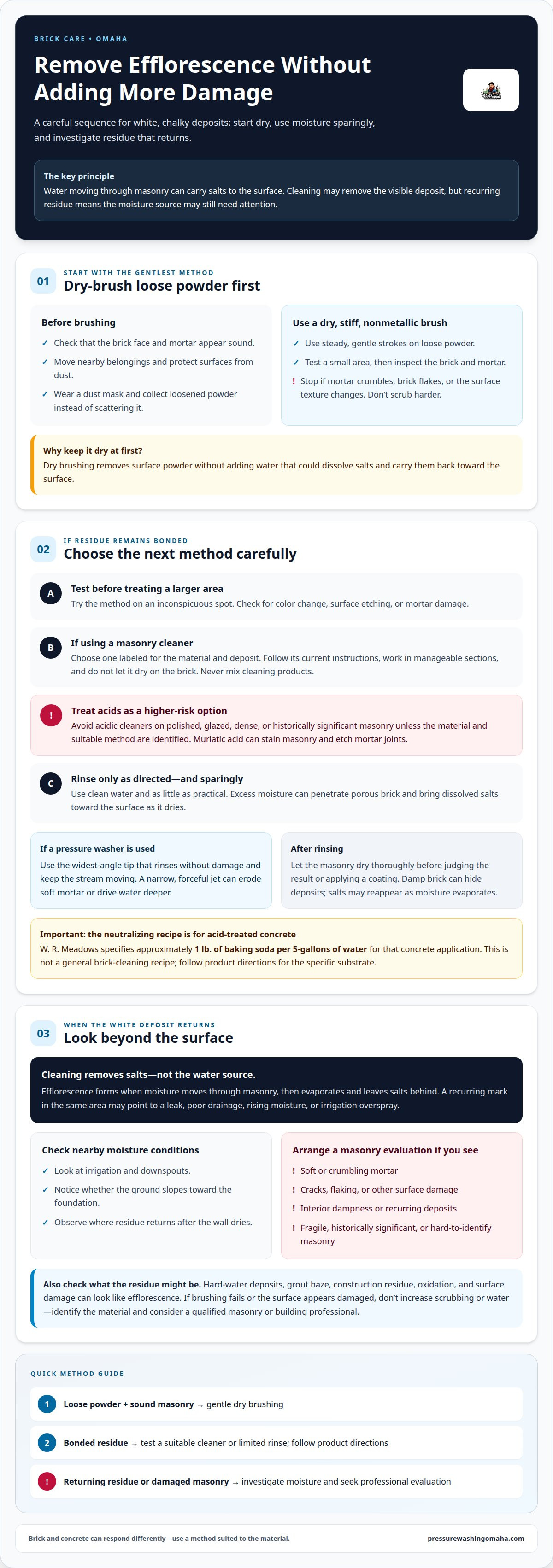
Efflorescence removal from brick in Omaha starts with identifying the white, chalky deposit and removing it without adding moisture or harming the masonry. A dry, stiff, nonmetallic brush is often the best first step when powder is loose and the brick and mortar are sound. This guide explains when brushing may be enough, why rinsing and cleaners require care, and when to seek a masonry evaluation.
Key Takeaways
- Start with a dry, stiff nonmetallic brush for loose, powdery deposits before considering a rinse or cleaner.
- Use water sparingly: excess moisture can carry more salts through the brick and leave new deposits as it dries.
- Follow cleaner instructions carefully, test an inconspicuous area, and never mix cleaning products.
- Recurring residue can point to ongoing moisture movement, so cleaning alone may not address the cause.
- Soft mortar, spalling, cracks, or interior dampness are signs that the masonry needs professional evaluation.
1. Efflorescence removal with a stiff brush
Efflorescence appears as white or light-gray powder after moisture moves through masonry and evaporates, leaving salts behind. Start with a dry, stiff, nonmetallic brush if the deposit is loose and the brick face and mortar remain sound. Gentle dry brushing removes surface powder without adding water, which can dissolve salts and carry them back toward the surface.
Use dry brushing for powder that comes away with gentle strokes. Consider water or a masonry cleaner only if residue remains bonded, and choose a method suited to the brick. If brushing does not work or the surface looks damaged, do not scrub harder. Hard-water deposits, grout haze, construction residue, oxidation, and surface damage can look like efflorescence.
Prepare the area before you begin. Move nearby belongings, protect surfaces from dust, and wear a dust mask while brushing. Collect loosened powder rather than scattering it across a walkway or planting bed. A nonmetallic brush helps prevent scratches from metal bristles and avoids leaving marks that could be mistaken for stains.
Test the method on a small area first. Use steady, gentle strokes, then inspect the brick face and mortar joints before continuing. If powder lifts easily from sound brick, the same approach may work across the affected patch. Stop if mortar crumbles, brick flakes, or the surface texture changes. These signs call for an assessment, not harder scrubbing.
Collect loose powder with a suitable vacuum or careful cleanup. Do not immediately hose down the wall, because added water may move remaining salts through porous brick. If residue persists, identify the material and consider whether a controlled rinse or suitable cleaner is appropriate. Take special care with acidic products on polished, glazed, dense, or historically significant masonry.
As you prepare the area, look for nearby sources of moisture. Check irrigation, downspouts, and whether the ground slopes toward the foundation. The U.S. Environmental Protection Agency advises promptly fixing water problems or leaks to address moisture intrusion. Brushing removes visible deposits, but it cannot stop water entering through a leak or poor drainage.
If the work area includes a concrete landing, the adjoining surface may need a separate concrete cleaning approach. Brick and concrete can respond differently to cleaning, so don’t assume one method suits both. On brick, recurring deposits, soft mortar, cracks, or flaking warrant evaluation by a qualified masonry or building professional before further cleaning.
2. Using cleaners, neutralizing rinses, and thorough rinsing
If dry brushing leaves bonded residue, a masonry cleaner may help, but the brick type matters. Test the method in a small, inconspicuous spot first. Check for color changes, surface etching, or mortar damage before treating a larger area. A test patch shows how that specific masonry responds, which is particularly useful when a wall includes different brick batches or repaired joints.
Choose a cleaner labeled for the material and deposit, then follow its current mixing and application instructions. Do not let the product dry on the brick, since dried cleaner can leave residue or additional marks. Work in manageable sections so you can monitor the surface and remove the product as directed. Never mix cleaning products, even if one seems ineffective.
Acidic cleaners require extra care. Avoid them on polished, glazed, dense, or historically significant masonry unless the material and suitable method have been identified. Acid can alter a vulnerable surface, and an unsuitable cleaner may cause lasting color or texture changes. Muriatic acid is particularly risky because it can stain masonry and etch mortar joints.
Rinse away cleaner residue with clean water as directed, using as little water as practical. Excess water can penetrate porous brick and carry dissolved salts toward the surface as it dries. If a pressure washer is used, choose the widest-angle tip that rinses without damaging the masonry. Keep the stream moving: a narrow, forceful jet can erode soft mortar or drive water deeper.
Some acid-treated concrete requires a separate neutralizing step. According to W. R. Meadows, its baking soda solution for that application is approximately 1 lb. of baking soda per 5-gallons of water. This recipe applies to acid-treated concrete, not every brick-cleaning job. Follow the product directions for the specific substrate, neutralization, and final rinse rather than transferring a concrete procedure to brick.
After rinsing, let the masonry dry thoroughly before judging the result or applying a coating. Damp brick can hide remaining deposits, and salts may reappear as moisture evaporates. Once dry, inspect the test patch and surrounding mortar. If residue returns, note its location and pattern: deposits concentrated near a joint can help show where moisture is moving.
A cleaner that removes residue from sound brick may still discolor an adjacent mortar joint. That is why testing and inspecting the surface after it dries matter. Record the cleaner and area treated so you can compare the result if considering another method. If the surface is fragile, historically significant, or difficult to identify, have a qualified masonry professional assess it before chemical treatment.
3. When recurring or severe masonry problems need professional evaluation
Efflorescence forms when water dissolves salts inside brick, mortar, concrete, or absorbent stone. As the water moves outward and evaporates, it leaves pale deposits on the surface. In cement-containing materials, migrating salts can also react with carbon dioxide in the air to form calcium carbonate. The residue indicates that moisture has moved through the masonry, even if the wall now looks dry.
Recurring deposits deserve attention because cleaning removes salts, not their water source. A mark that returns in the same area may indicate a leak, poor drainage, rising moisture, or irrigation overspray. Omaha's seasonal freeze-thaw conditions can worsen damage when water and salts remain in masonry. Salts trapped below the surface can contribute to spalling, and repeated freezing and thawing accelerates the process in northern climates.
Seek a qualified masonry or building professional if heavy deposits keep returning, mortar feels soft, brick faces flake, cracks widen, or interior walls feel damp. These signs call for more than surface cleaning. Powder on sound brick is different from a loose, spalling face with crumbling joints. An evaluation can distinguish salt deposits from damage and determine whether the wall needs repair.
For Omaha property owners, brick cleaning and masonry repair are separate needs. A cleaning service can address surface deposits, while a qualified masonry or building professional evaluates soft mortar, cracks, spalling, and water entry. Match the next step to the condition: residue alone calls for a cleaning assessment; failing joints or damaged brick need repair evaluation.
Muriatic acid is not a safe shortcut for brick or mortar. It can stain masonry, etch mortar joints, and contribute to deterioration by increasing water penetration. A damaged joint can admit more moisture, repeating the cycle that brings salts to the surface. Avoid muriatic acid, especially if mortar is already weak or brick is deteriorating.
Water intrusion requires a fix that addresses its source. Correct leaks, redirect irrigation overspray, improve runoff, and grade soil so water moves away from the foundation. The U.S. Environmental Protection Agency advises promptly fixing water problems or leaks to address moisture intrusion. Cleaning may remove remaining deposits afterward, but it cannot replace drainage or building repairs.
After addressing the source, inspect the wall again as it dries. If efflorescence continues alongside damp interiors, spreading cracks, or loose mortar, arrange a professional evaluation before further chemical cleaning. A breathable treatment cannot overcome hydrostatic pressure or a permanently wet substrate, so sealing alone does not stop water entry.
4. Efflorescence removal with a water rinse
A water rinse can remove loose salts after dry deposits are brushed away. It can also move dissolved salts through the masonry, leaving fresh white marks as the wall dries. The amount of water and how it is applied both matter. A controlled rinse may suit a small patch of residue on sound brick; a saturated wall or soft mortar calls for greater caution.
Begin with the least water needed to clear the surface. Apply a gentle, even rinse rather than holding a stream against a joint. Work in manageable areas and watch where runoff goes. If water pools at the wall base or enters a crack, stop and address the problem instead of continuing to soak the brick.
A pressure washer adds force as well as water, so it can damage brick and mortar. If using one, choose the widest-angle tip that cleans without harming the surface, and keep the stream moving. A concentrated jet can erode soft mortar, drive water deeper into porous brick, or spread dissolved salts. If a joint starts shedding grains under the spray, the force is too strong for that masonry.
Rinsing does not solve the cause of recurring dampness. A wall below a leaking downspout may look cleaner after washing, then show deposits again as it dries. Check nearby drainage and irrigation before treating the same area repeatedly. Otherwise, each rinse can add moisture while leaving the underlying source untouched.
Use cleaning products only as their current instructions direct, and do not let them dry on brick. Remove cleaner residue with clean water as directed. Do not combine products or improvise a neutralizing rinse if the product instructions do not call for one. On stained or fragile surfaces, test the method in an inconspicuous spot before treating the wall.
Let the masonry dry after rinsing before judging the result. Fresh deposits can appear as water evaporates, so a bright, wet wall does not prove the salts are gone. Once dry, compare the same area and check the mortar joints and lower courses where runoff may collect. If the white film returns, avoid repeated rinsing and investigate moisture movement.
Warm, dry weather is preferable for removal because the surface can dry after treatment. Avoid rinsing when rain is expected to keep the wall wet or when freezing conditions could affect damp masonry. For soft, damaged, or historically significant brick, have a qualified masonry professional determine the safest method before applying water or chemicals.
5. How to remove efflorescence from brick safely, step by step?
Safe brick cleaning starts by limiting moisture and choosing a method that suits the masonry. Loose deposits may come away with dry brushing, while bonded residue or weakened joints need more care. Follow these steps in order, and do not use chemicals or pressure on fragile brick without first assessing the surface.
- Find and address the water source. Look for leaks, irrigation overspray, blocked drainage, or soil sloping toward the wall. Cleaning before fixing ongoing moisture can leave fresh deposits as the brick dries. If water enters through damaged masonry, arrange an evaluation before washing.
- Choose suitable conditions. Plan the work for warm, dry weather, when the brick can dry afterward. Rain may keep the wall wet and move salts through the surface again. Avoid cleaning masonry that is saturated or has soft mortar and loose brick faces.
- Protect the area and inspect the surface. Move nearby items, contain dust and runoff, and wear a dust mask for dry deposits. Check the brick face, mortar joints, and previous coatings. Remove any curing and sealing compound thoroughly before treatment, since it can interfere with cleaning.
- Start with the least aggressive method. Brush dry, powdery residue with a stiff nonmetallic brush, then collect the loosened material. If salts remain, test a suitable method in an inconspicuous area. Inspect the patch after it dries for color, texture, or mortar changes.
- Use water sparingly if rinsing is appropriate. Apply a light rinse rather than soaking the wall. A pressure washer can drive water deeper, damage soft mortar, or spread dissolved salts. If used, select the widest-angle tip that cleans without harming the surface, and keep the stream moving.
- Handle chemical treatment carefully. Follow the cleaner’s directions for mixing, application, and rinsing. Keep products from drying on the masonry, never mix cleaners, and avoid muriatic acid on brick or mortar. Acid-treatment runoff requires collection and disposal in accordance with applicable regulations.
- Let the wall dry and inspect it again. Check the brick after thorough drying, since deposits may reappear as moisture evaporates. If residue returns or the wall shows cracking, spalling, soft mortar, or interior dampness, have a qualified masonry or building professional evaluate it.
No Pressure Power Washing
No Pressure Power Washing helps Omaha property owners with exterior cleaning, including house washing and concrete cleaning. Efflorescence is a salt deposit linked to moisture movement, so removing surface residue alone will not fix an ongoing water problem. If your project also involves grime on siding, a deck, or a driveway, the right method depends on the surface and its condition.
For brick with recurring deposits, soft mortar, or spalling, washing should not replace an evaluation of the masonry or its moisture source. No Pressure Power Washing also offers deck cleaning and driveway cleaning for other exterior surfaces. Contact the company to discuss your exterior cleaning needs.
Choose the Next Step for Your Brick
Let the wall's condition guide your next step. If the deposit returns, address the pattern as a sign of moisture movement rather than simply repeating the same cleaning method. For efflorescence removal from brick in Omaha, protect the masonry by choosing an approach that suits both the surface and the source of dampness.
No Pressure Power Washing can help with exterior cleaning around your property, including house washing, deck cleaning, and driveway cleaning. Brick with soft mortar, cracks, or spalling needs masonry evaluation rather than washing alone. Describe what you see and where it appears to focus the discussion on the right kind of help.
A careful next step can help protect the character and condition of your home's exterior.
Frequently Asked Questions
What is efflorescence?
Efflorescence is a surface deposit of salts left behind as moisture evaporates from porous materials. On a brick garden wall, it may appear as a white, powdery haze, often concentrated near joints or damp areas. The deposit itself is usually different from biological growth, but appearance alone cannot confirm the cause. Hard-water marks, construction residue, and surface damage can look similar, so check the material before choosing a cleaning method.
Can I seal directly over a white deposit?
No. Do not apply sealer over visible deposits. The masonry needs to be clean, dry, stable, and compatible with the specific product. Trapped salts or moisture can interfere with the finish. For example, dense brick that absorbs little water may reject a penetrating sealer and leave residue. Assess how much the surface absorbs and test the product in an inconspicuous spot before sealing.
Why did the white haze come back?
The haze can return if moisture continues moving through the brick and carries dissolved salts to the surface. A cleaned wall beside a leaking downspout, damp soil, or sprinkler overspray may show deposits again as it dries. Note where the marks reappear: a band near the base may point to a different moisture path than a patch beneath a roof edge. Repeated cleaning alone will not stop the source.
What causes efflorescence on brick, and how can it be identified?
Efflorescence develops when water dissolves salts within brick or mortar, carries them outward, and evaporates. A fresh deposit often looks white or light gray and feels powdery, but lookalikes include hard-water deposits, grout haze, and construction residue. A dry, nonmetallic brush can help assess loose powder on sound masonry. If it remains bonded or the surface changes, do not assume the mark is salt.
Which cleaners remove brick efflorescence without damaging mortar or masonry?
No cleaner is safe for every brick and mortar combination. Choose a product labeled for the material, follow its current mixing and application instructions, and test an inconspicuous patch first. Avoid muriatic acid, which can stain masonry and etch mortar joints. Chemical cleaning of historic, glazed, polished, or fragile materials requires an assessment of the specific substrate. Never combine cleaners or let a product dry on the wall.
What safety precautions are needed when cleaning efflorescence from brick?
When dry brushing, wear a dust mask and contain loose powder rather than sweeping it into nearby planting beds. Protect adjacent surfaces from cleaner and rinse runoff, and follow product directions for handling and application. Never mix cleaning products. If treatment involves acid, fragile brick, or runoff that needs collection, leave the work to someone equipped to handle the material and disposal safely.
How can recurring efflorescence on brick be prevented?
Reduce the water reaching the masonry: fix leaks, redirect sprinklers, and arrange runoff so it moves away from the wall. Check roof edges, flashing, downspouts, and soil that holds water against the foundation. During construction or repairs, protecting masonry from ground moisture can also limit salt exposure. In Omaha, freeze-thaw conditions make persistent dampness worth addressing rather than repeatedly rinsing away visible residue.
When does efflorescence indicate serious brick, mortar, or foundation damage?
Arrange a qualified masonry or building evaluation if heavy deposits return alongside soft mortar, cracks, flaking brick, spalling, or interior dampness. These signs suggest the issue may go beyond surface residue. Salts can remain in subsurface cracks and voids; moisture and freeze-thaw cycles can cause the brick face to break away. Efflorescence alone does not establish foundation damage, but movement or worsening cracks warrant prompt assessment.


