

The most expensive part of your fleet isn't the fuel or the driver; it's the invisible chemical reaction eating away at your undercarriages right now. While many operators view a clean truck as a simple matter of brand aesthetics, the reality in the Great Plains is far more clinical. In Nebraska, professional washing isn't a luxury. It's a fundamental preservation protocol designed to neutralize the aggressive magnesium chloride and road salts that compromise structural integrity. If you've ever faced a failed DOT inspection because of grime-covered reflectors or grease buildup, you know that neglect carries a heavy price tag.
We understand that your vehicles are the lifeblood of your business, and keeping them on the road requires more than just a garden hose. This guide explores how specialized fleet washing services nebraska protect your bottom line by extending vehicle lifecycles and ensuring compliance with the latest 2026 DWEE wastewater regulations. You'll discover the specific methodology used to combat corrosion, the impact of Legislative Bill 759 on your environmental obligations, and how mobile on-site care eliminates the costly employee downtime associated with traditional off-site washes.
Key Takeaways
- Understand why simple rinsing fails to stop the chemical oxidation caused by Nebraska's winter road salts and how professional neutralization preserves your undercarriage.
- Analyze the "Downtime Deficit" to see how mobile fleet washing services nebraska save significant labor costs compared to sending drivers to off-site wash bays.
- Navigate the 2026 DWEE wastewater regulations and learn how professional cleaning ensures your business remains compliant with the latest environmental laws.
- Discover how to integrate a customized wash schedule into your existing preventative maintenance routine to extend the operational life of every vehicle in your fleet.
The Hidden Cost of Nebraska Road Grime on Commercial Fleets
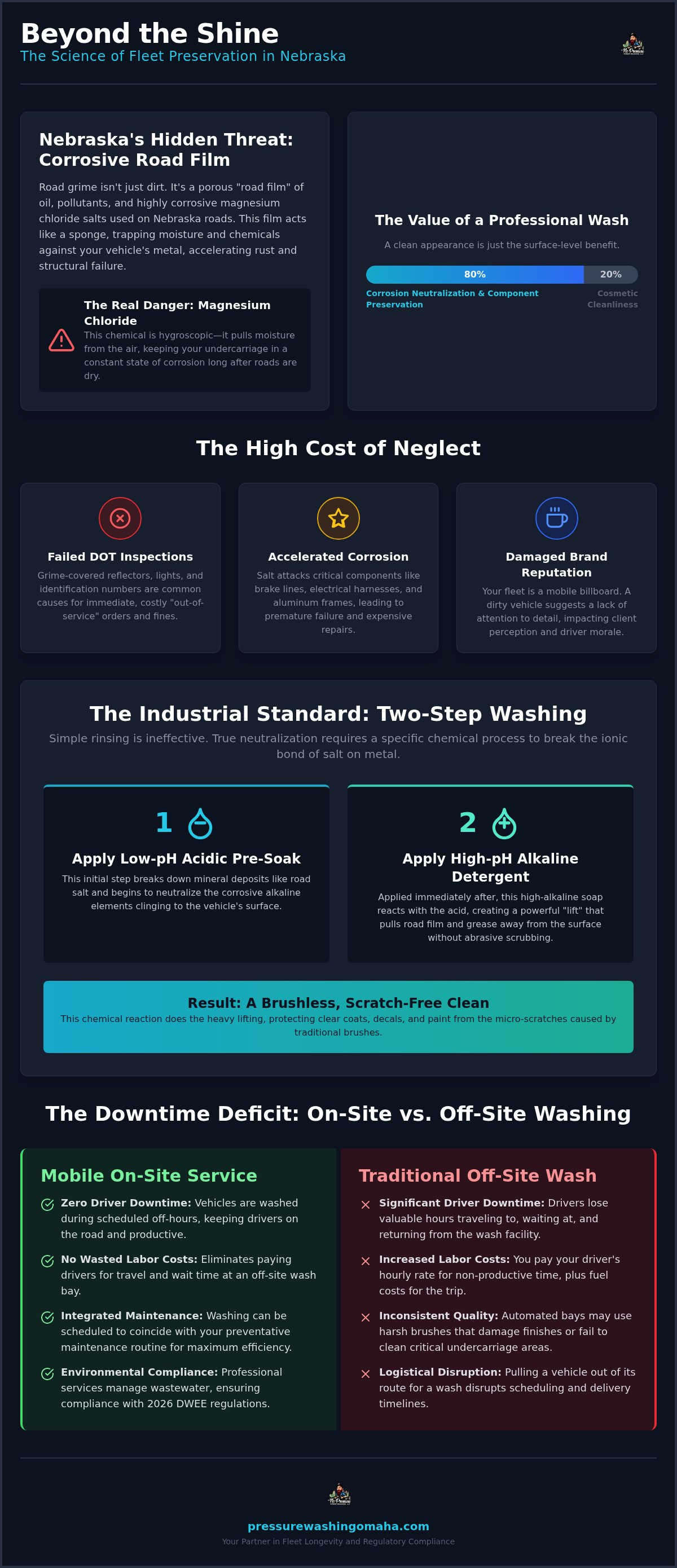
Many Nebraska fleet managers view washing as a cosmetic expense, but visual cleanliness accounts for only 20% of the value provided by professional maintenance. The real danger lies in what you can't see. Road grime isn't just dirt; it's a porous layer of "road film" composed of oil, rubber particles, and industrial pollutants. This film acts like a sponge, trapping moisture and chemicals against your vehicle's metal surfaces. Over time, this constant contact accelerates oxidation, leading to structural failures and costly repairs that could have been avoided with consistent fleet washing services nebraska.
Maintaining a clean fleet is also a prerequisite for regulatory compliance. The DOT and FMCSA require that commercial vehicles remain clean enough to ensure that lights, reflective surfaces, and identification numbers are clearly visible. A layer of winter salt doesn't just look bad; it can lead to immediate inspection failures. When your equipment is clean, inspectors see a company that prioritizes maintenance, which often leads to smoother interactions and fewer deep-dive scrutinies of your logs and hardware.
The Corrosive Threat of Magnesium Chloride and Salt
Nebraska's Department of Transportation often utilizes magnesium chloride brines because they effectively lower the freezing point of water on highways. While excellent for safety, this chemical is highly hygroscopic, meaning it continues to pull moisture from the air even after the roads are dry. This constant moisture cycle accelerates corrosion of vehicles, specifically targeting sensitive components like electrical harnesses, brake lines, and aluminum fuel tanks. Professional washing uses specific pressure and angles to reach these critical hidden points. Without specialized equipment, standard rinsing often pushes these salts deeper into the chassis rather than removing them.
Brand Reputation and the 'Mobile Billboard' Effect
Your trucks are moving billboards for your company's standards. In cities like Omaha, Papillion, and Elkhorn, a salt-streaked semi or a grime-covered delivery van sends a subtle message about your attention to detail. It's difficult to convince a client of your precision if your equipment looks neglected. This logic extends to your physical location as well, where services like house washing services or commercial building cleaning maintain your professional image. Beyond external perception, clean equipment significantly impacts driver morale. A driver who takes pride in a well-maintained rig is more likely to perform thorough pre-trip inspections and treat the equipment with care. This proactive mindset is often the difference between a passed DOT inspection and a costly "out-of-service" order.
The Technical Science of Professional Fleet Washing
Effective vehicle maintenance in the Great Plains requires more than a high-pressure nozzle and some soap. Professional fleet washing services nebraska rely on a specific chemical sequence to achieve true salt neutralization. When the Nebraska Department of Transportation advises you to Prepare Your Vehicle for Winter, they're highlighting the severity of the elements your trucks face daily. Standard rinsing often fails because it doesn't address the ionic bond that road salts form with metal surfaces. True neutralization involves breaking that bond at a molecular level, preventing the corrosive cycle from continuing even after the truck looks dry.
Two-Step Washing: The Industrial Standard
Our methodology utilizes an industrial "two-step" process that eliminates the need for abrasive scrubbing. This involves applying a low-pH acidic pre-soak followed immediately by a high-pH alkaline detergent. The resulting chemical reaction creates a "lift" that pulls road film away from the surface. This brushless approach is critical for preserving the clear coats and decals on modern fleet assets, as it prevents the micro-scratches often caused by dirty brushes. We also calibrate water temperature based on the specific soil type. While cold water is sufficient for light dust, we utilize heated water for heavy equipment cleaning to emulsify stubborn grease and hydraulic fluids that cold water simply can't touch.
Precision in pressure is just as vital as chemistry. Blasting a delicate radiator or an electrical sensor with excessive PSI can cause more damage than the salt itself. We calibrate our equipment to provide the exact force needed to dislodge debris without compromising the integrity of seals or gaskets. This meticulousness ensures that every wash cycle extends the life of your components rather than wearing them down.
Biodegradable Detergents and EPA Compliance
Environmental responsibility is a core value for local businesses, not just a regulatory hurdle. We use biodegradable, non-toxic detergents that comply with EPA standards and the 2026 Nebraska Legislative Bill 759 regarding clean water regulation. These surfactants are engineered to surround oil and grease molecules, suspending them in the wash water so they can be properly reclaimed or filtered. This process ensures that while we're protecting your trucks, we're also protecting the local Omaha watershed from hazardous runoff.
Investing in technical fleet washing services nebraska ensures your company meets these strict environmental benchmarks without sacrificing cleaning performance. If you have questions about how these non-toxic solutions perform against tough road grime, you can reach out for a technical consultation to discuss your fleet's specific needs and regulatory requirements.
Case Study: Onsite Mobile Washing vs. Traditional Truck Washes
For many operations in the Omaha metro area, the decision between a drive-through truck wash and mobile fleet washing services nebraska comes down to a misunderstanding of total cost. While the line item for a single wash might seem comparable, the "Downtime Deficit" tells a different story. When a driver takes a rig to an off-site wash bay, you're paying for fuel, wear and tear, and most importantly, the driver's hourly rate while they sit in a queue. This is non-productive time that directly eats into your profit margins.
Consider a real-world scenario we encountered with a 10-vehicle delivery fleet based in Papillion. Previously, drivers were responsible for taking their vehicles to a local wash once a week. Between the round trip and the wait time, each vehicle averaged 90 minutes of non-productive time. By switching to our scheduled on-site mobile service, that company reclaimed over 15 man-hours every single week. This transition allowed their team to focus on deliveries rather than logistics, effectively paying for the service through increased productivity alone.
The ROI of On-Site Convenience
Mobile rigs bring professional-grade power directly to your lot in Elkhorn or Gretna, eliminating the liability risks associated with extra miles on the road. When you analyze the per-unit cost, the savings are clear. Nebraska’s minimum wage is $15.00 per hour as of January 2026, but the actual cost of a skilled driver is significantly higher. Paying that rate for someone to sit in a wash line is a drain on resources. This is especially true for construction firms requiring heavy equipment cleaning, where transporting machinery just for a wash is logistically impossible and prohibitively expensive.
Quality Control and Accountability
Automated truck washes are designed for speed, not detail. These systems often miss critical areas like the fifth wheel, inner rims, and the back side of the chassis where corrosive salts accumulate. A dedicated specialist provides a level of accountability that machines can't match. We follow the Federal Motor Carrier Safety Administration regulations regarding systematic maintenance, ensuring that our cleaning process supports your required safety inspections. By maintaining a consistent digital trail of these cleanings, you aren't just preserving the asset; you're building a verifiable maintenance history that significantly boosts the vehicle's resale value when it's time to cycle the fleet.
Developing a Fleet Maintenance Program for Nebraska Businesses
A successful fleet maintenance program in the Great Plains requires a shift in perspective. Instead of treating washing as a reaction to a dirty truck, top-tier operators view it as a scheduled component of their preventative maintenance routine. Coordinating your fleet washing services nebraska with existing oil changes or safety inspections ensures that your equipment is clean when it matters most: during mechanical assessments. When a technician doesn't have to scrape through an inch of road grime to find a leak, your shop efficiency improves and your labor costs decrease. Budgeting for these services should be categorized under capital preservation rather than janitorial. By investing in the regular removal of corrosive agents, you're effectively deferring the massive capital expenditure of premature vehicle replacement.
Seasonal Adjustments: Winter vs. Summer Needs
Nebraska's climate dictates a variable service schedule. From November to March, bi-weekly salt neutralization is the industrial standard for high-mileage fleets. This frequency is necessary to combat the aggressive magnesium chloride brines used on our highways before they can pit metal surfaces. During the summer months, the focus shifts to removing insect remains and biological debris. These substances contain acids that can etch paint and clear coats if left in the sun. To keep your facility as clean as your trucks, we recommend periodic concrete cleaning for your loading docks and terminals. This prevents heavy oils and salt residues from being tracked back onto your freshly washed chassis.
Regulatory Compliance and Wastewater Recovery
Environmental stewardship is a legal obligation for businesses in Omaha and Bellevue. Under the Clean Water Act and recent updates in Nebraska Legislative Bill 759, it's illegal to discharge untreated wash water into storm drains. Professional services manage this by utilizing specialized containment and reclamation systems. This protects our local Nebraska waterways from petroleum and heavy metal runoff. We also provide the necessary documentation to support your ISO or environmental certifications. This digital trail proves your company's commitment to regulatory compliance and provides peace of mind during municipal audits of your facility's wastewater management practices.
No Pressure Power Washing: Your Partner in Fleet Longevity
Choosing a provider for fleet washing services nebraska requires more than just finding someone with a mobile rig. It requires a partner who understands the long-term implications of every wash cycle. With over 30 years of experience in the Omaha metro area, No Pressure Power Washing has refined a methodology that prioritizes asset preservation over sheer force. Our name isn't just a marketing slogan; it's our core philosophy. We rely on sophisticated, non-toxic chemistry and specialized detergents to lift road film and neutralize salts, rather than relying on high-PSI blasting that can strip paint, damage sensitive electronics, or force water into sealed bearings.
We recognize that every fleet is unique. A delivery van fleet in an urban setting faces different environmental stressors than heavy agricultural machinery operating in rural Wahoo. Our approach is never one-size-fits-all. We develop customized service plans tailored to your specific assets, ensuring that each vehicle receives the precise level of care it needs to stay on the road longer. This meticulous attention to detail is what allows us to serve as a "trusted guardian" for your commercial investments, treating your equipment with the same conscientiousness we would our own.
Service Area and Local Commitment
Our roots are deep in the Nebraska soil. We are a locally owned and operated business, which means we're directly accountable to the community we serve. We provide comprehensive mobile coverage across the greater Omaha metro, including Bennington, Valley, and Wahoo. Being local means we understand the specific challenges of our regional environment, from the humidity of our summers to the aggressive brines of our winters. Beyond standard cleaning, we offer specialized graffiti removal to protect your brand's image on the road. If your trailers are tagged, it's more than an eyesore; it's a threat to your professional reputation that requires immediate, expert attention.
Next Steps: Securing Your Fleet's Future
Transitioning to a professional maintenance program is a straightforward process designed to minimize disruption to your operations. We often recommend a pilot wash for a small segment of your fleet. This allows you to witness the "No Pressure" difference firsthand and see how our chemical-led cleaning restores your equipment's appearance without the risks of high-pressure damage. Once you see the results, we can establish a recurring maintenance schedule that fits naturally into your existing workflow, ensuring your assets remain protected year-round. Protecting your fleet is an investment in your company's future, and we are here to provide the expert guidance you need.
Protecting Your Commercial Investment for the Long Haul
Professional maintenance is a strategic protocol for extending the operational lifespan of your vehicles. We have explored how neutralizing aggressive road salts and managing road film prevents the corrosive damage that leads to premature mechanical failure and DOT inspection issues. Utilizing specialized fleet washing services nebraska ensures your company remains compliant with 2026 environmental regulations while eliminating the hidden labor costs of driver downtime.
No Pressure Power Washing provides the peace of mind that comes with 30+ years of Omaha-area experience. Our team utilizes biodegradable, eco-friendly solutions and operates as a fully insured local business, ensuring your property and vehicles are handled with meticulous care. We take pride in our role as a trusted guardian of your assets, focusing on quality and safety over high-volume speed.
Your fleet is the face of your business and a critical commercial investment. Taking a proactive approach to preservation today ensures your trucks remain reliable, compliant, and professional for the many miles ahead.
Frequently Asked Questions
How often should I have my Nebraska fleet washed during the winter?
High-mileage fleets should ideally be washed every two weeks during the winter months. This frequency is necessary to prevent magnesium chloride from pulling moisture from the air and continuously corroding your chassis. For vehicles with lower mileage or those that stay primarily in the Omaha metro, a monthly schedule may suffice. Consistent washing is the only way to disrupt the chemical oxidation process that eats away at your undercarriage.
Is mobile fleet washing environmentally safe in residential areas like Elkhorn?
Yes, our mobile services are designed to be environmentally safe for use in residential areas like Elkhorn and Papillion. We utilize non-toxic, biodegradable cleaning agents that safely break down road film without harming local landscaping or ecosystems. Additionally, we employ specialized wastewater reclamation methods to ensure that all runoff is captured and managed in strict accordance with 2026 Nebraska environmental regulations and clean water laws.
What is the difference between a standard truck wash and professional salt neutralization?
Standard truck washes typically rely on high-pressure water to remove surface dirt, while professional salt neutralization uses specialized chemistry to break the ionic bond between road salts and metal. Rinsing alone often leaves a microscopic layer of salt that continues to corrode the vehicle. Our technical approach to fleet washing services nebraska involves a chemical reaction that completely neutralizes these corrosive agents, providing protection that simple water cannot achieve.
Can professional fleet washing help my trucks pass DOT inspections?
Professional washing is a critical factor in passing DOT and FMCSA inspections. Clean vehicles allow inspectors to clearly see reflective tape, lights, license plates, and DOT numbers, which are primary items on their safety checklists. Beyond visibility, a clean undercarriage makes it easier for your own mechanics to spot hydraulic leaks, cracked frames, or frayed air lines before they become "out-of-service" violations during a roadside inspection.
Do you provide on-site washing for heavy construction equipment in Omaha?
We provide comprehensive on-site heavy equipment cleaning for construction and agricultural machinery throughout Omaha and the surrounding areas. Transporting large excavators or dozers to a wash facility is logistically difficult and expensive. Our mobile rigs bring high-volume water and specialized degreasers directly to your job site or yard. This service is engineered to remove heavy mud and grease, which helps prevent mechanical overheating and extends the life of your seals.
What kind of detergents do you use for fleet and equipment degreasing?
We exclusively use professional-grade, non-toxic, and biodegradable detergents that are specifically engineered for industrial degreasing. These surfactants work by emulsifying petroleum-based road film, oils, and grease, suspending them so they can be easily rinsed away. These solutions are safe for your equipment's paint, decals, and clear coats. They provide a thorough clean while ensuring our fleet washing services nebraska remain compliant with the latest EPA and state environmental standards.
How long does it take to wash a standard semi-truck and trailer on-site?
A standard semi-truck and trailer combination typically takes between 30 and 60 minutes to wash on-site. The exact duration depends on the level of soil buildup and whether specialized degreasing is required for the engine or fifth wheel. Our mobile teams work methodically to ensure every critical area is addressed. This on-site efficiency allows your drivers to remain productive or take their required breaks while we handle the maintenance.
Is there a minimum fleet size required for mobile service in Nebraska?
We don't strictly enforce a massive minimum fleet size, as we prioritize building long-term relationships with local Nebraska businesses of all sizes. Whether you operate a handful of delivery vans in Bennington or a large fleet of tractor-trailers in Valley, we can develop a service plan that fits your logistics. Our goal is to provide personalized, high-quality care that national chains often overlook, ensuring every local asset receives the protection it deserves.


