

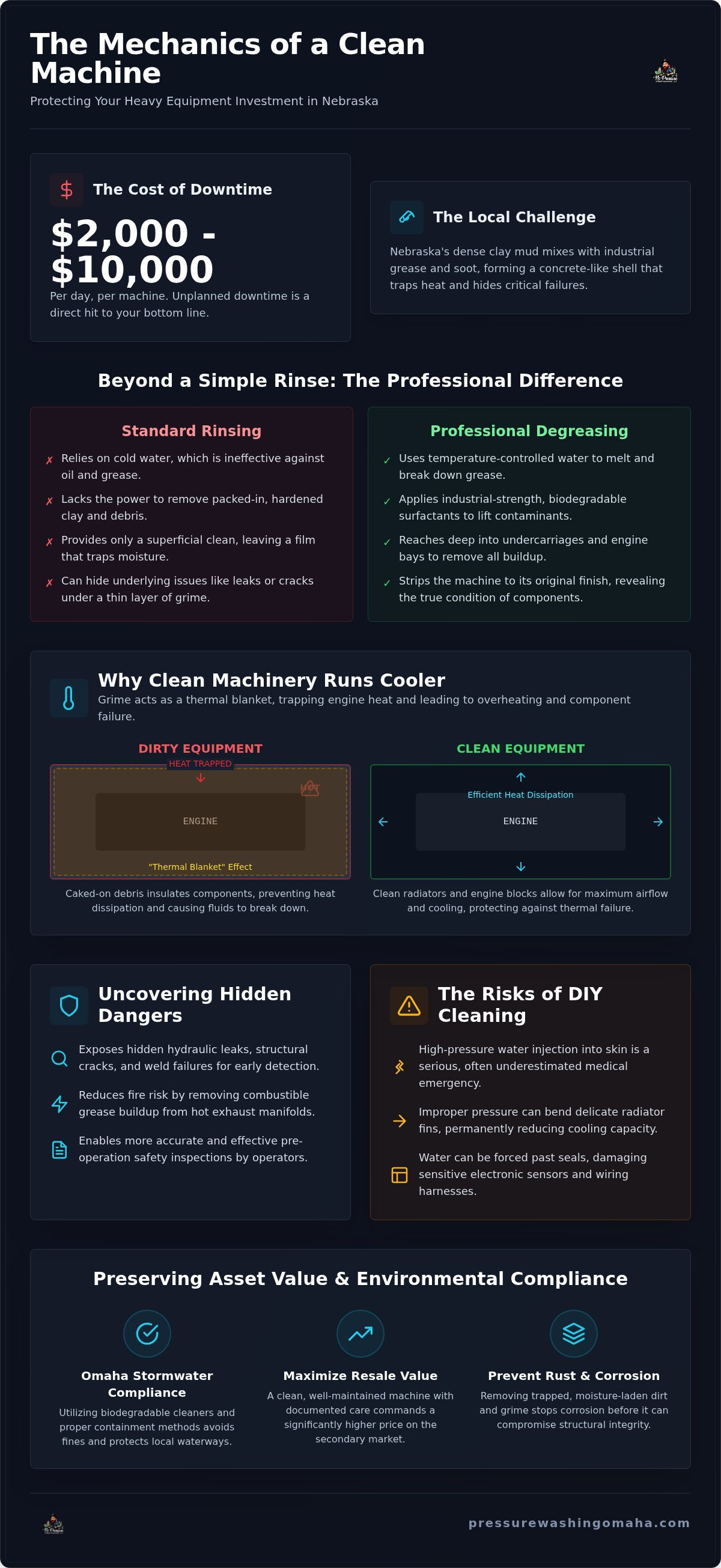
Did you know that unplanned equipment downtime on a construction site can cost between $2,000 and $10,000 per day? In the heart of Nebraska, your machinery faces everything from thick, stubborn clay mud to relentless industrial grease. While it's easy to view a layer of grime as a badge of hard work, professional heavy equipment cleaning omaha is actually a mechanical necessity that protects your investment from overheating and hidden structural failures. You likely already know that keeping your fleet running is a constant battle against the elements and tight project deadlines.
Our goal is to show you how specialized cleaning protects your machinery from thermal failure and ensures your operations remain in full compliance with local environmental standards. We'll take a close look at how meticulous degreasing reveals hidden cracks or leaks, the importance of adhering to the Omaha Municipal Code regarding stormwater runoff, and the specific ways meticulous maintenance preserves your equipment’s long-term value. This isn't just about a clean machine; it's about the peace of mind that comes from knowing your investment is protected by local experts who understand the unique challenges of our region.
Key Takeaways
- Learn how professional heavy equipment cleaning omaha utilizes temperature-controlled water and industrial degreasers to remove packed-in clay that standard pressure washers often miss.
- Discover why removing debris from radiator fins and hydraulic systems is essential for preventing overheating and thermal failure during intense Nebraska summers.
- Understand the safety and mechanical risks of improper cleaning, including the potential for high-pressure water injection injuries and damage to sensitive electronic sensors.
- Find out how to maintain compliance with Omaha’s stormwater runoff regulations by utilizing biodegradable, non-toxic cleaning agents and proper containment methods.
- Explore how regular, professional fleet care prevents rust and preserves the long-term resale value of your industrial assets through meticulous maintenance documentation.
What is Professional Heavy Equipment Cleaning?
Professional heavy equipment cleaning omaha is a specialized maintenance process that goes far beyond a standard wash. It involves high-volume, temperature-controlled water combined with industrial-strength degreasers to strip away the complex layers of grime that accumulate on job sites. Heavy equipment represents a massive capital investment, and maintaining these machines requires a technical understanding of their cooling systems and structural integrity. Heavy equipment cleaning is a preventative maintenance tool for industrial longevity.
A standard garden hose or a consumer-grade pressure washer simply doesn't have the thermal power or flow rate to handle Nebraska clay. Our local soil is notorious for its density. When mixed with hydraulic fluid and diesel soot, it creates a concrete-like shell that traps heat and moisture against sensitive metal. Professional-grade equipment uses heated water to melt grease and specialized nozzles to reach deep into undercarriages and internal cooling components that are otherwise inaccessible.
The Difference Between Rinsing and Degreasing
Rinsing might remove loose dust, but it won't break the molecular bond of industrial lubricants. Oil is hydrophobic, meaning it actively repels water. When we perform heavy equipment cleaning omaha, we use surfactants to lower the surface tension of the water, allowing it to penetrate and lift grease from metal surfaces. This process is vital because "dirt-caking" often hides structural cracks or hydraulic leaks. By stripping the machine down to its original finish, we allow operators to see the true condition of the steel and weld points.
Identifying Key Components that Require Care
Certain areas demand more than a cursory spray. Undercarriages and tracks are prone to grit intrusion, which acts like sandpaper on moving parts. Engine compartments and articulated joints are equally vulnerable. We focus on these critical zones:
- Tracks and undercarriages: Removing packed debris prevents premature wear on rollers, idlers, and drive sprockets.
- Engine bays: Cleaning radiators and oil coolers ensures the machine doesn't overheat during 90-degree Omaha summers.
- Pivot points: Removing old, grit-filled grease before re-lubricating protects the joints from internal scoring.
Clean machines also make pre-operation safety inspections significantly more accurate. It's much easier to spot a fraying hose or a loose bolt when you aren't digging through three inches of mud to find it. This meticulousness is what separates a simple wash from a professional preservation service.
Protecting Your Assets: Why Clean Machinery Runs Cooler
When the Nebraska sun pushes temperatures toward the triple digits, your machinery works under extreme stress. If that equipment is coated in a thick layer of dried mud and industrial grease, it's essentially wearing a thermal blanket. Debris buildup acts as an insulator, trapping heat within engine blocks and hydraulic reservoirs rather than allowing it to dissipate. This trapped heat leads to fluid breakdown and premature component wear. Effective thermal management in industrial engines depends heavily on the surface cleanliness of the block and cooling components.
Beyond performance, safety is a primary concern. Heavy grease accumulation near exhaust manifolds or turbochargers creates a significant fire hazard. It only takes one hydraulic leak or a spray of fuel hitting a hot, grease-caked manifold to start a fire that can destroy a million-dollar asset in minutes. Professional heavy equipment cleaning omaha removes these combustible materials, protecting both your crew and your bottom line. We prioritize the removal of these flammable layers to give you peace of mind on the job site.
Radiator and Cooling System Maintenance
Radiator fin occlusion is a silent killer for heavy engines. When dust and debris pack into the cooling cores, airflow is restricted, forcing fans to run longer and engines to run hotter. While it's tempting to blast these cores with a standard pressure washer, untrained operators often bend the delicate aluminum fins, permanently reducing cooling capacity. Our professional methodology ensures that airflow is restored without compromising the integrity of the cooling core. Considering that an engine overhaul can cost tens of thousands of dollars, routine heavy equipment cleaning omaha is a minor investment in asset protection.
Hydraulic System Preservation
The abrasive nature of Nebraska soil is particularly hard on hydraulic systems. When grit accumulates on hydraulic rods, it acts like sandpaper every time the cylinder retracts, eventually shredding the precision seals. This leads to leaks, lost pressure, and eventually, a total system failure. By keeping these rods and seals clear of abrasive buildup, you significantly extend the interval between expensive hydraulic rebuilds. If you want to ensure your fleet stays operational throughout the busy season, scheduling a professional cleaning is a proactive way to manage your assets. While we perform these services, we also remain mindful of Environmental Protection Agency (EPA) regulations regarding industrial runoff, ensuring your site stays compliant while your machines stay cool.
The Risks of DIY: Why Professional Expertise Matters
Many fleet managers consider assigning heavy equipment cleaning omaha to an entry-level laborer with a rental unit. This is a dangerous oversight. Industrial-grade pressure washers operate at levels that can cause high-pressure water injection injuries. These injuries occur when water penetrates the skin, forcing bacteria and debris deep into tissue. It's a medical emergency that often looks minor initially but can lead to catastrophic tissue damage if not treated by a specialist. Our team at No Pressure Power Washing prioritizes safety because we understand the physical risks involved in handling this specialized equipment.
Beyond human risk, improper technique ruins machines. Blasting water directly into sealed bearings or pivot points forces grit past the seals, effectively turning lubricant into grinding paste. Excessive PSI also strips away anti-corrosion coatings and factory paint, leaving the steel vulnerable to the humid Nebraska climate. We recommend professional intervention for all industrial assets because the cost of a single ruined sensor or bearing far outweighs the price of expert care. Our 30 years of experience has taught us that precision is always more effective than raw power.
Protecting Sensitive Electronics and Sensors
Modern excavators and dozers are packed with GPS receivers and telematics sensors. These components are designed to be weather-resistant, not pressure-proof. Our methodology involves identifying wiring harnesses and control modules before we start, using low-pressure techniques and specialized cleaners to remove grime without saturating delicate electronics. "More pressure" is rarely the right answer for complex machinery. We use a methodical approach to ensure that your monitoring systems remain functional and accurate after the wash is complete.
OSHA Safety and Operator Protection
Proper maintenance is closely tied to OSHA standards for equipment safety. A significant portion of job site accidents involves slips and falls. When we perform fleet washing or equipment degreasing, we pay special attention to steps, handrails, and catwalks. Removing the slick film of hydraulic oil and Nebraska mud makes the machine safer for your operators to climb. Additionally, hiring a professional service transfers the liability and insurance risks away from your business. You get the benefit of a clean machine without the headache of managing the high-risk task yourself, ensuring your crew stays focused on the project at hand.
Omaha Environmental Compliance and Runoff Management
Performing heavy equipment cleaning omaha is more than a maintenance task; it's a matter of legal responsibility. The Omaha Municipal Code, Chapter 32, strictly prohibits the discharge of wash water into the city's storm sewer system. This includes any water containing soaps, detergents, or industrial solvents. Unlike sanitary sewers, storm drains lead directly to local waterways without treatment. If your job site allows greasy runoff to enter these drains, you're in direct violation of local ordinances and the broader EPA Clean Water Act guidelines.
The city takes these violations seriously to protect our shared water resources. For a first violation of the municipal code regarding prohibited discharges, the penalty is $75. This amount increases to $150 for a second offense and $300 for a third. If a business has two prior violations within a 24 month period, the fine jumps to $500. Beyond these financial penalties, a violation can be deemed a misdemeanor, potentially resulting in jail time. Professional cleaning ensures that your business avoids these costly legal headaches by utilizing proper containment and disposal methods.
Biodegradable Solutions for Nebraska Soil
Because so much of the machinery we service is used in Omaha's agricultural and construction sectors, we prioritize the use of biodegradable, non-toxic cleaning agents. These specialized solutions are designed to break down heavy carbon buildup and hydraulic grease without leaching harmful chemicals into the soil. Protecting Nebraska’s groundwater is a core value of our local specialist approach. These eco-friendly degreasers are remarkably effective, lifting the molecular bond of road grime while remaining gentle enough for equipment used in sensitive environments like farms or parks.
Managing On-Site Runoff
Staying compliant during a major equipment wash requires a methodical approach to runoff. We utilize specialized tools such as berms and filtration mats to capture heavy solids and oils before they can travel across a concrete pad or job site. This proactive management aligns with Nebraska DEE standards for industrial waste, ensuring that all wastewater is either contained or diverted to a proper sanitary sewer. By documenting these environmental stewardship practices, we help you maintain a clean record with regulatory bodies while keeping your fleet in top condition.
Maximizing Resale Value with Professional Fleet Care
Upgrading your inventory requires a clear demonstration of asset value to potential buyers. Professional appraisers look for signs of diligent maintenance, and a documented history of heavy equipment cleaning omaha provides exactly that. It proves that you haven't allowed abrasive grit to score hydraulic rods or permitted Nebraska mud to trap moisture against the chassis. For companies managing larger inventories, our fleet washing services ensure every unit in the yard reflects a high standard of mechanical care. In the industrial market, a machine that looks neglected is often assumed to be mechanically suspect, even if the engine hours are low.
Combating Winter Salt and Corrosion
The chemical reaction between Nebraska road salt and industrial steel is aggressive and unrelenting. Sodium chloride and calcium chloride, used heavily on local roads, create an electrolytic environment that accelerates oxidation. If this salt remains trapped in the crevices of an undercarriage through the humid spring months, it leads to deep pitting and structural rust. A thorough post-winter deep clean is the most critical service of the year for any Omaha fleet owner. Our process focuses on neutralizing these salts and removing the briny film that standard rinsing leaves behind. Applying protective inhibitors after this deep clean shields the metal from the elements, ensuring the frame remains solid and free of the rust that typically devalues used machinery in the Midwest.
The No Pressure Power Washing Advantage
With over 30 years of experience serving Omaha, Papillion, and the surrounding metro area, No Pressure Power Washing has built a reputation as a trusted guardian of client property. We don't just wash machines; we preserve them. Our commitment to precision is captured in our guiding principle: "Beyond the Clean: Where Quality Comes First." We take the time to do the job correctly, focusing on the details that high-volume national chains often overlook. Meticulous care isn't just about appearance; it's about protecting the future of your business. Contact No Pressure Power Washing for a free estimate on your heavy equipment to start protecting your long-term investment.
Secure the Future of Your Industrial Fleet
Maintaining a heavy equipment fleet in Nebraska requires more than just a quick rinse at the end of a project. Professional heavy equipment cleaning omaha is a mechanical necessity that prevents thermal failure, protects sensitive electronic sensors, and ensures full compliance with local environmental regulations. By removing corrosive winter salts and caked industrial grease, you're not just improving the look of your machines; you're actively extending their operational lifespan and maximizing their eventual appraisal value.
No Pressure Power Washing is locally owned and operated right here in Nebraska, bringing over 30 years of industry experience to every job site. Our team utilizes 100% biodegradable and non-toxic cleaning solutions to achieve industrial-strength results without compromising the safety of your crew or our local groundwater. We take pride in being the trusted guardian of your most expensive assets, providing the meticulous care needed to keep your operations running smoothly.
Protecting your investment today ensures your machines remain reliable, safe, and profitable for many seasons to come. We look forward to helping you maintain the high standards your business deserves.
Frequently Asked Questions
Is high-pressure washing safe for my equipment's hydraulic seals?
High-pressure washing is safe when performed by an experienced professional who understands proper standoff distances. Blasting seals directly at point-blank range can force water and grit past the protective barrier, causing internal scoring or seal failure. We use a methodical approach with adjusted pressure settings to ensure grease is removed without compromising the integrity of your machinery's hydraulic system.
How often should heavy construction equipment be professionally cleaned?
Cleaning frequency depends on your specific job site conditions, but a monthly schedule is standard for active Omaha projects. Equipment operating in thick clay or high-grease environments often requires bi-weekly care to prevent debris from caking. Regular maintenance ensures your machinery runs cooler during peak summer heat and makes mandatory pre-operation safety inspections much more effective for your crew.
Can professional cleaning help identify mechanical issues?
Removing layers of packed mud and industrial grease often reveals hidden defects that would otherwise go unnoticed. This includes hairline structural cracks, fraying hydraulic hoses, or slow fluid leaks that are obscured by grime. By stripping the machine down to its original finish, we provide your mechanics with a clear view of the steel and weld points, allowing for proactive repairs.
Does No Pressure Power Washing use eco-friendly chemicals for degreasing?
We exclusively utilize 100% biodegradable and non-toxic cleaning solutions for every project. These industrial-strength agents are specifically formulated to break down heavy carbon buildup and grease while remaining safe for the local environment. Our commitment to environmentally responsible practices ensures that your job site stays compliant with local regulations without sacrificing the quality or speed of the cleaning process.
What areas around Omaha do you provide heavy equipment cleaning for?
We serve the entire Omaha metro area and many surrounding Nebraska communities. Our primary service range includes Papillion, Elkhorn, Gretna, Bennington, Bellevue, Valley, and Wahoo. Being locally owned and operated allows us to respond quickly to your needs throughout these regions. We provide a personalized alternative to impersonal national cleaning chains by focusing on the specific environmental challenges found in our local area.
What happens if industrial grease runoff enters the storm drain?
Discharging wash water into Omaha's storm sewer system violates Municipal Code Chapter 32 and can lead to significant fines. Penalties start at $75 for a first offense and can reach $500 for repeat violations within a 24 month period. Professional heavy equipment cleaning omaha involves using containment methods to ensure your operation remains compliant with city ordinances and broader EPA guidelines regarding industrial wastewater.
Do you clean agricultural equipment like tractors and combines?
We specialize in degreasing and cleaning a wide variety of industrial and agricultural assets. From tractors and combines to excavators and paving equipment, our team understands the unique cooling systems and pivot points of different machinery. Our non-toxic solutions are particularly well-suited for agricultural environments where protecting the soil and local groundwater is a top priority for the long-term health of the land.
How long does a typical heavy equipment cleaning session take?
The duration varies based on the size of the machine and the level of debris accumulation. A standard excavator might take a few hours, while a full fleet of machinery requires a more extensive window. We work methodically to ensure thoroughness, focusing on undercarriages and engine bays where debris often hides. We'll provide a clearer timeframe after assessing the specific condition and quantity of your assets.


