

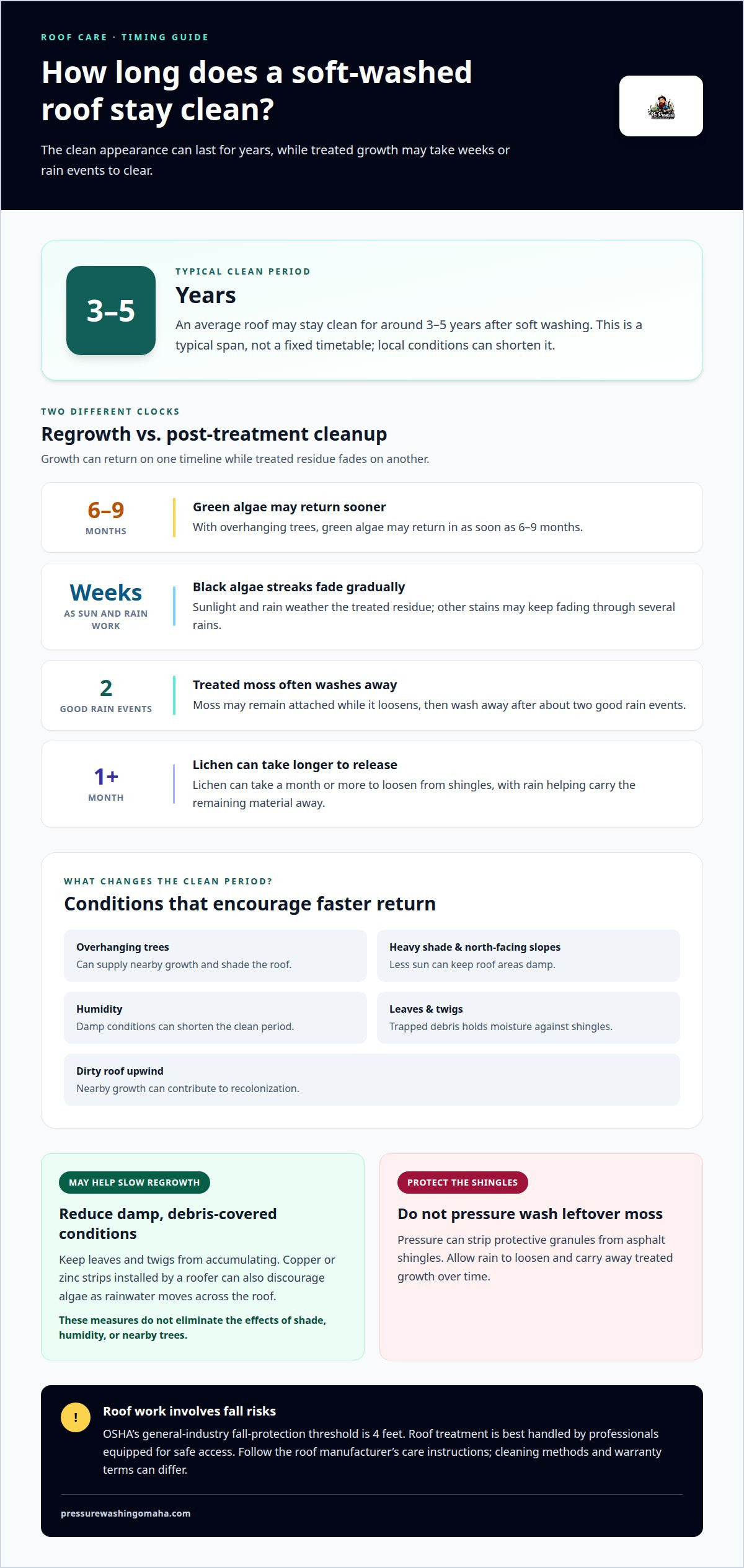
What if a roof looks clean after treatment but the results don’t last as long as you expect? If you’re wondering how long a soft roof wash lasts, an average roof may stay clean for around 3-5 years. That’s a typical span, not a fixed timetable: shade, overhanging trees, humidity, roof type, and organic debris can all affect how quickly discoloration returns.
It’s normal for a roof not to look completely clear right away. Soft washing treats the growth, while rain and time help loosen and remove dead moss and lichen. Knowing what to expect helps you judge the results without mistaking gradual cleanup for a failed treatment.
This article explains what affects how long a roof stays clean and how algae, moss, and lichen clear after treatment. You’ll learn why the roof’s appearance can continue to improve over the following weeks, and which conditions may call for closer attention.
Key Takeaways
- A soft-washed roof may stay clean for around 3-5 years, though local conditions can shorten that span.
- Overhanging trees can allow green algae to return in as soon as 6-9 months; moss generally recolonizes more slowly.
- Black streaks, moss, and lichen don’t always disappear immediately. Sun and rain help the treated growth fade and loosen over time.
- Roof material, shade, humidity, and trapped organic debris all influence how long the results last.
- Avoid pressure washing leftover moss from shingles; rain can loosen and carry away the dead growth without stripping granules.
Soft washed roofs: How long will they stay clean?
A soft-washed roof may stay clean for around 3-5 years, though growth can return sooner. Algae, moss, and lichen also clear at different speeds after treatment.
Black algae streaks fade over weeks as sunlight and rain weather the treated residue. Moss often washes away after two good rain events. Lichen can take a month or more to release from shingles, while other stains may continue fading through several rains.
Roofing guidance varies by manufacturer and warranty. The Asphalt Roofing Manufacturers Association publishes an asphalt-shingle cleaning method using chemical treatment and a low-pressure rinse. Follow the roof manufacturer’s care instructions, since cleaning methods and warranty terms can differ.
Is soft washing safe for asphalt shingles, tile, and metal? A low-pressure approach avoids the force of pressure washing, but the method and treatment must suit the roof material. Tile, metal, and asphalt shingles have different cleaning needs, and bleach requires care around copper components. Damaged or missing shingles need repair, not cleaning.
Algae-resistant shingles may contain copper granules that help discourage algae growth. They can slow staining, but they don’t prevent all regrowth. Roof slope, shade, and nearby trees still affect how quickly algae returns.
Conditions That Speed Algae Return
Conditions that keep a roof damp or supply nearby growth can speed algae recolonization. Overhanging trees, heavy shade, north-facing slopes, humidity, and a dirty roof upwind can shorten the clean period. Leaves and twigs also trap moisture against shingles. With overhanging trees, green algae may return in as soon as 6-9 months, while moss generally takes longer to recolonize than algae.
Delaying Algae and Moss Regrowth
To delay regrowth, reduce damp, debris-covered conditions that support it. Keeping leaves and twigs from accumulating helps limit trapped moisture. Copper or zinc strips installed by a roofer can also discourage algae as rainwater moves across the roof. These measures slow recolonization, but don’t eliminate the effects of shade, humidity, or nearby trees.
For context, an average roof may stay clean around 3-5 years after soft washing, but the conditions above can shorten that span. A shaded roof beneath overhanging branches may show green algae again much sooner than a roof with less exposure.
Separately, the Occupational Safety and Health Administration’s general-industry fall-protection threshold is 4 feet. Roof work involves fall risks, so treatment is best handled by professionals equipped for safe access.
Factors affecting how long a soft wash lasts
A roof’s clean appearance depends on how its surface and surroundings interact after treatment. Rather than treating every stain as the same problem, look at where it appears and how it changes. A patch beneath a tree may have a different cause and timeline than discoloration across an exposed roof slope.
Roof design can create different conditions across a property. Slopes facing different directions receive varying amounts of sun and shade, while nearby branches affect some areas more than others. That variation can explain why one section looks clean while another changes sooner. Assessing each roof plane gives a more useful picture than judging from the driveway alone.
Debris and drainage are connected considerations. Leaves or twigs resting on the roof can hold moisture against the surface, while accumulated material near roof edges may interfere with runoff. Keeping drainage paths clear can help prevent debris from lingering; gutter cleaning addresses buildup in the channels that carry roof runoff away.
Roof condition also affects what a wash can accomplish. Cleaning addresses surface staining and biological growth, not broken or missing shingles. If discoloration appears beside visibly damaged roofing, the issue may need repair rather than another cleaning. Distinguishing surface buildup from physical damage helps prevent expecting a wash to solve the wrong problem.
Past maintenance provides useful context, too. The time since the last cleaning and the amount of growth influence what you see afterward. For example, a roof with a few isolated marks differs from one with growth across several slopes. Consider whether stains reflect the roof’s exposure, accumulated buildup, or a condition beyond cleaning’s scope.
Runoff can carry dirt from roof edges onto nearby siding or hard surfaces. If staining extends down exterior walls, house washing may address that separate buildup. Similarly, dirt deposited where downspouts discharge can affect nearby walkways; concrete cleaning applies to those hard surfaces, not the roof itself.
These distinctions help set realistic expectations for roof maintenance. Note which areas change, whether growth is spreading, and whether damage is present. Those observations help identify returning growth, runoff staining, or a separate surface issue, without treating every mark around the home as the same cleaning problem.
How moss and lichen clear after treatment
Soft washing treats roof growth, but dead material doesn’t always disappear during the cleaning visit. Moss, lichen, and black algae cling differently to roofing, so each can leave visible residue afterward. Rain gradually loosens treated growth, and the roof may continue changing after treatment rather than looking completely clear right away.
Moss often washes away after about two good rain events. Until then, treated moss may remain attached to shingles as it loosens. Avoid pressure washing leftover moss from asphalt shingles, since force can strip protective granules from the surface.
Lichen is typically slower to release than moss. It can take a month or more to loosen from shingles, with rain helping carry away the remaining material. Patches may therefore still be visible after treatment. Their continued presence doesn’t necessarily mean the treatment has failed; the lichen may need more time to detach.
Black algae streaks fade over weeks of sunlight and rain. The change is gradual, not an instant rinse-off. A dark streak that lightens over successive rains follows a different timeline from a moss clump that must loosen and shed.
Patience helps protect the roof surface while this process unfolds. Removing attached residue with pressure washing can damage asphalt-shingle granules, while rain provides natural rinsing. Watch how treated patches change after rainfall. Loosening moss, fading streaks, and gradually releasing lichen each reflect a different stage of cleanup, not one uniform removal process.
Heavy growth may leave visible residue for longer because moss and lichen must release from the roof before rain can carry them away. A few weeks can pass before residue loosens, and several heavy rains may be needed to wash away what remains. The key distinction is between treated growth still shedding and new growth returning. Letting rain remove residue avoids aggressive cleaning that could harm shingles.
Typical duration of a soft-washed roof’s clean appearance
A roof typically stays visibly clean for around 3-5 years after soft washing, though treated discoloration can return as algae recolonizes the surface. Shade, trees, and other surroundings affect how soon this happens. A roof beneath trees may look different sooner than one with open sun exposure.
Roofing material also influences cleaning intervals. Asphalt-shingle roofs generally need soft washing every six to eight years, but visible staining can return before another full cleaning is appropriate. Roof type, condition, and the amount of biological growth help determine whether treatment is suitable.
For example, metal or tile roofs may need washing less often than asphalt shingles. Shade, humidity, and overhanging branches can still encourage growth on any of these surfaces. A shaded slope may develop discoloration while a sunnier section remains clean. Looking at each roof slope separately gives a more useful picture than judging the whole roof from one side.
Rain and sunlight affect what “clean” looks like after treatment. Black algae streaks fade over weeks, while remaining stains can lighten through several rains. Moss and lichen shed on different timelines, so a roof may look cleaner gradually rather than reaching its final appearance immediately after washing. Lingering residue that is still fading does not automatically mean another wash is needed.
Improper washing can harm roofing rather than simply shorten the clean period. Pressure washing leftover moss can strip protective granules from asphalt shingles. Bleach is also incompatible with copper, so roof components containing copper require care during treatment. A method that ignores the roof material or its components risks damage that cleaning cannot fix.
Use the roof’s condition, not a calendar alone, to interpret recurring discoloration. For asphalt shingles, the usual six-to-eight-year interval between soft washes is a reference, not a reason to clean automatically. New black streaks, moss, or lichen can signal returning growth; residue that is gradually fading may still be clearing after treatment. Distinguishing the two helps avoid unnecessary repeat washing and protects the roof surface.
What cleaning solution is used for soft washing roofs, and how long does it take to work?
Roof soft washing uses a roof-appropriate cleaning solution, commonly based on sodium hypochlorite. The concentration and application depend on the roofing material. Asphalt shingles, clay or concrete tile, and metal require different considerations, so a single mix shouldn’t be assumed suitable for every roof. The goal is to treat surface growth without using force as the cleaning mechanism.
For asphalt shingles, operators commonly apply a sodium hypochlorite mix of 3 to 6%. The Asphalt Roofing Manufacturers Association’s published asphalt-roof cleaning method calls for a 15 to 20 minute dwell before a low-pressure rinse. Dwell time gives the treatment time to act. It isn’t a universal setting for every roof, since surface type and treatment instructions matter.
Tile provides a clear example of why material-specific methods matter. The stated soft-wash mix for clay or concrete tile is about 5 to 5.25% sodium hypochlorite. Bare Galvalume, by contrast, calls for about 0.1% sodium hypochlorite followed by thorough rinsing. Those differences make improvised mixing a poor fit for roof work.
So, how quickly does the solution work? For asphalt shingles, the Asphalt Roofing Manufacturers Association method specifies a 15 to 20 minute dwell before rinsing. That describes the treatment period, not necessarily how quickly every stain disappears. The roof’s visible appearance can continue changing as treated material weathers, and roof materials may have different application requirements.
Choosing the right treatment also means accounting for roof components. Bleach and copper are incompatible, so copper features require careful handling during roof cleaning. The same caution applies to selecting a solution for a material that differs from asphalt shingles. A professional can identify the roof surface and components before deciding how to apply and rinse the treatment.
Soft washing involves chemical handling and work at height, so it isn’t a suitable experiment for an untrained homeowner. An incorrectly selected treatment or application can harm roofing or nearby components. A professional can match the approach to the roof and follow the relevant material-specific method instead of using one recipe for every surface.
No Pressure Power Washing: Roof Cleaning
No Pressure Power Washing provides Roof Cleaning for homeowners dealing with roof stains, algae, moss, or lichen. It’s a practical next step when growth becomes noticeable, the roof’s appearance concerns you, or you’re unsure whether staining is ready for treatment. A professional assessment can help distinguish biological growth from roof damage that cleaning won’t repair.
Soft washing is intended to treat organic growth without relying on the force of pressure washing. That distinction matters on asphalt shingles, where excessive pressure can strip protective granules. The correct approach also depends on the roofing material and its condition. Tile, metal, and asphalt shingles have different cleaning considerations, so a treatment should suit the surface rather than follow a single routine.
Timing matters, too. Black streaks may continue fading after treatment, while moss and lichen can take longer to release. A roof that still shows residue shortly after cleaning may be in the gradual shedding stage, not necessarily ready for another wash. Broken or missing shingles, on the other hand, call for repair or replacement rather than cleaning alone.
Roof Cleaning can make sense when discoloration is widespread, growth has accumulated, or the roof needs professional attention. It can also help when you want an informed assessment of whether visible patches are residual material or returning growth. The roof’s material, surrounding shade, debris, and overall condition all affect what cleaning can address and how long the results may remain visible.
Think of the work as part of caring for the whole exterior, not as a promise that stains will never return. Trees, moisture, and roof exposure still influence future growth. The aim is to treat current buildup with an approach suited to the roof while avoiding aggressive pressure that could cause damage. If the roof has structural issues, cleaning isn’t a substitute for repairs.
If roof staining or growth has you considering the next step, contact No Pressure Power Washing to discuss Roof Cleaning.
Choose a practical next step for your roof
Use what you’ve observed on the roof to decide whether cleaning is the right next step. Consider whether the concern is surface staining, returning growth, or visible damage. A professional assessment can help distinguish a cleaning need from a repair issue, so the next decision suits the roof, not just its appearance.
No Pressure Power Washing’s Roof Cleaning service is an option when roof staining or organic growth needs professional attention. The roof’s material and condition guide the appropriate approach. Cleaning can address surface buildup, but it isn’t a substitute for repairing damaged roofing.
Exterior maintenance can also involve other parts of the property. No Pressure Power Washing offers House Washing, Deck Cleaning, and Driveway Cleaning for homeowners addressing buildup on those surfaces.
There’s no need to treat every mark as an urgent problem. Consider the roof’s condition and the kind of growth or staining you see, then choose a sensible next step. A focused discussion can help clarify whether roof cleaning suits your situation.
Thoughtful care starts with understanding what the roof needs.
Frequently Asked Questions
What Is Soft Wash Roof Cleaning?
Soft wash roof cleaning treats roof stains and biological growth with a cleaning solution applied at low pressure. Unlike forceful washing, it relies on the treatment rather than water impact to address buildup. The solution and approach should suit the roofing material. For example, an asphalt-shingle roof and a metal roof can require different treatment considerations, so a professional should assess the surface before cleaning.
How long does a soft wash roof cleaning typically last?
For a practical answer to the question, “How long does a soft roof wash last?”, an average roof may stay clean for around 3-5 years. A roof with open exposure may look clean longer than one beneath dense tree cover. Judge the result by whether new growth is appearing, not only by lingering treated residue. Fading old streaks differ from fresh green growth spreading across a shaded roof slope.
What factors affect how long a soft roof wash stays clean?
Roof material, shade, tree cover, humidity, debris, and nearby growth all affect how long the clean appearance lasts. A north-facing slope beneath branches receives less sun and may stay damp longer than an open, sunny slope. Leaves and twigs can trap moisture on shingles, while a dirty neighboring roof upwind can contribute to recolonization. Roof condition also matters because cleaning cannot fix broken or missing shingles.
How often should a roof be soft washed?
Asphalt-shingle roofs generally need soft washing every six to eight years, but that interval isn’t a schedule for every roof. Exposure and visible growth matter. A shaded roof with heavy debris may show staining sooner, while another roof may not need treatment at that point. Consider the surface condition and distinguish active growth from treated residue still fading after rain.
How long do algae and moss take to return after a roof soft wash?
Green algae may recolonize a roof in as soon as 6-9 months when overhanging trees create favorable conditions. Moss generally takes longer to recolonize than algae. The timing depends partly on shade, moisture, and debris, so distinguish returning growth from material still shedding after treatment. Attached residue that loosens after rain is different from new green patches forming on shingles.
Does roof material affect soft wash results and longevity?
Yes. Metal or tile roofs may need washing less often than asphalt-shingle roofs, and their treatments can differ. Asphalt shingles may contain copper granules designed to help resist algae, but these don’t eliminate the effects of shade or trapped debris. A professional should account for roof material and condition when selecting a treatment, especially where copper components are present.
How can homeowners make roof soft-wash results last longer?
Limit conditions that keep the roof damp by having a roofing professional assess and remove accumulated leaves and twigs when needed; roof access and debris removal can be hazardous. A roofer can install zinc or copper strips where appropriate. Avoid forcing off leftover moss with pressure, which can damage shingle granules. For homeowners asking, “How long does a soft roof wash last on an asphalt roof?”, tree cover, shade, and debris remain important factors to consider when planning maintenance.


