

A stronger blast is not always a better clean. Forceful cleaning can damage deck boards or finishes, while algae often responds to a gentler, material-appropriate approach. If you’re searching for how to clean green algae off deck boards without causing harm, start by identifying the decking material and checking its care instructions.
That green film is more than an eyesore. It can thrive where moisture and shade linger, make boards slippery, and return when damp leaves and debris stay trapped on the surface. Wood and composite decks do not always tolerate the same cleaners or cleaning methods, so it pays to be cautious before treating the whole deck.
This guide explains why algae grows, how to choose a safer approach for wood or composite, and what maintenance can help slow regrowth. When growth is extensive or DIY cleaning feels risky, professional soft washing may be a gentler option. No Pressure Power Washing is locally owned and operated, with over 30 years of experience in the Omaha area. Its soft washing is performed with zero risk of high-pressure damage. The company prioritizes the environment by using biodegradable and non-toxic cleaning agents.
Key Takeaways
- A safe approach to cleaning green algae off deck boards starts with identifying the material and following its care instructions, not reaching for the strongest cleaner.
- Wood and composite decks can need different cleaning methods. Test any permitted cleaner discreetly and follow both its label and the deck manufacturer’s guidance.
- Shade, lingering moisture, and trapped debris can encourage algae to return. Regularly clearing debris can help the deck dry more readily.
- Widespread growth, slippery boards, delicate surfaces, or uncertainty about the deck material are good reasons to consider professional cleaning.
- No Pressure Power Washing uses soft washing, performed with zero risk of high-pressure damage, and prioritizes the environment by using biodegradable and non-toxic cleaning agents.
What Is the Green Algae on Your Deck, and Why Should You Remove It?
Green algae can form a slick film on damp deck surfaces. It often appears where moisture lingers, especially in shaded areas with limited airflow. The film can make boards slippery after rain or morning dew, so the concern is not just appearance. A cautious first step is to note where the growth is showing up and how the deck surface is holding up.
Color alone cannot confirm what is growing. Algae, moss, mold, and mildew can look similar, and dirt or other residue may be mixed in. Texture and location can offer clues, but they are not a definitive identification. Before choosing a cleaning method, consider whether the growth is limited to one patch or spread across the deck.
How to tell algae from moss, mold, or mildew
Algae may appear as a smooth or slick film, while moss often looks soft, raised, or fuzzy. Mold and mildew can form spots or patches, though appearances vary. Growth in a damp, shaded area points to favorable conditions, not a certain identification. Avoid choosing a strong cleaner based on color alone. If the growth is widespread or you are unsure what you are seeing, an experienced assessment can help determine a careful next step.
Why green growth returns on decks
Algae can return when a deck stays damp long enough for growth to take hold again. Shade slows drying, and leaves, planters, or other clutter can hold moisture against boards or restrict airflow. For example, a corner beneath a tree may remain wet after an open section has dried. That difference can explain why growth appears in one area but not across the entire deck.
Persistent dampness encourages repeat growth. Cleaning removes visible buildup, but it does not change a slow-drying location by itself. Clearing debris and improving airflow where practical can help the surface dry more evenly, although these steps cannot prevent all future growth.
If you are uncertain about the growth or concerned about the deck’s condition, professional deck cleaning can help you avoid guessing at the treatment. The right approach depends on both the growth and the material beneath it.
How to Clean Green Algae Off a Deck Carefully
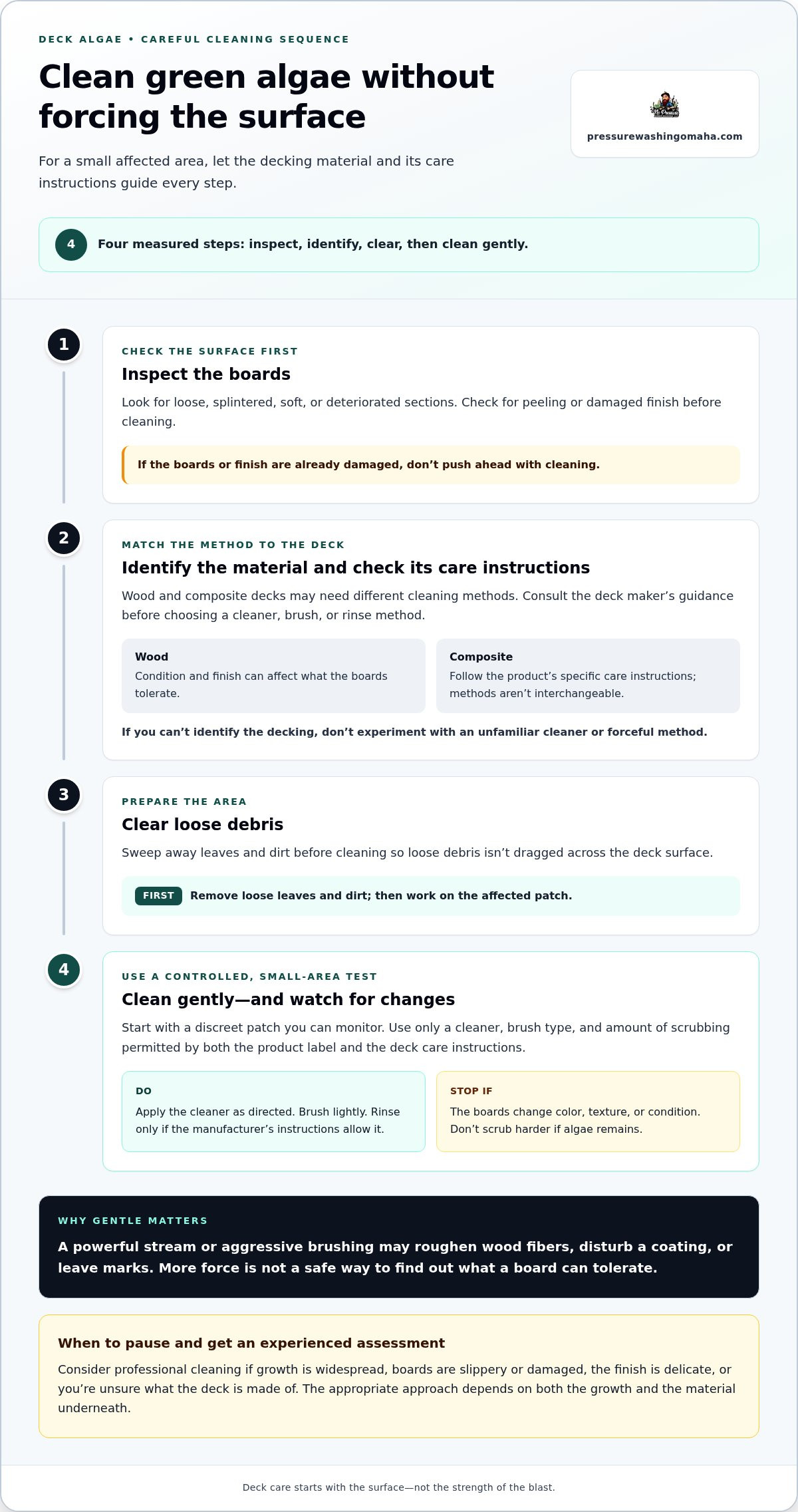
A careful approach to how to clean green algae off deck boards starts with the surface, not the cleaning tool. Wood species, composite products, age, and finish condition all affect what a deck can safely tolerate. If you cannot identify the material, do not experiment with an unfamiliar cleaner or forceful method. A treatment that suits one surface may discolor or roughen another.
For a small affected area, follow this sequence:
- Inspect the boards. Look for loose, splintered, soft, or deteriorated sections, as well as areas where the finish is peeling or damaged.
- Identify the decking and check its care instructions. Consult the deck maker’s guidance before choosing a cleaner, brush, or rinse method.
- Clear loose debris. Sweep away leaves and dirt first so they are not dragged across the surface during cleaning.
- Use an approved, gentle method. Brush lightly and rinse only if the manufacturer’s instructions allow it. Test any cleaner in a discreet spot, and stop if the boards change color, texture, or condition.
A careful cleaning sequence for a small affected area
Start with a patch you can monitor rather than treating the entire deck at once. Apply the cleaner as directed, use only the brush type and amount of scrubbing permitted by the care instructions, and rinse as directed. Do not scrub harder if the film remains. A change in appearance or a newly exposed rough patch is a reason to stop, not push through.
Why the cleaner and instructions matter
Deck cleaners are not interchangeable. Formulas and application directions can differ by decking material, and a product suited to one surface may be inappropriate for another. Choose a cleaner according to both its label and the deck manufacturer’s care instructions. Avoid relying on a homemade mixture or guessed concentration. Without material-specific guidance, it is difficult to know how a mixture may affect the boards or finish.
Gentle, controlled cleaning matters because force can affect the surface as well as the algae. A powerful stream or aggressive brushing may roughen wood fibers, disturb a coating, or leave marks that are harder to address than the original film. If you are unsure how much force a board can take, do not use force to find out. Loose boards, damaged finishes, extensive growth, or uncertainty about the material are good reasons to leave the work to an experienced professional.
No Pressure Power Washing is locally owned and operated, with over 30 years of experience in the Omaha area. Its Deck Cleaning service uses soft washing, performed with zero risk of high-pressure damage. The company prioritizes the environment by using biodegradable and non-toxic cleaning agents. If the surface feels too delicate for a DIY attempt, you can request professional deck cleaning instead of risking further damage.
Wood vs. Composite Decks: Which Algae-Cleaning Approach Fits?
There is no single answer to how to clean green algae off deck boards that works for every surface. Wood can vary in condition and finish, while composite decking is made from different materials and may have its own care requirements. Identify the decking and check its manufacturer’s guidance before cleaning. If you cannot tell what the boards are made of, avoid testing an unfamiliar cleaner or forceful method.
| Consideration | Wood deck | Composite deck |
|---|---|---|
| Care-instruction priority | Check guidance for the wood and any stain, sealer, or coating. | Follow the specific composite manufacturer’s cleaning instructions. |
| Surface condition | Look for weathering, splinters, soft spots, or worn coatings. | Check for buildup in surface texture, joints, and areas that hold debris. |
| Cleaning caution | Avoid forceful scrubbing that may roughen vulnerable fibers or disturb a finish. | Do not assume every cleaner or brush is suitable for every composite board. |
What to consider before cleaning a wood deck
Intact wood may tolerate a different approach from boards that are weathered, splintering, or deteriorated. A coating adds another consideration: a cleaner or vigorous scrub could affect the finish as well as the algae. Check the deck maker’s care guidance for approved cleaners and methods. If the surface looks fragile, do not use harder scrubbing as a test. Stop and seek professional help if boards are damaged or the finish is already failing.
How composite decking changes the decision
Composite boards still need material-appropriate care. Their ingredients and surface designs vary, so instructions for one product should not be treated as universal advice. Texture can make dirt or green growth appear more pronounced in grooves, while debris caught between boards can hold moisture. Follow the instructions for the specific decking rather than relying on the label “composite” alone.
Appearance can be misleading, too. A textured board may hold residue in its grain or grooves even when flatter areas look clean. That does not mean a stronger cleaner or tougher brush is needed. Clear loose debris first, then choose only a method allowed by the manufacturer. If the growth persists or the surface changes during cleaning, stop rather than escalating the treatment.
Wood condition, coatings, and prior wear all affect how much cleaning a surface can withstand. The same is true of composite products, whose care directions can differ. For broader guidance on caring for both materials, explore Deck Cleaning in Omaha. When you cannot identify the decking or its care instructions, a professional assessment can help avoid turning a green film into lasting surface damage.
How to Prevent Green Algae from Returning to Your Deck
After cleaning, routine upkeep can make the deck less inviting to algae by reducing debris and dampness on the surface. It cannot guarantee that growth will stay away. Shade, rainy weather, and limited airflow may still slow drying, so focus on what you can manage: keep boards clear, notice where moisture persists, and catch slick patches early.
Reduce moisture and debris around deck boards
Leaves, dirt, and other debris can hold moisture against boards or collect between them. Sweep them away, especially after windy weather or when they gather in corners. Check whether stored items, planters, or other objects keep a section damp. Moving them periodically, where practical, can let air reach more of the surface. A deck that dries more readily is less likely to provide the persistently damp conditions algae favors.
Pay attention to how the deck dries after rain. If one spot remains wet long after the surrounding boards have dried, look for a simple cause, such as debris, an object resting against the surface, or restricted airflow. You may not be able to change the amount of shade, but keeping the area clear can help it dry more freely. No single adjustment can prevent all future growth.
Set a simple inspection routine
Make a quick visual check part of regular outdoor upkeep, particularly after wet weather. Look first at shaded corners, spaces beneath furniture, and places that tend to stay damp. If you notice a small slick patch, address it before it spreads across a walking area. Use only a cleaning method suited to the deck material and its care instructions.
These checks can also help distinguish a recurring moisture problem from a one-time spill or patch of residue. Note which areas stay damp and whether growth returns in the same place. That pattern can point to where debris collects or airflow is limited. If the boards feel slippery, avoid walking across the affected area until it can be cleaned safely. Persistent or widespread growth may be a reason to stop DIY attempts and seek professional help.
Clearing debris and watching slow-drying spots will not remove every cause of algae. The goal is to reduce favorable conditions and respond before growth becomes extensive. If you are weighing professional deck cleaning for recurring buildup, consider the material and condition of the boards as part of your decision. A careful maintenance routine can help you notice when the surface needs more than sweeping.
Knowing how to clean green algae off deck boards is only part of long-term care. Regular checks, prompt debris removal, and realistic expectations make it easier to manage regrowth without resorting to aggressive cleaning. If algae keeps returning or the surface is becoming slick, professional help can reduce the guesswork and help protect the deck from avoidable wear.
When Professional Deck Cleaning in Omaha Is the Better Choice
DIY cleaning can be reasonable for a small patch on sound boards when you know the deck material and can follow its care instructions. Professional help is the safer choice if growth covers a broad area, the walking surface is slippery, boards or finishes look delicate, or you are unsure what the deck is made of. These are signs that trial-and-error cleaning could create more risk than the algae itself.
Be especially cautious if you are tempted to scrub harder or use a more forceful method to deal with stubborn growth. A surface that is already worn may not respond like intact boards, and working on a slippery deck can be hazardous. If you cannot confidently match a cleaning method to the material, leave the assessment and cleaning to an experienced deck-cleaning professional.
What professional soft washing offers for deck cleaning
No Pressure Power Washing is locally owned and operated, with over 30 years of Omaha-area experience. Its Deck Cleaning service uses soft washing, performed with zero risk of high-pressure damage. This approach is designed to clean while protecting the deck surface, rather than relying on force.
That care matters on both wood and composite decks, where the appropriate cleaning approach depends on the surface and its condition. If growth is extensive or the boards are delicate, professional deck cleaning in Omaha can remove the guesswork of choosing a method on your own. Soft washing does not mean algae will never return. Shade and moisture can still create conditions for regrowth. Thoughtful cleaning addresses current buildup while taking care with the deck itself.
The Clean Your Home Deserves. The Care It Needs.
Request deck-cleaning help in the Omaha area
No Pressure Power Washing serves Omaha, Gretna, Bennington, Elkhorn, Ashland, Valley, Waterloo, Springfield, Bellevue, Plattsmouth, West-Omaha, La Vista, Papillion. For local homeowners in Omaha, Papillion, Elkhorn, Gretna, Bennington, Bellevue, Valley, and Wahoo, a slick surface, widespread growth, or uncertainty about deck material can make DIY cleaning feel risky. Request a free, no-obligation estimate to discuss professional care for your deck.
Choose a Careful Next Step for Your Deck
A deck’s condition can change over time, so let what you see now guide your next move. If the boards are stable and you can identify the material, follow its care instructions before attempting a small, cautious clean. If you are unsure or the surface seems fragile, pause rather than risk turning a slippery patch into a repair concern.
Knowing how to clean green algae off deck boards also means knowing when to stop experimenting. A professional assessment can help you make a more confident decision when growth is extensive, the deck’s material is unclear, or previous cleaning has not resolved the problem. Regularly clearing debris and watching shaded areas can then help you notice changes early, even though no maintenance routine can rule out future growth.
Your deck deserves an approach suited to its surface, not a one-size-fits-all fix. Take the time to choose carefully, and you can move toward a cleaner, more comfortable outdoor space with greater peace of mind.
A thoughtful next step can help you enjoy your deck with confidence.
Frequently Asked Questions
Is green algae on a deck dangerous?
The main immediate concern is slipping, especially when the deck is wet. A green film can make footing uncertain on stairs, near a doorway, or anywhere people turn quickly. Keep people off a slick section until it has been addressed. Color alone cannot confirm what the growth is or establish a health risk. If boards are deteriorated or growth is extensive, avoid DIY scrubbing and seek professional help.
Can I use a pressure washer to remove green algae from a deck?
Forceful cleaning may roughen vulnerable boards or affect a finish, so do not assume more force will remove algae safely. Check the deck manufacturer’s cleaning guidance before choosing a method, especially if the boards are weathered or coated. No Pressure Power Washing cleans decks with soft washing, performed with zero risk of high-pressure damage. This method does not rely on a forceful blast to clean the surface.
Can vinegar remove green algae from a deck?
Vinegar is not a universal deck cleaner, and its effectiveness or suitability cannot be assumed for every surface. A solution that seems mild may still affect a coating or material, particularly if it has not been tested. Check the deck manufacturer’s care instructions before choosing a cleaner. If a product is permitted, follow its label and test it on a discreet area before treating the full deck.
How often should I clean algae from my deck?
There is no universal cleaning schedule because each deck dries under different conditions. A shaded deck beneath trees may collect damp leaves, while an open section gets more sun and airflow. Check the surface periodically, paying special attention to slow-drying spots, and address slick patches when you notice them. Routine checks can help you respond early, but they cannot guarantee algae will not return.
How can I tell whether the green growth is algae or moss?
Texture can offer a clue: algae may look like a slick film, while moss often appears soft or fuzzy. Still, color and appearance alone cannot reliably identify every growth, particularly if it is mixed with dirt or covers a broad area. If you are deciding how to clean green algae off deck boards, first consider the material and its condition. Seek experienced help if identification or surface condition is uncertain.
When should I hire a professional to clean green algae off a deck?
Hire help for widespread growth, damaged boards, slick surfaces, or uncertainty about the right cleaner. No Pressure Power Washing serves Omaha, Gretna, Bennington, Elkhorn, Ashland, Valley, Waterloo, Springfield, Bellevue, Plattsmouth, West-Omaha, La Vista, Papillion, and surrounding Nebraska communities. Its Deck Cleaning uses soft washing, performed with zero risk of high-pressure damage. Locally owned and operated, it has over 30 years of Omaha-area experience. Request a free, no-obligation estimate.


