

Those unsightly black streaks on your shingles aren't just a cosmetic nuisance caused by dirt or soot. In reality, your roof has become a feeding ground for a hardy cyanobacteria called Gloeocapsa magma that consumes the limestone filler in your shingles. It's frustrating to watch your home's curb appeal decline while worrying if these stains signal a costly, premature replacement. If you're searching for how to remove black streaks from roof surfaces without causing permanent damage, you aren't alone in your concern for your property's long-term value.
You don't need to resort to high-pressure blasting that can strip away protective granules and void your warranty. We believe in a gentler, more scientific approach that prioritizes the health of your home. This guide explains why soft washing is the only professional-grade method recommended by manufacturers to eliminate algae at its source. You'll discover the science behind biodegradable solutions and learn how this specialized technique can extend your roof's lifespan by up to 15 years. We want to provide you with the expert guidance you need to protect your investment and restore your peace of mind.
Key Takeaways
- Identify the biological culprit, *Gloeocapsa magma*, and understand how this hardy algae physically consumes the limestone filler in your asphalt shingles.
- Recognize the hidden financial risks of ignoring roof stains, including increased attic temperatures and the potential for premature shingle failure.
- Learn how to remove black streaks from roof structures using the soft wash method, which utilizes specialized, low-pressure equipment to protect your home's integrity.
- Explore the professional steps of a safe cleaning process, ensuring your landscaping remains protected while using biodegradable, non-toxic solutions.
- Gain actionable insights on preventing future growth through strategic maintenance and the installation of algae-inhibiting metal flashing.
What Are the Black Streaks on Your Roof? Identifying Gloeocapsa Magma
Many Omaha homeowners look up and see dark, vertical stains that resemble soot or chimney runoff. These marks aren't actually dirt; they're a living organism. Identifying the problem correctly is the first step in understanding how to remove black streaks from roof surfaces without causing more harm than good. While these stains might seem like a minor cosmetic flaw, they represent a biological colony that's actively compromising your home's exterior.
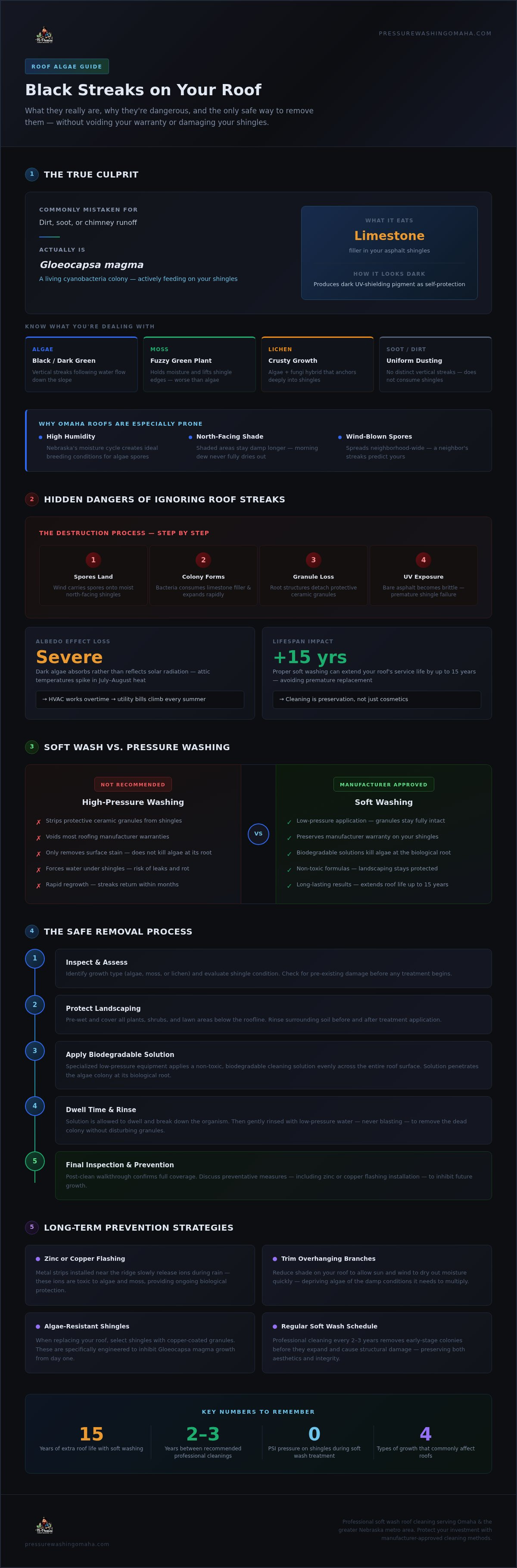
Gloeocapsa magma is a cyanobacteria that thrives on the limestone filler in modern asphalt shingles. While it's often referred to as "algae," this organism is uniquely adapted to survive the harsh environment of a rooftop. It develops a dark, pigment-rich outer coating to protect itself from ultraviolet rays, which is exactly what creates those unsightly black streaks. It's vital to distinguish this growth from other common roof issues:
- Algae: Appears as black or dark green streaks, usually following the flow of water down the slope.
- Moss: A fuzzy, green plant that holds significant moisture and can lift shingle edges.
- Lichen: A crusty, symbiotic growth of algae and fungi that anchors deeply into the shingle.
- Soot or Dirt: Usually a more uniform dusting that doesn't form distinct, heavy vertical streaks.
Why Omaha Roofs Are Prone to Algae Growth
Nebraska's climate provides a perfect breeding ground for these organisms. Our high humidity levels and dramatic temperature swings create a cycle of moisture that algae loves. You'll likely notice the streaks first on the north side of your home or under the shade of a large oak tree. These areas stay damp longer because they don't get enough direct sunlight to dry out the morning dew quickly.
The infestation often spreads across entire neighborhoods through wind-blown spores. If your neighbor has black streaks, it's likely those spores will eventually land on your roof. Once they take hold, they begin to multiply, forming the dark protective layer that gives them their signature appearance. Without intervention, the colony will continue to expand until it covers the entire roof surface.
The Anatomy of a Shingle: What the Algae Is Eating
Modern asphalt shingles aren't just made of asphalt and sand. Manufacturers use limestone as a heavy filler to add weight and durability to the product. Unfortunately, limestone is the primary food source for Gloeocapsa magma. As the algae grows, it literally consumes the structure of your roof. It isn't just sitting on top; it's feeding on the very material designed to protect your home.
This biological consumption leads to a phenomenon known as granule loss. The algae's root-like structures wrap around the protective ceramic granules on the shingle's surface. As the algae grows and detaches, or as it's hit by heavy rain, it takes those granules with it. This leaves the underlying asphalt exposed to UV rays, which causes the shingles to become brittle and eventually fail. This is why professional roof cleaning is a matter of preservation, not just aesthetics.
The Hidden Dangers of Ignoring Roof Streaks
Many homeowners in the Omaha metro area delay cleaning because they assume the damage is only skin deep. This is a mistake. When you're looking for how to remove black streaks from roof shingles, you're actually looking for a way to stop a slow-motion decay process. These streaks act as a heat sink, significantly altering how your home interacts with the Nebraska sun. What starts as a minor cosmetic blemish can quickly evolve into a source of structural instability and financial strain.
Increased Energy Costs and Heat Absorption
A healthy roof should reflect a large portion of solar radiation. This is known as the Albedo Effect. When dark, pigment-heavy algae colonies cover your shingles, that reflectivity vanishes. Instead of bouncing heat away, your roof absorbs it. During Nebraska's sweltering July and August months, this extra heat transfers directly into your attic. Your HVAC system has to work overtime to compensate, which shows up clearly on your monthly utility bill. Keeping your roof clean isn't just about pride; it's a practical way to manage your home's efficiency and lower your cooling costs.
From Algae to Structural Damage
Algae is often just the beginning of a more aggressive biological succession. The presence of Gloeocapsa magma creates a moist, nutrient-rich environment that allows moss and lichen to take root. Lichen is particularly destructive. It develops root-like structures that physically "pluck" the ceramic granules off your shingles as the organism expands and contracts with moisture levels. This leads to premature "balding," leaving the asphalt underneath vulnerable to rot and UV damage. If left unchecked, this moisture can eventually reach the underlying roof deck, causing structural issues that cost thousands to repair.
The Asphalt Roofing Manufacturers Association (ARMA) emphasizes using a manufacturer-approved cleaning method to prevent this degradation without voiding your warranty. Beyond structural concerns, these streaks can negatively impact your property appraisal. In a competitive local market, a stained roof suggests neglect to potential buyers. Professional roof cleaning preserves both the integrity and the resale value of your home. If you're noticing these dark patterns forming, it might be time to schedule a professional assessment to see how much life is left in your shingles.
Soft Wash vs. Pressure Washing: Why 'No Pressure' Matters
When homeowners look for how to remove black streaks from roof shingles, they often reach for the most powerful tool in the garage. It's a common mistake born from a desire for immediate results. However, there's a critical difference between mechanical force and chemical restoration. While traditional pressure washing relies on high-velocity water to blast away debris, soft washing uses a specialized, low-pressure delivery system to apply cleaning solutions that treat the underlying biological issue. We've spent 30 years refining this "No Pressure" philosophy because it's the only way to ensure your home's safety.
This distinction isn't just our professional preference. The Asphalt Roofing Manufacturers Association (ARMA) specifically recommends against high-pressure cleaning for asphalt surfaces. Major shingle manufacturers like GAF and Owens Corning take this a step further; using high pressure on your roof can actually void your manufacturer’s warranty. They understand that asphalt shingles are delicate systems designed to shed rain, not withstand concentrated blasts of thousands of pounds per square inch.
The Mechanics of Shingle Damage from High Pressure
High-pressure water is the enemy of shingle longevity. The protective ceramic granules on your roof are there to shield the underlying asphalt from harsh UV rays. A pressure washer tip can easily dislodge these granules, leading to "accelerated aging" and leaving your roof vulnerable. Beyond granule loss, high-velocity water can be forced under the shingles or into lap joints, leading to hidden leaks and moisture trapped against the roof deck. We frequently see "scarring" on Omaha roofs where an inexperienced operator left permanent wand marks on the shingles, damage that no amount of cleaning can fix.
The Soft Wash Solution: Science Over Force
Our soft wash approach relies on science rather than brute strength. We use professional-grade, biodegradable, and non-toxic surfactants specifically designed to kill algae and other organic growth at the root. This isn't just a surface rinse. The solution requires a specific "dwell time" to fully sanitize the surface and neutralize the colonies. This ensures that the biological growth is actually dead, rather than just moved around by a water stream.
Once the solution has done its work, we use a low-pressure rinse, which is roughly equivalent to the force of a standard garden hose. This safely removes the dead organic matter without stressing the shingle adhesive or stripping away the protective surface. By choosing this methodical process for roof cleaning, you're investing in a solution that preserves your home's integrity for the long haul. It's about being a trusted guardian of your property, ensuring the job is done safely and correctly the first time.
How to Remove Black Streaks Safely: The Professional Process
Understanding how to remove black streaks from roof surfaces requires more than just the right chemicals; it demands a disciplined, multi-stage process. We approach every home with the mindset of a "trusted guardian," ensuring that the cleaning process is as gentle on your property as it is tough on algae. While DIY enthusiasts often attempt a "spray and pray" method with hardware store bleach, a professional roof cleaning service utilizes specialized equipment and protective measures that safeguard your entire investment. Our 30 years of local experience has taught us that the preparation is just as important as the application itself.
Protecting Your Omaha Landscape During Cleaning
One of the biggest concerns for homeowners is the impact of cleaning solutions on their grass, shrubs, and flower beds. We use a proactive "pre-wetting" technique, saturating all nearby vegetation with fresh water before any cleaning begins. This ensures that the plants' root systems are hydrated and less likely to absorb any runoff. Throughout the process, we continue to rinse the foliage and may use specialized neutralizers to maintain a safe pH balance in your soil. This level of professional runoff management is a hallmark of our "No Pressure" philosophy, ensuring your curb appeal is enhanced rather than compromised.
The Step-by-Step Soft Wash Execution
Our methodical execution follows a specific sequence designed for maximum safety and effectiveness. By using professional-grade pumps and long-range nozzles, we can often treat the highest peaks of your home from the safety of a ladder or the ground. This minimizes the need for technicians to walk on your shingles, which prevents unnecessary wear and tear on the delicate ceramic granules. The process generally follows these four critical steps:
- Step 1: Thorough Inspection. We begin by identifying existing damage, loose shingles, or compromised flashing that might be vulnerable to moisture.
- Step 2: Systematic Application. We apply our biodegradable, professional-grade solution in a uniform pattern, ensuring every colony of Gloeocapsa magma is reached.
- Step 3: Dwell Time Monitoring. We allow the solution to sit for a precise amount of time. This "dwell time" is essential for the surfactants to sanitize the surface and kill the algae at its root.
- Step 4: Low-Pressure Rinse. Finally, we perform a gentle rinse to remove the dead organic material, followed by a final property-wide cleanup.
Request a professional roof inspection and soft wash quote for your home today.
Once the rinse is complete, we conduct a final walk-through to ensure your gutters are clear and your siding is pristine. This attention to detail is why local residents trust us to handle their home's most sensitive surfaces. We don't just leave you with a clean roof; we leave you with the peace of mind that comes from knowing the job was done with meticulous care and respect for your property.
Long-Term Prevention and Maintenance for Your Roof
Once your roof is restored to its original beauty, your focus should shift toward preservation. While you now understand how to remove black streaks from roof shingles using the soft wash method, the most cost-effective approach is preventing the algae from recolonizing in the first place. A proactive maintenance schedule doesn't just keep your home looking sharp; it protects the structural integrity of your shingles and extends the time between professional cleanings. By managing the environment around your roof, you can significantly inhibit the return of Gloeocapsa magma.
The Role of Zinc and Copper in Algae Prevention
Metal flashing made of zinc or copper can serve as a long-term deterrent against biological growth. When it rains, water washes over these metal strips, releasing metallic ions that are naturally toxic to algae. As this ion-rich water flows down the slope, it creates a protective barrier where algae cannot easily survive. Some homeowners opt for copper-infused shingles during a full replacement, while others choose to have professional installers add zinc strips at the roof peaks. It's important to remember that these metals are a preventative supplement rather than a cure; they won't clean an existing infestation, but they are excellent at maintaining a sanitized surface after a professional wash.
Seasonal Maintenance Tips for Nebraska Homeowners
In the Omaha metro area, our changing seasons bring unique challenges to roof health. High humidity and falling leaves create the damp, shaded conditions that algae crave. Learn how professional gutter cleaning protects your roof by ensuring that moisture is quickly diverted away from your shingles. We recommend several key seasonal tasks to keep your roof in peak condition:
- Clear organic debris: Regularly remove leaves, twigs, and pine needles that trap moisture against the shingle surface and provide nutrients for algae.
- Trim overhanging branches: Increasing sunlight and airflow helps your roof dry out faster after morning dew or heavy Nebraska thunderstorms.
- Schedule periodic inspections: We recommend a professional assessment every two to three years to catch early signs of growth before they become a major problem.
Choosing a Local Omaha Specialist
Maintaining a roof requires a partner who understands the local climate and the specific needs of Nebraska homes. With 30 years of experience right here in Omaha, we take pride in being the trusted guardian of our neighbors' properties. We don't just offer a service; we offer a commitment to long-term value and craftsmanship. See our professional roof cleaning results to understand the difference that a dedicated, local expert can make for your home's curb appeal. Don't wait for the streaks to return and compromise your shingles. Get your free roof cleaning estimate from No Pressure Power Washing today and let us help you protect your investment for the long haul.
Protecting Your Home’s Long-Term Investment
Your roof is one of the most critical components of your home's exterior, and it deserves a level of care that prioritizes preservation over speed. We've seen how Gloeocapsa magma acts as a biological threat rather than a simple stain, making professional intervention a matter of structural health. Understanding how to remove black streaks from roof safely ensures that your home remains both beautiful and energy efficient for years to come.
With 30 years of experience serving the Omaha community, we remain committed to using biodegradable solutions and our signature "No Pressure" soft-wash technology. This methodical process provides the peace of mind that comes from knowing your shingles are protected from the damage caused by aggressive pressure washing. You don't have to settle for an unsightly roof or worry about the high costs of premature replacement.
We're here to help you navigate the best path for your home's maintenance. Take the next step toward a cleaner, more durable roof and enjoy the confidence that comes with expert, local care.
Frequently Asked Questions
Will cleaning the black streaks off my roof damage my shingles?
Professional soft washing won't damage your shingles because it relies on chemical sanitization rather than mechanical force. When considering how to remove black streaks from roof surfaces, it's important to choose a method that preserves shingle integrity. This low-pressure approach gently neutralizes the algae colonies without stripping away the protective ceramic granules that shield your home from harsh ultraviolet rays.
Is roof algae growth just a cosmetic problem or something more serious?
While the streaks are certainly unsightly, the underlying biological growth is a serious threat to your roof's durability. These organisms physically consume the limestone filler in your shingles, which leads to brittleness and eventual granule loss. Additionally, the dark pigment absorbs heat, which can strain your air conditioning system and lead to higher utility costs during Nebraska's hot summers.
How long does a professional roof soft wash take to complete?
Most residential projects in Omaha are completed within two to five hours. This window allows our team to perform a comprehensive inspection, protect your landscaping, and monitor the chemical dwell time required to kill algae at the root. We prioritize thoroughness over speed to ensure your shingles are perfectly sanitized and the surrounding property is left pristine.
Can I use a regular pressure washer on my roof if I turn the pressure down?
Using a regular pressure washer is extremely risky even on a low setting. The concentrated stream from a standard wand can permanently scar your shingles or force water into your attic space. Our specialized soft wash equipment is engineered for high-volume, low-pressure delivery, which is the only safe way to address how to remove black streaks from roof shingles without causing structural harm.
Are the cleaning chemicals used safe for my pets and plants?
The biodegradable, non-toxic solutions we use are safe for your family and pets when applied by our experienced technicians. We take meticulous care to protect your landscape by saturating your plants with fresh water before, during, and after the cleaning process. This protective barrier ensures that your grass and flowers remain healthy while we restore your home's curb appeal.
How often should I have my roof cleaned in Omaha?
For most Omaha residents, a professional cleaning is recommended every three to five years to prevent biological growth from taking hold. If your home is surrounded by mature trees or has large north-facing slopes, you might need an inspection more frequently. Regular maintenance catches small issues before they evolve into the heavy black streaks that compromise your roof’s lifespan.
Why do black streaks only appear on certain parts of my roof?
Algae colonies thrive in damp, shaded environments, which is why you'll often see streaks only on the north side of your home. These areas don't receive enough direct sunlight to dry out quickly after a rainstorm or morning dew. This lingering moisture provides the perfect breeding ground for the cyanobacteria to feed on the limestone filler in your shingles.
Does roof cleaning void my manufacturer's warranty?
Soft washing won't void your warranty; in fact, it's the only method recommended by the Asphalt Roofing Manufacturers Association. Major manufacturers like GAF and Owens Corning specifically warn against high-pressure cleaning because of the mechanical damage it inflicts. By choosing a professional soft wash, you're adhering to industry standards and protecting your long-term investment.


