

A single layer of neglected sludge on a hydraulic manifold can cost a facility more in one afternoon of downtime than a full year of scheduled maintenance. You likely already know that heavy grease acts as a thermal insulator, causing engines to overheat and critical parts to fail when you need them most. Beyond the mechanical risks, slippery surfaces create immediate hazards for your crew, and the regulatory landscape has never been more demanding. With the EPA's 2026 enforcement of trichloroethylene bans and strict local Omaha wastewater standards, industrial equipment degreasing is no longer just about a clean machine; it's about asset preservation and legal compliance.
In this professional guide, you'll learn the specific methods used to remove stubborn buildup without damaging sensitive components or violating environmental rules. We'll explore why the industry is shifting toward biodegradable, non-toxic solutions and how a meticulous cleaning schedule extends the life of your fleet. By the end of this article, you'll have a clear roadmap for maintaining a safer, more efficient job site while protecting the long-term value of your most expensive investments. Taking a proactive approach to cleanliness isn't just a chore; it's a commitment to the safety of your team and the health of our local community.
Key Takeaways
- Discover why caked-on grease acts as a silent killer by trapping heat and causing premature mechanical failure in heavy assets.
- Learn how to balance the variables of time, temperature, and chemistry to safely break the molecular bonds of industrial lubricants.
- Navigate the complex landscape of EPA compliance, including the 2026 trichloroethylene (TCE) ban and local wastewater runoff regulations.
- Understand the safety benefits of professional industrial equipment degreasing and why specialized expertise is required to protect sensitive engine components.
- Evaluate the long-term value of using biodegradable, non-toxic solutions to preserve your machinery and protect the local Omaha watershed.
What is Industrial Equipment Degreasing and Why Does it Matter?
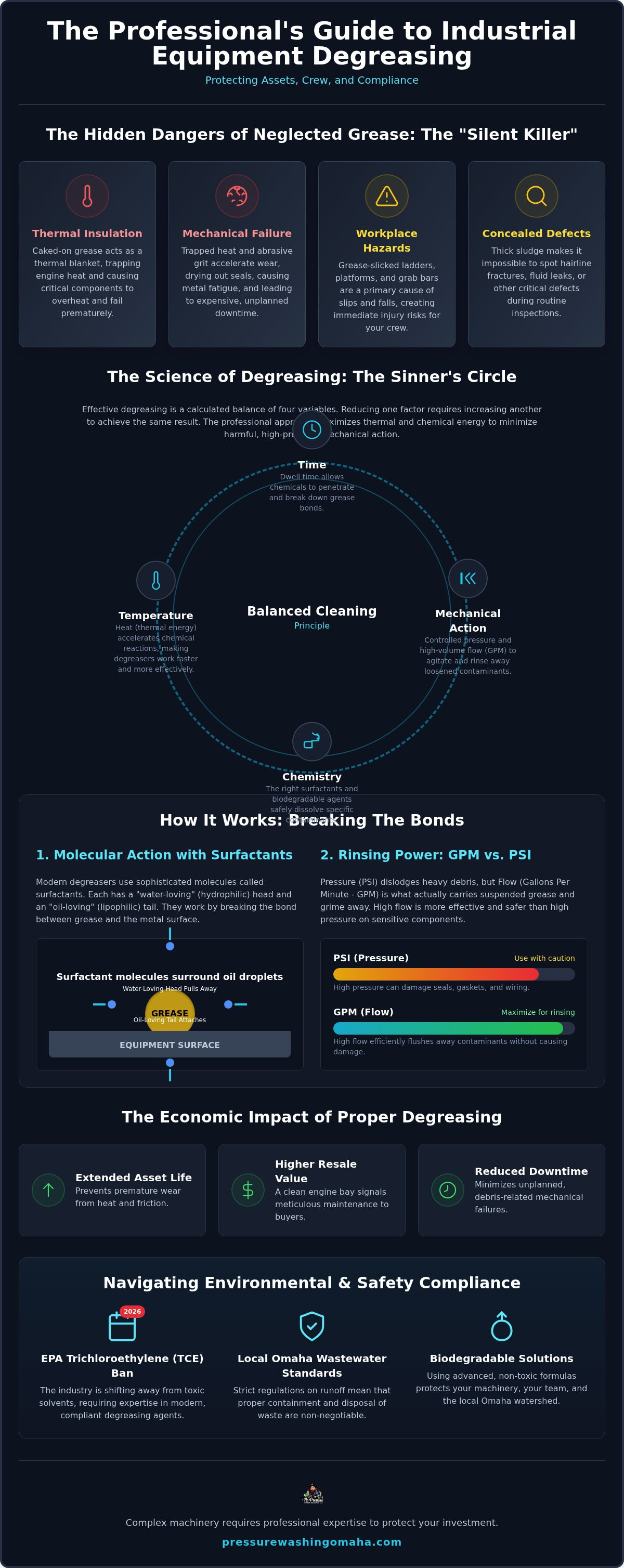
Industrial equipment degreasing is the systematic removal of organic and inorganic oils, greases, and lubricants from your machinery. It's a critical maintenance step that often gets overlooked until a part fails. Think of heavy grease as a thermal blanket. This "silent killer" traps heat against engine blocks and hydraulic lines, which causes seals to dry out and metal to fatigue prematurely. While solvent degreasing is a common industry term, the modern approach requires a delicate balance of chemistry and care to protect the equipment's integrity.
Beyond the health of the machine, we have to consider the safety of the operator. Grease-slicked ladders and grab bars are major contributors to workplace injuries. Caked-on oil near hot exhaust manifolds also poses a legitimate fire risk. Professional heavy equipment cleaning also serves as a diagnostic tool. It's impossible to spot a hairline fracture in a boom or a slow leak in a high-pressure line when it's buried under three inches of sludge. A clean machine is a transparent machine.
The Economic Impact of Proper Degreasing
Investing in regular industrial equipment degreasing pays for itself by extending the usable life of your assets. When you keep surfaces clean, you reduce the friction and heat that lead to expensive, unplanned repairs. This level of care also maintains the resale value of your fleet. Buyers in the heavy construction and farming sectors look for signs of meticulous maintenance; a spotless engine bay is a powerful indicator of a well-cared-for machine. By preventing debris-related mechanical failures, you minimize the downtime that eats into your company's bottom line.
Grease vs. Grime: Identifying Industrial Contaminants
Identifying the specific type of contaminant is the first step in our professional process. Petroleum-based greases require different treatment than synthetic lubricants. In Omaha, we face a unique challenge where fine agricultural dust mixes with grease to form a crust that's incredibly difficult to remove. This mixture can become as hard as rock if left in the sun. We also pay close attention to removing road salt and winter chemicals from the chassis. These corrosive elements can quietly eat away at your frame if they aren't neutralized with the right biodegradable solutions. With the 2026 enforcement of EPA bans on solvents like trichloroethylene, choosing the right chemical profile is more complex than ever.
The Science of Degreasing: Heat, Chemistry, and Pressure
Effective industrial equipment degreasing isn't a matter of luck; it's a calculated application of the "Sinner Circle." This fundamental cleaning principle balances four critical variables: time, temperature, chemistry, and mechanical action. If you reduce one factor, such as temperature, you must increase another, like dwell time or chemical concentration, to achieve the same result. For heavy machinery, we focus on maximizing thermal energy and chemical efficiency to reduce the need for aggressive mechanical pressure that could damage seals or delicate wiring.
At the molecular level, degreasing is about breaking bonds. Surfactants are the heroes of this process. These molecules have a "water-loving" head and an "oil-loving" tail. They wedge themselves between the grease and the metal surface, surrounding the oil droplets so they can be lifted and rinsed away. With the 2026 enforcement of EPA regulations for TCE, we've shifted toward sophisticated aqueous-based surfactants. These modern formulas provide the same "bite" as old-school solvents without the toxic runoff that threatens our local Omaha watershed.
Pressure is the final piece of the puzzle, but it's often misunderstood. While high PSI (pounds per square inch) helps dislodge heavy mud, it's the GPM (gallons per minute) that actually carries the grease away. We call this soil suspension. High flow is often more effective than high pressure, especially since we never recommend high pressure on sensitive engine components or hydraulic gaskets. If you're managing a diverse inventory and feel unsure about the safest approach, it's always best to consult with a local specialist to protect your assets.
Choosing the Right Degreasing Agent
The transition from solvent-based to aqueous degreasers is a major trend in fleet washing and industrial maintenance. Solvent degreasers dissolve grease, while aqueous cleaners use water-based chemistry to emulsify it. We prioritize biodegradable, non-toxic solutions to keep your facility compliant with wastewater standards. It's also vital to monitor pH levels. Highly alkaline cleaners are great for heavy steel but can cause "flash" corrosion or dulling on aluminum parts if the chemistry isn't neutralized quickly.
The Role of Thermal Energy in Degreasing
Cold water is the enemy of grease. Using it on an oil-caked engine often just spreads the mess around, creating a thin, slippery film that's harder to remove later. Hot water, ideally between 160 and 200 degrees Fahrenheit, liquefies solidified grease so it can be easily flushed away. For the most stubborn buildup, steam cleaning provides the highest level of thermal energy. However, you must exercise extreme caution. High-heat cleaning can soften certain hydraulic lines or melt plastic connectors if the operator isn't experienced in handling industrial-grade steam equipment.
Environmental Compliance and Safety Standards
Responsible industrial equipment degreasing in Omaha requires a deep understanding of the Missouri River watershed and the local regulations that protect it. Under the EPA Clean Water Act, discharging untreated oily runoff into storm drains is a federal violation. For businesses, this means every gallon of wash water must be managed. Professional wash bays utilize oil-water separators to trap hydrocarbons, allowing the treated water to pass safely into the sewer system while the concentrated waste is hauled away for proper disposal. Ignoring these standards can lead to significant fines and long-term liability for your facility.
Safety is the other side of the compliance coin. OSHA strictly enforces standards for handling the specialized chemicals and high-pressure equipment used in heavy cleaning. Technicians must wear specific Personal Protective Equipment (PPE) to guard against chemical burns and the danger of high-pressure injection injuries. These injuries occur when fluid is forced under the skin at high velocity, requiring immediate surgical intervention. We adhere to Green Seal safety and environmental standards to ensure the agents we use minimize toxicity and VOC content for everyone on the job site. As of 2026, OSHA penalty amounts for serious violations can reach $16,550 per citation, making safety a critical financial consideration.
Managing Wastewater and Runoff
Identifying Total Suspended Solids (TSS) is a necessary step in managing industrial wash water. TSS refers to the dirt, metal shavings, and heavy grease particles suspended in the effluent. In the Omaha metro area, legal requirements for onsite containment are strict. You can't let industrial runoff reach the soil or the street. When we perform perimeter cleaning around a shop or warehouse, we often use biodegradable house wash solutions to neutralize any overspray and ensure the surrounding environment remains unaffected by the cleaning process.
Protecting Sensitive Machinery Components
Safety procedures begin before the first trigger pull. We always implement Lock-out/Tag-out (LOTO) protocols to ensure machinery cannot be energized while a technician is working on it. This is followed by a meticulous masking phase. Electrical panels, sensitive sensors, and air intakes must be shielded from moisture and chemical mist. While the goal is a clean machine, we never recommend high pressure on sensitive engine components, bearings, or soft seals. Forcing water into a sealed bearing will displace the internal lubricant, leading to a mechanical failure that's far more expensive than the cleaning itself.
Step-by-Step Guide to Degreasing Heavy Machinery
A systematic approach to industrial equipment degreasing is the only way to ensure every nook and cranny is addressed without compromising the machine's functionality. The process begins with a thorough pre-inspection where we identify high-build areas, typically around the undercarriage and pivot points. We also take this time to mark sensitive zones like alternators, computer modules, and air intakes. Before any water or chemicals are introduced, we perform dry debris removal. This involves manually scraping away caked-on mud and the "concrete-like" agricultural dust common in the Omaha area. By removing this bulk material first, we prevent it from turning into a thick, drain-clogging slurry later in the process.
Phase 1: Preparation and Chemical Dwell
We never apply cleaning agents to a hot engine or hydraulic system. High surface temperatures cause the degreaser to flash-dry, which leaves behind a stubborn chemical film and stops the surfactant action in its tracks. Once the machine has cooled, we apply our biodegradable solution from the bottom up. This prevents clean streaks from forming as the chemical works its way down the frame. Dwell time is essential; we adjust this window based on local Omaha humidity and ambient temperatures to ensure the chemical stays active long enough to emulsify the grease without drying out.
Phase 2: Mechanical Removal and Rinsing
For the most stubborn industrial deposits, we use specialized soft-bristle brushes to agitate the grease. This mechanical action helps the surfactants penetrate deeper into the sludge. When rinsing, we utilize a "sweeping" technique, moving the suspended oils and dirt toward a central collection point or oil-water separator. We always switch to low-pressure rinsing for sensitive engine compartments to avoid forcing moisture into gaskets or bearings. After the final rinse, we perform a detailed inspection to ensure no spots were missed, then re-lubricate pivot points that may have had their grease stripped during the heavy equipment cleaning process.
Phase 3: Post-Cleaning Maintenance
The true value of a professional clean often reveals itself once the machine is dry. We use this opportunity to inspect for hydraulic leaks or hairline cracks in the frame that were previously hidden by layers of sludge. To protect your investment, we apply corrosion inhibitors to any bare metal surfaces exposed during the wash. Finally, we document the service in your fleet washing or maintenance logs. This documentation is vital for demonstrating compliance with local regulations and maintaining a high resale value for your assets.
Professional vs. DIY: Choosing the Right Approach
While it's tempting to hand a pressure washer to a shop hand and call it maintenance, the hidden costs of DIY industrial equipment degreasing often outweigh the initial savings. Consumer-grade equipment typically lacks the thermal capacity to liquefy heavy grease, which leads to excessive water use and chemical waste. You're also putting your asset at risk. Untrained staff might inadvertently spray high-pressure water into a turbocharger intake or a sensitive electrical harness, turning a simple cleaning task into a multi-thousand dollar repair. Professional care ensures the job is done without compromising the machine's mechanical integrity.
Liability is another major factor. If an employee is injured by high-pressure injection or chemical exposure, the OSHA citations and insurance premiums can be devastating. Professional heavy equipment cleaning provides a critical layer of protection for your business. We carry the necessary insurance and specialized training to handle these high-value assets safely. By outsourcing this work, you're not just buying a clean machine; you're buying peace of mind and ensuring that your internal labor stays focused on their primary, revenue-generating roles.
When to Call a Professional Specialist
There are specific scenarios where professional intervention is a necessity rather than a luxury. If you're managing a large-scale fleet or complex industrial production lines, the logistics of containment and runoff management become overwhelming for an in-house team. This is especially true for assets located near sensitive borders in Gretna or Elkhorn, where noise and wastewater runoff are closely monitored by the community. When your facility is facing an environmental audit, having documented cleaning procedures from a certified specialist is an invaluable asset for demonstrating compliance with state and federal regulations.
The No Pressure Power Washing Advantage
With over 30 years of local experience, we've built our reputation as a trusted guardian of Omaha's industrial infrastructure. Our deep knowledge of fleet washing services allows us to tackle the toughest sludge while strictly adhering to our commitment to non-toxic, biodegradable solutions. We understand the local environment and the specific challenges of the Omaha watershed, ensuring your business stays on the right side of environmental law. If you're ready to protect your machinery and streamline your maintenance schedule, we invite you to request a free estimate for Omaha industrial cleaning today.
Securing the Future of Your Fleet
Proper maintenance is a commitment to the longevity of your business and the safety of your crew. By mastering the balance of heat and chemistry, you move beyond surface cleaning to true asset preservation. You're now equipped to navigate strict 2026 EPA standards while keeping your fleet in peak condition. This proactive approach prevents the "silent killer" of heat-related failure and ensures your machinery remains a reliable asset for years to come.
Choosing professional care means trusting a partner who treats your machinery with the same respect as their own. With over 30 years of local Omaha experience, we use EPA-compliant biodegradable solutions to protect your equipment and our shared watershed. Our fully insured technicians handle the heavy lifting so you can stay focused on your core operations. Prioritizing industrial equipment degreasing today is the most cost-effective way to avoid expensive downtime tomorrow.
We look forward to helping you maintain a safer, more efficient workplace while protecting your long-term investments.
Frequently Asked Questions
Is industrial degreasing safe for all types of machinery?
Industrial equipment degreasing is safe for almost any machine when performed by a specialist who understands component sensitivity. While the metal frame can handle heat and pressure, we take extreme care around electrical harnesses and hydraulic seals. We use low-pressure techniques and manual agitation for delicate zones to ensure we don't displace vital internal lubricants. It's about protecting the machine's integrity while removing the buildup that causes it to underperform.
How often should I degrease my heavy equipment?
Usage frequency varies by your specific industry and the Omaha environment. For heavy construction or agricultural equipment, we recommend a professional degreasing every 250 to 500 operating hours. This schedule typically aligns with your standard oil changes and hydraulic inspections. Machines working in high-dust areas or during the winter salt season may require more frequent attention to prevent the corrosive buildup that leads to frame fatigue and part failure.
Can I use standard dish soap for industrial degreasing?
Standard dish soap is ineffective for heavy-duty industrial equipment degreasing because it isn't formulated to break the molecular bonds of petroleum. It lacks the necessary pH balance and specialized surfactants to emulsify synthetic lubricants or heavy sludge. Using dish soap often results in a thin, tacky film that actually attracts more dirt and agricultural dust. Professional-grade degreasers are required to lift these contaminants and provide a clean, residue-free surface for inspection.
What happens to the grease and oil after the cleaning process?
In a professional setting, the effluent is never simply washed into the ground. We utilize a multi-stage filtration process where the wash water enters an oil-water separator. This device allows the oils to float to the top and solids to sink to the bottom. The remaining water is then safely discharged into the sewer system. The concentrated oil and sludge are collected and transported to a certified waste facility for responsible disposal.
Do I need to move my equipment to a wash bay for degreasing?
Onsite cleaning is possible with the right containment technology, though a dedicated wash bay is often the most efficient choice. Mobile degreasing units must use capture mats and vacuum systems to prevent runoff from reaching the soil or storm drains. If your facility lacks a plumbed oil-water separator, moving the equipment to a professional site ensures you remain compliant with local wastewater regulations while protecting the local Omaha groundwater from contamination.
Will high-pressure degreasing damage my machine’s paint or decals?
Concentrated high pressure can absolutely strip decals or damage paint if applied too closely or at the wrong angle. We avoid this by using wide-fan nozzles and maintaining a safe distance from the surface. Our goal is to use thermal energy and chemical action to do the heavy lifting rather than relying on raw mechanical pressure. This meticulous approach ensures your fleet looks professional and stays protected from the elements without any unintended cosmetic damage.
What is the difference between a degreaser and a cleaner?
The primary difference lies in the chemical formulation and the target contaminant. A general cleaner is designed to remove water-soluble dirt, dust, and light grime. A degreaser is a specialized tool built to emulsify insoluble oils, fats, and greases. While a cleaner might wash away the top layer of mud, it won't penetrate the oily film underneath. Degreasers use specific surfactants to lift that oil so it can be rinsed away completely.
Are biodegradable degreasers as effective as solvent-based ones?
Modern biodegradable formulas are just as effective as traditional solvents for most industrial equipment degreasing tasks. These aqueous solutions use advanced surfactant technology to achieve the same chemical bite without the health and environmental risks associated with chlorinated solvents. Since the 2026 EPA enforcement of TCE bans, these eco-friendly alternatives have become the industry standard. They provide a safer work environment for your team while delivering the deep clean your machinery requires.


