

A parking area shapes visitors’ first impression before they reach the building. Regular parking garage cleaning in Omaha helps keep debris, grime, and visible buildup from taking over busy garages and lots, supporting a cleaner, better-maintained property.
It’s easy to focus on the building itself, but parking areas also need consistent care. Vehicle and foot traffic quickly track in dirt and leave debris behind; sweeping and appropriately planned power washing help address that buildup and keep the space looking cared for.
This article covers the practical benefits of parking-area maintenance, how sweeping and concrete cleaning fit into a plan, and why the cleaning method matters. You’ll also learn what to consider when maintaining parking surfaces, so you can make informed decisions about your Omaha property.
Key Takeaways
- Learn how sweeping and power washing address different kinds of buildup in busy parking areas.
- Understand how traffic, plowing, and sun exposure affect parking lot striping maintenance.
- See why cleaning plans should account for debris, surface condition, and safe work practices.
- Explore concrete-cleaning methods that remove grime while taking the surface’s condition into account.
- Compare contractors by looking at their cleaning approach, project scope, and attention to property care.
Power washing
Professional soft washing uses a controlled cleaning process to address grime on suitable exterior surfaces, and choosing an appropriate method can help limit the risk of damage. For parking garages, a trained professional should identify the surface type, the buildup, and any existing wear. Concrete cleaning can help with grime on concrete, but cracks, flaking, or structural damage need separate attention.
A safe cleaning plan should account for the surface and its condition, rather than relying on force. A trained professional should check for cracks, worn areas, and stains before work begins. A stained parking stall, for example, may need different attention from a drive aisle with general grime. The condition of the concrete and the type of buildup should guide the scope.
Preparation matters. Loose gravel and litter can interfere with washing and move across the surface under water pressure. Scheduled sweeping followed by concrete power washing helps keep debris out of storm drains. A trained professional can remove loose material, identify stained zones, and wash in a controlled pattern. That approach helps prevent debris from simply shifting from one part of the garage to another.
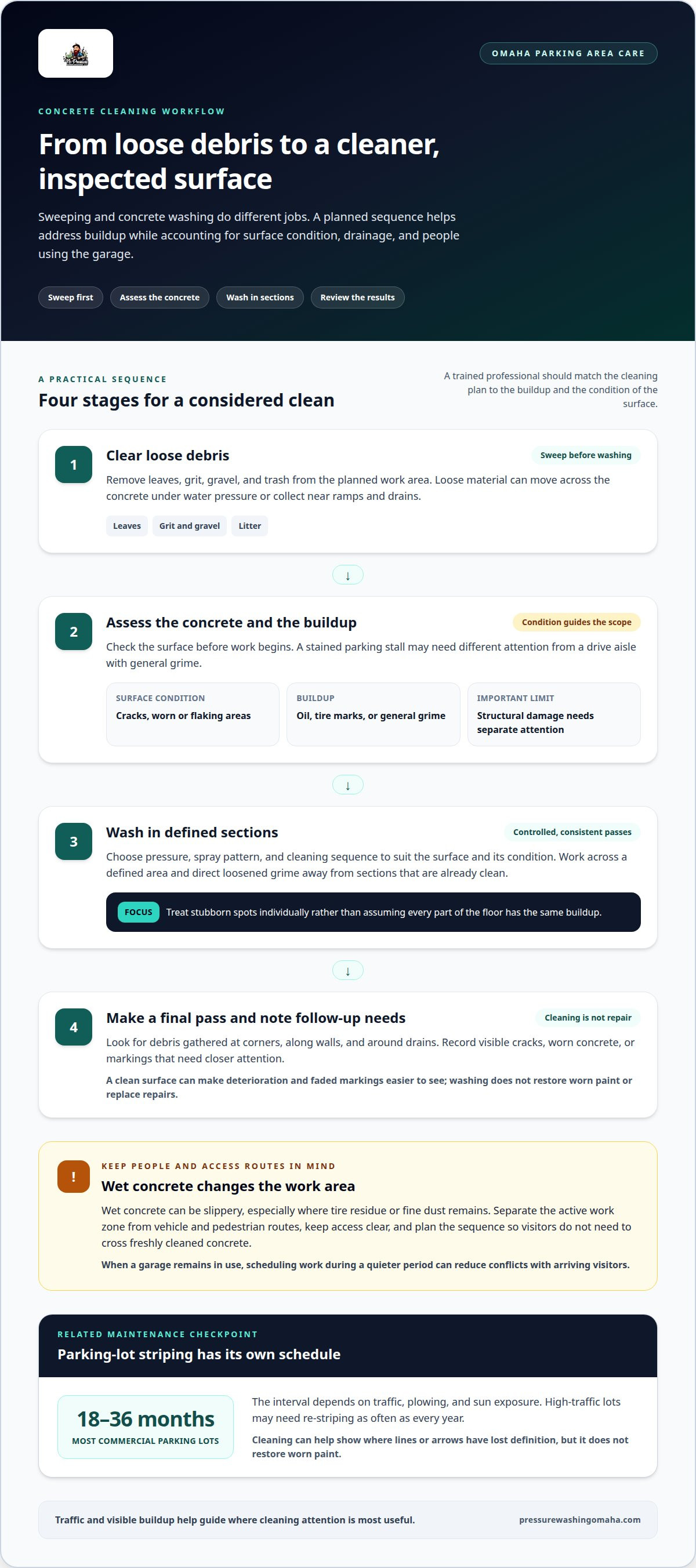
- Clear loose debris. A trained professional should sweep leaves, grit, and trash from the planned work area before washing begins.
- Assess the concrete. A trained professional should note cracks, worn sections, and oil or tire marks so the cleaning method suits the surface.
- Wash in sections. A trained professional should work across a defined area, keeping passes consistent and directing loosened grime away from clean sections.
Stubborn spots may need focused attention rather than cleaning across the entire floor. An oil mark near a parking stall, for example, differs from ordinary dust in a traffic lane. Identifying these areas first helps define the work and avoids treating every square foot as though it has the same buildup.
For parking garage cleaning in Omaha, power washing works best as part of a maintenance routine, not as a substitute for sweeping. Cleaning frequency depends on traffic and the buildup each property experiences. A garage entrance exposed to vehicle traffic may collect grime differently from a sheltered upper level. Matching pressure, spray pattern, and cleaning sequence to those conditions supports a more even result.
Parking garage and lot cleaning in Omaha
In Omaha, busy parking areas can quickly collect litter, grit, and vehicle residue. Entrances, drive lanes, and stalls see different patterns of foot and vehicle traffic. Regular upkeep keeps loose debris from accumulating and helps the property make a cared-for first impression. Treat a garage and an open lot as related spaces, but assess their surfaces and conditions individually.
Open lots receive weather and direct sun, while enclosed garages collect vehicle traffic and tracked-in grime. A retail lot may need sweeping where debris gathers near entrances, while garage corners and ramp edges can trap dust that routine passes miss. Sweeping removes loose trash; concrete cleaning addresses buildup that sweeping cannot lift.
Cleaning can also support broader upkeep. Removing grit from travel lanes can make surface markings easier to see, while a clean surface may reveal cracks, worn concrete, or areas where grime obscures deterioration. These observations do not replace repairs, but they help property managers identify where closer attention is needed. A cleaner surface also makes parking spaces and traffic directions easier to see.
Striping needs its own maintenance schedule. Most commercial parking lots need re-striping every 18 to 36 months, depending on traffic, plowing, and sun exposure. High-traffic lots may need re-striping as often as every year. Faded stall lines or arrows can make a lot harder to navigate, so cleaning and visual inspection work well together. Washing doesn’t restore worn paint; it helps show where markings have lost definition.
- Start with a walkthrough. Note debris, stains, faded striping, and damaged concrete in entrances, stalls, and ramps.
- Schedule the work by surface. Plan sweeping for loose material and washing for adhered grime.
- Review the results. Record areas needing follow-up maintenance, such as visible cracks or worn markings.
For properties with both a lot and a garage, a consistent schedule makes upkeep easier to manage. Traffic levels and visible buildup help determine where cleaning attention is most useful. If your property needs attention to concrete surfaces, discuss a cleaning plan suited to its parking areas.
Safety and quality practices
A safe cleaning plan starts with the people using the garage. Before work begins, the cleaning crew should separate the active work area from vehicle and pedestrian routes. For example, a ramp entrance needs clear direction around the work zone, not a hose stretched across the travel path. In an Omaha property, scheduling work during a quieter period can reduce conflicts between cleaning activity and arriving visitors.
Water changes surface conditions. Wet concrete can be slippery, especially where tire residue or fine dust remains. The crew should work in defined sections, keep access routes clear, and avoid leaving a wet path across an active entrance. If the garage stays in use, the crew should plan the sequence so visitors can reach open areas without crossing freshly cleaned concrete.
Debris management protects both finish quality and drainage. The cleaning crew should sweep leaves, grit, and trash before washing; otherwise, water can push loose material toward ramps or drains. Scheduled sweeping and concrete power washing help keep debris out of storm drains. A final pass should look for debris collected at corners, along walls, and around drain openings.
- Walk the area. A trained cleaning crew should note cracks, worn concrete, loose debris, and access routes before equipment arrives.
- Set the work zone. The crew should keep hoses and equipment away from vehicle paths and pedestrian access.
- Review the finish. After cleaning, the crew should look for missed stains, moved debris, and pooled water.
Equipment and technique also affect quality. A narrow spray aimed at one spot may leave an obvious mark or disturb a weakened surface. An operator should assess each concrete area and adjust the washing approach to its condition. For example, an older ramp with visible cracking needs more care than an open, sound section of floor. That judgment is one reason professional concrete cleaning methods matter for demanding surfaces.
At garage entrances, the route may continue across an exterior concrete apron or a paver walkway. Different surfaces call for different cleaning approaches, so the transition should be included in the site review. A concrete driveway surface or paver walkway adjoining the garage can also affect how people move around the work area.
Finish with a documented visual review. The cleaning crew should check the entrance, ramps, corners, and parking stalls, not just the main drive lane. They should compare the cleaned surface with the initial walkthrough, and note stains that remain or damage needing separate attention. Cleaning improves appearance, but it does not repair cracks or restore worn concrete. Keeping these limits clear helps property managers plan maintenance without confusing cleaning with structural repair.
Best methods for cleaning concrete parking garages
Concrete garage floors collect tire residue, tracked-in soil, and grime around stalls and ramps. Begin with a surface assessment: note cracks, flaking areas, oil spots, and drainage paths. These details matter because a sound drive lane can tolerate a different cleaning approach than worn concrete beside a ramp. Cleaning commercial concrete surfaces helps maintain the concrete’s structural integrity, but washing does not repair existing damage.
Remove loose material before cleaning. A broom or mechanical sweeper can lift grit, leaves, and trash that might otherwise spread across the floor. Pay attention to corners, wall edges, and drains, where debris often gathers. This first pass also makes stains easier to identify, helping focus attention on specific areas.
A professional should assess the concrete and soil, then select a suitable washing method. The method for an open floor area may differ from the treatment for a stained spot. Professionals can adjust pressure and technique to the surface, taking extra care with cracked or worn concrete, such as a garage ramp. They should also control runoff so loosened grime does not spread across the garage.
- Assess the surface. A professional should note visible damage, drainage paths, and areas that need attention.
- Select the method. The cleaning approach should suit the concrete’s condition and the type of soil.
- Inspect the result. A professional should check for remaining stains, pooled water, and debris shifted into corners or drains.
Water control is part of the method. A professional should direct runoff away from pedestrian routes and avoid pushing loosened grime into adjacent parking bays. Drain placement, floor slope, and the location of ramps all affect how water travels through a garage. For a multilevel structure, each level should be assessed separately instead of assuming the same flow pattern throughout.
Some marks may remain after cleaning. Oil can penetrate porous concrete, and surface cleaning may not remove deep discoloration. A professional can distinguish surface soil from staining or physical damage and set realistic expectations for the result. Regular sweeping between deeper cleanings helps limit loose buildup, while periodic inspections reveal changes in cracks and worn areas.
How to compare parking garage cleaning contractors
When evaluating a cleaning plan, compare the work described, not just the word “cleaning.” Check whether it covers ramps, corners, and entrances, or only open floor areas. A useful scope identifies the surfaces and problem spots, such as tire marks near stalls or grime along a ramp. For parking garage cleaning in Omaha, traffic patterns and surface condition should shape the plan.
Ask how the cleaning sequence addresses different types of buildup. A sound plan distinguishes loose grit from adhered stains and explains where sweeping ends and washing begins. For example, sweeping removes dry debris from a drive lane, while pressure washing targets grime that remains on concrete. The method should account for cracks and worn areas, rather than treating every floor section alike.
Check whether the work plan accounts for how the garage is used. An active entrance needs a sequence that separates cleaning activity from vehicle and pedestrian routes. Identify the areas to be cleaned, the order of work, and how access through ramps or drive lanes will be managed. These details clarify the practical impact on daily operations.
- Scope: Does the plan include entrances, ramps, corners, stalls, and other requested areas?
- Method: Does it distinguish sweeping from pressure washing and explain how stained spots are treated?
- Surface care: Does it account for cracked, worn, or otherwise vulnerable concrete?
- Follow-up: Does it identify visible issues, such as fading striping or cracks, that cleaning will not repair?
Striping is another useful comparison point. Most commercial parking lots need re-striping every 18 to 36 months, depending on traffic, plowing, and sun exposure. High-traffic lots may need re-striping as often as every year. Cleaning cannot restore faded markings, so a clear scope should distinguish washing from striping work and note when worn lines need separate attention.
Finally, define how the completed work will be reviewed. A practical walkthrough can cover the main drive lane, a ramp, and corners where debris gathers. It should also distinguish cleaning from repairs: cleaning may reveal a crack, but it will not fix it. Clear boundaries help property managers assess the work and plan separate maintenance as needed.
No Pressure Power Washing
No Pressure Power Washing provides Concrete Cleaning for concrete surfaces, along with exterior cleaning services for properties in the Omaha area. Parking garages and lots have specific access, drainage, and surface conditions, so a cleaning plan should reflect the site rather than assume every area needs the same treatment. Soft washing may reduce the risk of high-pressure damage, but it still requires a method suited to the surface.
A property may need concrete cleaned along an exterior approach while its parking area follows a separate maintenance schedule. A clear scope helps distinguish those needs. Concrete cleaning addresses surface buildup, while cracks, worn markings, and structural damage require separate attention. This distinction keeps expectations realistic and avoids treating cleaning as a repair.
No Pressure Power Washing also provides House Washing, Deck Cleaning, and Driveway Cleaning. These services may fit a property’s wider exterior maintenance needs, but they are distinct from maintaining a parking garage. A residence with a concrete driveway and a wooden deck, for instance, requires surface-specific cleaning approaches rather than one method applied everywhere.
- Concrete Cleaning: For exterior concrete surfaces with grime or accumulated buildup.
- Driveway Cleaning: For driveway surfaces that need cleaning as part of property upkeep.
- Deck Cleaning: For deck surfaces requiring their own careful cleaning approach.
- House Washing: For exterior house surfaces as part of broader property care.
When planning parking-area upkeep, consider the full property and assess each surface separately. A concrete entrance, driveway, deck, and house exterior can collect different types of buildup and need different cleaning approaches. No Pressure Power Washing provides exterior cleaning, including Concrete Cleaning. For a parking garage, factor traffic, surface condition, drainage, and access into the maintenance plan.
Describe which exterior surfaces need attention and the buildup you see. That gives the conversation a useful starting point, whether you’re considering Concrete Cleaning or coordinating care across other listed surfaces. For concrete with visible wear or damage, remember that cleaning addresses surface buildup, not repairs.
Make a Practical Plan for Your Property
Cleaner parking areas start with a maintenance plan that fits how the property is used. When planning parking garage cleaning in Omaha, consider which surfaces need routine attention and which need separate repair or maintenance. Clear priorities help you care for the property without expecting cleaning to solve every surface issue.
No Pressure Power Washing provides House Washing, Deck Cleaning, and Driveway Cleaning, with each service suited to a different exterior surface. For concrete with visible grime, professional Concrete Cleaning can be part of broader property upkeep. Damage or worn markings still need separate attention.
Choose a next step based on the surfaces you want cleaned and the condition you can see. Describe the property and its cleaning needs to start a focused conversation about the work.
Thoughtful care helps keep your property welcoming, one well-maintained surface at a time.
Frequently Asked Questions
What are the benefits of regular maintenance?
Regular maintenance gives property managers a record of how conditions change. Note recurring stains, damaged curbs, or areas where visitors track dirt indoors, then use those observations to prioritize future work. This record can also help distinguish a new issue from an existing one. Dated photos of a ramp, for example, can help document surface changes during a maintenance review.
Which parking garage cleaning companies serve Omaha, Nebraska?
No Pressure Power Washing serves the Omaha area and offers exterior cleaning relevant to property upkeep. For a garage-related need, its Concrete Cleaning offering is relevant to concrete surfaces. Omaha-area property managers can describe the location, surfaces, and specific concerns to start a focused discussion. Nearby communities in its local service area include Papillion, Elkhorn, Gretna, Bennington, Bellevue, and Valley.
What parking garage cleaning services are offered in Omaha?
Parking-area upkeep can involve more than surface cleaning, including separate maintenance for markings, lighting, drainage, and concrete repairs. No Pressure Power Washing provides Concrete Cleaning for concrete surfaces. For a property manager planning work in Omaha or Wahoo, separating cleaning from these other maintenance needs helps define the intended result and avoids treating a cleaning visit as a substitute for unrelated repairs or site work.
How do power washing and sweeping work together for Omaha parking garages?
Plan each task around the area’s condition rather than treating the entire facility identically. A covered level with little tracked-in material, for instance, may need a different plan from an exposed entrance after nearby construction. Record which areas collect residue most quickly, then use that history to plan cleaning without assuming every zone needs identical attention.
How often should a parking garage be cleaned?
Set the schedule according to observed conditions and changes in facility use. A property manager might review entrances after a tenant move, a busy event, or nearby work that brings extra dust and grit. If visible buildup returns quickly in one zone but not another, adjust the maintenance plan accordingly. A dated log can help show whether the schedule suits actual use.
What safety risks and precautions apply to parking garage cleaning?
Before work starts, identify site-specific concerns such as low-clearance areas, blind corners, and entrances used by delivery vehicles. Share these details with the cleaning crew so the plan accounts for how people and vehicles move through the facility. Use trained professionals for equipment-based cleaning, especially in a multilevel garage where access and visibility can vary from one area to another.


