

That high-pressure nozzle might seem like the right tool for those stubborn orange streaks, but the truth is that aggressive blasting often does more harm than good. When you're dealing with rust removal from concrete, you aren't just fighting a surface stain; you're managing a chemical reaction that has bonded with the porous structure of your driveway. We understand the frustration of watching your home's curb appeal decline while hardware store remedies fail to deliver on their promises. It's even worse when you're worried that a DIY acid wash might leave behind permanent white "burn" marks or etching that ruins the finish forever.
You deserve a solution that is both effective and gentle on your property. In this guide, we'll share the science-backed restoration methods we've refined over 30 years here in Omaha to eliminate deep-set stains safely. You'll learn why our local hard water often causes these issues and how to use biodegradable, eco-friendly treatments to achieve a clear, stain-free surface. We're going to pull back the curtain on professional techniques that prioritize property preservation over quick, destructive fixes, giving you the peace of mind that your investment is protected for the long term.
Key Takeaways
- Understand that rust is a chemical bond between iron oxide and your concrete, often triggered by Omaha's mineral-heavy irrigation water.
- Learn why professional rust removal from concrete relies on pH-balanced restoration rather than high pressure, which can actually push stains deeper into the surface.
- Identify the significant risks of using harsh DIY acids that can permanently etch or "burn" your driveway if not handled with professional precision.
- Discover the essential steps for protecting your lawn and landscaping through proper pre-wetting and neutralization techniques during the cleaning process.
- Explore long-term prevention strategies, such as adjusting irrigation patterns and applying professional sealers to keep your surfaces clear and protected.
Understanding the Root Causes of Concrete Rust Stains
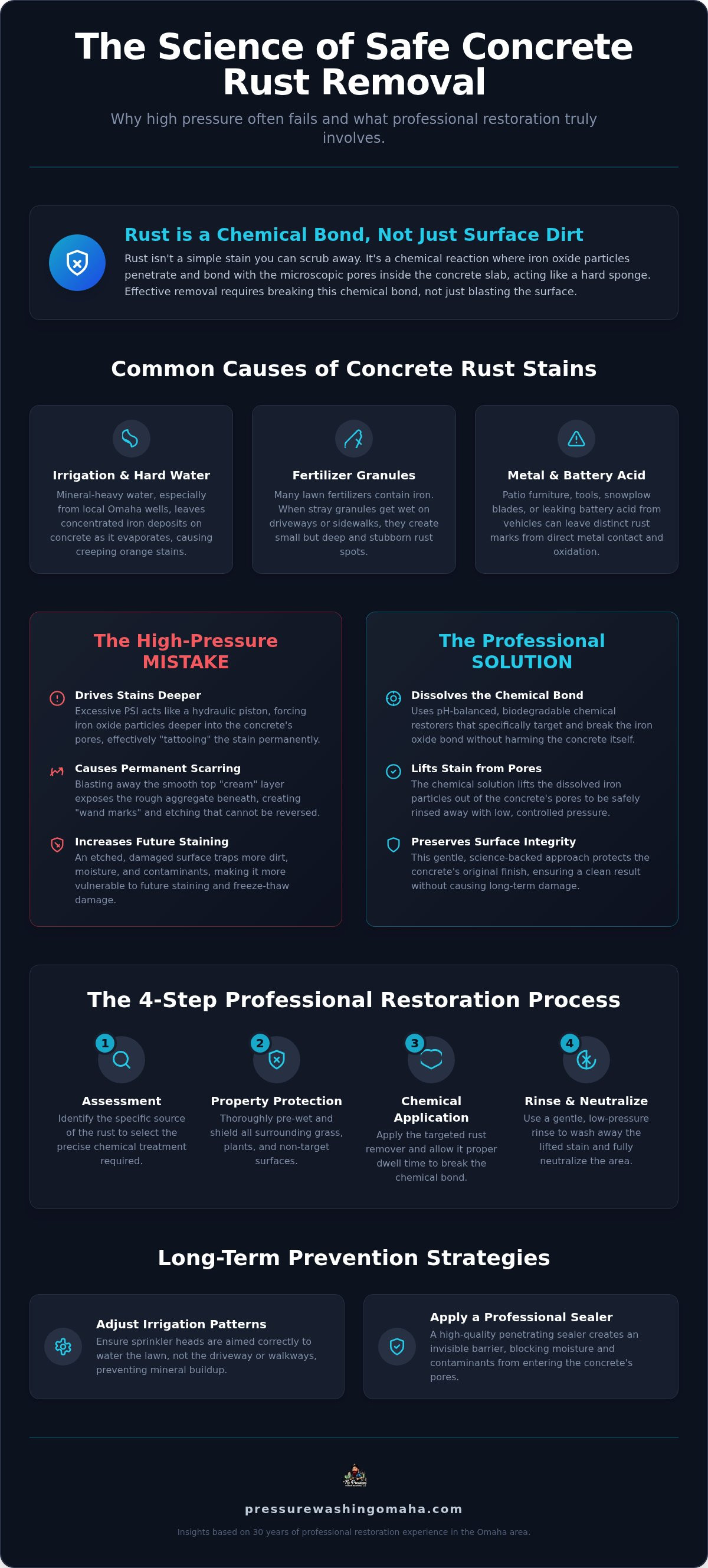
Rust is not merely a surface-level blemish that you can scrub away with soapy water. It is the result of an iron oxide reaction that chemically bonds to the cement paste within your slab. Because concrete is naturally porous, it acts like a hard sponge. When iron particles meet moisture and oxygen, they oxidize and sink into those microscopic pores, creating the stubborn orange discoloration homeowners dread. Successful rust removal from concrete requires understanding exactly where that iron originated.
The Role of Irrigation and Hard Water
In the Omaha area, our water supply is often mineral-heavy. Properties utilizing well water for irrigation frequently struggle with "creeping" stains that follow the spray pattern of the sprinkler heads. As the water evaporates, it leaves behind concentrated iron deposits. Over time, these deposits build up, turning the edges of sidewalks and driveways a deep, rusty orange. These stains are particularly frustrating because they return shortly after a basic cleaning if the underlying water chemistry isn't addressed. Our 30 years of local experience has shown that these mineral-driven stains are among the most common reasons residents seek professional concrete cleaning services.
Fertilizer Stains and Metal Oxidation
Your lawn care routine might also be a hidden culprit. Many high-quality fertilizers contain iron to help grass achieve that deep green color. If these granules land on your driveway and get wet, they create small, localized orange spots that are remarkably difficult to lift. Beyond chemicals, physical metal contact is a frequent factor. We often see rust marks left behind by:
- Metal patio furniture legs
- Snowplow blades and shovels
- Tools left out in the rain
- Leaking battery acid from golf carts or vehicles
Oxidation is a chemical bond that penetrates the concrete pores. While battery acid stains look similar to irrigation rust, they are actually a flash-burn from sulfuric acid and require a specialized neutralizing agent. Understanding these distinctions is the first step in a successful restoration project. For deep-set staining, a standard driveway cleaning won't be enough; you need a targeted chemical approach to break that molecular bond. This is why professional rust removal from concrete is considered a restoration service rather than a simple wash.
The Science of Concrete Restoration: Why Pressure Alone Fails
Concrete seems indestructible. It isn't. It's actually a porous material that "breathes" through a network of microscopic capillaries. When moisture carries iron into these pores, the rust forms inside the slab rather than just sitting on top of it. Most people reach for a high-pressure washer, thinking mechanical force is the only answer. However, using excessive PSI for rust removal from concrete often backfires. The water stream acts like a hydraulic piston, driving iron oxide particles deeper into the substrate where they become nearly impossible to reach. Instead of lifting the stain, you're effectively tattooing it into the concrete.
The Dangers of Surface Scarring
High-pressure cleaning often leads to permanent "scarring" or etching. This occurs when the top layer of the concrete, known as the "cream," is blasted away by a narrow spray pattern. Once this smooth finish is gone, the rough aggregate underneath is exposed. This creates a textured surface that traps dirt and moisture more easily than before. Etched concrete is far more vulnerable to future staining and the harsh Nebraska freeze-thaw cycles. To avoid this, it's vital to use professional concrete cleaning services that prioritize surface integrity. If you're already seeing light gray "wand marks" from a previous DIY attempt, you can consult with a restoration specialist to discuss your options.
Chemical Bonding vs. Surface Dirt
There is a fundamental difference between removing organic growth and mineral stains. Mold, mildew, and algae are biological organisms. They sit on the surface and die when exposed to standard detergents. Rust is different. It is a chemical bond between iron and oxygen that has fused with the cement paste. Standard soaps and degreasers simply don't have the chemical properties to break this molecular bond. Effective restoration requires a sophisticated understanding of pH levels. We use specialized chelating agents that "grab" the iron molecules and pull them out of the pores without needing destructive water pressure. By lowering the pH of the stain, we release its grip on the concrete, allowing it to be rinsed away safely. This scientific approach to rust removal from concrete ensures the stain is gone while the concrete remains strong and intact.
Evaluating DIY Rust Removal vs. Professional Restoration
When an ugly orange stain appears on your property, the temptation to grab a quick fix from a big-box store is understandable. However, effective rust removal from concrete isn't about using the most aggressive chemical you can find; it's about using the right one for the substrate. DIY attempts often result in what we call the "halo" effect. This occurs when a harsh cleaner over-cleans a localized spot, leaving a bright white circle that contrasts sharply with the naturally weathered concrete surrounding it. Instead of fixing the problem, you've created a permanent visual distraction that's nearly impossible to blend.
The Risks of Muriatic Acid
Muriatic acid is a frequent DIY recommendation, yet it functions as a blunt instrument for a delicate task. This powerful acid works by dissolving the top layer of the concrete to release the iron oxide. This often "burns" the surface, leaving it white, chalky, and structurally brittle. Once the protective "cream" layer is compromised, the concrete becomes significantly more porous and prone to premature wear. Beyond the slab, these acids pose a genuine threat to Omaha's local drainage systems and groundwater. If the runoff isn't neutralized with precision, it can kill your lawn and disrupt the soil's pH balance for years. Muriatic acid is often too aggressive for residential decorative concrete.
Professional Chelating Agents
Professional restoration relies on sophisticated chemistry rather than raw acidity. We utilize specialized chelating agents that are engineered to "grab" and encapsulate iron molecules without attacking the cement binder. This selective process ensures the rust is lifted from deep within the pores while the concrete remains strong and intact. One of the primary benefits of this professional approach is the consistency of the results. Because these solutions are gentle, we can apply them evenly across the entire surface during a thorough driveway cleaning. This prevents the patchy look associated with spot-cleaning. Our methods prioritize environmental responsibility, utilizing biodegradable and non-toxic solutions that protect your family and the local Omaha ecosystem. Entrusting rust removal from concrete to a specialist ensures your property is restored safely without the risk of permanent chemical damage.
Step-by-Step Guide to Safely Removing Rust Stains
Successful rust removal from concrete begins with a proper diagnosis. You need to know if you're fighting iron deposits from a sprinkler system or a flash-burn from a leaking vehicle battery. Each scenario requires a specific chemical concentration to be effective. Before any cleaning agent touches your driveway, you must prepare the workspace to prevent collateral damage to your home or landscaping. This isn't a task where you can "wing it" without risking permanent etching or dead grass.
Preparation and Safety Protocols
Personal safety is the first priority. Professional-grade restoration chemicals are effective because they are potent. We follow strict safety protocols, and you should too. As of May 19, 2026, OSHA required chemical manufacturers to update Safety Data Sheets and labels under the Hazard Communication Standard. This highlights the importance of understanding exactly what you're applying. Eye protection and chemical-resistant gloves are mandatory to prevent accidental burns. Beyond personal gear, protecting your Omaha landscape is vital. We thoroughly saturate surrounding grass, shrubs, and flowers with water before starting. This pre-wetting prevents the plants from absorbing any accidental overspray. Finally, never skip the "test spot" rule. Apply your solution to a small, hidden area first to see how your specific concrete reacts. This prevents a small mistake from becoming a property-wide disaster.
Application and Rinsing Techniques
When you're ready to apply the solution, consistency is key. You should apply the treatment evenly across the stained area to avoid "zebra stripes" or patchy results. Once applied, the chemical requires "dwell time" to work. This is the period where the cleaner reacts with the iron oxide to break its bond with the concrete. You must keep the surface wet during this phase; if the solution dries, it can trap the minerals back in the pores. After the stain has lifted, perform a thorough, low-pressure rinse. Unlike standard driveway cleaning, we don't use high PSI here. We want to float the neutralized rust particles out of the pores and off the slab. A final pH-neutralizing rinse ensures that no active chemicals remain to attract new dirt or harm your lawn's root system. This methodical approach to rust removal from concrete guarantees the best results without damaging your property.
Long-Term Prevention: Keeping Your Omaha Concrete Rust-Free
Once the orange streaks are gone, the goal shifts to preservation. Since Omaha's mineral-heavy water is a primary stain source, prevention starts with your landscaping. Adjusting irrigation heads is the simplest way to protect your investment. You should ensure that your sprinkler patterns are set to avoid "overspray" on sidewalks and driveways. Every gallon of hard water that evaporates on your concrete leaves behind a tiny amount of iron. Over a single summer, those microscopic deposits accumulate into the visible stains that ruin your curb appeal. Moving a sprinkler head even a few inches can save you from the frustration of recurring discoloration.
Sealing as a Protective Barrier
Sealing is your most effective line of defense against future staining. When we talk about rust removal from concrete, we are often dealing with iron that has migrated deep into the substrate. A high-quality sealer closes those microscopic pores, preventing moisture and minerals from taking hold. There is a significant difference between topical and penetrating sealers. Topical sealers create a film on the surface, which can be slippery or peel over time. Penetrating sealers, which we prefer for Omaha driveways, enter the concrete capillaries to create a hydrophobic barrier from within. This protection is similar to the specialized care required for paver cleaning, where maintaining surface integrity is essential for long-term durability. A properly sealed driveway won't just resist rust; it will also be easier to clean during your routine maintenance.
Maintenance and Professional Oversight
Regular maintenance is far more cost-effective than deep restoration. We recommend an annual cleaning schedule to catch mineral buildup before it has a chance to chemically bond with the cement paste. Catching these issues early saves you from the higher costs of future rust removal from concrete. You can find a complete seasonal checklist in our Omaha property maintenance guide to help keep your home in top condition throughout the year. If you discover a stain that has already set deep into the slab, don't risk the etching and "burning" associated with DIY acid washes. Our team has over 30 years of experience in the local environment, and we prioritize the safety of your property above all else.
Contact No Pressure Power Washing for a free rust removal estimate
Restoring the Value and Beauty of Your Omaha Property
Professional rust removal from concrete is a meticulous restoration process that requires the right balance of chemistry and care. Relying on high water pressure or harsh store-bought acids often leads to permanent scarring and environmental damage. By understanding the mineral content in our local water and the porous nature of your driveway, you can make informed decisions that protect your home's long-term value and curb appeal.
Our team brings over 30 years of local experience to every project. We are licensed and insured specialists who act as the trusted guardians of your investment. We use eco-friendly, non-toxic solutions that effectively lift deep-set stains while remaining gentle on your landscaping and the local Omaha ecosystem. You can trust that we prioritize property preservation over quick, destructive fixes that might compromise the integrity of your concrete.
You don't have to live with stubborn orange streaks ruining your curb appeal. Let us help you restore your concrete surfaces to their original, pristine condition safely and efficiently. We're here to provide the expert guidance and professional results your property deserves.
Frequently Asked Questions
Can I use a pressure washer alone to remove rust from my driveway?
No. High pressure typically fails because rust is a chemical bond, not surface dirt. Blasting it with high PSI can push iron oxide deeper into the concrete's pores or etch the surface permanently. We recommend a chemical restoration approach that breaks the molecular bond safely without the risk of scarring. This methodical process ensures the stain is lifted rather than just being driven further into the substrate's capillaries.
Will rust removal chemicals kill my grass or plants?
They can if not handled with professional care. We use biodegradable, non-toxic solutions and follow a strict pre-wetting protocol to saturate your lawn and landscaping first. This prevents the plants from absorbing the cleaning agents. When applied correctly and neutralized afterward, these treatments are safe for your Omaha landscape. We prioritize property preservation to ensure your greenery remains healthy while your concrete gets clean.
Why do rust stains keep coming back after I clean them?
Stains often return because the source of the iron hasn't been addressed. In Omaha, mineral-heavy irrigation water is a frequent culprit. If you clean the surface but continue to spray hard water on the slab, new deposits will form. Additionally, if the concrete pores remain open, they'll trap new minerals quickly. Professional sealing after rust removal from concrete is the best way to break this cycle for good.
Is it safe to use muriatic acid on my concrete patio?
We strongly advise against using muriatic acid for residential projects. While it's a common DIY suggestion, it's a "hot" acid that eats away the top "cream" layer of your concrete. This leaves the surface white, chalky, and more susceptible to future staining. It also poses significant risks to your skin, eyes, and local groundwater. Professional chelating agents are a much safer and more effective alternative for your property.
What is the difference between a rust stain and a fertilizer stain?
Rust stains are usually broad and "creeping," often caused by metal contact or irrigation. Fertilizer stains appear as small, localized orange spots where granules landed and dissolved. Both involve iron oxide, but fertilizer stains can be more concentrated. Identifying the specific source helps us choose the right chemical concentration for rust removal from concrete. This ensures we lift the pigment without damaging the surrounding substrate or leaving behind uneven patches.
How long does a professional rust removal treatment take to work?
Most treatments require a dwell time of 15 to 30 minutes, depending on the severity of the stain. During this period, the specialized chemicals react with the iron to release its grip on the concrete. Some deep-set stains might require a second application to achieve full restoration. We monitor the reaction closely to ensure the surface stays wet; allowing the solution to dry can trap the minerals back inside the pores.
Can old, deep-set rust stains be completely removed?
Most deep-set stains can be significantly lightened or removed entirely through professional restoration. However, success depends on whether the concrete was previously etched by high pressure or harsh acids. If the surface is physically damaged, the "shadow" of the stain might remain. We're honest about these limitations and always perform a test spot to give you a realistic expectation of the final results before the full project begins.
Should I seal my concrete after removing rust stains?
Yes, sealing is a critical final step in the restoration process. Once the pores are cleaned out, they're essentially "open" and ready to absorb new moisture and minerals. A high-quality penetrating sealer creates a hydrophobic barrier that keeps iron and water from sinking back into the slab. This simple preventative measure extends the life of your cleaning and makes future maintenance much easier for busy Omaha homeowners who want lasting results.


