

Cedar restoration is a chemical process of pH balancing, not a mechanical process of high-pressure blasting. If you've noticed your deck turning a dull, weathered gray or developing dark patches of algae during a humid Nebraska summer, your first instinct might be to reach for a high-powered rental machine. However, professional cedar deck cleaning services prioritize the health of the wood fibers over raw force. Using excessive pressure on soft cedar often leads to "furring" or permanent scarring. This destroys the very investment you're trying to save.
We understand the pride you take in your outdoor living space. It's frustrating to see that natural honey-red glow fade away under layers of organic growth. This guide will show you how to safely reverse years of environmental wear while extending your deck's lifespan by another 10 to 15 years. You'll discover the exact steps we use in Omaha, Papillion, and Elkhorn to neutralize pH levels and prep the wood for a flawless finish. We're going to walk through the professional checklist required to restore beauty and structural integrity without the risk of splinters.
Key Takeaways
- Learn how Nebraska's harsh UV cycles break down cedar's natural lignin and how to spot early signs of wood rot before they become costly repairs.
- Discover why professional cedar deck cleaning services prioritize soft-wash methods to avoid the permanent "furring" and scarring caused by standard pressure washers.
- Understand the critical role of pH balancing and wood brighteners in restoring the vibrant, honey-red color that basic cleaning solutions often leave looking dull or dark.
- Follow a comprehensive inspection and protection checklist designed to shield your landscaping and extend your deck's life by an additional 10 to 15 years.
The Science of Cedar: Why Omaha Decks Require Specialized Care
Cedar is a favorite for Omaha homeowners because of its natural durability and striking appearance. Most decks in our area are built from Western Red Cedar, a softwood prized for its internal oils and tannins that naturally repel rot and insects. While these properties make it a premium building material, they also make the wood highly reactive to the environment. Understanding the molecular structure of your deck is the first step in effective preservation. It's not just about aesthetics; it's about managing the chemistry of a living material.
Understanding Lignin and UV Degradation
Nebraska’s intense summer sun acts as a relentless abrasive on wood surfaces. UV rays break down lignin, which is the organic glue that holds wood fibers together. Once this glue dissolves, the cellulose fibers on the surface die and detach, resulting in that familiar silvery-gray weathered appearance. When we provide cedar deck cleaning services, our goal is to safely remove these dead fibers. If you apply a stain over dead cellulose, the finish will peel within a season because it has nothing structurally sound to grab onto. Proper restoration requires removing the "gray" to reach the healthy, structural wood underneath.
The Role of Natural Tannins in Cedar
Tannins are the chemical compounds that give cedar its iconic color and rot resistance. However, these compounds are water-soluble and highly sensitive to pH changes. If a cleaner uses high heat or aggressive alkaline chemicals, it can draw out these tannins to the surface. This results in tannin bleed, leaving dark, scorched-looking stains that are difficult to remove. Managing wood chemistry is a delicate balance. It requires a deep understanding of how different solutions interact with the wood's natural defenses to ensure the surface remains bright and healthy rather than chemically burnt.
Omaha’s climate presents a specific set of challenges for wood preservation. Our humid summers create a breeding ground for organic growth. Mold and mildew spores settle into the porous grain of the cedar, flourishing in the heat. This biological pressure is even more intense for properties in Gretna or Elkhorn that feature significant tree cover. Shade prevents the wood from drying completely after a rain, allowing fungi to take root. Professional cedar deck cleaning services must address this at a microscopic level, using solutions that kill the spores without damaging the delicate wood cells. This specialized approach is the only way to protect your investment from the inside out.
The Essential Cedar Deck Cleaning Checklist: A Step-by-Step Guide
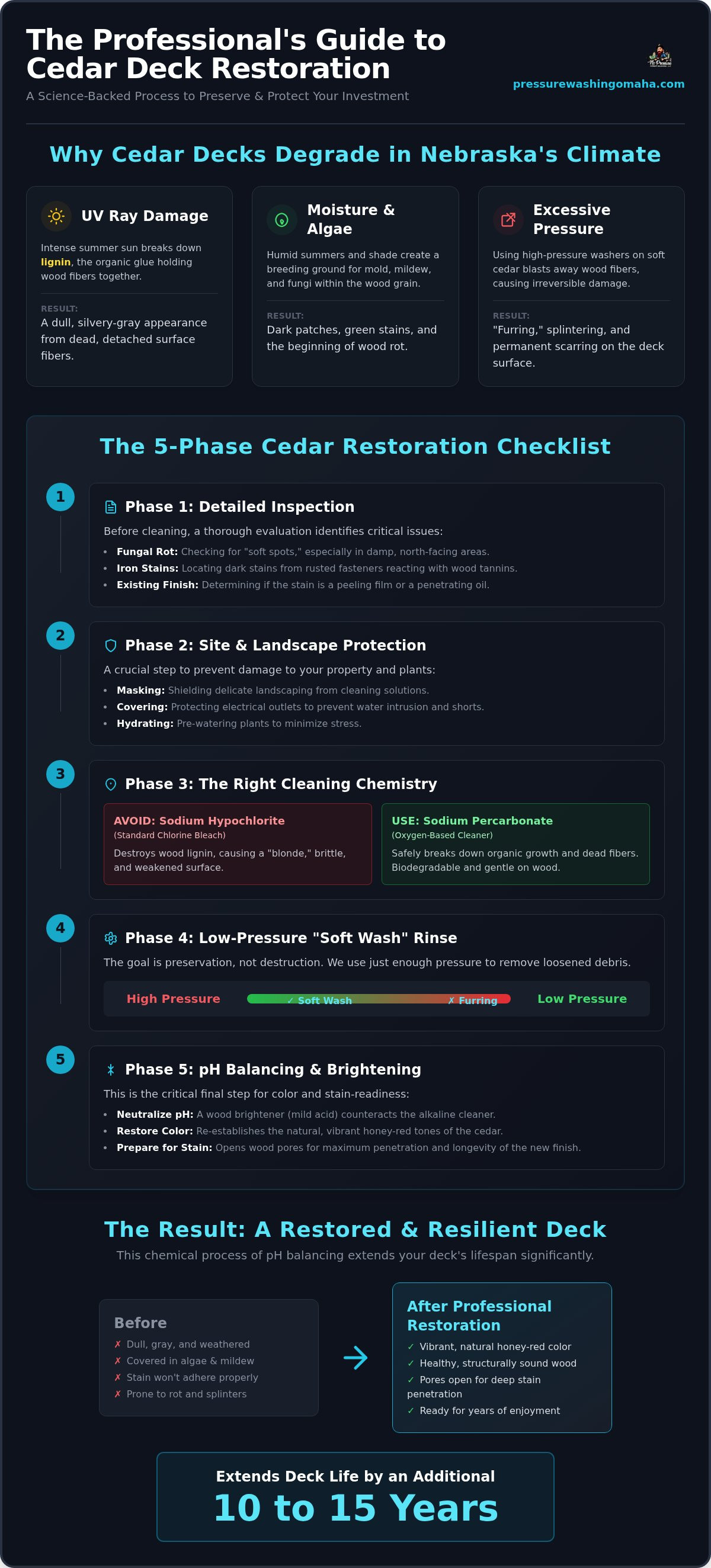
Proper cedar care isn't just about appearance; it's about structural preservation in Omaha’s volatile climate. Our 30 years of local experience providing cedar deck cleaning services has refined a five-phase process that ensures deep cleaning without sacrificing the wood's integrity. By following a methodical sequence, we address the unique environmental pressures that Nebraska decks face throughout the year.
The Inspection Checklist for Omaha Homeowners
Before any water hits the wood, a detailed evaluation is necessary. In the Omaha metro, north-facing deck sections often stay damp longer, making them prime targets for "soft spots" or fungal rot. You should also look for rusted fasteners. When iron reacts with cedar's natural tannins, it creates dark "iron gall" staining that requires specific chemical treatment to remove. It's also vital to determine if your current finish is a film-forming stain, which peels like paint, or a penetrating oil, as each requires a different removal strategy during the cleaning process.
Once the inspection is complete, protection becomes the priority. We mask delicate landscaping and cover electrical outlets to prevent water intrusion. Nebraska's humid summers mean your plants are often already heat-stressed; we ensure they stay hydrated and shielded from any cleaning solutions. This step is frequently skipped in DIY projects, leading to "burnt" leaves or electrical shorts.
Choosing the Right Cleaning Chemistry
We strictly avoid sodium hypochlorite, or standard chlorine bleach, because it destroys lignin and leaves wood looking "blonde" and brittle. Instead, professional cedar deck cleaning services utilize sodium percarbonate. This oxygen-based cleaner effectively breaks down organic growth and gray fibers while remaining biodegradable. The U.S. Department of Agriculture’s Forest Products Laboratory notes that maintaining wood decks with the right chemistry is the only way to prevent premature fiber failure. When applying these solutions, we work from the bottom up on vertical surfaces like railings to prevent permanent streak marks.
The "No Pressure" method is our signature for the rinsing phase. We use specialized equipment to deliver a low-pressure rinse that gently lifts away loosened gray fibers. This prevents the "furring" or splintering that ruins the tactile feel of the wood. The final step is neutralization. Because cleaners are alkaline, they leave the wood in a state where it cannot properly absorb new stain. Applying a citric or oxalic acid brightener restores the pH balance and brings back the natural honey-red glow of the cedar. If you're unsure about the current state of your wood, you can always request a professional assessment to see what your deck specifically needs.
Pressure vs. Preservation: Avoiding Irreversible Damage to Wood Fibers
Using a standard pressure washer on a cedar deck is often like using a sledgehammer to hang a picture frame. While the intent is to clean, the mechanical force often results in permanent structural damage. Cedar is a delicate softwood, and its beauty lies in its tight, straight grain. When high-pressure water hits these fibers, it doesn't just remove dirt; it shreds the wood surface. Professional cedar deck cleaning services emphasize preservation because we know that once wood fibers are shredded, the damage is irreversible. This creates a "fuzzy" texture known as furring, which is essentially a layer of splinters that makes the deck uncomfortable for bare feet and nearly impossible to stain evenly.
The Technical Dangers of High PSI on Softwoods
The vulnerability of cedar is best understood through the Janka hardness scale, which measures the resistance of wood to denting and wear. Western Red Cedar typically has a Janka rating between 350 and 580. For comparison, concrete is exponentially harder, and even common hardwoods like Oak rank over 1200. When an Omaha homeowner rents a machine from a local hardware store, they often don't realize that the 3000 PSI output is nearly ten times what a cedar board can safely withstand. Learn more about our specialized deck cleaning process to see how we avoid these mechanical pitfalls.
Beyond furring, high pressure often leaves "wand marks" or "lap marks." These are permanent zig-zag patterns etched into the wood by the high-velocity stream. Because cedar is so soft, these scars cannot be simply washed away; they often require aggressive, expensive sanding to correct. Even more concerning is the risk of deep tissue damage. Forceful water streams can drive moisture inches deep into the wood grain. This trapped water creates an internal environment where rot can flourish from the inside out, even if the surface looks clean. Professional cedar deck cleaning services avoid these risks by letting chemistry do the heavy lifting.
Professional Soft-Washing vs. Standard Power Washing
The soft-wash alternative replaces brute force with a methodical, gentle soak. Instead of blasting the surface, we apply specialized, biodegradable solutions that break down the bond between contaminants and the wood fibers. This allows us to rinse the deck at a pressure similar to a garden hose. This method preserves the integrity of the wood for decades longer than traditional power washing. Professional cedar care is an investment in longevity, not just aesthetics. By choosing preservation over pressure, you ensure your deck remains a safe, beautiful part of your home for years to come.
Restoring the Glow: pH Balancing and the Role of Wood Brighteners
If you've ever cleaned a deck yourself and were disappointed when the wood turned a dark brown or charcoal color instead of a bright honey-red, you've likely witnessed a pH shift. Most effective cleaners are alkaline bases. While they're necessary to kill mold and strip old oils, they naturally darken the wood fibers. This is particularly true for cedar because of its high tannin content. Professional cedar deck cleaning services don't stop after the rinse; we follow up with a neutralizing agent to restore the wood's natural glow and structural health.
Why Neutralization is the Most Skipped Step in DIY
Neutralization is a simple chemical reaction between a base and an acid. We use citric or oxalic acid brighteners to bring the wood back to a slightly acidic state, which is its natural baseline. Skipping this step is the primary reason for premature stain failure. If the wood remains alkaline, it will chemically reject the new sealer, leading to peeling and flaking within a few months. As a trusted guardian of your property, we believe that if a contractor doesn't mention pH balancing, they aren't a true wood specialist. They're simply power washing without understanding the material.
Preparing for the Sealing Phase
Restoring the color is only half the battle. Before any stain can be applied, the wood must be properly prepped to drink in the product. Brightening opens the wood pores that were previously clogged or collapsed during the cleaning phase. However, timing is everything in the Omaha metro. Because of the high humidity in areas like Papillion and Bellevue, wood takes longer to dry than in more arid climates. We use moisture meters to ensure the wood is below 15% moisture content before moving forward. Sealing wood that is too damp traps moisture inside, which inevitably leads to internal rot and black mold growth under the finish. You can find more details in our Deck Cleaning in Omaha: The Complete Guide to Wood Preservation (2026).
The visual transformation during this stage is often breathtaking. You'll see the wood shift from a dull, lifeless brown to a vibrant "new wood" honey tone in real time. This chemical prep work ensures that your new coat of stain doesn't just sit on top of the wood but becomes part of it, providing a durable shield against the elements. It's the difference between a temporary fix and a long-term restoration that adds 10 to 15 years to your deck's life.
Choosing Professional Cedar Deck Cleaning Services in the Omaha Metro
Omaha’s weather is notoriously hard on wood. We experience a 100-degree swing between our humid, scorching summers and our sub-zero winters. This constant expansion and contraction puts immense stress on cedar fibers. When you search for cedar deck cleaning services, you need a partner who understands these local stressors. It's not just about the wash; it's about preparing the wood to survive the next blizzard and the next heatwave. We've spent 30 years refining a process that respects the biology of the wood while standing up to Nebraska's volatile climate.
We've served as the trusted guardians of outdoor spaces across Gretna, Papillion, and the wider metro area. We've seen how decks deteriorate when treated with generic, high-pressure methods. If you're interviewing a contractor, ask about their chemical philosophy. If they don't mention pH balancing or if they plan to use high-pressure tips, they aren't wood specialists. They're likely using "brute force" tactics that save them time but cost you the life of your deck. A true specialist prioritizes the long-term health of the wood over a fast turnaround.
The No Pressure Power Washing Promise for Omaha Homeowners
At No Pressure Power Washing, our commitment to your home goes beyond the wood itself. We use non-toxic, biodegradable solutions that are safe for your children, your pets, and your lawn. This "No Pressure" approach ensures we never compromise the structural integrity of the cedar. From Elkhorn to Bennington, we provide a methodical service that respects your property and your peace of mind. We believe in doing the job correctly the first time, ensuring your deck remains a beautiful retreat for years to come.
Why "Cheap" Cleaning Costs More in the Long Run
It's tempting to hire a "fly-by-night" contractor who offers a rock-bottom price. However, these services often rely on high pressure to finish quickly. This leads to the furring and scarring we discussed earlier, which can only be fixed with labor-intensive sanding. The cost of professional maintenance is a fraction of the price of a total deck replacement. Protecting your investment now adds a decade or more to its lifespan. Explore our full range of exterior house washing services to see how we maintain every surface of your home with the same level of care and precision.
Securing Your Outdoor Investment for the Seasons Ahead
Your cedar deck is more than just wood and nails; it's a centerpiece for family gatherings and a significant financial investment. Successful restoration relies on the chemistry of pH balancing rather than the brute force of a standard pressure washer. By prioritizing soft-wash techniques and professional-grade brighteners, you protect the delicate fibers from the "furring" that destroys so many outdoor spaces. It's about working with the wood's biology to ensure it remains durable against the elements.
Choosing the right cedar deck cleaning services ensures that your wood remains structurally sound and visually stunning despite Nebraska's extreme weather shifts. With over 30 years of local experience, our fully insured family business specializes in the precise soft-wash methods required for long-term wood preservation. We take pride in being the trusted guardians of your property in Papillion, Elkhorn, and Gretna. Taking these steps today can add 10 to 15 years to your deck's lifespan while restoring its natural honey-red beauty.
We're here to help you bring back that vibrant glow and keep your deck healthy for many seasons to come.
Frequently Asked Questions
Can I use a pressure washer on my cedar deck?
You should avoid using a high-pressure washer on cedar. Because cedar is a softwood with a low Janka rating, high PSI will shred the fibers and cause permanent furring. Our specialized cedar deck cleaning services utilize soft-wash equipment. This method relies on chemistry rather than brute force to lift away contaminants without damaging the wood's structural integrity.
How often should a cedar deck be professionally cleaned in Omaha?
Most Omaha decks require professional cleaning every 2 to 3 years. Our local climate features high humidity and heavy pollen counts that accelerate organic growth like mold and algae. Regular maintenance prevents these organisms from rooting deep into the grain. If your deck is under heavy tree cover in areas like Gretna, you might need more frequent care to prevent rot.
Is it better to clean a deck with bleach or vinegar?
Neither bleach nor vinegar is the ideal choice for professional-grade cedar restoration. Chlorine bleach is too aggressive and destroys the lignin that holds wood fibers together. Vinegar lacks the strength to kill deep-rooted mold spores. We use sodium percarbonate, an oxygen-based cleaner that effectively removes gray fibers and organic growth while remaining biodegradable and safe for your home.
How long does it take for a cedar deck to dry after a professional cleaning?
It typically takes 48 hours for a cedar deck to dry completely in the Omaha metro. This duration can vary based on local humidity levels and whether your deck is in a shaded or sun-drenched spot. We always utilize moisture meters to ensure the wood is below 15% moisture content. This step is vital to ensure that any subsequent stain or sealer adheres properly.
What happens if I don’t brighten the wood after cleaning?
Skipping the brightening step leaves the wood in an alkaline state, which causes it to look dark and prevents stain adhesion. Brightening neutralizes the pH levels and opens the wood pores. Without this chemical balance, your new coat of stain will likely peel or flake off within a few months. It's the difference between a surface-level wash and a true restoration.
Will the cleaning chemicals harm my plants or grass?
Our biodegradable, non-toxic solutions won't harm your grass or landscaping. We take extra precautions by pre-wetting your plants and using shielding techniques during our cedar deck cleaning services. This protective approach ensures your garden stays healthy while we restore the wood. We prioritize the safety of your property, pets, and family throughout the entire cleaning process.
Can you clean a cedar deck in the winter?
Cleaning is not recommended when temperatures are below freezing. Water trapped in the wood pores can freeze and expand, which causes the cedar to crack or split. We typically perform these services from early spring through late fall. This ensures the wood has enough time to dry in temperatures that stay consistently above 40 degrees Fahrenheit for the best results.
Should I sand my deck instead of cleaning it?
Sanding should be a last resort for physical damage, not a standard cleaning method. Professional cleaning removes organic growth that sandpaper often pushes deeper into the wood grain. Most weathered decks only need a chemical restoration to look new again. Sanding is labor-intensive and creates a mess that is often unnecessary if the wood is treated with the right chemistry.


