

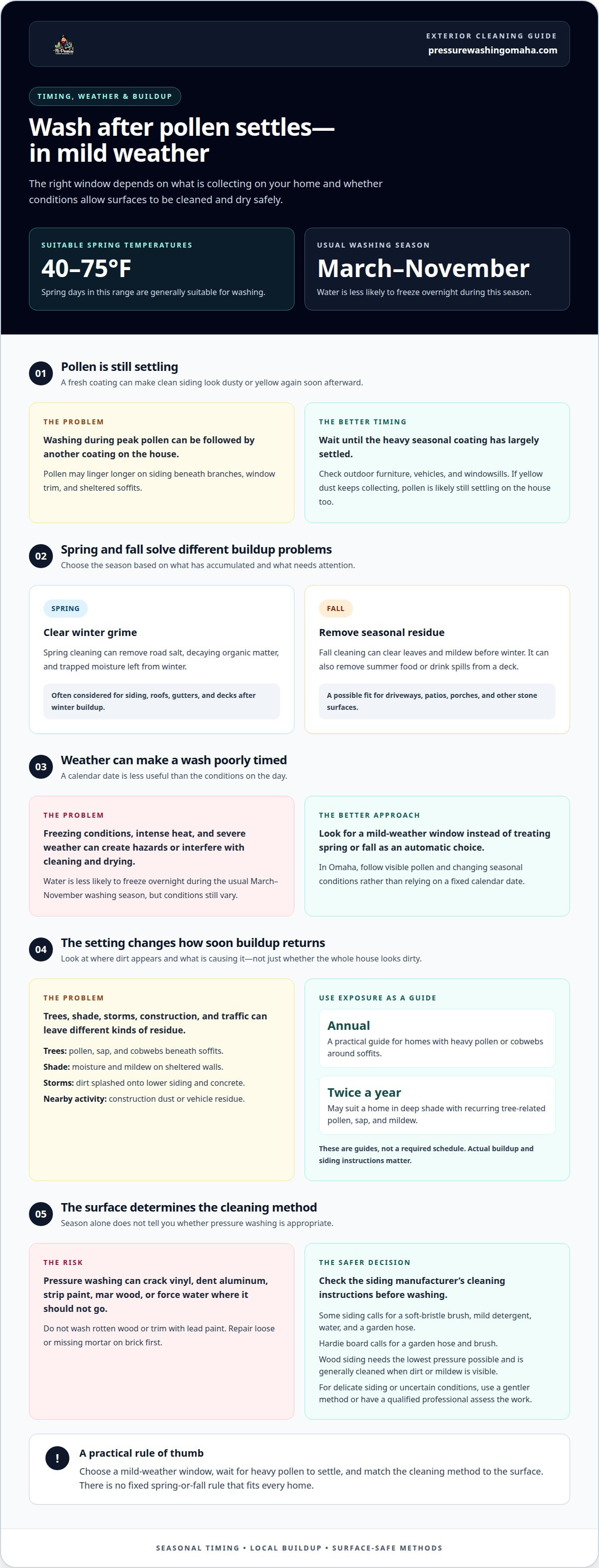
Spring isn’t automatically the right day to wash your home. The best time of year to pressure wash a house is usually late spring, after pollen has settled, when temperatures are mild; spring days between 40 and 75 degrees Fahrenheit are generally suitable. Fall can also work well if the weather is mild and you want to clear away leaves, mildew, or grime before winter.
Choosing the right window matters because fresh pollen can quickly coat clean siding, while heat, humidity, and freezing conditions affect drying and surface safety. This guide explains how seasonal buildup, pollen, temperature, and local humidity shape the timing, including why Omaha homeowners may choose a different washing window from one year to the next. You’ll also learn when a spring or fall wash makes sense and what conditions are better avoided.
Key Takeaways
- Choose a mild-weather window and time the wash around seasonal buildup, rather than relying on a fixed spring-or-fall rule.
- Account for pollen, shade, trees, sap, and nearby environmental sources that can make exterior surfaces dirty again sooner.
- Check siding manufacturer recommendations before cleaning; some materials call for gentler methods than pressure washing.
- Avoid freezing conditions, intense heat, and severe weather, which can create hazards or interfere with cleaning and drying.
- Use humidity and the surfaces that need attention to decide whether house washing, deck cleaning, or concrete cleaning is the right next step.
1. When Is the Best Time to Power Wash a House?
The best time of year to pressure wash a house is usually spring or fall, when temperatures are mild. Spring is suitable when outdoor temperatures are between 40 and 75 degrees Fahrenheit. In most places, the washing season runs from March through November, when water is less likely to freeze overnight. There’s no fixed rule that makes spring or fall right for every home.
In spring, washing can remove winter grime, including road salt, decaying organic matter, and trapped moisture. It’s also a practical time to clean siding, roofs, gutters, and decks after winter buildup. Fall cleaning can remove leaves and mildew before winter, and can suit driveways, patios, porches, and other stone surfaces. Cleaning summer food or drink spills from a deck can also keep residue from remaining through winter.
Choose a method based on the siding material, not just the season. Before washing, check the siding manufacturer’s cleaning instructions. Some manufacturers recommend avoiding pressure washing and instead using a soft-bristle brush, mild detergent, water, and a garden hose. For vinyl and aluminum siding, an unheated washer may be preferable to heated power washing. Hardie board siding calls for a garden hose and brush. Wood siding needs the lowest pressure possible, and washing is generally reserved for visible dirt or mildew unless very gentle cleaning is used for annual pollen or cobweb removal.
Cleaning frequency also depends on siding type and exposure. A full house wash once or twice a year is a general guideline for siding that is safe to wash. Vinyl, metal, or composite siding is commonly washed annually, while wood siding is cleaned when dirt or mildew builds up. Homes near the coast may need washing twice a year to address salt exposure. Local water restrictions or HOA rules can affect scheduling, water use, or permitted methods, so check local notices and community rules before planning the work.
Pressure washing can crack vinyl, dent aluminum, strip paint, mar wood, or force water into unwanted places. Don’t wash rotten wood or trim with lead paint; repair loose or missing mortar on brick first. For delicate siding or uncertain conditions, use a gentler method or hire a qualified professional to assess and handle pressure washing.
2. Environmental causes of exterior buildup
A home’s surroundings affect what collects on its exterior and how often cleaning may be useful. Leafy trees can leave pollen and sap on siding, while branches and shaded walls can shelter moisture and mildew. Cobwebs often collect beneath soffits. A house with trees close to its walls may need attention sooner than a more exposed home.
Other sources come from beyond the yard. Heavy storms can splash dirt onto lower siding and concrete, while nearby construction can spread dust across windowsills and walls. Vehicle exhaust may leave residue on surfaces near a busy road or driveway. Smoke from forest fires can also add particles to exterior surfaces, even when the fire is not nearby.
Look at where buildup appears, rather than judging only whether the whole house looks dirty. Examples include:
- Pollen and cobwebs around leafy trees or shaded soffits.
- Sticky sap beneath branches that extend over the roof or siding.
- Dust on walls facing nearby construction.
- Dark residue on surfaces near vehicle traffic or exhaust.
- Storm-splashed dirt along the lower exterior and walkways.
These patterns can help guide timing. Homes with heavy pollen or cobweb-covered soffits may suit annual cleaning. A home in deep shade may need cleaning twice a year to address tree-related pollen, sap, and mildew. These are practical guides, not a schedule every house needs: the amount of buildup and the siding’s cleaning requirements still matter.
For example, if pollen repeatedly coats a shaded wall, cleaning once the buildup is noticeable may make more sense than waiting for grime to spread across the exterior. If construction dust is the main issue, consider whether it is still settling before scheduling. On concrete near a driveway, vehicle residue and storm-splashed dirt can also point to areas that need attention. Match the cleaning method to the affected surface instead of treating every mark the same way.
3. Seasonal timing after pollen settles
Late spring, after pollen has settled, is often a good time to clean a home’s exterior. Cleaning during peak pollen can leave siding dusty or yellow again soon afterward. If outdoor surfaces have a fresh coating, wait until the heavy pollen has passed before scheduling, so the cleaned surfaces are less likely to be immediately recoated.
In Omaha, visible pollen can help guide timing. If yellow dust is still collecting on patio furniture, vehicles, or windowsills, more is likely settling on the house. Once those surfaces stay cleaner between checks, cleaning is less likely to be followed immediately by another coat. Pollen timing varies with local trees and seasonal conditions, so watch the buildup rather than relying on a calendar date.
Consider where pollen gathers most. Siding beneath tree branches, trim around windows, and sheltered soffits can hold pollen longer than exposed surfaces. You may also notice it collecting on a shaded wall or around outdoor fixtures. These clues can help distinguish widespread seasonal coating from isolated dirt with another cause.
A practical timing check is simple:
- Look for yellow residue on outdoor furniture and nearby surfaces.
- Notice whether pollen continues to collect on windowsills or siding.
- Wait until the seasonal coating has largely settled before arranging a wash.
- Consider tree coverage, since surfaces beneath branches may collect pollen longer.
Waiting for pollen to settle does not mean postponing cleaning indefinitely. If grime or biological growth is already visible, the siding’s condition still matters. Follow the manufacturer’s cleaning instructions and use a method suited to the material, especially on delicate siding. Timing around pollen can help prevent quick re-soiling, but it does not replace material-specific care.
Late spring can also be useful for coordinating exterior cleaning. If you plan to clean several outdoor surfaces, scheduling after pollen settles can avoid washing one area during the heavy coating and needing to repeat the work later. This matters especially where trees surround the home or pollen collects in sheltered corners. A clean surface is also easier to assess when fresh pollen no longer obscures stains or residue.
Choose the season by observing your property, not just the month. When pollen has eased and outdoor surfaces remain comparatively clear, you can plan cleaning around that seasonal lull. If trees are still shedding pollen, waiting for the coating to settle can help the result last longer.
4. Avoiding extreme temperatures
Temperature affects drying, cleaning performance, and safety around a home. Washing below 40 degrees Fahrenheit can leave ice behind, while freezing water in cracks or crevices can worsen existing damage. In Omaha, avoid scheduling exterior washing when overnight conditions could freeze wet surfaces. A walkway that looks merely damp during the work can become slick as temperatures fall.
Warm weather has different drawbacks. Above 75 degrees Fahrenheit, especially in intense sunlight, water and cleaning solutions can dry too quickly and leave stains or streaks. Heat can also affect how cleaning chemicals work. For example, a sunny wall may dry sooner than a shaded wall, creating uneven results if the cleaning solution does not have time to work consistently.
A mild day is generally more suitable than either extreme. Spring temperatures between 40 and 75 degrees Fahrenheit are commonly considered appropriate for pressure washing. Summer can also help surfaces dry faster, reducing lingering moisture on siding and walkways. The goal is a workable window, not simply the warmest available day. Check the forecast for the washing period and the hours afterward, including the expected overnight low.
Weather matters as much as the thermometer. Avoid cleaning during extreme wind, rain, or major weather events. Wind can carry spray away from the target area, while rain can interfere with cleaning and drying. A calm, dry stretch helps keep water where it belongs and gives exterior surfaces time to dry. If temperatures are near freezing, postpone the work to avoid water freezing on steps, paths, or in crevices.
Use these checks to choose a suitable day:
- Keep temperatures above 40 degrees Fahrenheit to reduce leftover ice risk.
- Avoid temperatures above 75 degrees Fahrenheit when intense sunlight could cause streaking.
- Consider shade, since sunny and shaded surfaces may dry at different rates.
- Skip days with strong winds, heavy rain, or major weather events.
- Include overnight conditions in the decision, not just the afternoon forecast.
Freezing conditions are a particular concern for concrete steps and walkways because leftover water can become hazardous ice. Siding also needs appropriate conditions for cleaning and drying. If the weather is changing sharply or the surfaces are difficult to assess, a professional can help determine whether the conditions and method suit the job.
5. Climate and humidity considerations
Humidity affects how quickly water evaporates from siding, trim, and shaded exterior surfaces. In humid climates, homes may be more susceptible to mildew, especially where walls stay damp or receive little sunlight. A shaded side of a house can remain wet longer than a sunlit wall, giving mildew more opportunity to develop between cleanings.
For homes in humid climates, cleaning at least once a year is a practical guideline. Homes in the South may need cleaning twice a year because of heat and humidity. Omaha homeowners can look for visible signs rather than assuming every wall needs the same schedule. Dark growth on a sheltered wall or recurring mildew beneath eaves can signal that moisture and shade are affecting that area.
How long does a house take to dry after exterior cleaning? There is no single drying time for every home. Humidity, airflow, sunlight, shade, and surface material all affect evaporation, so a shaded wall on a humid day can remain wet longer than an exposed surface in moving air.
Drying also matters when planning other exterior work. A shaded surface that remains damp may need more time before painting or another treatment. Walkways can also stay wet longer, so consider foot traffic around entrances and paths while surfaces dry. Wind and rain can change drying conditions, and cleaning should be avoided during extreme wind, rain, or major weather events.
Cleaning does not remove the environmental cause of recurring mildew. If a north-facing wall stays shaded beneath trees, moisture may continue to linger after cleaning. Good timing can clear existing buildup, but shade and humidity still affect how soon it returns. Monitor the same sheltered spots through the season and use visible growth to guide future cleaning.
Before scheduling, consider these local conditions: whether shaded siding stays damp, whether mildew has returned in the same spots, and whether the forecast includes rain or strong wind. A regular annual inspection can help distinguish a one-time dirty patch from recurring moisture-related growth. Clean affected surfaces at an appropriate interval instead of treating every part of the house as equally exposed.
No Pressure Power Washing: House Washing
No Pressure Power Washing helps Omaha homeowners plan exterior cleaning around the surfaces that need attention. Its House Washing service addresses dirt and grime on home exteriors using soft washing, which uses lower pressure than conventional pressure washing to reduce the chance of pressure-related damage. However, results and suitability depend on the surface and its condition. The company prioritizes the environment by using biodegradable and non-toxic cleaning agents. The cleaning approach can be matched to the surface and its condition.
Seasonal planning can include more than siding. Deck Cleaning can address residue left by outdoor use, while Driveway Cleaning and Concrete Cleaning can address buildup on hard surfaces. For example, a homeowner might arrange to clean an exterior and a concrete walkway when both show grime. The right scope depends on the affected areas, not an assumption that every surface needs attention.
Timing can help you avoid cleaning too early. If pollen is still settling in spring, freshly cleaned surfaces may quickly collect another layer. If leaves are still falling in autumn, debris may return after cleaning. Consider the weather window and the condition of each surface when planning. For delicate siding or surfaces with existing damage, material-specific care matters more than stronger cleaning.
Start your plan with the areas that concern you most. Note whether the issue is residue on siding, grime on a deck, or buildup on the driveway. This makes it easier to identify the service that fits and decide whether to include several surfaces. Focusing on the areas that need care keeps the work suited to your home’s actual condition.
No Pressure Power Washing serves homeowners in the Omaha area. Contact the company to discuss the surfaces you want cleaned, the buildup you’re seeing, and the season you’re considering. Sharing those details gives the conversation a clear starting point for planning House Washing, Deck Cleaning, Driveway Cleaning, or Concrete Cleaning to suit your property.
Plan the Right Wash for Your Home
The best time of year to pressure wash your house depends on what has collected and which surfaces need attention. Identify the areas you want cleaned and describe the buildup you’re seeing. No Pressure Power Washing can then discuss whether soft washing is suitable for your home. It uses lower water pressure than pressure washing, but the method may not suit every surface or type of buildup.
No Pressure Power Washing offers House Washing, Deck Cleaning, and Driveway Cleaning using soft washing. The company uses biodegradable and non-toxic cleaning agents. These services can address different parts of a property, from exterior grime to residue on outdoor living spaces and driveways. Start with the areas where buildup is most noticeable, then consider whether other surfaces would benefit from cleaning during the same seasonal plan.
Share whether you’re planning around spring pollen, winter residue, or buildup in a shaded area. No Pressure Power Washing prioritizes the environment by using biodegradable and non-toxic cleaning agents. Those details help shape a plan for the cleaning work that fits your property and timing.
Frequently Asked Questions
When Is the Best Time to Power Wash a House?
Late spring, after pollen has settled, is often the best time to wash a house. Mild weather helps, and the outdoor temperature range of 40 to 75 degrees Fahrenheit is suitable. If you’re preparing to paint, washing can remove grime, algae, and old residue that could interfere with paint adhesion. In Omaha, plan around the condition of the exterior and the work that will follow.
What season is best for pressure washing a house?
Spring is a good choice for clearing winter residue, while fall suits removing leaves and mildew before winter. Neither season is automatically best for every home. A home with fresh pollen still settling may benefit from waiting, while a fall cleaning may be less useful if leaves continue landing on cleaned surfaces. Choose based on the buildup and the expected weather.
What temperature is best for pressure washing a house?
Outdoor temperatures between 40 and 75 degrees Fahrenheit are generally suitable for washing. Below 40 degrees, water can leave ice behind; above 75 degrees, intense sunlight can contribute to stains or streaks as surfaces dry quickly. Consider the temperature during the work and afterward. A mild afternoon followed by freezing overnight conditions can still create a problem on wet steps or in siding crevices.
Is spring or fall better for pressure washing a house?
Spring is useful for removing winter grime, while fall can clear leaves and mildew before cold weather arrives. The right choice depends on what the exterior has collected and whether debris will quickly return. For instance, wait until pollen has settled before a spring cleaning. In fall, consider whether nearby trees are still dropping leaves onto siding or outdoor surfaces.
What weather conditions should you avoid when pressure washing a house?
Avoid freezing conditions, intense sunlight on hot days, extreme wind, rain, and major weather events. Freezing water can create ice on walkways and worsen existing cracks, while hot, sunny conditions can dry cleaning solutions too quickly. Wind can carry spray away from the intended area, and rain interferes with drying. Choose a calm, dry period and account for temperatures after cleaning, not just during it.
Is it safe to pressure wash siding in freezing or hot weather?
No. Freezing conditions can leave hazardous ice and allow water in crevices to worsen existing cracks. In hot weather, rapid drying under intense sun can leave streaks or stains. Siding materials also differ: manufacturers may recommend a soft-bristle brush, mild detergent, and garden hose instead of pressure washing. Wood siding needs especially low pressure, so use a suitable gentle method or hire a professional.


