

The cheaper-looking option can cost more once you include equipment and the risk of damaging surfaces. A professional estimate, meanwhile, depends on the area, surface type, and amount of buildup.
It makes sense to weigh the upfront expense carefully, especially when a small cleaning job seems manageable. But the right method matters as much as the initial cost: too much pressure or an unsuitable approach can damage siding, decking, or roofing.
This guide explains the costs involved in each option, what affects a professional estimate, and how cleaning methods differ by surface. You’ll also learn when a small touch-up may suit a DIY approach and when professional equipment and surface-specific care make more sense.
Key Takeaways
- Compare the full DIY expense, including equipment, supplies, fuel, and water, with the convenience of hiring a professional.
- Understand how surface size, material, buildup, and cleaning method can shape a service estimate.
- See why siding, pavers, and roofs call for different levels of pressure and care.
- Learn when professional equipment and experience can help reduce cleaning time and protect surfaces.
- Use the decision guide to choose an approach that fits the job, then explore professional house, deck, driveway, and concrete cleaning.
How Much Does Pressure Washing Cost?
DIY expenses include equipment, cleaning solution, water, and fuel. Professional pricing depends on the surface and job conditions. The figures below compare equipment costs with the factors that shape service estimates, without presenting equipment expenses as service prices.
Washing Costs by Surface
Driveways, patios, decks, siding, roofs, and fences differ in size, material, and cleaning needs. Concrete may call for a different method than wood decking, while siding and roofing need care to protect the material and avoid forcing water beneath surfaces. Fence estimates may depend on linear footage, while a broad patio or driveway is assessed by its area and condition.
Professional Pressure Washing Service Costs Compared with DIY Equipment Costs
Renting avoids a larger purchase for a one-time job; buying may make sense if you'll use the equipment repeatedly. A professional estimate from No Pressure Power Washing covers the work itself, with the price depending on the surface, its condition, and the area being cleaned.
Permits, water-use restrictions, and runoff rules may be relevant because local requirements can govern water use or where wash water flows. Their application depends on the location and job conditions.
DIY Supplies and Operating Costs Compared with Professional Service Costs
Equipment is only part of a DIY budget. Fuel adds another operating expense for gas-powered equipment, though the amount depends on the machine and time spent working.
Professional service from No Pressure Power Washing means you don't need to buy or rent a washer and attachments for the job. The estimate depends on the area, surface type, and amount of dirt or grime. Equipment figures below are not professional service prices.
| Option | Equipment cost | Other costs | Best fit |
|---|---|---|---|
| Rent a pressure washer | Daily or hourly rental fee | Solution, water, and fuel | Occasional DIY work |
| Buy a consumer washer | Upfront purchase price | Solution, water, fuel, and attachments | Repeated use |
| Hire a professional | No personal equipment purchase | Estimate reflects job conditions | Surface-specific cleaning |
For Omaha house exteriors, house washing is one example where the surface and cleaning method shape the work. Choose based on how often the washer will be used, the material being cleaned, and the care the surface requires.
DIY versus professional service comparison
Compare the complete job cost, not just equipment rental or a service estimate. DIY expenses can include equipment, supplies, and operating costs, while professional pricing reflects the project’s scope and cleaning method. The calculation for one surface may differ from a job covering a driveway and several exterior areas.
Professional Service Costs for Common Projects
A professional estimate reflects the project’s area, material, buildup, and access, not your equipment budget. DIY totals depend on whether you already own a washer and how many supplies the job needs. A small concrete landing requires a different scope from a long driveway, while siding or an elevated area calls for another cleaning method.
Professional rates vary by job scope and pricing method, such as an area-based estimate or a project price. This makes the estimate more useful when it describes the surfaces being cleaned. For concrete cleaning, for example, the slab’s size and condition help define the work.
Professional Service Rates
Treat this as broad context, not a prediction of a driveway or house project’s total. A professional considers the surface, dimensions, buildup, and access when setting the project scope.
To manage the overall cost, group compatible surfaces into one clearly defined job instead of arranging separate visits. Include the driveway, patio, and other areas needing attention in the same scope. Combining work may reduce repeated setup, though the estimate still depends on the surfaces and cleaning required.
Professional Time and Efficiency
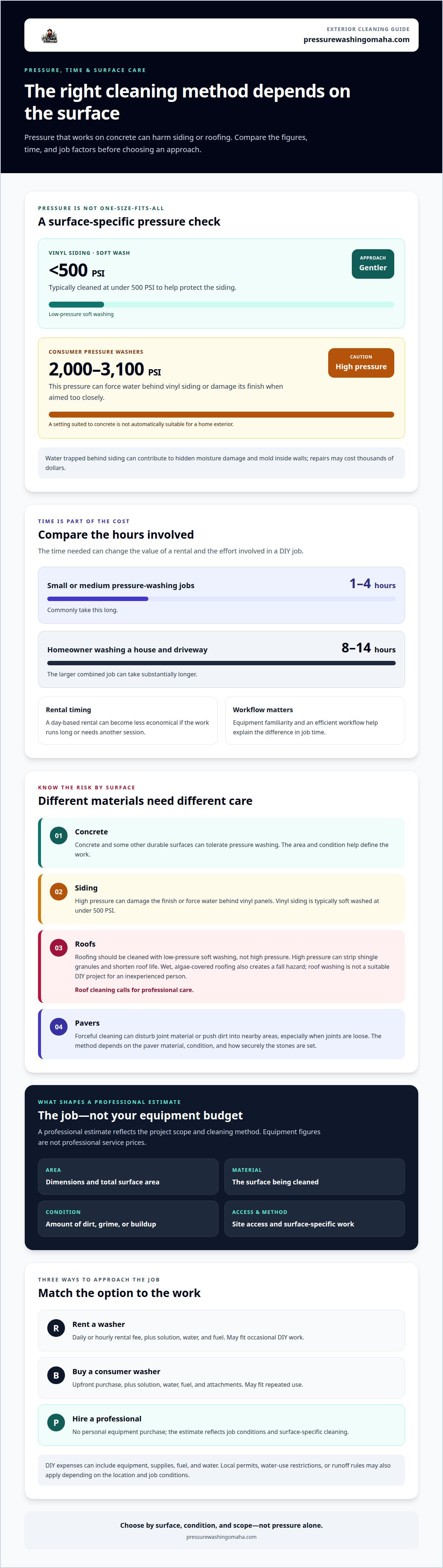
Small or medium pressure-washing jobs commonly take 1-4 hours. A professional may clean a home in a few hours, while washing a house and driveway can take homeowners 8-14 hours. Familiarity with equipment and an efficient workflow help explain the difference.
Time also affects the DIY calculation. A rental charged by the day can become less economical if the work runs long or needs another session. Consider how many surfaces are included, whether you can complete the work in one visit, and whether each material needs a different method. For extensive or delicate cleaning, professional service saves you from managing equipment and surface-specific work.
Potential damage to siding and other surfaces
Concrete and some other durable surfaces can tolerate pressure washing, but siding and roofs often need a gentler method. Vinyl siding is typically soft washed at under 500 PSI, while roofs should be cleaned with low-pressure soft washing rather than high pressure.
Consumer pressure washers can produce 2,000-3,100 PSI, enough to force water behind vinyl siding or damage its finish when aimed too closely. Water trapped behind panels can contribute to hidden moisture damage and mold inside walls, with repairs potentially costing thousands of dollars. A pressure setting suited to concrete is not automatically appropriate for a home’s exterior.
Pavers need care for both the surface and the joints. Forceful cleaning can disturb joint material or push dirt into nearby areas, particularly where joints are already loose. The right approach depends on the paver material, its condition, and how securely the stones are set. For uneven or delicate areas, choosing a suitable method matters more than simply increasing pressure to remove stubborn marks.
Roofs carry added risk because high pressure can strip shingle granules and shorten roof life. Wet, algae-covered roofing also creates a fall hazard, so roof washing is not a suitable DIY project for an inexperienced homeowner. Some shingle or tile manufacturers may void warranty coverage if high pressure or the wrong chemical is used. Low-pressure roof cleaning addresses buildup without treating shingles like concrete.
Decking instructions can differ by manufacturer. Trex permits pressure washing its current decking lines at up to 3,100 PSI, with a fan tip held at least 8 inches from the boards. That specific allowance does not apply to every deck or other surfaces. Always match the cleaning approach to the material rather than assuming one pressure setting works throughout a property.
For siding, roofing, and delicate pavers, professional surface-specific cleaning can help reduce the chance of damage. A trained operator considers material, buildup, and water direction before choosing pressure or soft washing. Pressure may suit a durable concrete driveway, while a house exterior or roof calls for a gentler treatment. The safest choice depends on the surface and its condition, not on the washer’s maximum output.
Factors affecting professional estimates
A professional estimate reflects the work required, not just the time spent cleaning. For example, a crew cleaning a broad concrete driveway with open access can work differently from one dealing with algae on pavers behind a narrow gate. The surfaces may cover similar areas, but the buildup and access change the preparation and cleaning method needed.
Layout can affect the work even when the area is the same. Steps, planters, parked vehicles, and narrow gates may require extra care or setup. Surface condition matters too: light dust is different from embedded grime, algae, or mildew that has collected over time. A professional selects a method suited to the material, whether it’s concrete, siding, or pavers.
Height and obstacles also affect access. A ground-level patio is easier to reach than upper exterior areas or complex rooflines. Landscaping, outdoor furniture, and fragile fixtures may require additional preparation. Location can influence estimates through travel and local operating conditions, while combining compatible surfaces into one project may avoid repeated setup. Renting a washer may seem cheaper for one surface, but that doesn’t account for your time, supplies, or the method each material needs.
To compare estimates, list the surfaces, approximate areas, visible buildup, and access limitations. Then check what each estimate includes, such as preparation, cleaning method, and areas covered. A reputable contractor should describe the work rather than give a number without saying what will be cleaned. Professional pricing depends on the job and is provided after a quote request.
Clear details help prevent mismatched expectations. If you’re considering cleaning a surface yourself, think about whether you have suitable equipment and understand the material’s needs. An estimate is most useful when it describes the actual work, not just a general promise to clean.
Professional driveway and house-washing prices
A DIY vs professional power washing cost comparison depends on the work included, not simply whether you rent equipment or hire a service. Driveway and house-washing estimates reflect different surfaces, methods, and conditions. Concrete may need attention to embedded grime, while siding calls for an approach suited to its material. Comparing unlike jobs can obscure what an estimate actually covers.
For a driveway, the estimate depends on its dimensions, condition, and access. A single-car slab and a broad driveway have different cleaning areas, even when both are concrete. Oil marks, algae, or other buildup can change the work required. Nearby landscaping, parked vehicles, and narrow access may also affect preparation and cleaning.
House-washing estimates depend on exterior size, siding material, visible buildup, and access. A compact, single-story home differs from a larger exterior with several levels, trim, and hard-to-reach areas. Dirt and mildew may call for a different approach than loose dust. Since siding isn’t cleaned like concrete, the method should match the material.
Pricing methods vary. One estimate may use area as a guide, while another may price the defined project. Neither format tells the whole story unless the included work is clear. A driveway estimate covering part of the paved area cannot be directly compared with one covering the full surface and stained sections.
Compare the same scope: identify the surfaces included, the cleaning method, and any preparation. For a house, clarify which exterior areas are covered. For a driveway, establish whether the full paved area is included. These details show what the estimate covers without assuming that a lower total represents equivalent work.
Project scope matters as much as the choice between renting equipment and hiring a professional. A one-time driveway clean differs from a combined house-and-driveway project. DIY expenses can include equipment, supplies, water, and time, while a service estimate reflects the work required for the listed surfaces.
The practical takeaway is to compare the work, not just the headline amount. For driveway cleaning or house washing, surface condition, access, and cleaning method help explain different estimates. Matching the included areas and approach gives you a clearer basis for judging value and deciding whether professional care suits your property.
No Pressure Power Washing
Deciding whether to rent, buy, or hire a professional depends on the surfaces and the amount of buildup. A house exterior, wood deck, and concrete driveway need different cleaning methods, so one DIY setup may not suit them all. For several areas, stubborn buildup, or materials that could be damaged by the wrong method, professional cleaning may be worth considering.
For exterior dirt, algae, or mildew, House Washing uses low-pressure soft-washing and biodegradable, non-toxic cleaning agents. The method and its application matter, particularly near openings and delicate finishes. A cleaning approach suited to the house’s material can reduce the risk of damage from relying on a general-purpose washer.
Deck Cleaning and Driveway Cleaning account for different surface needs. Wood decking can be vulnerable to excessive pressure, while a driveway may have embedded grime or stains. Concrete Cleaning focuses on concrete areas, with the work shaped by their size and condition. When several surfaces need attention, each may require a different approach.
How often you expect to use a washer also matters. For a one-time project, rental equipment and supplies add costs; buying means storing and maintaining the washer. A professional estimate reflects the surfaces and cleaning required, helping you compare the full job cost with equipment expenses.
No Pressure Power Washing offers House Washing, Deck Cleaning, Driveway Cleaning, and Concrete Cleaning using soft-washing and biodegradable, non-toxic cleaning agents. These services address common exterior cleaning needs without using the same method on every material. A project can include both siding and a concrete driveway, or focus on a deck, depending on the areas and their condition.
When comparing DIY work with professional service, weigh equipment costs, time, and surface care together. Professional cleaning may be a sensible option for larger projects, multiple surfaces, or areas where the wrong method could cause damage. Contact No Pressure Power Washing to discuss your exterior cleaning needs.
Frequently Asked Questions
Is it cheaper to pressure wash yourself or hire someone?
DIY can cost less for a small, straightforward job if you already own suitable equipment. Renting or buying a washer, purchasing detergent, and covering water and fuel can change the calculation. For a larger project or several different surfaces, professional service may offer better overall value by avoiding equipment purchases and reducing the risk of surface damage. Compare the complete project costs, not just the machine expense.
What can a professional pressure washer do that a rental cannot?
A rental provides equipment, but it doesn’t assess your siding, deck, or concrete and select a cleaning approach for each material. Professional cleaning can combine pressure washing with soft-washing and biodegradable, non-toxic cleaning agents when the surface calls for gentler treatment. That distinction matters on delicate exteriors, where force alone may not remove biological growth safely. A professional also handles the setup and cleaning work.
How much does professional power washing cost per square foot in the US?
There isn’t one per-square-foot rate that reliably represents every US power-washing job. A square-foot calculation may help estimate a broad, consistent surface, but it can misrepresent a project with separate materials, difficult access, or uneven buildup. House exteriors, concrete, and roofing need different methods. For a useful comparison, look at the surfaces and work included in the estimate, not only its unit of measurement.
What is the average cost to power wash a house, driveway, deck, or patio?
There’s no single average that fairly covers all four projects. A house estimate depends on exterior area and siding; a driveway depends on its dimensions and condition. Decks and patios differ by material, layout, and buildup. These are distinct professional cleaning services, so the actual estimate depends on the specific job. Compare estimates by matching the surfaces and work included, rather than treating unlike projects as equivalent.
What does professional power washing cost compared with DIY costs for detergent, water, and equipment?
DIY spending can include detergent, water, fuel, equipment rental, or a washer purchase. The balance changes with how often you use the machine: buying equipment spreads its cost across future projects, while rental is tied to each job. Professional service replaces those separate purchases with a job estimate. Consider storage and upkeep too, since owning a washer means maintaining it between cleaning projects.
What factors affect power washing prices, such as surface, size, location, and dirt level?
Estimates reflect the surface material, area, location, amount of buildup, and access. For example, a compact concrete walkway with open access is different from a larger, heavily soiled exterior with delicate trim. The cleaning method matters because siding and concrete shouldn’t automatically receive identical treatment. These details define the work and help explain why similar-looking properties can receive different estimates.
How much does professional power washing cost in my area?
In Omaha and nearby Papillion, Elkhorn, Gretna, Bennington, Bellevue, Valley, and Wahoo, the estimate depends on the property and surfaces being cleaned. Local labor and job conditions can also affect pricing. A house exterior with mildew is a different scope from a concrete driveway or deck. The most useful local estimate describes the areas included and the work required, rather than relying on a national average.
What are the risks of DIY power washing, including property damage and personal injury?
High-pressure water can injure skin and damage siding, roofing, deck boards, or paver joints if the approach doesn’t suit the material. Water forced behind siding can contribute to hidden moisture problems, while roof washing combines slippery surfaces with fall risk. A wand can also be difficult to control, particularly from a ladder. For elevated areas or delicate materials, professional cleaning is the safer choice.


