

What makes one piece of heavy equipment cost more to wash than another? For heavy equipment power washing in Papillion, the quote depends on the machine’s size, how much dirt and grease has collected, and how accessible the surfaces are. A compact loader with light dust buildup takes a different level of attention than agricultural equipment coated in packed soil and oily residue.
It’s reasonable to want a clear sense of what affects the cost before arranging heavy equipment cleaning. The method matters, too: grease often needs targeted degreasing, while forceful water can damage sensitive components.
This article explains the factors that shape a cleaning quote, what professional degreasing involves, and how routine washing can help prevent residue from building up. You’ll also learn how equipment condition, access, and cleaning scope affect the work.
Key Takeaways
- Understand how equipment size, soil and grease buildup, and access can shape a washing quote.
- Learn why effective degreasing involves more than applying pressure, especially around sensitive components.
- See how routine cleaning can help prevent soil and residue from accumulating on working equipment.
- Identify which kinds of heavy equipment may be suitable for on-site washing and what affects the approach.
- Recognize why electrical components and seals need careful handling during pressure washing.
Equipment washing and degreasing process
A professional equipment wash follows a sequence, because loosened grease can spread if rinsing starts too soon. The crew first assesses the machine, the residue, and sensitive areas. A tracked loader with dried clay needs a different approach from a tractor with oily deposits around its undercarriage. That assessment guides the cleaning method, detergent choice, and rinse direction.
- Inspect the machine. The crew identifies heavy soil, grease, painted surfaces, electrical connections, seals, and openings. They also note areas that need gentler treatment before pressure washing begins.
- Remove loose material. Mud, crop residue, and dust can be cleared before degreasing. This keeps loose debris from mixing with detergent and makes oily buildup easier to see.
- Apply a suitable degreaser. A cleaning solution is directed onto greasy surfaces, such as a loader’s bucket linkage or a tractor’s exterior frame. Product strength and dwell time depend on the residue and surface.
- Allow the cleaner to work. The solution needs time to loosen oily film, but it shouldn’t dry on the equipment. Shade, temperature, and airflow affect how quickly a treated area dries.
- Rinse with controlled pressure. The operator works methodically across treated sections, directing loosened residue away from sensitive components. Close-range, high-pressure spray can force water into connections or past seals.
- Review the result. A final inspection looks for remaining grease, packed soil, and missed areas behind guards or beneath accessible panels. Persistent deposits may need another targeted treatment.
Degreasing is more than rinsing dirt away. Grease clings to metal and traps dust around moving joints, so cleaning agents help loosen the film. A greasy hinge area, for example, needs targeted attention and a careful rinse, not forceful water across the entire machine.
Location also shapes the process. On-site washing in Papillion can involve working around parked machinery, uneven ground, or nearby equipment. The cleaning crew plans access and rinse direction around those conditions. Similar care applies to road-going service vehicles, where fleet washing addresses exterior buildup without treating every vehicle like heavy machinery. For construction or farm machinery, professional heavy equipment cleaning applies that same equipment-specific attention.
Seals and electrical components can be vulnerable to water and cleaning agents. Professional heavy equipment cleaning calls for a method suited to the machine, with care around sensitive areas. A considered sequence removes soil and oily residue while limiting unnecessary exposure.
Routine washing to reduce buildup and deterioration
A work-based cleaning schedule helps keep soil and residue from becoming harder to remove. A tractor used in wet fields, for example, can carry damp soil into axle areas and frame recesses. As it dries, the material may pack around joints and brackets. Planned washing removes buildup before it obscures components or complicates inspections.
The right cleaning interval depends on what the machine handles and where it operates. A loader moving dry aggregate gathers different residue from a combine working through crop debris. After muddy work, washing can remove packed soil before it dries. Greasy film around a pivot point needs targeted attention because dirt clings to oily surfaces.
Routine washing can also make changes easier to see. A clean surface may reveal a fresh fluid mark, damaged paint, or a loose-looking connection previously hidden by grime. Washing doesn’t repair mechanical wear or replace equipment inspections, but it can leave surfaces clearer for maintenance staff examining a bucket hinge or hydraulic line.
- After muddy fieldwork: remove wet soil from tracks, steps, and frame recesses before it hardens.
- After dusty hauling: clear accumulated dust from exterior panels and accessible cooling-area surfaces.
- After greasy work: target oily deposits around a loader linkage instead of treating the whole machine identically.
- Before storage: clean residue from accessible surfaces so trapped dirt and moisture don’t remain unnoticed.
Agricultural equipment benefits from attention to crop residue as well as mud. Stalk fragments can gather around guards and other accessible areas during harvest. If left mixed with damp soil, that debris can hold moisture against painted surfaces. A careful wash removes visible buildup, while the operator avoids directing water carelessly toward electrical connections, seals, or openings.
Consistency matters more than an arbitrary calendar date. A machine working daily in wet ground needs different attention from equipment used occasionally on dry, clean surfaces. Heavy equipment power washing in Papillion can be planned around operating conditions, visible buildup, and storage needs. Professional cleaners assess those factors and choose a suitable method for the material and machine, rather than relying on force alone.
Factors affecting washing prices
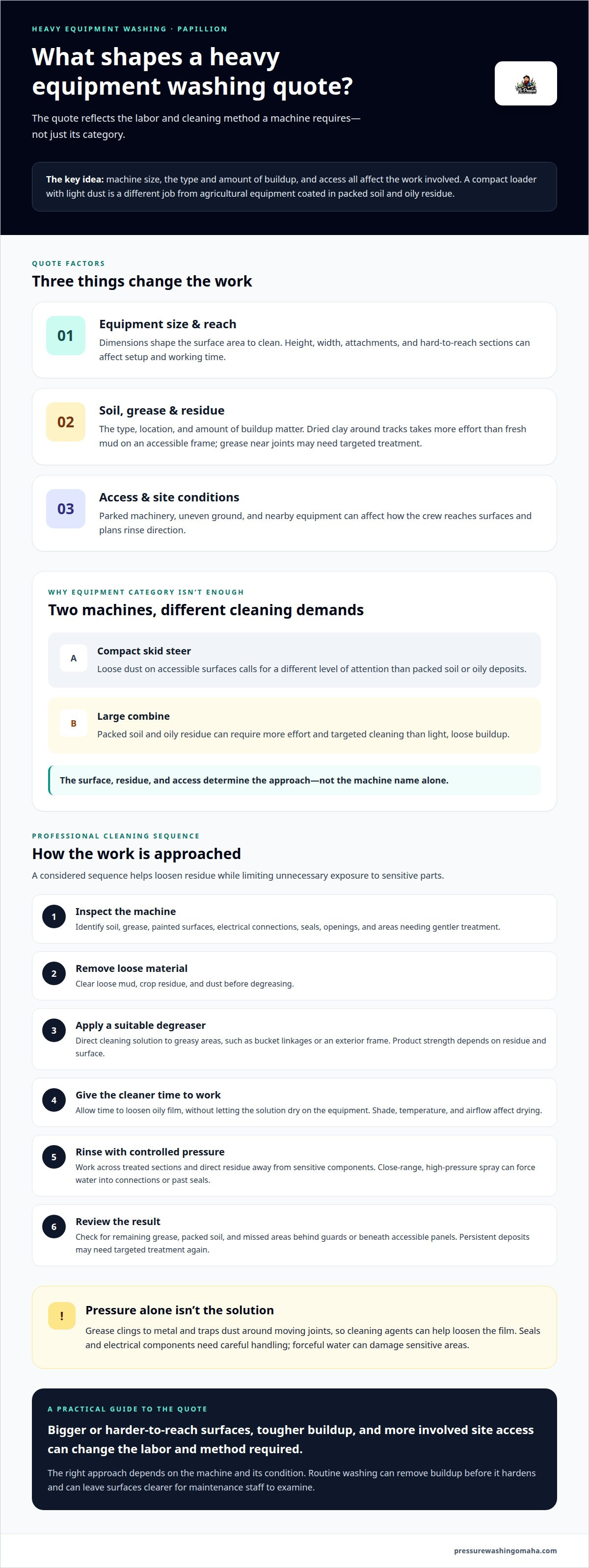
A washing quote reflects the labor and cleaning method a machine requires, not just its category. A compact skid steer with loose dust presents a different job from a large combine carrying packed soil and oily residue. Equipment dimensions affect the surface area to clean. Height, width, attachments, and hard-to-reach sections can also influence setup and working time.
Equipment condition is another factor. Dried clay around tracks takes more effort to remove than fresh mud on an accessible frame. Grease near joints may need targeted treatment before rinsing. Crop residue, road film, and dust behave differently, so the type, location, and amount of buildup shape the work involved. Heavy equipment power washing in Papillion is tailored to these job-specific needs.
Access can affect the cleaning process. A machine parked in an open, level area is easier to approach than one positioned tightly between other equipment. Restricted clearance may limit access to surfaces and call for careful movement around the machine. The equipment’s location and available working space help define the work.
- Machine size: a wide agricultural machine has more exterior area than a small loader.
- Soil and residue: packed mud or oily deposits need more attention than light dust.
- Access: tight parking or blocked sides can slow careful coverage.
- Scope: cleaning several machines at one location differs from washing one unit.
The requested cleaning scope matters, too. Cleaning exterior panels differs from also addressing accessible tracks, undercarriage areas, and attachment surfaces. A bucket with caked soil, for example, adds work beyond cleaning the cab exterior. Describing the areas to be cleaned helps define the requested scope, alongside the machine’s location and condition.
Heavy equipment power washing in Papillion has no single price that fits every machine. The quote depends on the equipment, its condition, access, and requested scope. A large machine with light buildup and open access may need less detailed work than a smaller unit with heavy grease in a confined space. That’s why each quote is tailored to the job.
What types of heavy equipment can be power washed on site?
On-site cleaning can suit machines that collect soil, dust, crop residue, or road film during work. Excavators, bulldozers, motor graders, backhoes, and skid steers are common examples. Their frames, tracks, tires, buckets, and attachments can hold material that becomes harder to remove as it dries. The cleaning method should suit each machine’s surfaces and sensitive components.
A tracked excavator may need attention around its undercarriage, blade, and boom. A motor grader often accumulates road dust along its frame and moldboard. Skid steers can carry compacted material around tires, attachment plates, and lower panels. These areas are accessible for cleaning, but close-range pressure around wiring, seals, and openings requires care.
- Earthmoving machines: excavators, bulldozers, and backhoes collect soil on tracks, buckets, blades, and lower frames.
- Road-maintenance machines: motor graders and rollers pick up dust, mud, and residue on exposed exterior surfaces.
- Material-handling equipment: telehandlers and forklifts used outdoors can gather dirt around tires, forks, and chassis.
- Agricultural machines: planters and sprayers can carry field soil and plant material on accessible exterior parts.
Farm equipment has different cleaning needs from construction machinery. A planter may have dry soil on its frame, while a sprayer can have residue on exterior surfaces. Each calls for an approach suited to the material and machine, rather than the same treatment everywhere. Professional cleaning can account for delicate assemblies and painted areas.
Site conditions matter as much as machine type. A backhoe with clear access around its sides is easier to clean methodically than equipment crowded beside materials or other machinery. Uneven ground, tight spacing, and attachments left in place can limit access. The cleaning approach takes account of the equipment’s position and avoids directing water into sensitive areas.
Not every part of a machine should receive the same treatment. Exposed steel and a sturdy bucket differ from electrical housings, seals, and control areas. A professional assesses the equipment before washing, then selects an appropriate method for accessible surfaces. In Papillion, the machine’s condition, attachments, and working location help determine whether on-site power washing is practical.
Risks of pressure washing heavy equipment electrical components and seals
High-pressure water can damage areas that ordinary rinsing leaves untouched. On an excavator, spray directed at a wiring connector may push moisture past its protective fitting. Water trapped inside can contribute to corrosion or cause an electrical fault. The risk depends on the component’s condition, spray pressure, distance, and direction.
Electrical systems include more than visible cables. Sensors, control modules, switches, and connector housings may sit behind panels or near exposed frame sections. Directing water at a tractor’s sensor connection can force moisture into a gap that looks closed. Trapped moisture may cause problems later, even if the machine starts afterward.
Seals need careful treatment, too. Rubber seals around access covers, bearings, and hydraulic connections help keep contaminants out during normal operation. Forceful water held against a seal can stress its edge or drive water and grit past it. A damaged or aged seal may be especially vulnerable.
- Connectors: direct spray can force water into joints between plugs and wiring.
- Control areas: moisture around switches or modules can interfere with electrical function.
- Seals and bearings: water or grit forced past a seal can contaminate protected areas.
- Openings: vents, exposed filters, and uncapped ports can admit water or loosened debris.
The direction of the rinse matters. Water sent upward beneath a machine can reach wiring routes and covered assemblies. Cleaning close to a hydraulic fitting can also push debris toward its seal. A trained operator identifies vulnerable zones and adjusts the cleaning method rather than treating every surface alike.
Preparation helps limit exposure. Before cleaning, a professional looks for visible electrical connections, damaged wiring, loose covers, and worn seals. The method is adjusted around sensitive areas. If a cover or connector appears damaged, forceful washing can worsen the problem rather than solve it.
After washing, moisture around a connector or seal deserves attention before equipment returns to work. A heavy machine operating with compromised electrical connections may develop intermittent faults, while contaminated lubricant can affect protected components. Professional pressure washing balances soil removal with protection of sensitive parts, especially on older equipment with worn fittings or repaired wiring.
No Pressure Power Washing: Heavy Equipment Cleaning
No Pressure Power Washing provides Heavy Equipment Cleaning for machinery with built-up soil, grease, dust, or agricultural residue. The service helps when deposits cover working surfaces, collect around attachments, or make equipment harder to inspect. Low-pressure soft-washing and biodegradable, non-toxic cleaning agents remove exterior buildup with care around electrical components, seals, and other sensitive areas.
The cleaning approach depends on the machine and the residue. A loader with dried soil on its bucket needs different attention from farm equipment with oily film or plant debris. The crew assesses the equipment and buildup, then selects a suitable cleaning method. Biodegradable, non-toxic solutions are used as part of the company’s washing services.
On-site cleaning suits equipment that is difficult to move or has collected residue at its work location. For example, machinery used in muddy conditions may need attention before packed soil hardens around accessible areas. Heavier grease buildup calls for targeted treatment, not a forceful rinse. The aim is to clean surfaces while taking account of the machine’s sensitive parts.
Professional cleaning is particularly useful when work involves areas near wiring, connectors, controls, or worn seals. Forceful water can push moisture into vulnerable components. No Pressure Power Washing matches its low-pressure soft-washing method to the machine’s condition, residue, access, and sensitive areas, so equipment owners don’t need to take on specialized cleaning themselves.
- Construction machinery: remove accumulated soil and grime from accessible exterior surfaces.
- Agricultural equipment: address field residue and buildup left by seasonal work.
- Greasy equipment: apply focused degreasing where oily deposits attract dirt.
- Regularly used machinery: schedule cleaning as buildup returns through normal operation.
No Pressure Power Washing’s local experience includes work in the Omaha area, and its Heavy Equipment Cleaning service is a practical next step when equipment needs professional exterior care. The service may not replace mechanical maintenance or repair; its purpose is cleaning, not diagnosing machine faults. For equipment with damaged electrical fittings or compromised seals, those issues need attention before washing.
To discuss cleaning for your machinery, contact No Pressure Power Washing.
Frequently Asked Questions
What Affects Heavy Equipment Washing Pricing?
Equipment size, condition, access, and requested cleaning scope shape the quote. A compact loader with open access differs from a larger machine parked tightly beside other equipment. Residue matters, too: light dust and hardened grease need different attention. Sharing the machine type, its location, and the areas to be cleaned helps define the work and supports a more useful estimate.
What is the best professional pressure washing method for construction equipment, grease, and mud?
No Pressure Power Washing cleans heavy equipment using low-pressure soft-washing and biodegradable, non-toxic cleaning agents. Construction equipment can carry several kinds of residue, so the method should suit both the machine and the buildup. Mud on a bucket and oily residue on a frame, for example, need different treatment. Lower pressure can reduce some risks associated with high-pressure water, but sensitive components still need protection.


