

Stamped concrete can often be cleaned and sealed, but not every surface is ready for sealer. For stamped concrete cleaning in Papillion, the surface’s condition and existing coating help determine the right approach. Patios, walkways, and decorative accents can all be candidates when the concrete is suitable for cleaning and sealing.
It makes sense to want a thorough clean without losing the pattern or color that gives stamped concrete its character. This article explains which surfaces may be cleaned and sealed, how professionals prepare them, and what to expect when patios, walkways, and accents are cleaned before sealing. You’ll also learn why careful preparation matters: dirt or grime left on the concrete can be trapped beneath the new sealer, affecting the finished surface.
Key Takeaways
- Surface condition and any existing coating help determine whether stamped concrete is ready to be cleaned and sealed.
- Proper pre-seal cleaning removes dirt and grime that could otherwise be trapped beneath the sealer.
- Learn how professional cleaning is adapted for patterned patios, walkways, accents, and driveways to protect their appearance.
- For rust stains, a professional selects and uses a pressure-washer nozzle of at least 15 degrees to help reduce surface damage.
- Stamped concrete is generally resealed every two to three years, with traffic and sun exposure influencing the timing.
Cleaning Stamped Concrete Before Sealing
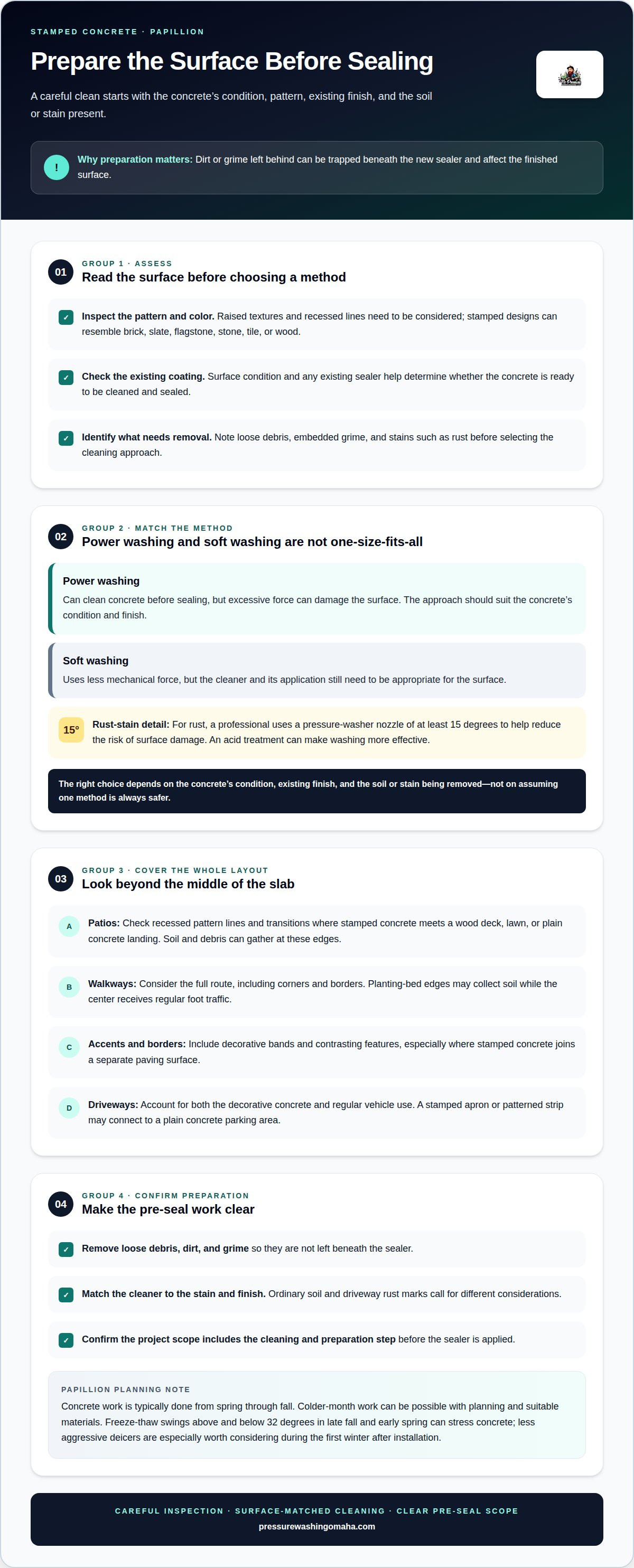
Before sealing, dirt and grime need to be removed so they are not trapped beneath the finish. The surface and any stains also need to be assessed before choosing a cleaning approach.
Choosing a Cleaning Contractor
Choose a concrete contractor who explains how the surface will be assessed, cleaned, and prepared for sealer. A useful contract describes the work clearly, including how the pattern and existing finish will be considered. Ask how the professional handles rust stains and what preparation precedes sealing. In Papillion, spring through fall is typical for concrete work; colder-month work can be possible with planning and suitable materials.
How professionals choose between power washing and soft washing for stamped concrete
Neither method is automatically safer for every stamped surface. Professionals choose based on the concrete’s condition, existing finish, and the soil or stain being removed. Power washing can clean concrete before sealing, but excessive force can damage the surface. For rust stains, a pressure-washer nozzle of at least 15 degrees helps reduce that risk. Soft washing uses less mechanical force, but the cleaner and application still need to suit the surface.
How professionals clean stamped concrete without damaging its pattern or color
Careful preparation starts with an inspection of the stamped pattern, color, and any existing sealer. The professional then removes loose debris and selects a cleaning approach suited to the surface, rather than applying the same treatment everywhere. Rust needs particular attention: pressure washing can remove rust stains, and an acid treatment can make washing more effective. After cleaning, the concrete must be ready for sealer, not left with grime beneath the finish.
Which cleaners do professionals use on stamped concrete patios and driveways?
The cleaner depends on the stain and the concrete finish. A patio with ordinary soil needs a different treatment from a driveway with rust marks, so professionals match the cleaning agent to the problem and the surface. Papillion’s freeze-thaw swings above and below 32 degrees in late fall and early spring can stress concrete. Less aggressive deicers are especially worth considering during the first winter after installation, since winter treatment can affect the surface before its next cleaning and sealing.
The company’s preparation sequence is to pressure wash stamped concrete, then apply sealer. This removes dirt and grime before they can be trapped beneath the finish. Confirm that pressure washing is included in the project scope before the finishing step, so the planned work is clear.
Stamped Concrete Patios, Walkways, and Accents
Stamped concrete gives Papillion homeowners decorative surfaces that can resemble brick, slate, flagstone, stone, tile, or wood. These patterns suit patios, paths, and borders, but each design has its own texture. A slate-look patio, for example, has recessed lines that differ from a smoother border. A cleaning approach should account for these transitions so the outdoor space looks consistent.
Patios often connect several materials in one area. A stamped slab might meet a wood deck, lawn, or plain concrete landing. Soil and debris can collect at those edges, so the professional considers the layout rather than treating the patio as an isolated rectangle. Where concrete meets a deck, deck cleaning may be relevant to maintaining the connected outdoor space.
Walkways collect different kinds of buildup along their route. A path from a Papillion home’s back door to its garden may gather soil beside planting beds, while the center gets regular foot traffic. A stamped stone design can also hold debris in narrow grooves. Looking at the full route, including corners and borders, helps identify where buildup is concentrated and where the pattern needs attention.
Decorative accents may be small but visually prominent. Examples include a stamped band around a patio or a contrasting feature near an entry. If the accent joins a separate paving surface, the transition deserves attention too. A nearby paver area has different joints and materials, so paver cleaning can be relevant when planning care for connected outdoor surfaces.
Driveways combine decorative concrete with regular vehicle use. A Papillion property might have a stamped apron leading to a plain concrete parking area, or a patterned strip bordering the drive. The professional considers both the layout and how each section is used. For a driveway with stamped details, driveway cleaning can address the broader surface while keeping the decorative portion in view.
Homeowners can help define the work by pointing out stamped areas and where each surface meets another. A patio border, walkway edge, and driveway apron may all need attention, even when they appear to form one continuous outdoor layout. Identifying these features gives the cleaning plan a clearer scope and helps prevent smaller accents from being overlooked.
Stamped concrete is often described as easy to clean and maintain, but regular attention still depends on the surface’s condition and the buildup present.
How Do Professionals Clean Stamped Concrete Without Damaging the Pattern or Color?
Start by inspecting the stamped surface, its color, and any existing sealer. A slate-look patio with worn coating needs a different assessment from newer, evenly colored concrete. Identify loose debris, embedded grime, and rust marks before cleaning. This helps account for raised textures and recessed pattern lines, and shows whether the surface appears suitable for preparation before sealing.
Match the cleaning method to the surface and the soil. Excessive force can mark or erode concrete, so the approach should suit the surface’s condition rather than treating every stamped area alike. For rust near a patterned border, treatment should focus on the stain without damaging the surrounding texture. No Pressure Power Washing uses low-pressure soft washing to clean exterior surfaces without high-pressure damage.
Rust calls for particular care. Pressure washing can remove rust stains from concrete, and acid treatment can improve its effectiveness. That does not mean every stamped surface should receive the same chemical or application. The professional considers the existing color and coating, then limits treatment to the affected area where appropriate. A driveway apron with a rust spot, for example, needs attention that preserves the adjacent stamped design.
Preparation continues after washing. Before sealer is applied, dirt and grime must be removed rather than sealed beneath the finish. Professionals assess the cleaned surface and allow it to dry before proceeding. Then they apply stamped-concrete sealer in multiple thin coats, helping prevent puddles and create an even appearance. A thin, consistent finish is especially important across a wood-look pattern, where pooled sealer could collect in grooves.
Color preservation also depends on recognizing the surface’s condition. Cleaning can remove surface soil, but it cannot restore color that has worn away or repair damaged concrete. Distinguish ordinary buildup from deterioration before setting expectations. A faded section beside a richly colored border, for example, may reflect wear rather than removable grime.
In Papillion, freeze-thaw cycles add another reason for careful assessment. Temperature swings above and below 32 degrees occur on many late-fall and early-spring days. If cracks, flaking, or exposed aggregate appear, the professional accounts for them before washing or sealing. Cleaning technique protects the stamped pattern; inspection identifies surface problems that cleaning alone cannot correct.
What Cleaners Do Professionals Use on Stamped Concrete Patios and Driveways?
There is no single cleaner suited to every stamped patio or driveway. First identify the soil, stain, concrete condition, and existing finish. Loose dirt on a patio differs from a stain on a driveway, and the treatment should address the specific buildup without harming the surface. No Pressure Power Washing uses biodegradable, non-toxic cleaning agents for its exterior cleaning services.
For routine grime, the cleaning approach should suit concrete and the stamped surface. Consider any existing coating, since affecting it could leave uneven color. A food spill on a patio differs from tire residue on a driveway. Identifying the buildup first helps keep cleaning focused rather than applying a more intensive treatment across the whole area.
Rust stains require a more targeted decision. Pressure washing can remove rust from concrete, and acid treatment can make washing more effective. That doesn’t make acid appropriate for every patio or driveway. The professional considers the stamped pattern, color, and sealer before selecting a treatment. For example, rust on a small driveway section may call for focused stain treatment, rather than applying the same solution over adjacent decorative concrete.
Cleaning products should be applied and rinsed so residue is not left behind. A film in the grooves of a slate-pattern patio can look like soil even after the raised areas appear clean. The cleaning approach should account for the concrete’s texture, stain, and coating. No Pressure Power Washing uses biodegradable, non-toxic cleaning agents and low-pressure soft washing for exterior cleaning.
Before sealing, the goal is a clean surface without leftover cleaner, soil, or grime beneath the finish. That preparation matters because sealing over residue can trap it under the new coat. On a patterned driveway, residue may show unevenly across recessed joints and raised sections. Professionals therefore match the cleaner to the surface, remove remaining soil, and assess the prepared concrete before sealer is applied. The right choice depends on the stain and finish, not a single universal product.
How Often Should Stamped Concrete Be Cleaned in Papillion, Nebraska?
Stamped concrete does not follow one fixed cleaning schedule for every Papillion property. The interval depends on visible buildup, foot traffic, shade, and nearby debris. A patio beneath trees may collect leaves and organic residue sooner than a covered entry. A driveway used daily may show tire marks before a lightly used garden path needs attention. Plan professional stamped concrete cleaning in Papillion around these differences.
Cleaning and resealing are separate maintenance tasks. Stamped concrete should generally be resealed every two to three years, depending on traffic and sun exposure. That interval applies to resealing, not routine cleaning. A clean surface may still need fresh sealer, while a visibly soiled area may need cleaning before its next sealing appointment. Keeping the two schedules distinct helps homeowners plan based on the surface’s condition.
Stamped concrete sealer typically lasts three to five years under normal conditions. That lifespan differs from the general two-to-three-year resealing guidance. Sunlight and traffic influence how quickly protection wears, so a sunny driveway may need closer attention than a shaded patio. For stamped concrete cleaning in Papillion, a professional can assess the coating and buildup before preparation, rather than assuming the concrete needs identical treatment each time.
Season affects scheduling in Papillion, too. Concrete work is typically scheduled from spring through fall, though some work can be done during colder months with proper planning and suitable materials. A spring visit can address winter residue before outdoor use increases; a fall visit may prepare a surface for maintenance before winter. Temperature conditions matter because cleaning and sealing require suitable working conditions.
Winter care can affect a surface between professional visits. Choose deicers that are less aggressive on concrete, especially during the first winter after installation. A stamped walkway near an entry may receive more deicer than a sheltered patio. Those differences help explain why one area may need attention sooner, even when both surfaces were installed or sealed around the same time.
Use visible condition, not an arbitrary schedule, to guide cleaning. Notice where dirt gathers in stamped grooves, whether stains appear, and how the sealer looks. Plan cleaning around buildup and resealing around the coating’s condition. For Papillion homeowners, traffic, sun, seasonal exposure, and prior maintenance provide a practical basis for planning professional care.
No Pressure Power Washing: Concrete Cleaning
No Pressure Power Washing cleans stamped concrete for Papillion property owners using a low-pressure soft-washing method and biodegradable, non-toxic cleaning agents. The service may suit a patio, walkway, decorative accent, or driveway with outdoor buildup. When requesting an assessment, identify the stamped areas and point out visible stains.
Stamped concrete can sit beside plain concrete, creating different finishes across one outdoor area. A Papillion driveway, for example, might include a patterned apron and an unpatterned parking surface. No Pressure Power Washing offers both concrete cleaning and driveway cleaning, which may be relevant when connected surfaces need attention. Identifying the decorative sections helps define the work.
Surface condition also affects the assessment. Ordinary grime on a patio is different from a rust mark on a driveway or buildup along a walkway’s edges. Cleaning can address surface soil and stains; damaged or worn concrete needs a separate assessment.
Concrete cleaning can be considered alongside nearby exterior surfaces when planning property maintenance. For instance, a backyard patio may connect to a deck, while a driveway runs beside the home exterior. No Pressure Power Washing also provides concrete cleaning for residential and commercial surfaces. Clarify which areas are stamped and which adjacent surfaces need a different service.
Professional cleaning may be appropriate when buildup affects stamped concrete or stains detract from its appearance. Identify the surfaces and visible issues, including where decorative concrete meets a driveway or another exterior area. Cleaning does not replace an assessment of damaged or worn concrete.
For a Papillion patio, walkway, accent, or driveway, contact No Pressure Power Washing to discuss concrete cleaning.
Frequently Asked Questions
Can you clean and seal any stamped concrete surface?
A professional should assess the concrete before recommending cleaning and any further maintenance. A patio with intact color and a decorative driveway apron may be suitable for cleaning, while visibly worn or damaged areas need closer evaluation. Include connected stamped borders or accents in the discussion, since they affect how the finished area will look. Cleaning can address surface soil, but it cannot repair deteriorated concrete.
Can you remove stains before sealing?
Yes, professionals can treat stains before sealing, with the method selected for the stain and surface. Rust is one example: pressure washing can remove it, and acid treatment can improve effectiveness. Oil, algae, and leaf marks call for their own assessment. For a driveway with several stain types, identifying each affected area helps determine a suitable cleaning plan before the finish is applied.
How long does the sealer last?
Stamped concrete sealer typically lasts three to five years under normal conditions. Sun exposure and traffic influence wear, so a frequently used, sunny driveway can differ from a protected patio. The lifespan is a useful planning range, not a guarantee for every surface. Note which parts receive direct sun or regular vehicle use, since those conditions help explain differences across one property.
Should a professional power wash a driveway before sealing it?
Yes, a professional should clean and prepare a driveway before sealing so soil and grime are not trapped beneath the new finish. No Pressure Power Washing uses low-pressure soft washing, not high-pressure washing, and biodegradable, non-toxic cleaning agents. For properties with stamped sections beside plain concrete, the cleaning plan can account for both surfaces before further maintenance.
How do professionals remove oil, rust, algae, and leaf stains from stamped concrete?
Professionals identify the stain first, then choose a treatment suited to the concrete and its finish. Rust can be treated with pressure washing, and acid treatment can make that method more effective. No Pressure Power Washing also offers rust removal. For mixed stains, such as oil near leaf marks, identifying each area helps avoid treating the entire stamped surface as though it had one uniform problem.
Does stamped concrete need resealing after cleaning, and how often?
Cleaning does not automatically mean the concrete needs resealing. Stamped concrete should generally be resealed every two to three years, depending on traffic and sun exposure, while sealer typically lasts three to five years under normal conditions. These ranges describe different maintenance considerations. A homeowner can keep a record of the last sealing date and note areas with heavier traffic to inform future maintenance planning.


