

A single layer of Nebraska field grime and packed grease can hide a hairline fracture that eventually costs your company tens of thousands of dollars in emergency repairs. You already know that keeping your fleet moving is the only way to stay profitable, but finding the time for a deep scrub between jobs often feels like a luxury your crew can't afford. It's a common struggle for local operators who balance tight project deadlines with the need for meticulous maintenance. Discover how professional heavy equipment cleaning goes beyond simple aesthetics to serve as a vital mechanical intervention; it ensures you meet Omaha’s strict environmental codes while extending the life of your most valuable assets.
We understand the pride you take in your fleet and the pressure of keeping it compliant with DOT and OSHA standards. In the following sections, we'll explore the underlying reasons why grease buildup leads to premature failure and how our specialized methodology protects Nebraska’s waterways from runoff fines. From identifying hidden leaks to preparing for a high-value resale, you'll learn why a methodical approach to preservation is the smartest investment you can make for your bottom line.
Key Takeaways
- Learn how a thorough cleaning serves as a vital diagnostic tool to reveal hidden hydraulic leaks and structural cracks before they lead to mechanical failure.
- Understand why specialized hot water extraction is more effective than raw PSI for heavy equipment cleaning while protecting sensitive electrical sensors and seals.
- Evaluate the true financial impact of diverting your skilled operators to cleaning tasks versus the efficiency of professional mobile industrial services.
- Navigate the complexities of Nebraska’s environmental regulations and seasonal logistics to ensure your fleet stays compliant and operational year-round.
- Discover how professional asset preservation maintains the professional appearance of your fleet and protects its long-term resale value in the Omaha market.
The Strategic Importance of Heavy Equipment Cleaning
Many fleet managers view washing as a cosmetic expense, but it's actually the first line of defense in a comprehensive maintenance program. When a machine is caked in Nebraska clay, you're essentially flying blind. Professional heavy equipment cleaning allows for a clear view of the machine’s skeletal structure, making it possible to spot trouble before it leads to an expensive jobsite shutdown. It's the foundation of asset preservation.
Uncovering Mechanical Risks Before They Become Failures
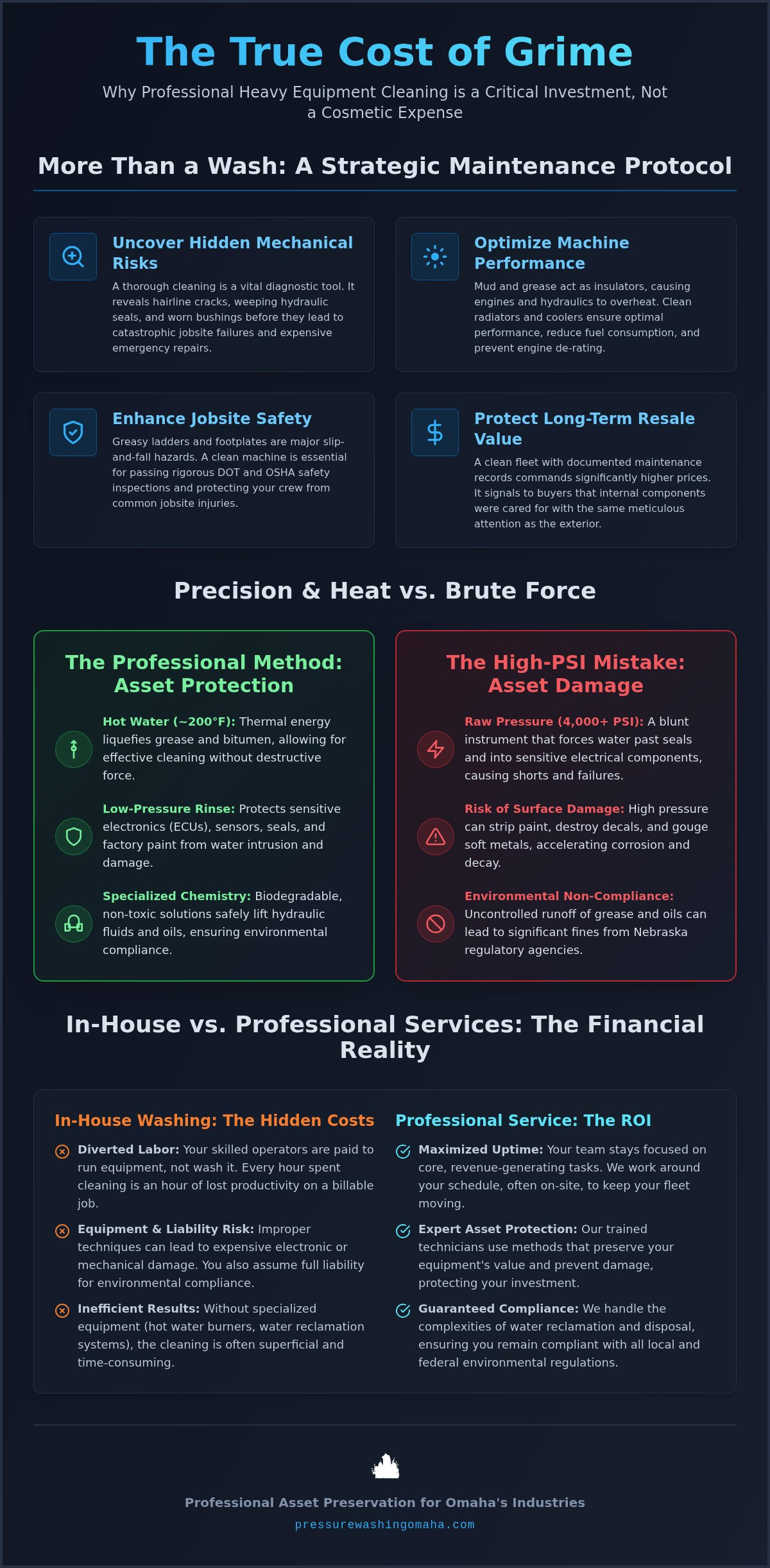
It's impossible to perform a meaningful visual inspection under three inches of dried mud. Thick layers of grease often hide hairline cracks in booms or weeping hydraulic seals that are just beginning to fail. By utilizing systematic inspection, detection, and correction, you can address worn bushings and loose pins while they're still minor fixes. This level of detail isn't just about longevity; it's a requirement for passing rigorous DOT and OSHA safety inspections. An inspector can't verify the integrity of a weld or a hydraulic line if they can't see the metal through a layer of grime.
Optimizing Machine Performance and Cooling
Heavy machinery generates immense heat. It relies on constant airflow to stay within safe operating temperatures. Mud and grease act as heavy-duty insulators, trapping heat against engine blocks and hydraulic reservoirs. When radiators and oil coolers are blocked by debris, cooling fans must run longer, which leads to significant efficiency loss and eventually causes the engine to de-rate or overheat. Keeping these systems clear is essential for maintaining factory performance levels.
- Preventing the sandpaper effect: Grit trapped against moving hydraulic cylinders scores the chrome finish. This leads to premature seal failure and internal leaks.
- Reducing fuel consumption: Accumulated mud on a large excavator or tractor can add hundreds of pounds of dead weight. This forces the engine to work harder just to move the machine across the site, burning through fuel unnecessarily.
Beyond the machine's health, cleanliness impacts your people and your reputation. Greasy ladders and footplates are major slip-and-fall hazards. These are among the most common causes of jobsite injuries in the construction and farming sectors. A clean fleet also reflects your company’s internal standards. At the time of trade-in or resale, machines with a clean appearance and documented heavy equipment cleaning records consistently command higher prices. Potential buyers assume that if the exterior was meticulously maintained, the internal components received the same level of care.
Professional Methodologies: Heat, Chemistry, and Precision
Raw pressure is a blunt instrument. While it might seem efficient to blast away mud with 4,000 PSI, this approach often causes more harm than good to modern machinery. Today's excavators and combines are essentially computers on tracks, outfitted with sensitive Electronic Control Units (ECUs) and delicate sensors. We utilize a "No Pressure" philosophy that prioritizes thermal energy and chemical science over sheer force. This protective approach ensures we don't force water into sealed electrical components or compromise the integrity of hydraulic seals during heavy equipment cleaning.
Why Temperature Matters More Than Pressure
Heat is the secret to effective industrial restoration. We use specialized burners to heat water to approximately 200 degrees, which effectively liquefies grease and bitumen on contact. This thermal breakdown allows us to rinse away contaminants using significantly lower pressure, preserving the factory paint and protecting the "brains" of the machine. Whether we're tackling hardened concrete on a mixer or standard jobsite grime on a skid steer, the right temperature does the heavy lifting without the risk of water intrusion into sensitive pivot points.
Eco-Friendly Chemistry in Industrial Applications
Effective cleaning shouldn't come at the cost of Nebraska’s natural resources. We select non-toxic, biodegradable solutions that interact specifically with hydraulic fluids and oils to lift them from the surface safely. This commitment to Environmental Compliance means our processes align with federal and state standards. In the context of the Nebraska Department of Water, Energy, and Environment regulations, biodegradable degreasing is the application of cleaning solutions that naturally break down into non-toxic substances, preventing illegal point-source pollution in our state's waterways.
To reach the areas where failure often begins, we employ specialized attachments designed for undercarriages and hard-to-reach pivot points. Standard wands can't effectively clear the packed clay from a crawler's track frame or the deep recesses of a harvester's internal belts. Our mobile units are equipped with articulating nozzles that ensure every inch of the chassis is clear of debris. If you're concerned about the buildup in your fleet's most vulnerable areas, you can schedule a specialized cleaning session to keep your assets in peak condition.
Precision is the difference between a clean machine and a damaged one. We treat every hydraulic line and sensor with the meticulousness of a mechanic rather than the haste of a general laborer. By focusing on asset preservation, we ensure that your heavy equipment cleaning schedule supports your long-term operational goals rather than creating new maintenance headaches. This steady, methodical approach is what has defined our service in Omaha for over three decades.
In-House Washing vs. Professional Services: A Comparison
It is tempting to think that handing a pressure washer to a crew member at the end of a shift saves your company money. However, a closer look at the balance sheet often reveals a different story. When you calculate the true cost of heavy equipment cleaning, you have to look past the water bill. You're balancing operator downtime, equipment maintenance, and significant regulatory liabilities.
The Hidden Costs of DIY Equipment Cleaning
Skilled operator downtime is the most significant factor. If your lead excavator operator spends four hours washing a machine, that is four hours they aren't moving dirt or generating revenue. You're essentially paying a skilled labor rate for a task that requires specialized cleaning equipment they likely don't have. Professional crews use industrial-grade heaters that reach the 200-degree temperatures necessary to liquefy grease instantly. Most in-house units can't match this, leading to longer wash times and higher water usage.
There is also the "good enough" trap. A tired crew member will naturally focus on the visible sheet metal but often miss the critical internal components. Mud packed into the undercarriage or grease buildup around pivot pins causes the "sandpaper effect" mentioned earlier. Professional services provide a level of meticulousness that prevents these hidden mechanical issues. We handle the maintenance of the pumps, burners, and hoses so your team can stay focused on the jobsite.
Regulatory and Compliance Risks
Environmental liability is a major concern for Nebraska businesses. The Clean Water Act and local Omaha ordinances are very clear about oil and sediment runoff. If your yard doesn't have a compliant reclamation system, you risk heavy fines for every gallon of greasy water that hits the storm drain. Professional fleet washing and industrial cleaning services come with the expertise to manage these risks properly.
We also prioritize jobsite safety and compliance, ensuring that all procedures meet OSHA standards for chemical handling and personal protective equipment. This provides you with third-party documentation that can be invaluable during insurance renewals or safety audits. Hiring a specialist isn't just about a cleaner machine; it's about shifting the liability and the logistical headache to someone else. A professional crew can finish in a few hours what might take an untrained crew all day to complete. This efficiency keeps your fleet in the field where it belongs, protecting your bottom line and your reputation for excellence.
Omaha Jobsite Logistics and Environmental Compliance
Running a fleet in the Omaha metro means battling a rotating cast of environmental enemies. From the corrosive brine used on I-80 in January to the relentless clay found on new developments in Elkhorn, your machines take a beating. Managing the logistics of heavy equipment cleaning requires more than just a water source; it demands an understanding of local regulations and seasonal timing. We coordinate our visits with your scheduled maintenance windows to ensure your assets are serviced during natural downtime. This prevents any loss in productivity and keeps your machines ready for the next project.
Seasonal Asset Protection in Nebraska
Winterizing your fleet is a critical step in preventing long-term structural rot. Road salt and liquid de-icing chemicals are highly corrosive to hydraulic lines and exposed metal. If left to sit through the spring thaw, these chemicals can lead to premature pitting and failure. Once the ground softens, the challenge shifts to clearing the heavy, wet clay typical of Elkhorn and Papillion jobsites. This soil is notorious for packing into track systems and cooling towers, where it eventually hardens like concrete. Regular Fleet Washing Services provide a consistent defense against these seasonal threats, ensuring that salt and mud don't have the chance to cause permanent damage to your investment.
Mobile Service Requirements
Bringing professional cleaning to a remote jobsite or a crowded yard requires careful coordination. Our mobile units are self-contained, but our technicians need clear access to safely maneuver around large excavators or dozers. Safety is our priority; we follow all OSHA guidelines for jobsite conduct to protect both our team and yours. Beyond physical access, managing runoff is a legal necessity in the Omaha metro. Chapter 32 of the Omaha Municipal Code prohibits discharging soaps, solvents, or heavy sediment into the storm sewer system. We utilize specialized water reclamation and containment strategies to ensure your company stays compliant with Nebraska Department of Water, Energy, and Environment (DWEE) standards and EPA Title 119 regulations. This proactive stance on heavy equipment cleaning prevents the risk of environmental fines that can reach thousands of dollars. Maintaining a clean yard is just as important as maintaining the machines, which is why we often pair equipment care with Commercial Concrete Cleaning to manage oil spots and debris in your staging areas.
Partnering with No Pressure Power Washing for Industrial Success
Choosing a partner for your heavy equipment cleaning needs is a decision that impacts the longevity of your most expensive capital investments. For over 30 years, our team has served the Omaha area as a trusted guardian of industrial and agricultural machinery. We understand that a tractor or an excavator isn't just a tool; it's the backbone of your business. This local perspective allows us to anticipate the specific environmental challenges your fleet faces, from the alkaline dust of a dry summer to the corrosive salts of a Nebraska winter. We take pride in being a neighborly specialist who is deeply invested in the success of our local construction and farming communities.
Experience You Can Trust
Our "No Pressure" name is more than a brand; it's a specific methodology designed to safeguard your assets. We've spent three decades refining our processes to ensure that every hydraulic line, electrical sensor, and delicate seal receives meticulous care. Unlike high-volume national chains, we prioritize quality and personal relationships over output alone. We believe in the preservation of equipment rather than just the removal of dirt. This commitment to long-term value ensures your machines remain in peak condition for years. For a deeper look at our results in the field, you can explore our Fleet Washing Services Nebraska: A Case Study in Asset Preservation. Our experience allows us to identify potential mechanical issues during the cleaning process, providing you with an extra layer of diagnostic security.
Ready to Restore Your Fleet?
Every operation has unique requirements, which is why we offer customized maintenance schedules that scale to your specific fleet size and operational pace. Whether you manage a handful of skid steers or a massive inventory of earthmovers, we provide the same steady, methodical attention to detail. Our process begins with a transparent assessment of your needs followed by a clear, professional plan for restoration. We don't believe in aggressive sales tactics; we believe in the persuasive power of a job done correctly and safely. Getting started is a straightforward process that begins with a conversation about your goals and the specific machinery you need to protect. We provide free estimates that reflect the true scope of the work required to maintain your standards. When you are ready to ensure your fleet reflects the professional standards of your company, we are here to help.
Protecting Your Fleet for the Long Haul
Your machinery represents the heart of your business. Maintaining a clean fleet is more than just a matter of appearance; it's a critical mechanical strategy. By removing the corrosive salts and packed clay unique to the Omaha area, you're preventing the "sandpaper effect" on hydraulic seals and ensuring your cooling systems run at peak efficiency. This proactive care allows for the early detection of structural cracks and leaks that might otherwise lead to catastrophic failure on the jobsite.
Partnering with a local specialist provides the peace of mind that your assets are in capable hands. We bring over 30 years of Omaha experience to every site, using EPA-compliant biodegradable solutions that protect your property and our local environment. As licensed and insured experts, we safeguard your sensitive electronics and sensors through our specialized "No Pressure" methodology. Investing in professional heavy equipment cleaning is the most reliable way to preserve your capital investments and maintain a professional reputation in Nebraska's demanding industries.
We look forward to helping you extend the life of your machines and keeping your crew safe on every project.
Frequently Asked Questions
How often should heavy equipment be professionally cleaned?
You should clean your machinery based on the intensity of its operation and the specific environment where it works. For equipment exposed to Nebraska's winter road salts or heavy agricultural mud, a monthly schedule is often necessary to prevent corrosion. Machines used in less corrosive environments might only require a deep scrub at the end of a project or before seasonal storage. Regular intervals ensure that technicians can perform visual inspections for leaks or cracks.
Can high-pressure washing damage my machine's electrical components?
High-pressure water can absolutely damage sensitive electrical sensors and Electronic Control Units (ECUs) if it is applied directly to those components. This is why we utilize a specialized methodology that relies on hot water and chemical science rather than raw force. By reducing the PSI and increasing the temperature, we effectively remove grease without forcing water into sealed electrical connectors or damaging delicate wiring harnesses that are critical for modern machine operation.
Do you provide on-site heavy equipment cleaning in Papillion and Elkhorn?
Yes, we provide full mobile service for heavy equipment cleaning throughout the Omaha metro area, including Papillion and Elkhorn. Our technicians are equipped to handle on-site logistics in active construction zones or farm yards. We understand that moving large machinery to a wash bay is often impractical and expensive. We bring the specialized heaters and reclamation gear directly to your location to minimize your fleet's downtime.
What are the environmental regulations for washing construction equipment in Nebraska?
Nebraska regulations require that wastewater from heavy equipment cleaning be managed to prevent illegal discharges into storm sewers or state waterways. This includes compliance with the federal Clean Water Act and Nebraska’s Title 119, which governs point-source pollution. In the Omaha metro, local ordinances prohibit soaps and oils from entering the drainage system. We use biodegradable solutions and containment strategies to ensure your jobsite remains compliant with these environmental standards.
Is hot water pressure washing better than cold water for degreasing?
Hot water is significantly more effective than cold water for breaking down industrial-grade grease and oils. Cold water typically just pushes grease around or causes it to smear, whereas 200-degree water liquefies the buildup on contact. This thermal energy allows us to achieve a deeper clean using lower pressure, which is safer for your machine’s paint and seals. It's the difference between rinsing a greasy pan with cold water versus hot soapy water.
Can you remove hardened concrete from mixers and loaders?
We can remove hardened concrete from mixers, loaders, and other construction assets using specialized techniques that don't compromise the underlying metal. Removing concrete buildup is essential for maintaining the proper weight and balance of your machinery. While standard pressure washing often fails against cured concrete, our professional-grade equipment and targeted methodologies can strip away the debris. This restoration process helps your fleet maintain a professional appearance and functional efficiency.
Do I need to provide a water source for the cleaning service?
Our mobile units are self-contained and carry their own water supply, so you don't necessarily need to provide a source on-site. However, if a reliable water hookup is available at your facility or jobsite, it can allow our technicians to work more efficiently on larger fleets without needing to leave for refills. We'll discuss your specific site logistics during the scheduling process to ensure we have everything needed for a thorough job.


