

What is the safest way to remove green algae from siding? Often, it has less to do with scrubbing and more to do with controlling water and pressure. Green growth commonly appears on shaded walls where moisture lingers, but not every stain is algae. A quick assessment can help you avoid treating the wrong problem or damaging the siding.
If you’re concerned that a stiff brush or pressure washer could loosen panels, push water behind them, or affect nearby plants, that caution is well placed. The right cleaning method depends on the siding material, its condition, and how much growth has built up. Cleaning without addressing damp, shaded conditions may also mean the green returns.
This guide explains common causes of algae, what to check before cleaning, and how to approach light growth carefully. You’ll also learn how to test a cleaner, protect landscaping, and decide when professional soft washing may be a safer option for your siding and property.
Key Takeaways
- Before deciding how to remove green algae from siding, identify the siding material and check for cracks, loose panels, or other signs of damage.
- Follow the siding and cleaner manufacturers’ instructions, and prepare the surrounding area before cleaning. Don’t guess at cleaner proportions or mix products.
- Consider DIY cleaning only when the siding is in sound condition and you can work safely. Uncertain materials or stubborn growth are reasons to seek a professional assessment.
- Reducing persistent dampness and shade may help limit algae returning, but prevention can’t guarantee it won’t come back.
- Stop if access is unsafe or the surface changes unexpectedly. Cleaning can address growth, but it isn’t siding repair.
Why Green Algae Appears on Siding, and What to Check First
Green growth on siding often points to lingering moisture and limited sunlight, rather than proving that the siding itself has failed. Algae can grow on damp exterior surfaces, but its color alone isn’t a diagnosis. Dirt, other biological growth, or a change in the siding’s finish can look similar. Visible growth doesn’t confirm damage.
Moisture is the common thread. Shaded surfaces dry more slowly after rain or rinsing, giving algae more opportunity to grow. Growth may also collect where water repeatedly runs down a wall or nearby plants limit airflow. A slimy film can form as microorganisms gather on a surface, but it doesn’t establish the siding’s condition.
Shaded siding that stays damp is more prone to visible algae growth because it gets fewer chances to dry between wet periods.
Where algae is most likely to appear
Check shaded walls, siding beneath overhanging plants, and spots that stay damp longer than the surrounding surface. Growth concentrated on one side of the home may reflect different drying conditions there. Green streaks or patches near roof or gutter runoff may indicate that water repeatedly crosses the area. These patterns can help you investigate, but they don’t prove that a particular feature is faulty.
From a safe vantage point, note whether the growth is limited to a few patches or spread across a larger area. Don’t climb or stretch into an unsafe spot to inspect it. Recording where the growth appears can help you compare areas and explain the issue if you seek an assessment.
Inspect the siding before choosing a cleaning method
Identify the siding material if possible. Homes may have vinyl, wood, fiber cement, metal, or another exterior finish, and a method suitable for one surface may be unsuitable for another. If you’re unsure, check the siding manufacturer’s installation or maintenance information before deciding how to clean it.
Look for loose panels, cracks, peeling paint, or other changes that could make cleaning riskier. Don’t mistake these conditions for algae or assume washing will correct them. Cleaning addresses surface growth; it doesn’t repair siding. Photograph affected areas and review the manufacturer’s care guidance. If the material or its condition remains uncertain, a professional assessment can help you choose a cautious next step. For details about professional house washing, review the service information before proceeding.
How to Remove Green Algae from Siding Without Unnecessary Risk
The safest way to clean siding depends on its material and condition. Vinyl, wood, painted surfaces, and fiber cement can have different care limits, so don’t assume a method that worked on one exterior is suitable for another. Before deciding how to remove green algae from siding, check the manufacturer’s care instructions. Stop if the surface is damaged or the recommended method is unclear.
A cautious, staged cleaning process
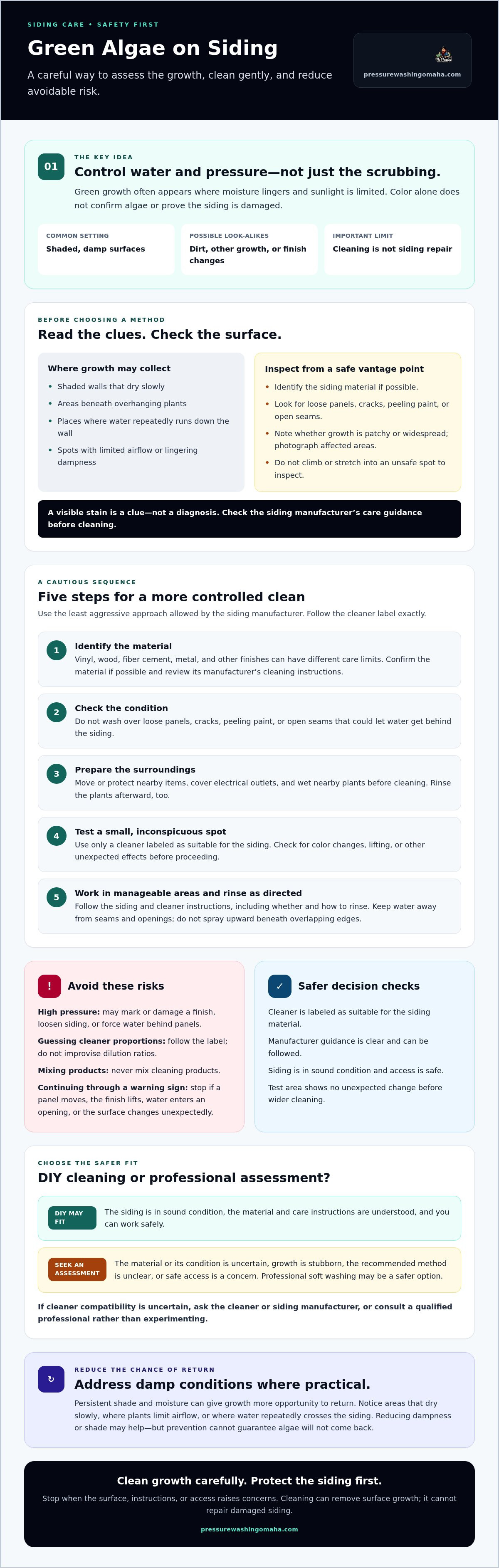
Work methodically. A cautious sequence helps reduce the risk of changing the finish or forcing water where it doesn’t belong:
- 1. Identify the material. Confirm the siding type if possible, then review the manufacturer’s cleaning guidance.
- 2. Inspect its condition. Look for loose panels, cracks, peeling paint, or open seams. Don’t wash over damage that could let water enter behind the siding.
- 3. Prepare the surroundings. Move or protect nearby items, cover electrical outlets, and wet surrounding plants before cleaning. Rinse the plants afterward, too.
- 4. Start gently. Use the least aggressive approach allowed by the siding manufacturer. Test the cleaner and method on a small, inconspicuous spot, then check for color changes, lifting, or other unexpected effects.
- 5. Work in manageable areas and rinse as directed. Follow the siding and cleaner manufacturers’ instructions, including guidance on whether and how to rinse. Stop if a panel moves, the finish lifts, or water enters an opening.
Use a cleaner only if its label says it is suitable for the siding material. Follow the label exactly and don’t guess at dilution ratios. Never mix cleaning products. If compatibility is uncertain, ask the cleaner or siding manufacturer, or consult a qualified professional instead of experimenting on the wall.
Why high pressure and improvised mixtures can cause trouble
A forceful spray may mark or damage a finish, loosen siding, or drive water behind panels. The risk isn’t limited to vinyl: the right pressure and cleaning method depend on the material, its age, and its condition. Keep water away from seams and openings, and don’t direct a spray upward beneath overlapping edges.
Household bleach, detergent, and other cleaners aren’t suitable for every surface. A mixture that removes visible growth could discolor siding or affect nearby plants, and combining products can create additional hazards. If growth is widespread, the siding is delicate, or the safe method remains uncertain, professional house washing may be a more careful option. To discuss whether professional cleaning fits your siding, contact the team about your house washing needs.
DIY Cleaning or Professional Soft Washing: Which Fits Your Siding?
Green algae can look like a simple surface-cleaning job, but a small patch doesn’t show how vulnerable the siding may be. Material, age, finish, access, and existing damage all affect the risk. No single cleaning method suits every siding type or condition. Base your decision on what the surface can safely tolerate, not just how much green growth you see.
| Situation | Cautious homeowner option | Reason to seek professional assessment |
|---|---|---|
| Light growth on sound, accessible siding | Follow the siding and cleaner manufacturer instructions; test a small area first. | Seek advice if the material or compatible cleaner is unclear. |
| Fragile, peeling, cracked, or loose siding | Don’t clean over damage or use force to remove growth. | Cleaning could worsen the condition; assessment can help clarify a safer next step. |
| Elevated or hard-to-reach areas | Don’t climb or stretch to reach the growth. | Unsafe access adds risk beyond the cleaning itself. |
| Growth persists or the surface changes during cleaning | Stop rather than scrubbing harder or changing products. | A professional can assess the siding and cleaning approach. |
When careful DIY cleaning may be reasonable
DIY cleaning may be reasonable for light growth on accessible siding that appears sound, provided the manufacturer gives clear cleaning instructions. Use only a method you can control without forceful spraying, and test it in an inconspicuous spot. If the algae remains, the finish changes, or a panel shifts, stop. Repeated scrubbing or escalating pressure can turn a small cleaning task into avoidable surface damage.
When professional help is the safer choice
Seek professional assessment for fragile, damaged, elevated, or hard-to-reach siding, or whenever you can’t confirm the material or safe method. Soft washing uses a low-pressure approach, but that doesn’t mean one process suits every surface, and it can’t guarantee a particular result. A provider should consider the siding’s condition and the surrounding property before cleaning.
If you’re unsure how to remove green algae from siding, professional house washing is an option to discuss. Ask how the provider will account for your siding material, protect nearby surfaces, and handle areas that are already damaged. Cleaning and repair are separate needs; washing shouldn’t be treated as a fix for loose or deteriorating siding.
How to Reduce Green Algae Returning to Omaha-Area Siding
Cleaning removes visible growth, but it doesn’t necessarily change the conditions that helped it develop. For homeowners in Omaha and nearby communities, the practical goal is to reduce persistent dampness and shade around the affected wall, not to expect algae will never return. If the same patch reappears, something nearby may be keeping the siding wet or limiting airflow.
Reduce damp conditions around exterior walls
Start by observing how water moves around the home. After rain, look for visible gutter overflow or downspouts sending runoff onto the siding. Note whether water repeatedly streaks one section or collects near the foundation. If you spot a drainage concern, address its cause rather than repeatedly scrubbing the wall.
Plants resting against siding can hold moisture and restrict airflow. Keep growth from pressing directly on the exterior while preserving landscaping that suits your property. Also notice shaded areas that stay wet longer than nearby walls. A persistently damp spot may have more than one contributing factor, so observe before making changes.
Build a simple siding observation routine
Keep a brief record of where green growth appears, whether it returns in the same place, and what moisture sources are nearby. A photo can help you compare the area over time. Recheck the wall after visible drainage problems, changes to nearby plants, and seasonal yard maintenance. You don’t need a complicated schedule; the goal is to notice recurring patterns before reaching for a cleaner again.
- Record the affected wall and the approximate location of growth.
- Note visible runoff, gutter overflow, or plants touching the siding.
- Compare the area during later visual checks, especially if growth returns.
These observations can help distinguish a one-time patch from a recurring moisture issue. They also give a cleaning professional useful context if the growth keeps coming back or the siding’s condition is uncertain. For service details, review professional house washing. Cleaning may remove visible algae, but persistent dampness can still create conditions for renewed growth.
When to Call an Omaha-Area Siding Cleaning Professional
Some siding should be assessed before anyone tries to wash it. If you’re unsure how to remove green algae from siding without affecting the surface, pause rather than increasing pressure or trying a stronger cleaner. A professional can evaluate the cleaning approach, but washing is not the same as repairing damaged siding.
Signs the job has moved beyond a simple DIY wash
Stop and seek qualified advice if you notice any of these conditions:
- Loose panels, cracks, or deterioration: Cleaning may worsen existing damage, especially if water can enter behind the siding.
- Uncertain siding or coating: If you can’t identify the material or don’t know what finish has been applied, don’t guess at a cleaning method.
- Unsafe access: Don’t use a ladder or equipment beyond your training, balance, or safe reach. Hard-to-reach areas are a good reason to bring in a professional.
- Persistent growth: If algae remains after a cautious, manufacturer-approved attempt, stop instead of scrubbing harder or switching to an unverified mixture.
- Unexpected surface changes: Discoloration, lifting finish, moving panels, or signs of water entering an opening are reasons to stop immediately.
House washing can address surface dirt and growth, but it won’t repair loose, cracked, or deteriorating siding. If you see damage, arrange an assessment with a qualified siding professional; don’t expect a cleaning service to correct a repair issue.
What to ask before arranging house washing
Before booking, ask how the provider will identify your siding material and adapt the cleaning approach to its condition. You can also ask how nearby plants and other property features will be considered, and what signs would lead them to recommend stopping rather than proceeding. Clear answers help you understand the plan and its limits.
No Pressure Power Washing provides house washing with soft washing for delicate exterior surfaces in Omaha and surrounding communities. The company serves Omaha, Papillion, Elkhorn, Gretna, Bennington, Bellevue, Valley, and Wahoo. Professional house washing may be worth considering if the siding is fragile, access is difficult, or you’re uncertain about the safest method.
Protect Your Siding with a Careful Next Step
Green growth often reflects lingering moisture and shade, not necessarily siding failure. Before choosing how to remove green algae from siding, identify the material, check its condition, and follow the manufacturer’s cleaning guidance. Light growth on sound, safely accessible siding may be suitable for cautious DIY cleaning. Damaged surfaces, uncertain materials, unsafe access, or persistent growth are good reasons to stop and seek professional advice.
Reducing damp conditions around the wall may help limit regrowth, though it can’t guarantee algae won’t return. If cleaning feels uncertain, professional house washing with a soft-wash approach for delicate exterior surfaces is an option to consider. No Pressure Power Washing has more than 30 years of experience in the Omaha area.
With a careful assessment and a method suited to the siding, you can address green growth while taking a more protective approach to your home.
Frequently Asked Questions
What is the safest way to remove green algae from siding?
The safest method depends on the siding material and its condition. To decide how to remove green algae from siding, check the siding manufacturer’s care instructions and use the least aggressive method they allow. Test it on a small, inconspicuous area first. Protect nearby plants, avoid spraying toward seams or openings, and follow cleaner label directions. Don’t mix products or increase pressure if the growth doesn’t come off easily.
Can you pressure wash green algae off siding?
Pressure washing may remove algae, but a forceful spray can damage some finishes or push water behind siding. Don’t assume a pressure washer is suitable just because the surface looks sturdy. Check manufacturer guidance, and avoid directing water at seams or openings. Professional soft washing uses a low-pressure approach, but the suitable method still depends on the material and its condition.
Why does green algae grow on one side of a house?
Algae may be more visible on a wall that stays shaded and damp longer than other elevations. Nearby plants can restrict airflow, while repeated runoff from a gutter or roof can keep a section wet. Growth beneath overhanging branches or near water streaks may point to conditions worth investigating. The pattern alone doesn’t prove that the siding is damaged.
Will green algae come back after cleaning siding?
It can return if the conditions that favor growth remain. A shaded wall that dries slowly, plants touching the siding, or recurring runoff may contribute to renewed growth. Cleaning addresses visible algae, but it doesn’t necessarily change the source of persistent moisture. Track where growth reappears and check for visible drainage issues. Reducing dampness may help, but it can’t guarantee algae won’t return.
Can household cleaners or bleach damage siding or plants?
Yes. A cleaner that isn’t compatible with the siding may discolor or affect its finish, and cleaning runoff can harm nearby plants. Don’t assume household bleach or detergent is safe for every surface. Read the siding and cleaner manufacturers’ instructions, test a small hidden area, and follow label directions. Never mix cleaning products. If compatibility is unclear, ask the manufacturer or consult a qualified professional.
When should I hire a professional to clean algae from siding?
Hire a professional if siding is loose, cracked, peeling, deteriorating, or letting water enter behind it. Professional advice is also prudent if you can’t identify the material or coating, access requires unsafe ladder work, growth persists, or the surface changes during cleaning. House washing is cleaning, not siding repair. No Pressure Power Washing provides house washing and soft-wash services in the Omaha area, with more than 30 years of local experience.
How can Omaha homeowners help prevent algae from returning?
Omaha-area homeowners can look for gutter overflow or downspouts directing water onto siding, and notice where plants touch the wall or shade slows drying. Keep a simple record of where growth returns and check those spots after visible drainage problems or seasonal yard maintenance. No Pressure Power Washing serves Omaha and surrounding communities, including Papillion, Elkhorn, Gretna, Bennington, Bellevue, Valley, and Wahoo. Contact the team to request a free house-washing estimate.


