

The fastest way to remove a rust stain can also leave a permanent mark. Rust removal Omaha property owners need starts with identifying the likely stain source and the surface. A cleaner or pressure level that works on concrete may damage brick, siding, or another exterior material.
Rust-colored marks can make a well-kept property look neglected, especially when the cause isn’t obvious. Sprinkler overspray can leave mineral-rich deposits, but stains may also come from corroding metal or iron carried by water. Treating a mark without understanding its source can damage the surface, or leave a stain that returns.
This guide covers common causes of exterior rust stains, why methods vary by material, and what to ask before choosing an approach. You’ll also learn when it’s safer to leave the work to a professional, particularly if the surface is vulnerable or the right treatment is unclear. No Pressure Power Washing offers rust removal and reports more than 30 years of experience in the Omaha area. Here’s how to assess the problem and protect your exterior.
Key Takeaways
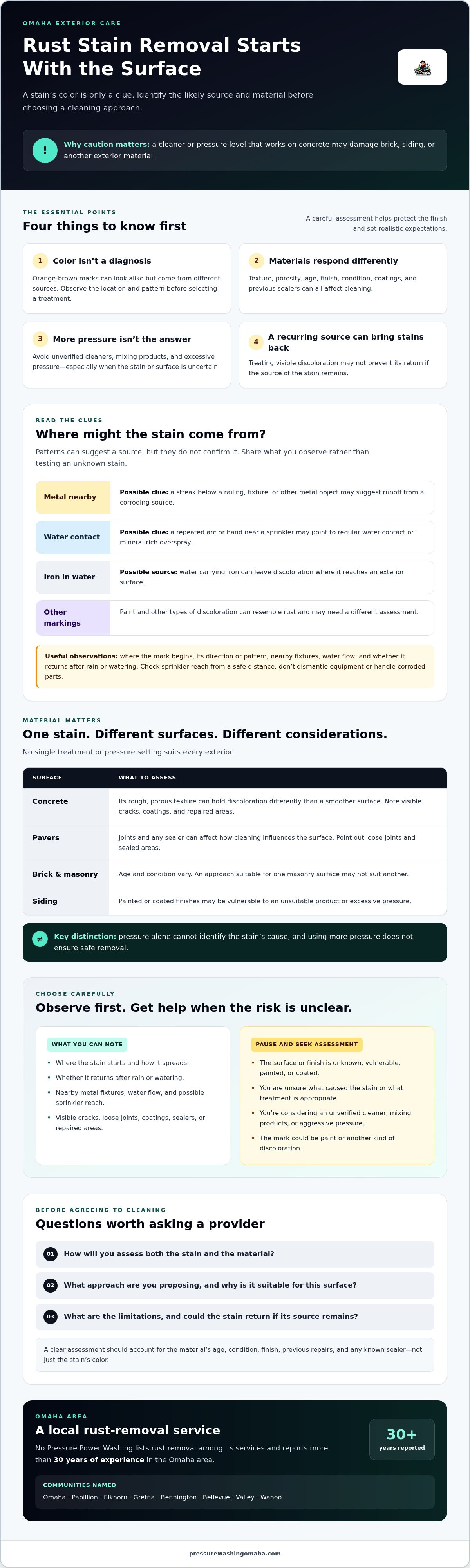
- Rust-colored stains can have different sources. Look for clues about what caused the mark before choosing a treatment.
- Concrete, pavers, masonry, and siding can respond differently to cleaning. Age, finish, condition, and previous sealers all matter.
- Avoid unverified cleaners, mixing products, or using excessive pressure, especially when the surface or stain is uncertain.
- For Rust removal Omaha, ask a provider to assess the material, explain the proposed approach, and describe its limitations.
- No Pressure Power Washing lists rust removal among its services and reports more than 30 years of Omaha-area experience.
Rust Removal in Omaha: What Causes Orange-Brown Exterior Stains?
Orange-brown marks on concrete, pavers, masonry, or siding can look alike but come from different sources. A rust stain is discoloration associated with iron corrosion, which occurs when iron reacts with oxygen and moisture. Color alone can’t confirm that an exterior stain is rust or identify its source.
If you’re considering Rust removal Omaha services, start by observing the stain rather than choosing a cleaner. Its location and pattern may offer clues, but they don’t confirm the cause. Other kinds of discoloration can look similar and may call for a different assessment.
How can you tell whether an exterior stain is rust?
Look at where the mark begins and how it spreads. A streak below a metal fixture may suggest runoff from a corroding source. A repeated arc or band near a sprinkler may point to regular water contact. These are clues, not a diagnosis. Note whether the mark returns after rain or watering, and share what you observe with a qualified professional instead of testing an unknown stain with chemicals or aggressive pressure.
What can cause rust stains on Omaha-area properties?
Possible sources include exposed or corroding metal, water that carries iron onto a surface, and irrigation overspray that repeatedly wets the same area. Runoff from a railing, fixture, or other nearby object may leave a trail below it. If the stain is near a lawn, check from a safe distance whether sprinklers reach the affected spot. Don’t dismantle equipment or handle corroded components to investigate.
Before arranging Rust removal Omaha, note nearby fixtures, the direction of water flow, and whether the stain returns in the same place. A recurring mark may come back if its source remains, even after the visible discoloration is treated. This information can help a provider assess the stain and discuss realistic next steps.
Not every exterior mark is rust. Paint and other markings may need a different assessment. No Pressure Power Washing lists graffiti removal services separately, which is one reason to identify the type of stain before choosing an approach. The company serves Omaha and nearby communities, including Papillion, Elkhorn, Gretna, Bennington, Bellevue, Valley, and Wahoo.
Why Rust Removal Depends on Concrete, Pavers, Siding, and Other Surfaces
There isn’t one rust treatment or pressure setting that suits every exterior. Concrete, pavers, masonry, and siding differ in texture, porosity, finish, and condition. The same approach can affect each material differently, so assess the surface before cleaning begins.
Concrete’s rough, porous texture can hold discoloration differently than a smoother surface. Pavers have joints and may have a sealer that changes how cleaning affects them. Brick and other masonry vary in age and condition. Painted or coated siding may be vulnerable to an unsuitable product or excessive pressure. These differences make assessment important, but they don’t guarantee a particular treatment will work.
Can the same rust treatment be used on every exterior surface?
No. Don’t assume a treatment or pressure level that suits one material will work on another. Porous, coated, painted, and weathered surfaces may respond differently, and previous repairs or sealers can affect the result. If you’re unsure about the material or finish, ask a qualified professional to assess it before treatment.
What should be assessed before cleaning concrete or pavers?
Before arranging Rust removal Omaha service, point out visible cracks, loose joints, coatings, sealers, and repaired areas. These details help a provider assess the surface and discuss an appropriate approach. Pressure alone won’t identify what caused a stain, and using more pressure doesn’t ensure safe removal. For broader concrete care, see the concrete cleaning service information.
Rust removal is different from cleaning general dirt or biological growth, which may call for another assessment. Treating every mark alike could miss the cause or affect the finish. Describe what you’ve noticed and ask how the stain and surface will be evaluated before agreeing to next steps. If you don’t know the material or its finish, consider getting a professional assessment before attempting treatment.
DIY Rust Removal or Professional Cleaning: How to Choose Safely
Not every rust-colored mark calls for a service visit. You can observe the stain, note whether it returns, and check for a nearby source from a safe distance. Treatment is a different decision. If the cause or surface is uncertain, experimenting with a cleaner or pressure washer can turn a small blemish into a damaged finish.
Rust removers and other exterior cleaners aren’t interchangeable. Mixing products can create hazardous reactions, and an unverified product may discolor or affect the material. Excessive pressure can also harm vulnerable finishes or disturb surface components. Don’t rely on a general online recipe. The product and method need to suit the identified stain and surface, and the product must be used according to its label.
When is it safer to call a rust-removal professional?
Ask for a qualified assessment if the surface is valuable, fragile, coated, weathered, or unfamiliar, or if the stain covers a large area or returns after cleaning. Recurrence can mean the source hasn’t been addressed. Don’t handle chemicals or equipment beyond your training, and don’t use a product in a way the label doesn’t permit. If you can’t confidently identify the stain and material, pause rather than guess.
What should you ask before approving exterior rust treatment?
Ask how the provider will identify the surface and assess its condition. Find out what products and methods may be considered, how nearby areas will be protected, and what results are realistic for this particular stain. A responsible provider should explain limitations after assessing the job, not promise complete removal before understanding the surface and stain.
For Rust removal Omaha, choose a provider who starts with an assessment, not a preset method. Share when the mark appeared, whether it has returned, and what you’ve already tried. Ask the provider to explain the proposed approach in terms you understand, including any care instructions you’ll need to follow. If the assessment suggests the stain isn’t rust, ask what further evaluation may be appropriate before treatment proceeds.
Key takeaway: Match any treatment to the identified stain, the surface’s condition, and the product instructions. If any of these are unclear, don’t improvise. Ask a qualified professional to assess the risk first.
What to Expect During Professional Rust Removal in Omaha
A careful rust-removal visit should begin with questions, not a preset treatment. Describe the surface, where the stain is, how much area it covers, and whether you know of a possible source. Mention if the mark has returned or if you’ve already tried cleaning it. These details help the provider understand the situation before discussing options.
How does an initial rust-stain assessment work?
A provider should identify the material, assess its condition, and examine the staining before recommending next steps. Photos may help start the conversation, but they might not show the surface texture, finish, or condition clearly enough to replace an on-site assessment. After considering the material and stain, the provider should discuss an appropriate approach and realistic results.
How can you prepare the area and discuss realistic results?
When it’s safe and practical, move loose personal items away from the work area. Tell the provider about known coatings, sealers, previous repairs, earlier cleaning attempts, and nearby materials that may need consideration. If the stain is on a driveway, the company’s driveway cleaning information offers broader context, though rust removal still needs to be discussed for the specific stain and surface.
Before work begins, make sure you understand the proposed next steps and realistic outcome. A stain’s age, source, and the condition of the material can affect what’s achievable. A careful provider should explain limitations rather than promise complete removal before assessing the area.
No Pressure Power Washing lists rust removal among its services and reports more than 30 years of experience in the Omaha area. Its stated service communities include Omaha, Papillion, Elkhorn, Gretna, Bennington, Bellevue, Valley, and Wahoo. Ask how the surface will be assessed and what method may suit your particular stain. Clear answers help you make an informed decision without assuming every rust mark can be treated the same way.
Choose Omaha Rust Removal That Protects the Property
The right provider should explain how they’ll protect the surface, not just how they plan to remove the stain. Before choosing a Rust removal Omaha service, make sure the conversation covers the material, its condition, the likely stain source, and any previous cleaning attempts. Clear expectations matter because the possible result depends on the surface and staining.
How do you evaluate an Omaha-area rust-removal provider?
Use this checklist when comparing providers:
- Surface assessment: They ask what the material is, its condition, and whether it has a coating, sealer, or previous repair.
- Clear method discussion: They explain what products or methods may be considered and how they’ll follow product instructions while protecting nearby areas.
- Honest limitations: They describe realistic outcomes after assessing the stain instead of promising complete removal before seeing the surface.
- Relevant experience: They can explain their experience with rust removal and the exterior surfaces involved.
No Pressure Power Washing lists rust removal among its services and reports more than 30 years of experience in the Omaha area. The company describes its solutions as biodegradable and non-toxic. Ask which approach is appropriate for your surface and stain. Its stated service communities include Omaha, Papillion, Elkhorn, Gretna, Bennington, Bellevue, Valley, and Wahoo.
Graffiti is a separate cleaning concern, so don’t assume the same treatment applies to both marks. You can review the company’s graffiti removal service separately.
How can Omaha-area property owners request an estimate?
When you contact a provider, describe the affected surface, where the stain appears, how much area it covers, and anything you know about its history. Mention previous cleaning attempts, recurring discoloration, and nearby materials that may need protection. Photos can help explain the issue, though a provider may need to assess the surface before discussing an appropriate method and realistic result.
Ask what information they need to evaluate the job and what next steps they recommend. Avoid relying on a promised result before the stain and material have been assessed. A careful estimate discussion should help you understand the proposed work without pressure to approve an uncertain treatment.
Restore the Surface With a Careful Next Step
Exterior rust stains can have different sources, and orange-brown color alone doesn’t confirm what caused them. Identify the stain and assess the material before choosing a treatment. Concrete, pavers, masonry, and siding can respond differently, so avoid unverified cleaners or aggressive pressure when you’re unsure.
For Rust removal Omaha, look for a provider who discusses the surface, its condition, the possible method, and realistic results before work begins. No Pressure Power Washing lists rust removal as a service and reports more than 30 years of experience in the Omaha area. The company describes its cleaning solutions as biodegradable and non-toxic.
A thoughtful assessment can help you choose a sensible next step and care for your property with confidence.
Frequently Asked Questions
Can rust stains be removed from concrete?
Rust stains can often be reduced or removed from concrete, but the outcome depends on the stain and the concrete’s condition. Concrete is porous, so discoloration may settle into its texture rather than remain on the surface. A professional should assess the affected area before choosing a treatment. The stain’s source matters too: if iron-bearing runoff or another source continues reaching the concrete, discoloration may return.
Can pressure washing remove rust stains?
Pressure washing may remove surface dirt, but pressure alone doesn’t identify or reliably remove every rust stain. Iron-related discoloration can need a different assessment, and excessive pressure may damage some exterior materials or finishes. The right approach depends on the stain and surface, not simply on how forcefully water is applied. If you’re unsure what caused the mark, avoid experimenting with high pressure and seek a professional assessment.
What causes rust stains on a driveway or siding?
Rust-colored marks on a driveway or siding can come from corroding metal, iron carried by water runoff, or repeated irrigation overspray. A streak below a metal fixture or a repeated pattern near a sprinkler may offer clues, but color and location can’t confirm the source by themselves. Note where the mark starts and whether it returns. Identifying the source helps guide treatment and may prevent the stain from recurring.
Is it safe to use a rust remover on pavers?
Use a rust remover on pavers only if the product label specifically supports that surface and you can follow its instructions safely. Pavers can vary in material, finish, condition, and sealer, so a product that suits one may affect another differently. Don’t mix cleaners or apply an unverified product. If you’re uncertain about the pavers or their finish, ask a qualified professional to assess them first.
How do professionals remove rust stains from exterior surfaces?
Professionals should first identify the surface, assess its condition, and consider what may have caused the stain. They can then discuss a suitable method, how nearby areas will be protected, and what result is realistic. The process isn’t the same for every material, and complete removal shouldn’t be promised before assessment. For Rust removal Omaha, share the stain’s location, surface type, and any previous cleaning attempts when discussing next steps.
Will rust stains come back after removal?
Rust stains can return if the source remains. For example, runoff from a corroding fixture or sprinkler overspray may continue to deposit iron on the same area after cleaning. Removal addresses visible discoloration, but it may not stop the cause. Note whether the stain reappears and where water reaches the surface. A professional can use that history when assessing the mark and discussing next steps.
Does No Pressure Power Washing offer rust removal in Omaha?
Yes. No Pressure Power Washing lists rust removal among its services and reports over 30 years of experience in the Omaha area. Its stated service communities are Omaha, Papillion, Elkhorn, Gretna, Bennington, Bellevue, Valley, and Wahoo. The company describes its cleaning solutions as biodegradable and non-toxic. Ask about your specific surface and stain before agreeing on an approach.


