

That clean, freshly washed deck shouldn't come at the cost of an emergency veterinary visit. When homeowners explore pet safe exterior cleaning, their most urgent question is simple: are the solutions washing down the siding genuinely safe for curious animals? If you worry about your dog licking outdoor surfaces or grooming paws that picked up harsh chemical residue from the grass, your concern is completely justified. According to the ASPCA Animal Poison Control Center, household cleaning products consistently rank among the top ten pet toxins nationwide.
You shouldn't have to choose between eliminating stubborn algae and protecting your pets from toxic burns. In this guide, you'll discover how to thoroughly clean your siding, deck, and hardscapes without exposing your pets or yard to caustic residues. We'll unpack the difference between vague marketing buzzwords and true chemical safety, explain proven non-toxic washing methods, and provide the exact criteria you need to keep your outdoor spaces clean and secure.
Key Takeaways
- Understand why genuine pet safe exterior cleaning depends on balanced, biodegradable solutions rather than caustic chemical washes that pose severe contact hazards to paws.
- Discover how pets encounter lingering residues through grooming and foot pads, making porous decks and patios higher-risk areas than vertical siding.
- Learn the essential property preparation steps to take before cleaning begins, including clearing outdoor gear and establishing safe zones for your animals.
- Identify the specific soft-wash techniques and chemical safety questions to ask contractors before they begin treating your home.
What Is Pet Safe Exterior Cleaning and Why Does It Matter?
True pet safe exterior cleaning is not just a marketing label stamped on a bottle. It is an intentional methodology that pairs non-toxic, biodegradable chemistry with specialized low-pressure wash techniques to eliminate mold, algae, and grime without leaving corrosive chemical residues behind. While many traditional exterior washing operations focus entirely on surface speed, a pet-conscious approach balances effective microbial eradication with complete animal welfare and landscape preservation.
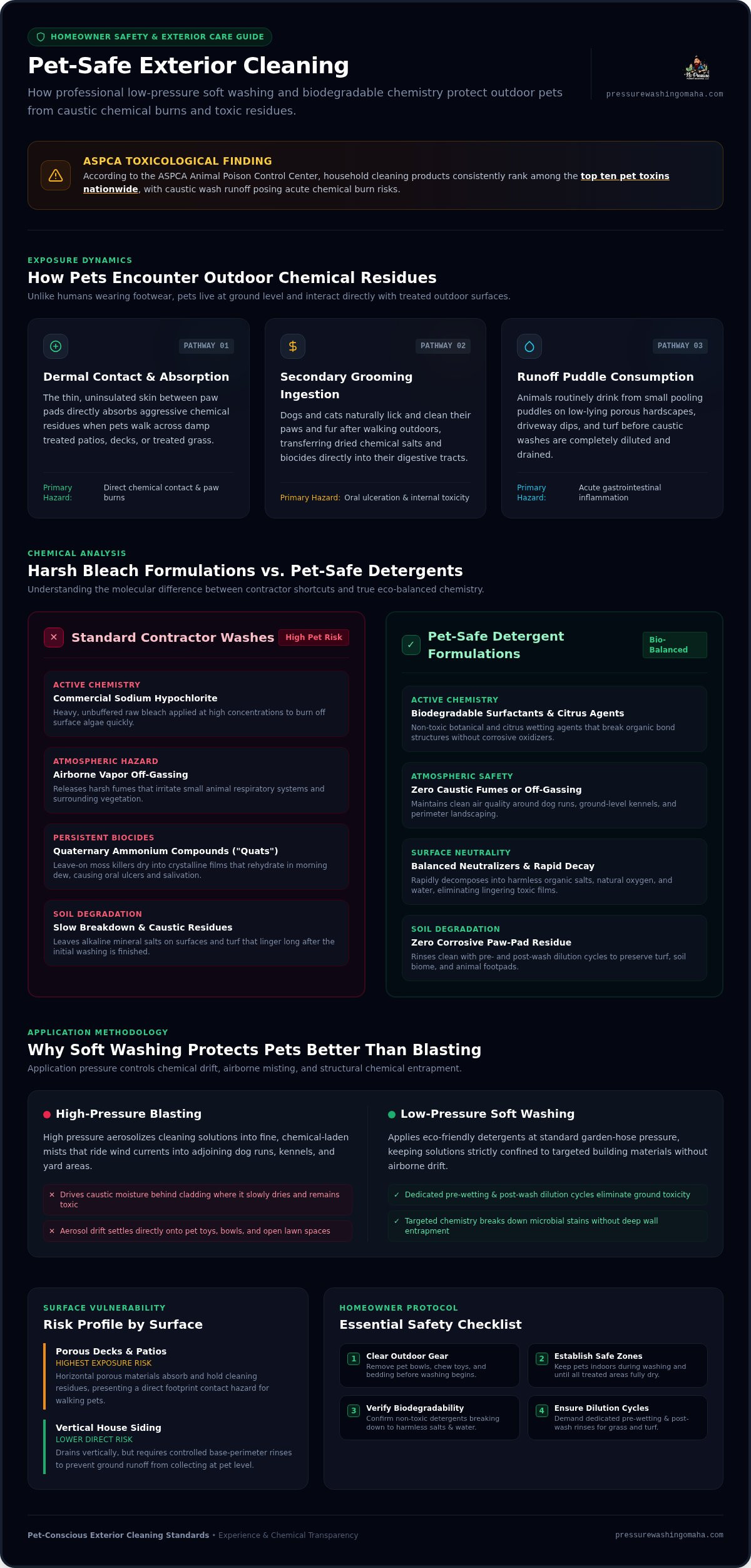
The distinction matters because dogs and cats experience outdoor environments at ground level. Unlike humans wearing protective footwear, animals walk directly across damp treated patios, sniff low-lying siding, and roll on freshly sprayed grass. Their primary biological exposure pathways include:
- Dermal contact and absorption: Thin skin between paw pads readily absorbs harsh chemical compounds.
- Secondary ingestion through grooming: Cats and dogs naturally lick their paws and fur after walking through treated areas, transferring dried chemical salts directly to their digestive tracts.
- Runoff consumption: Pets often lap from small puddles that collect on porous hardscapes or turf before washing solutions fully dilute and drain.
Common Exterior Chemical Hazards to Dogs and Cats
Standard contractor blends rely heavily on commercial-grade sodium hypochlorite. In high concentrations, unbuffered bleach solutions cause chemical burns on sensitive paw pads and off-gas vapors that inflame small respiratory systems. Similarly, heavy degreasers and quaternary ammonium compounds (often called "quats" in leave-on moss killers) pose acute toxicity risks. Veterinary toxicology data confirms that even dried biocide films can rehydrate in morning dew, causing severe oral ulcerations, excess salivation, and gastrointestinal inflammation when animals groom their coats.
The Crucial Role of Low-Pressure Soft Washing
Application pressure directly influences chemical drift. High-pressure blasting aerosolizes cleaning detergents into fine, airborne mists that ride wind currents into adjoining dog runs, outdoor kennels, and perimeter vegetation. It also risks driving moisture deep behind exterior cladding, where trapped cleaning agents dry slowly and remain hazardous.
Professional soft washing solves this problem through controlled delivery. By applying eco-friendly detergents at garden-hose pressure, technicians keep cleaning agents confined precisely to the targeted building materials. When paired with comprehensive house washing protocols that include dedicated pre-wetting and post-wash dilution cycles, soft washing eliminates biological stains while ensuring surrounding soil and turf remain completely safe for four-legged family members.
Comparing Exterior Cleaning Solutions: Harsh Bleach vs. Pet-Safe Detergents
Traditional contractors often reach for high-strength caustic bleach mixtures because raw hypochlorite kills green algae almost instantly. It cuts labor time, but this shortcut creates significant hazards for households with animals. Authentic pet safe exterior cleaning relies on a fundamentally different chemical foundation. Instead of flooding surfaces with harsh oxidizers, it uses targeted, biodegradable surfactants, citrus wetting agents, and balanced neutralizers that dissolve organic bonds without leaving caustic residues behind.
When properly formulated, eco-certified detergents break down rapidly into harmless organic salts, oxygen, and water. A quick review of the ASPCA guide to poisonous cleaning products demonstrates how easily standard domestic bleaches corrode sensitive tissues. Dedicated exterior technicians balance biological sanitization with family health by utilizing modern, non-toxic chemistry during professional house washing, protecting siding alongside the pets playing beneath it.
- Standard Contractor Washes: Heavy sodium hypochlorite concentrations, unbuffered alkaline salts, slow soil degradation, high paw-pad irritation risk.
- Pet-Safe Detergent Formulations: Biodegradable surfactants, neutral pH balancers, rapid environmental breakdown, zero corrosive residue on turf or decking.
Evaluating Chemical Concentration, Dwell Times, and Biodegradability
Chemical dwell time dictates how deeply wash solutions saturate surrounding soil. When unbuffered biocides sit on concrete or siding, gravity carries them down into adjoining turf, where unrinsed chemicals linger in dense grass thatch. Professional biodegradable solutions work within calibrated ten to fifteen minute contact windows. They sanitize organic micro-spores completely, after which systematic rinsing neutralizes the solution before your companions ever step back into the yard.
Why 'Green' Labels Require Strict Technical Verification
Retail shelves are full of jugs labeled "natural" or "eco-friendly," yet many still contain quaternary ammonium compounds that present severe oral toxicity risks to grooming animals. Genuine peace of mind requires looking past marketing buzzwords to check active ingredients against established EPA Safer Choice standards. If you have questions about specific formulations or want to discuss safe application practices for your property, you can easily request guidance from our local team before scheduling your next wash.
Surface-Specific Considerations for Homes with Outdoor Animals
Every exterior material reacts differently to detergents and water flow. While vertical vinyl or aluminum siding allows rinse water to sheet off rapidly toward grade level, horizontal surfaces trap cleaning solutions directly in the paths where pets walk, sit, and sleep. Effective pet safe exterior cleaning requires adapting wash strategies to the porosity of each substrate rather than applying a single universal wash process across the entire property.
Porous outdoor flooring presents the highest risk of chemical transfer to domestic animals. Porous stone, unfinished cedar, and standard masonry draw moisture down into cellular cavities and hairline voids. If an aggressive chemical saturates these surfaces, summer heat can later force trapped residues back up to the surface as moisture evaporates, creating contact hazards days after the wash crew packs up.
Wood Decks and Composite Patios
Organic timber behaves like a dense sponge. Cellular wood fibers readily pull in cleaning surfactants, meaning specialized deck cleaning must incorporate thorough, multi-stage freshwater flushing rather than high-pressure blasting that tears wet grain. Composite decking poses a different challenge: synthetic capping holds moisture in shaded corners where slick biological slime develops. Addressing this requires botanical, low-foaming cleaners evaluated under the EPA Safer Choice program to eliminate algae without damaging composite polymers or leaving greasy coatings on paw pads.
Concrete Driveways, Sidewalks, and Paver Walkways
Concrete seems virtually indestructible from above, but unsealed slabs contain millions of microscopic capillaries. During deep concrete cleaning, heavy surface grime and detergent runoff can pool in decorative joints and surface depressions where companion animals love to investigate. Professional flat-surface rotary cleaners must be paired with dedicated perimeter water control, keeping dirty wash water actively redirected away from grass verges and pet zones until completely flushed away.
Paver patios feature joint sand that acts as an additional collection trap. Flooding interlocking pavers with high concentrations of harsh chemicals turns that sand into a lingering chemical reservoir. Selecting non-ionic, biodegradable cleansers ensures joint materials dry cleanly, maintaining stable paver joints without creating caustic dust when dried sand kicks up under running paws.
Homeowner Checklist: Protecting Pets Before, During, and After Exterior Washing
Safe cleaning results rely on clear operational discipline. Even when using certified botanical solutions, practical jobsite management prevents accidental run-ins with technicians, pressurized spray, or active washwater. A well-planned checklist ensures your companion animals remain calm indoors while technicians restore outdoor surfaces.
Executing a reliable pet safe exterior cleaning plan involves four central phases:
- Step 1: Secure indoor shelter. Bring cats and dogs indoors well before service trucks arrive. Close ground-floor windows and draw blinds facing work areas to minimize reactive barking.
- Step 2: Clear perimeter pet gear. Pick up chew toys, water bowls, organic bones, outdoor beds, and wire crates from the yard.
- Step 3: Pre-saturate adjacent soil. Thoroughly soaking perimeter grass and soil with clean water prevents plant roots and low turf from absorbing displaced washwater.
- Step 4: Enforce a full quarantine window. Keep all domestic animals inside until every deck board, patio slab, and siding panel dries completely.
Pre-Service Yard Preparation
Before technicians begin running water lines, inspect your boundary fencing. Walk the perimeter to verify latch hardware functions properly, as wash crews move back and forth carrying equipment. Relocate plastic dog houses or fabric agility tunnels away from drip lines. If your home has an automated dog door, physically lock it shut. Finally, let the crew know if you have an underground electric pet fence along the driveway so they can route heavy supply lines without snagging subterranean wiring.
Post-Wash Re-Entry and Surface Drying Protocols
Allow washed surfaces to dry completely for a minimum of two to four hours under direct sunlight. In shaded areas or on humid afternoons, extend that window. Technicians should run a final freshwater rinse across grass borders and paver joints to dissolve lingering suds or residual foam. Before releasing your pets into the yard, run a dry paper towel over shaded deck planks or concrete edges. If the paper towel picks up dampness, wait another hour until the substrate feels bone-dry to the touch.
Hiring a Pet-Conscious Exterior Cleaning Professional
Hiring an exterior cleaning contractor shouldn't require compromising your animal's safety. While many operators claim their services are environmentally sound, vague assurances rarely reveal what is actually inside their chemical tanks. Truly conscientious service demands technical transparency regarding detergent chemistry, equipment calibration, and active runoff mitigation. Across the Omaha metro, where humidity and seasonal shifts impact drying times, working with a seasoned team prevents common jobsite hazards caused by uncalibrated chemical delivery.
Untrained operators often use high-pressure tips to blast away mildew quickly, or they flood surfaces with concentrated bleach to compensate for inadequate equipment. Both shortcuts endanger pets. Selecting dedicated specialists who prioritize authentic pet safe exterior cleaning ensures your siding, hardscapes, and yard receive meticulous treatment without risking paw irritation or chemical ingestion.
Essential Questions to Ask Your Power Washing Contractor
Before allowing any company to spray cleaning solutions around your home, ask these direct vetting questions:
- What active cleaning agents are in your wash mix? Make sure the solution avoids unbuffered chlorine bleach and caustic degreasers that leave hazardous residues on horizontal surfaces.
- What protocols protect fenced dog runs and grass perimeters? Verify that the crew actively pre-wets soil and rinses all foliage before, during, and after detergent application.
- What is your clear re-entry timeframe? Technicians should evaluate local temperature and humidity to give you a dependable estimate for when outdoor surfaces will be fully dry and safe for pets.
The Long-Term Value of Gentle, Conscientious Exterior Care
Gentle low-pressure washing achieves two vital goals at once: it preserves siding finishes, wood decks, and stone pavers while maintaining a completely non-toxic environment for your pets. Harsh wash chemicals degrade paint seals and dry out wood grain over time, creating expensive property maintenance issues down the road. Conscientious soft washing eradicates organic spores at their roots, maintaining beautiful curb appeal while keeping the ground safe for every animal that calls your home its territory.
Protect your home and your four-legged family members by requesting a free pet-safe exterior cleaning estimate with local specialists who put property preservation and animal safety first.
Protect Your Home and Pets With Responsible Exterior Care
A pristine outdoor living space should never come at the expense of your animal's health. Achieving thorough results without chemical risk comes down to three essentials: selecting biodegradable formulations that break down quickly, avoiding high-pressure chemical aerosolization, and enforcing thorough pre- and post-wash dilution. When these standards guide the process, your decks, concrete walkways, and siding stay spotless while outdoor zones remain secure for curious paws.
No Pressure Power Washing brings over 30 years of exterior washing experience to homeowners across the Omaha metro. We combine specialized soft-wash equipment engineered to preserve delicate siding and timber with dedicated, non-toxic detergents designed to protect pets and landscape beds. Investing in professional pet safe exterior cleaning means you never have to second-guess the safety of your yard when opening the back door.
Give your home the thorough, gentle wash it deserves while keeping your four-legged companions happy, comfortable, and protected all season long.
Frequently Asked Questions
Is soft wash solution harmful if my dog licks dried exterior siding?
No, properly rinsed and dried pet safe exterior cleaning solutions present minimal risk once completely dry. Quality biodegradable surfactants break down during application and subsequent rinsing. Because the active components neutralize into inert salts and water, a pet licking dry vinyl or composite siding won't ingest active toxins. However, you should always verify that your contractor used plant- and pet-conscious formulations rather than lingering quaternary ammonium compounds.
How long must pets stay inside after exterior house or deck washing?
Pets should remain indoors for a minimum of two to four hours after cleaning finishes. Across the Omaha metro area, drying times depend heavily on local humidity, sun exposure, and wind conditions. In shaded yards or cooler autumn weather in communities like Elkhorn and Gretna, surfaces take longer to dry. Ensure that all porch decking, low siding panels, and concrete patios are completely dry to the touch before releasing pets outdoors.
Can exterior cleaning chemicals burn or damage grass where my dog plays?
Yes, unbuffered commercial bleach and harsh chemical cleaners can scorch grass blades and damage root structures if applied carelessly. Concentrated runoff turns turf brown and creates toxic puddles where pets play. Conscientious contractors protect lawns by continuously pre-saturating grass with fresh water before applying detergents, keeping plant cells fully hydrated so they cannot absorb stray runoff, followed by a meticulous post-wash rinse to dilute any residual solution safely.
What should I do if my pet comes into contact with wet cleaning overspray?
Immediately flush the affected fur, eyes, or paw pads with clean lukewarm water for ten to fifteen minutes. Wash their coat gently with pet-safe shampoo to remove remaining surfactant film before they attempt to groom themselves. If you notice signs of redness, paw irritation, excessive drooling, or coughing, contact your local veterinarian or the ASPCA Animal Poison Control Center right away with details about the specific cleaning solution involved.
Why is pressure washing alone without detergents insufficient or unsafe?
Water pressure alone merely shears off surface mildew without eliminating the underlying fungal spores embedded inside siding or wood grain. Blasting surfaces with excessive pressure often forces water behind house siding, gouges decking boards, and strips paint. Low-pressure soft washing uses specialized biodegradable solutions to sanitize and lift organic root structures completely, keeping building materials intact while delivering a longer-lasting clean that keeps pet-friendly outdoor spaces hygienic.
Are biodegradable exterior detergents as effective on mold and algae as harsh bleach?
Yes, modern biodegradable detergents and botanical wetting agents are exceptionally effective against exterior organic growth. Rather than relying on raw chemical bleaching to mask stains temporarily, targeted eco-friendly solutions break down the cellular structure of algae, lichen, and mildew directly. When paired with proper dwell times and gentle agitation, professional pet safe exterior cleaning delivers spotless results that last just as long as traditional caustic methods without leaving dangerous residues behind.
How do professional technicians protect outdoor dog runs and kennels during service?
Experienced crews in Papillion, Bellevue, and Bennington take deliberate steps to isolate and safeguard dedicated pet areas before washing begins. Technicians inspect kennels to remove food dishes, dog toys, and water buckets, then cover stationary housing with protective tarps if needed. The perimeter surrounding the dog run is pre-soaked with fresh water to prevent runoff migration and rinsed repeatedly throughout the process to guarantee zero detergent settles in your pet's favorite zones.


