

Blasting your commercial facade with aggressive water pressure isn't standard maintenance; it's often the fastest way to ruin your building's exterior envelope. When managing commercial building exterior cleaning Omaha facilities require, treating the process as a simple cosmetic scrub misses the entire point. Real exterior care is about proactive substrate preservation, not high-pressure cosmetics.
You already understand the punishment local weather inflicts on commercial properties. Between punishing winter freeze-thaw cycles, corrosive road salt, and humid summers that feed microbial growth, your exterior walls face constant wear. Coordinating exterior work brings legitimate headaches, too, especially when balancing tenant parking, protecting delicate EIFS panels, and remaining compliant with local stormwater runoff rules.
You don't have to gamble with structural safety to achieve clean curb appeal. This guide outlines how to safely evaluate modern cleaning methods, keep wash water aligned with municipal environmental codes, and vet insured local contractors. Below, you'll find the operational framework necessary to protect your building materials and keep your facility looking immaculate year-round.
Key Takeaways
- Shift your facility maintenance strategy from cosmetic washing to proactive substrate preservation designed to withstand harsh Midwest climate shifts.
- Learn why gentle soft washing protects delicate commercial cladding, mortar joints, and manufacturer warranties far better than high-pressure blasting.
- Use a clear verification checklist to vet commercial building exterior cleaning Omaha contractors for proper insurance, specialized equipment, and municipal stormwater compliance.
- Implement site coordination strategies that protect pedestrian safety and parking accessibility while eliminating operational downtime for your tenants.
- Discover how partnering with seasoned local exterior specialists shields your physical asset and maintains Douglas County property standards.
Evaluating Commercial Building Exterior Cleaning in Omaha: Asset Preservation vs. Aesthetics
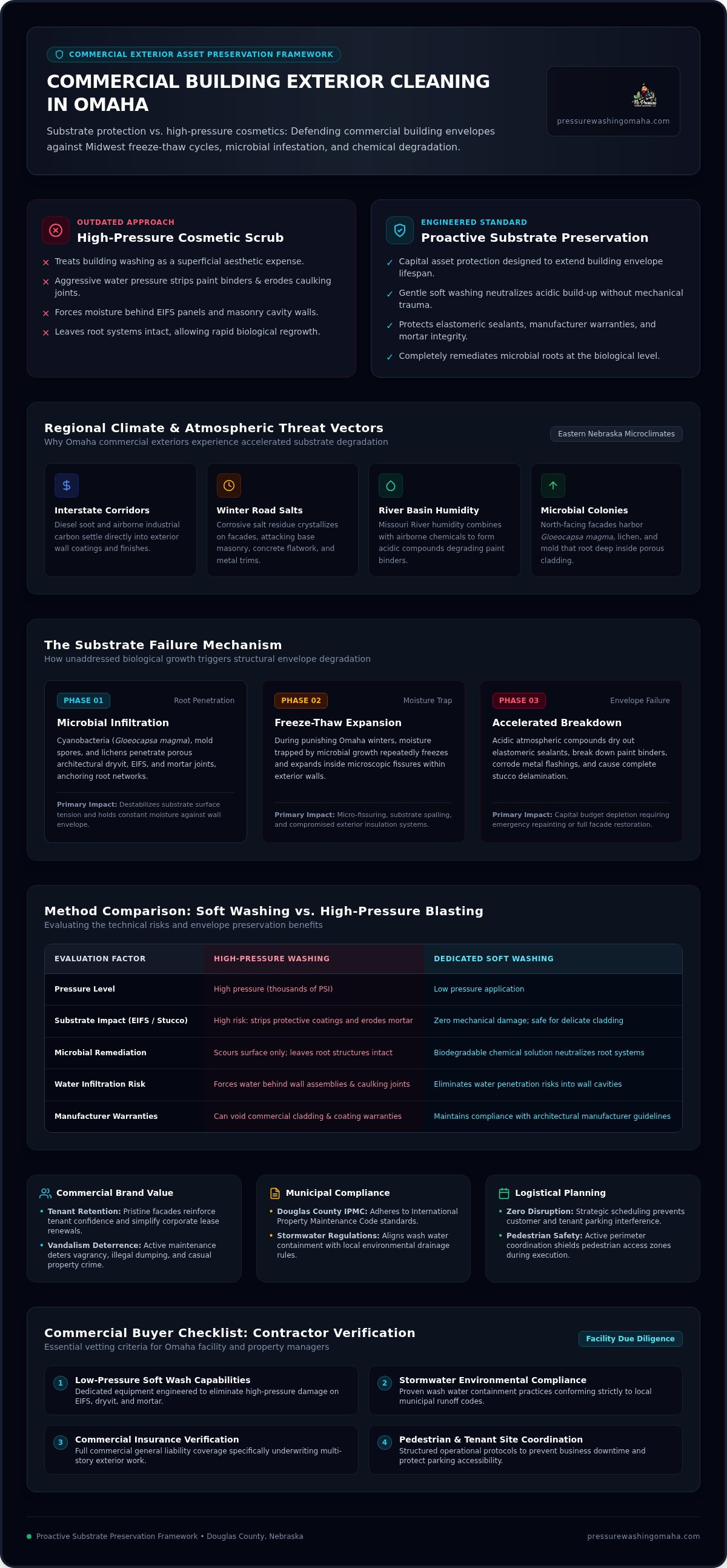
Most commercial property managers view building washing as an aesthetic expense, treating it like routine janitorial care designed solely for visual appeal. That mindset shortchanges your capital budget. Effective commercial building exterior cleaning Omaha facilities depend on operates as preventive maintenance. It protects building envelopes from premature material failure rather than just polishing appearances.
Throughout eastern Nebraska, exterior substrates endure harsh atmospheric elements. Diesel soot from interstate corridors, airborne industrial carbon, and winter road salt residue settle into exterior coatings. When mixed with river valley humidity, these contaminants form acidic compounds that steadily break down exterior paint binders, dry out elastomeric sealants, and corrode metal flashings. Scheduling regular wash cycles safeguards these surfaces, extending the lifespan of exterior sealants and delaying costly full-scale repainting or stucco restoration.
The Structural Cost of Omaha Weather and Biological Growth
Microorganisms thrive in regional microclimates. Along the humid Missouri River basin, north-facing walls and shaded facades offer fertile ground for Gloeocapsa magma (cyanobacteria), lichen colonies, and mold spores. These organisms do not just sit on walls; their root systems penetrate porous finishes like EIFS, architectural dryvit, and masonry mortar.
Understanding these risks starts with reviewing fundamental power washing basics to separate surface scouring from true microbial remediation. Biological growth holds moisture against exterior envelopes. During Omaha winters, this trapped moisture repeatedly freezes and expands within porous surfaces. This cycle leads to micro-fissuring, substrate spalling, and compromised exterior insulation systems. Pair your wall maintenance with routine concrete cleaning across surrounding flatwork to halt moisture infiltration before seasonal freezes trigger extensive freeze-thaw damage.
Impact on Tenant Retention, Client Perception, and Brand Value
A building exterior serves as a physical declaration of management quality. Discolored facades, mildewed entryways, and grime-streaked parapets create negative psychological reactions that affect retail foot traffic and commercial tenant leasing decisions:
- Tenant Pride and Retention: Corporate clients expect their physical premises to reflect operational excellence. Neglected facades undermine tenant confidence and complicate lease renewals.
- Security and Vandalism Deterrence: Properties exhibiting visible wear attract negative attention. Clean, well-maintained commercial facilities discourage vagrancy, illegal dumping, and casual vandalism by projecting active oversight.
- Municipal and Brand Compliance: Neglecting facade cleanliness can violate local property codes like Douglas County's IPMC standards, while pristine exteriors support corporate brand equity.
Investing in exterior preservation shifts maintenance from reactive repair to calculated asset protection, delivering reliable returns on property value and long-term envelope durability.
Soft Washing vs. Pressure Washing: Choosing the Safe Method for Commercial Substrates
High water pressure and delicate exterior facades do not mix. Blasting water at thousands of pounds per square inch easily strips protective coatings, erodes caulking joints, and forces moisture behind wall assemblies. Safe commercial building exterior cleaning Omaha facilities depend on relies on soft washing, a dedicated low-pressure delivery method that utilizes biodegradable cleaning solutions rather than blunt force. By giving targeted detergents proper dwell time on the substrate, these agents neutralize mold and bacterial colonies at their root without scouring delicate finishes.
Protecting Vulnerable Commercial Facades: EIFS, Stucco, and Metal Panels
Exterior Insulation and Finish Systems (EIFS) and synthetic stuccos are particularly vulnerable to mechanical abrasion. Concentrated water streams can puncture the synthetic topcoat, saturating the moisture-sensitive foam insulation underneath. Architectural metal claddings carry similar risks; high-velocity spray can scratch factory powder coatings and void manufacturer warranties.
The National Park Service recommends using the gentlest means possible when maintaining structural surfaces, a standard every commercial property manager should enforce. Uncalibrated pressure equipment can blast away soft mortar joints or strip protective architectural paints. Professional soft-wash systems operate at low pressure, distributing biodegradable solutions that dissolve road film and biological residue while keeping envelope warranties intact.
When High Pressure Is Appropriate: Concrete, Walkways, and Dumpster Enclosures
While high pressure damages vertical wall claddings, calibrated pressure remains the right tool for durable horizontal surfaces. High-traffic walkways, loading bays, and restaurant dumpster corrals require targeted mechanical force to lift grease, vehicle fluids, and embedded grime.
For these resilient areas, professional teams deploy calibrated surface cleaners rather than handheld wands to avoid etching concrete pores or leaving uneven zebra stripes. Adding regular commercial concrete cleaning to your schedule preserves pedestrian traction and keeps grease from tracking into tenant suites. To see how horizontal and vertical maintenance work together across an annual schedule, read our comprehensive overview of professional pressure washing in Omaha.
If you're unsure which method your building envelope requires, you can connect with our team for a site assessment to review your substrates before scheduling service.
Commercial Exterior Cleaning Buyer Checklist: How to Vet Omaha Contractors
Selecting a partner for commercial building exterior cleaning Omaha properties require demands moving past surface-level marketing. Hiring an unqualified crew risks substrate damage, costly safety citations, and regulatory fines that fall back on facility ownership. Use this five-step checklist before signing any commercial agreement:
- Step 1: Insurance Verification. Confirm commercial general liability coverage along with dedicated workers' compensation.
- Step 2: Dedicated Rig Assessment. Verify that crews utilize low-pressure soft-wash systems and high-flow pumps, not residential consumer pressure washers.
- Step 3: Wastewater Compliance. Audit runoff management plans to ensure compliance with municipal storm sewer discharge rules.
- Step 4: Omaha Commercial References. Require recent, local references from retail, corporate, or industrial facilities in the metroplex.
- Step 5: OSHA Safety Protocols. Inspect written Hazard Communication plans and certified fall-protection practices for elevated work.
Insurance, Liability, and Risk Mitigation on Commercial Job Sites
Residential insurance policies often exclude elevated commercial structures, multi-unit properties, and specialized equipment. If an underinsured vendor has an employee fall while servicing your parapet or roofline, property owners face serious premises liability claims. Require a Certificate of Insurance sent directly from the carrier listing your business as an additional insured. Ask the agent directly whether the policy covers completed operations and third-party substrate damage.
Environmental Compliance and Biodegradable Detergents
Under the Clean Water Act and Omaha's Chapter 32 MS4 stormwater ordinance, letting wash wastewater enter municipal storm drains without authorization is prohibited. Contractors must deploy containment berms, drain plugs, and vacuum recovery systems to isolate wastewater before it reaches public waterways. Pair these physical controls with neutral, biodegradable detergents that rinse cleanly without scorching customer landscaping, particularly when coordinating greasy pad washes with commercial dumpster cleaning services.
Evaluating Multi-Service Capabilities: Flatwork, Facades, and Emergency Graffiti Removal
Hiring separate vendors for building facades, flatwork maintenance, and unexpected surface tagging burns management hours. An experienced contractor coordinates these tasks under unified billing and consolidated job site staging. Rapid response matters, too; securing immediate professional graffiti removal eliminates vandalism before harsh aerosol pigments permanently stain porous architectural masonry.
Protecting your physical envelope requires specialized machinery and proven local craftsmanship. Consult with Chuck Crom for a tailored commercial assessment to establish a safe, fully compliant wash plan for your commercial properties.
Logistical Planning: Executing Commercial Washing Without Operational Disruptions
Coordinating an exterior wash on an active commercial site requires rigorous logistics. When scheduling commercial building exterior cleaning Omaha facility managers cannot afford blocked entrances, wet pedestrians, or detergent odors drifting into interior offices. Smooth execution demands isolating active zones, protecting sensitive mechanical assets, and scheduling operations during low-impact hours.
Night and Weekend Scheduling for Retail and Office Parks
Off-peak execution prevents daily business disruptions for corporate offices, medical clinics, and retail storefronts. Staging work during evenings or weekends eliminates pedestrian slip risks and keeps customer parking clear. Successful projects rely on a clear communication sequence:
- 72-Hour Tenant Notice: Distribute written notifications alerting tenants to secure ground-level windows, remove vehicles from perimeter walls, and notify security personnel.
- Phased Parking Closures: Block off parking bays in sections using high-visibility barricade tape and signage, ensuring employees and visitors retain uninterrupted building access.
- Noise and Light Management: Position directional lighting down toward the work face and utilize baffle-equipped equipment to minimize disturbance to neighboring properties.
Water Access, Pressure Management, and Property Safeguards
Before applying any detergents, crews must safeguard sensitive exterior infrastructure. Commercial HVAC systems constantly draw in outdoor air. Sealing wall louvers and low fresh-air intakes prevents aerosolized cleaning agents from entering interior air ducts. Technicians should also hand-mask exterior card access scanners, security cameras, and open electrical junction boxes.
Water sourcing is equally critical. Professional commercial rigs carry high-capacity buffer tanks, allowing crews to maintain continuous flow without overburdening building water lines or causing interior pressure drops. After completing the wash, a final quality walkthrough verifies that glass surfaces are free of mineral spotting, sidewalks are dry, and entrance thresholds are completely clear of chemical residue.
Partnering with Omaha’s Proven Exterior Specialists: No Pressure Power Washing
Managing an active commercial property leaves little room for contractor errors or administrative runarounds. For reliable commercial building exterior cleaning Omaha facility leaders depend on a trusted local partner rather than impersonal national chains or fly-by-night outfits. No Pressure Power Washing brings over 30 years of continuous hands-on craftsmanship to commercial properties across eastern Nebraska, treating every facility with the precision of a true property guardian.
Three Decades of Local Experience Across the Omaha Metropolitan Area
Local experience matters when contending with regional weathering patterns. For three decades, our team has served commercial clients throughout Omaha, Papillion, Bellevue, Elkhorn, Gretna, Bennington, and Valley. We understand firsthand how eastern Nebraska's heavy clay soils, airborne agricultural dust, and corrosive winter road salts attack commercial substrates.
Every commercial assessment receives direct owner oversight from Chuck Crom. Rather than sending inexperienced technicians with high-pressure wands, we deploy dedicated low-pressure soft-wash systems and high-flow surface equipment. Using biodegradable, non-toxic chemistry, our technicians lift deep grime while safeguarding commercial siding, architectural finishes, and manufacturer warranties.
Custom Commercial Maintenance Agreements and Streamlined Estimates
The most cost-effective exterior maintenance relies on a consistent calendar rather than reactive crisis management. Routine seasonal wash cycles prevent mold, carbon, and salts from permanently etching exterior coatings, keeping your capital budget protected from premature restoration expenses. We establish customized service agreements that consolidate building facade care, entryway concrete cleaning, and dumpster corral sanitation under one dependable schedule.
If your facility also manages distribution vehicles or field equipment alongside commercial real estate, review our guide on fleet washing services in Nebraska to see how routine wash schedules protect mobile capital assets from salt corrosion.
Protect Your Commercial Investment with Confidence
Maintaining your commercial facility requires moving beyond superficial washes. By choosing gentle soft washing instead of high-pressure blasting, you protect delicate materials like EIFS and synthetic stucco while stopping moisture before freezing weather hits. Prioritizing vetted contractors and municipal wastewater compliance ensures that the commercial building exterior cleaning Omaha businesses invest in safeguards both your operating budget and your physical structure.
With over 30 years of dedicated experience across the Omaha metro, No Pressure Power Washing delivers dependable craftsmanship with total peace of mind. Our proprietary low-pressure systems and eco-friendly, biodegradable solutions safely remove biological growth and road film without risking envelope damage or tenant disruptions.
Partner with a trusted local property guardian to keep your commercial storefront, corporate office, or industrial facility pristine, safe, and built to last.
Frequently Asked Questions
How often should a commercial building exterior be cleaned in Omaha?
Most commercial buildings in Omaha require exterior washing every 12 to 24 months. Facilities located near major transit corridors like Interstate 80 or industrial zones often need annual cleaning to clear away heavy diesel exhaust and winter road salt buildup. North-facing elevations prone to persistent shade and river valley humidity also benefit from regular wash cycles to stop organic growth before it degrades exterior wall coatings.
Will commercial soft washing damage our building exterior paint or signage?
No, professional soft washing protects delicate exterior paint, vinyl graphics, and architectural channel signage. Unlike high-pressure blasting, soft washing applies water at low pressure combined with non-toxic, biodegradable detergents. The cleaning chemistry lifts surface dirt and neutralizes biological spores without stripping paint layers, tearing caulked expansion joints, or voiding manufacturer envelope warranties.
Can commercial exterior washing be scheduled during closed business hours?
Yes, scheduling the commercial building exterior cleaning Omaha properties require during closed business hours is standard practice. Arranging service during evening hours or weekends avoids disruptions for retail tenants, corporate staff, and clients. It also eliminates pedestrian slip hazards around building perimeters and keeps customer parking spaces open during peak operating hours.
How do you prevent wash water from entering storm drains and violating EPA rules?
Technicians isolate wash water using heavy-duty containment berms, storm drain covers, and vacuum pump systems. Under the Clean Water Act and Omaha's Chapter 32 MS4 stormwater ordinance, wash wastewater cannot enter public storm sewers. Professional crews capture runoff directly at surface collection points, filtering debris and managing disposal to keep facility managers fully compliant with municipal environmental codes.
What is the primary difference between commercial soft washing and power washing?
The primary difference lies in water pressure and the reliance on cleaning chemistry. Power washing uses high-velocity mechanical pressure to lift dirt from dense, horizontal concrete flatwork. Soft washing operates under low pressure, relying on specialized biodegradable detergents to gently break down road grime and microbial growth on vertical claddings, EIFS, and stucco without scarring fragile substrates.
Can your exterior cleaning process remove graffiti and oil stains from commercial entryways?
Yes, specialized exterior cleaning safely eliminates both aerosol graffiti and deep oil stains from commercial flatwork. Porous concrete and brick entryways quickly absorb petroleum fluids and spray paint. Experienced technicians combine targeted concrete cleaning equipment with dedicated graffiti removal methods to draw out deep-set pigments and grease without gouging the surrounding masonry surface.
Do commercial property managers need to shut down HVAC systems during facade washing?
Complete mechanical shutdowns are rarely needed, but property managers should temporarily set fresh-air intakes to internal recirculation mode. Sealing exterior wall louvers and low fresh-air vents near active work zones prevents airborne detergent mist or mild odors from entering interior ductwork. This basic safeguard preserves indoor air quality while exterior wall assemblies dry.


