

If you think those green patches on your shingles are just a cosmetic eyesore, you're actually hosting a biological parasite that's slowly eating your home's first line of defense. For many local homeowners, moss removal from roof surfaces feels like a constant battle against Omaha's humid climate. It's completely normal to feel a sense of aesthetic shame when your house looks "dirty," but the real concern is the hidden damage occurring beneath the surface. You've probably heard conflicting advice about bleach or seen the damage high-pressure washing can cause to delicate asphalt shingles.
You deserve peace of mind knowing your home is protected without risking the very shingles meant to shelter you. This guide will teach you the safest, most effective methods for removing moss without voiding your warranty or stripping away the essential gravel layer. We'll break down the 2026 standards for soft-wash technology, compare eco-friendly cleaners, and explain why professional expertise is the most reliable way to preserve your roof's long-term value and durability in the unique Nebraska environment.
Key Takeaways
- Understand why moss is a biological parasite that anchors into asphalt granules, leading to structural damage if left untreated.
- Discover why soft washing is the only manufacturer-approved method for moss removal from roof surfaces to protect your warranty.
- Learn why high-pressure power washing is a dangerous trap that can strip away decades of shingle life in a single afternoon.
- Compare DIY chemical treatments against professional solutions to see why most store-bought options fail to kill moss at the root.
- Identify the specific environmental factors in Omaha, like tree canopy and shade, that contribute to recurring moss growth on your property.
Why Moss Removal from Roof Surfaces is a Structural Necessity
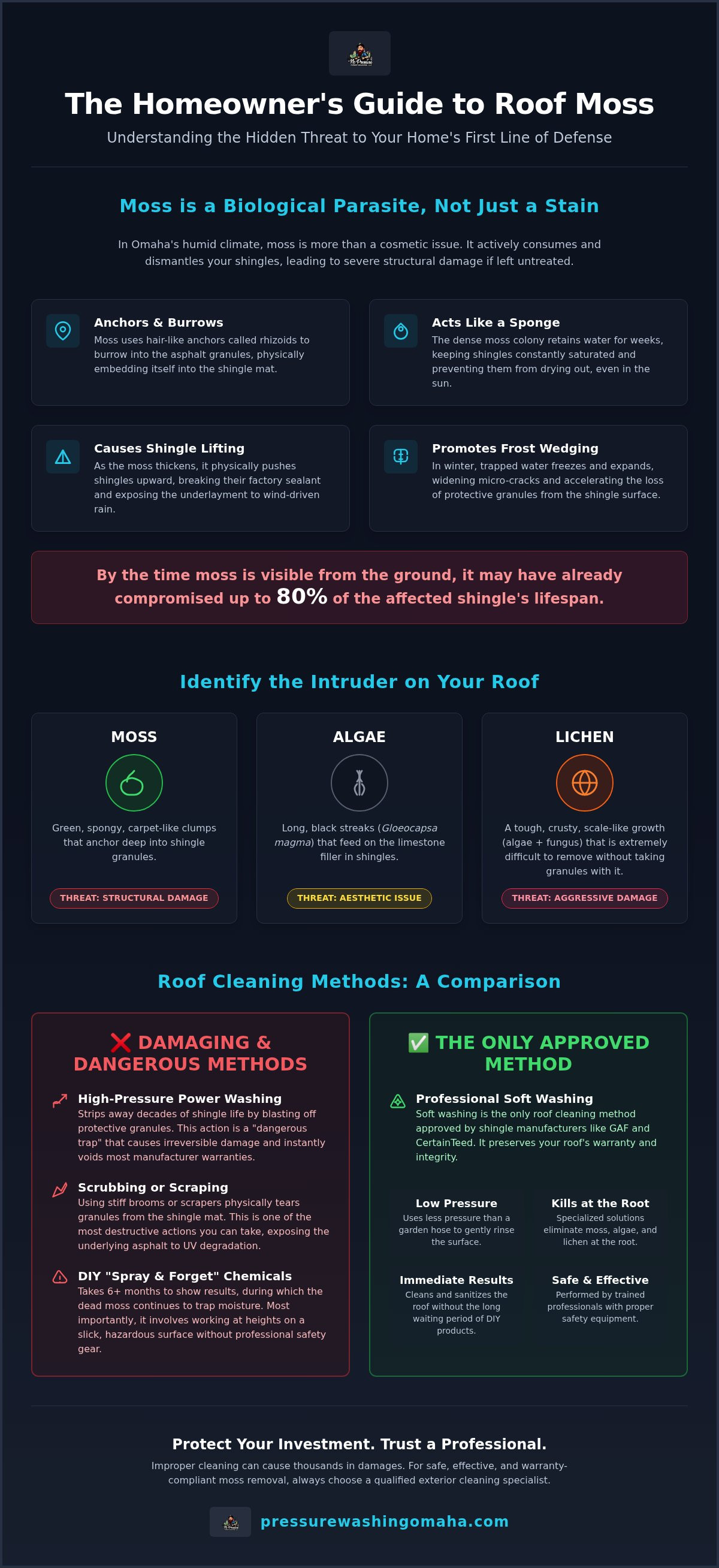
Omaha’s humid summers and shaded neighborhoods create a perfect breeding ground for moss. To understand why professional roof cleaning is vital, we first need to ask: What is moss? Scientifically, it's a non-vascular plant that lacks a traditional root system. Instead of roots that draw nutrients from soil, moss uses tiny, hair-like anchors called rhizoids. On a roof, these rhizoids don't just sit on the surface; they burrow into the asphalt granules and the shingle mat itself. This makes moss removal from roof surfaces far more complex than simply brushing off a surface stain.
Once established, moss acts like a living sponge. It retains water against your shingles for days or even weeks after a Nebraska rainstorm. This constant moisture exposure leads to "lifting," where the thickening moss colony physically pushes the edges of the shingles upward. Professional moss removal from roof shingles isn't just about curb appeal; it's about preventing this mechanical failure. This lifting breaks the sealant strip and exposes the vulnerable underlayment to wind-driven rain. When moss remains saturated, it creates a microclimate that prevents the roof from drying even on sunny days. This persistent dampness is the primary driver of premature shingle failure in our local neighborhoods, leading to wood rot and mold growth that can compromise your home’s structural integrity.
The Biological Threat to Asphalt Shingles
Modern asphalt shingles often contain limestone filler to add weight and durability. Unfortunately, moss thrives on this mineral content, essentially consuming your roof from the inside out. In Omaha's fluctuating climate, this biological activity leads to "frost wedging." During winter, the water trapped inside the moss freezes and expands, widening small cracks in the shingles and accelerating granule loss. This is why simply scraping the surface is a mistake. If you pull the plant off without killing the rhizoids, you're physically tearing the asphalt granules away from the shingle mat, causing permanent damage. The green patches you see from the curb are usually just the tip of the iceberg. By the time moss is visible, it has often already compromised 80% of the affected shingle's lifespan.
Moss vs. Algae: Identifying the Growth on Your Omaha Home
Not every dark spot on your roof is moss. Many homeowners in areas like Papillion or Elkhorn notice long, black streaks. This is usually Gloeocapsa magma, a type of cyanobacteria. While algae is primarily an aesthetic issue that feeds on limestone, moss is a far more aggressive structural threat. The most dangerous stage of growth, however, is lichen. Lichen is a symbiotic relationship between algae and fungus that creates a crusty, scale-like growth. It is incredibly difficult to remove and often takes the shingle's protective granules with it when it dies. You can learn more about these differences in our guide to Understanding Algae.
DIY Moss Removal vs. Professional Soft Washing: A Comparison
Homeowners often attempt moss removal from roof surfaces using "spray and forget" products found at big-box retailers. These usually contain either zinc sulfate or potassium salts of fatty acids. While these chemicals eventually kill the plant, they create a "wait and see" scenario. You might wait six months or longer for the dead moss to naturally weather away. During that half-year, the decaying organic matter continues to hold moisture against your roof deck, negating the benefits of the treatment. Professional solutions, by contrast, are designed for immediate results without the long-term decay period.
Beyond the chemical limitations, the physical risks of DIY work are substantial. Attempting a project on a two-story Elkhorn home often reveals the limitations of a standard garden hose. It simply cannot reach the high peaks where shade-loving moss thrives. More importantly, walking on a roof covered in wet, biological growth is incredibly dangerous. Moss becomes slicker than ice when damp, making a slip almost inevitable for those without professional fall-protection gear. If you aren't comfortable with heights or don't have the proper safety equipment, you can request a professional evaluation to avoid unnecessary risk.
Why 'Scrubbing' is Never the Answer
It's tempting to grab a stiff broom and start scrubbing once the moss turns brown. However, this is one of the most destructive things you can do to your roof. Stiff bristles strip away the protective granules that shield the asphalt from UV rays. Physical removal also fails to address the microscopic rhizoids we discussed earlier. If you don't kill the plant chemically at the root, the moss will return faster and more aggressively than before. The gravel layer is the primary defense against shingle aging. Once those granules are gone, the underlying asphalt dries out and cracks, leading to leaks that no cleaning solution can fix.
The Soft Wash Advantage
Professional soft washing is the industry-standard alternative to both high-pressure washing and ineffective DIY scrubbing. This method uses low-pressure equipment, typically under 100 PSI, to apply specialized, biodegradable algaecides that kill moss, lichen, and algae on contact. This approach aligns with the ARMA guidelines for moss cleaning, ensuring your manufacturer's warranty remains intact. Unlike DIY products that take months to show results, a professional soft wash provides a "kill and clean" timeline that delivers a pristine roof in just a few hours. To understand why this low-pressure method is superior to traditional cleaning, read our full breakdown of Soft Wash vs Power Wash.
The High-Pressure Trap: Why You Should Never 'Power Wash' a Roof
Many homeowners assume that if a pressure washer can blast grime off a concrete driveway, it’s the right tool for moss removal from roof shingles. This is one of the most expensive mistakes you can make as a property owner. The Asphalt Roofing Manufacturers Association (ARMA) is very clear on this point, they explicitly warn against using high-pressure water to clean asphalt roofs. When a stream of water hitting 1,000 PSI or higher strikes a shingle, it acts like a liquid sandblaster. It doesn't just remove the moss; it strips away the limestone-rich granules that are essential for protecting the underlying asphalt from Omaha’s intense summer sun.
Beyond the immediate loss of protective granules, high-pressure washing carries the risk of "water injection." This occurs when a powerful stream of water is forced upward under the laps of the shingles. This water can saturate the underlayment and soak the wooden roof deck, often leading to hidden attic mold or ceiling leaks that may not become apparent for weeks. At No Pressure Power Washing, we've spent 30 years refining a process that uses less pressure than a standard garden hose. We rely on gentle chemistry to kill the moss at the root, ensuring the structural integrity of your home remains untouched.
Voiding Your Roof Warranty
Most modern roofing warranties contain specific clauses that exclude coverage for damage caused by pressure washing. If you experience a leak or premature shingle failure in the future, a manufacturer representative can easily identify the telltale signs of high-pressure damage and deny your claim. This turns a simple maintenance task into a potential $15,000 out-of-pocket replacement. It's vital to remember that granule loss is the #1 indicator of a roof's remaining lifespan, and once those granules are gone, the roof's ability to shed water is permanently compromised.
The Professional Equipment Difference
A dedicated soft-wash system is fundamentally different from a standard pressure washer. While a typical power washer relies on a high-velocity pump to create impact force, our specialized equipment uses a high-volume, low-pressure delivery method. We use precision-engineered tips to ensure uniform coverage of our biodegradable solutions without any physical impact on the shingles. This approach allows the solutions to soak into the moss and kill the rhizoids without disturbing the delicate shingle mat. For a better understanding of what to look for in a contractor, check out our Low Pressure Roof Cleaning Checklist.
Prevention Strategies: Keeping Moss from Returning to Your Omaha Roof
Omaha’s position within the Missouri River Valley brings a level of humidity that makes moss removal from roof surfaces a recurring challenge for many homeowners. To break the cycle of growth, you have to change the environment that allowed the moss to thrive in the first place. This starts with understanding the role of sunlight. If you live in a shaded neighborhood in Papillion or Bellevue, you’ve likely noticed that the north-facing slopes of your home are consistently the greenest. These areas receive the least amount of direct sunlight, which means they stay damp much longer after a rainstorm, providing the perfect habitat for biological growth.
Pruning back your tree canopy is one of the most effective ways to reduce shade and limit organic debris. When branches hang over your shingles, they drop leaves and twigs that trap moisture and create a nutrient-rich "soil" for moss colonies. Proper moisture management also requires professional gutter cleaning to prevent water from backing up at the eaves. When gutters are clogged, the bottom rows of shingles stay saturated, encouraging moss to take root right at the edge of your roofline.
Many homeowners try to use zinc or copper strips installed at the ridge to prevent regrowth. While these metals release ions that are toxic to moss, they have significant physical limitations. In our experience across the Omaha metro, these strips typically only protect about 10 to 15 feet of shingle below the ridge. On a standard roof plane, this leaves the bottom half of the roof completely vulnerable to new growth once the chemical concentration dilutes.
Environmental Modifications
In Nebraska, our specific freeze-thaw cycles turn moss from a cosmetic nuisance into a structural threat. Moss acts like a heavy, saturated sponge that holds water against the shingle mat. When temperatures drop, that water freezes and expands, physically prying the granules apart and widening small cracks. Improving your attic ventilation helps keep the roof deck cool and dry, which can slow down this destructive process. Removing any "overhang" debris is also crucial for breaking the micro-climate that allows moss to survive even during dry spells.
Maintenance Schedules
A bi-annual inspection is always cheaper than a full moss remediation project. We often recommend a "preventative treatment" approach, where we apply a light, biodegradable algaecide every few years before any green growth is visible to the naked eye. This proactive care preserves the gravel layer and ensures you get the full 25 to 30 years out of your shingles. For a more detailed look at long-term maintenance, you can explore our Roof Cleaning Omaha Pillar.
Choosing an Omaha Roof Moss Removal Specialist
Selecting a contractor for moss removal from roof surfaces is a decision that impacts your home's longevity for decades. In the Omaha metro area, 30 years of local experience isn't just a number; it represents a deep understanding of how our specific humidity levels and freeze-thaw cycles affect asphalt shingles. A specialist who has spent decades in Nebraska knows that a roof in the shaded hills of Ponca Hills requires a different approach than one in a wind-exposed patch of West Omaha. This local expertise ensures the cleaning solutions and application methods are perfectly calibrated for our environment.
Safety and liability are the most critical factors when vetting a professional. You should never hire a "guy with a ladder" who lacks proper credentials. In Omaha, professional roof cleaners should hold a Class E license and maintain a $10,000 bond. Beyond legal requirements, verify they carry both General Liability and Workers’ Compensation insurance. This protects you from being held liable if a technician is injured on your property. At No Pressure Power Washing, we prioritize this peace of mind, ensuring every project is backed by professional standards that a casual handyman simply cannot provide.
Our "Plant Protection" protocol is another hallmark of professional care. While our cleaning solutions are biodegradable and non-toxic, we take extra precautions to protect your Omaha landscaping. This includes thoroughly pre-wetting all perimeter plants and using a dedicated "ground man" to rinse foliage during the entire application process. We also manage runoff to ensure your soil remains balanced and your expensive ornamental trees stay healthy. Transparency in pricing is equally important. A professional estimate should be based on the square footage, the pitch of the roof, and the severity of the biological growth, rather than a vague "flat fee" that might hide corners being cut.
Questions to Ask a Roof Cleaning Company
Before signing a contract, ask these direct questions to ensure your roof is in safe hands:
- Do you use a high-pressure washer or a dedicated low-pressure soft-wash system?
- Can you provide current certificates for workers' comp and liability insurance?
- What specific steps do you take to protect my gutters and sensitive perimeter plants?
- Are your cleaning solutions approved by major asphalt shingle manufacturers?
The No Pressure Guarantee
We believe in doing the job correctly the first time. Our commitment to using biodegradable, non-toxic solutions means your home is treated with the same care we'd use on our own. We don't just "clean" the surface; we achieve a 100% kill rate for moss, algae, and lichen. This ensures the biological roots are completely neutralized, preventing the rapid regrowth that often follows inferior cleaning methods. When you choose a specialist, you're investing in the long-term value and structural integrity of your property.
Get a Free Roof Cleaning Estimate in Omaha
Securing Your Home's Long-Term Protection
Your roof is a significant investment that deserves more than a temporary fix or a damaging high-pressure blast. We've explored how moss acts as a biological parasite, why the "wait and see" approach of DIY chemicals often fails, and why manufacturer-approved soft washing is the only way to preserve your warranty. Meticulous moss removal from roof shingles requires a methodical approach that prioritizes shingle integrity over speed. By choosing a method that kills the roots without stripping the gravel layer, you're extending the life of your home's first line of defense.
With 30 years of local experience right here in Omaha, No Pressure Power Washing provides the specialized equipment and eco-friendly, biodegradable solutions necessary to neutralize growth without harming your landscaping. Our fully insured technicians understand the unique environmental pressures of the Nebraska climate and are dedicated to restoring your home's curb appeal safely and effectively. We take pride in being the trusted guardians of your property's value.
You don't have to tackle the risks of roof work or the confusion of chemical cleaners alone. We're here to provide the expert guidance and professional care your home deserves, ensuring you can enjoy peace of mind for many seasons to come.
Frequently Asked Questions
Is it okay to scrape moss off a roof?
Scraping moss off shingles is a destructive practice that causes permanent damage to your roof's protective surface. When you manually scrape, you physically tear away the asphalt granules that shield your shingles from UV rays and weather. This process also fails to address the rhizoids, or roots, embedded in the shingle mat. Without chemical neutralization, the moss will return faster and more aggressively than before.
Will moss on my roof cause leaks?
Moss will eventually lead to leaks by acting as a saturated sponge that holds moisture against your roof deck. As the colonies grow, they physically lift the shingles, breaking the sealant strips and exposing the underlayment to wind-driven rain. In Omaha's harsh winters, this trapped water undergoes freeze-thaw cycles that expand and crack shingles, creating direct entry points for water to reach your attic.
Can I use bleach to remove moss from my roof?
Sodium hypochlorite, or bleach, is the industry standard for effective moss removal from roof surfaces when it's professionally managed and applied. However, using household bleach without proper dilution or professional-grade surfactants can corrode your gutters and kill your landscaping. A professional soft-wash system ensures the solution is strong enough to kill the biological growth while remaining safe for your property and the environment.
How much does it cost to remove moss from a roof in Omaha?
The cost of professional moss removal depends on factors like the pitch of your roof, the total square footage, and the density of the growth. While every home requires a specific assessment to determine the scope of work, a professional soft wash is a fraction of the cost of a premature roof replacement. Investing in maintenance now preserves your shingles and prevents the massive expenses associated with structural wood rot or water damage.
Do zinc strips really stop roof moss?
Zinc strips serve as a helpful preventative measure but cannot cure an existing moss infestation. They work by releasing metallic ions during rainstorms, which creates an environment where new moss cannot easily take root. Their effectiveness is usually limited to the 10 or 15 feet directly below the ridge. For full-plane protection on larger Omaha homes, a comprehensive soft-wash treatment is still the most reliable solution.
How long does a professional roof moss treatment last?
A professional soft-wash treatment typically keeps a roof clear of moss and algae for two to five years. This duration depends heavily on environmental factors like local humidity and the density of your home's tree canopy. You can extend these results by keeping your gutters clean and pruning overhanging branches to allow more sunlight to reach the shingles, which helps the entire system dry more effectively after rain.
Does moss grow more on certain types of roofs?
Moss thrives most on porous materials like asphalt shingles and wood shakes because they provide a stable anchor for rhizoids. These surfaces also tend to retain the moisture and organic debris that moss needs to survive. While metal and slate roofs are less susceptible to moss, they can still host algae colonies that create unsightly black streaks if they aren't regularly maintained with the proper low-pressure techniques.
When is the best time of year for roof moss removal in Omaha?
Spring and Fall are the ideal seasons for moss removal from roof surfaces in the Omaha metro area. During these windows, temperatures are moderate enough to prevent our cleaning solutions from evaporating too quickly, which ensures a complete biological kill. We avoid treatments during freezing temperatures to protect our technicians and ensure the specialized soft-wash equipment functions with the necessary precision and safety.


