

Blasting your shingles with high-pressure water is the fastest way to turn a simple maintenance task into a five-figure replacement bill. Most homeowners see those unsightly black streaks and assume they need a heavy-duty scrub to save their curb appeal, but that aggressive approach often does more harm than good. It's a stressful position to be in when you're trying to protect your home's value while worrying about potential damage or voided warranties. Choosing low pressure roof cleaning ensures that your shingles are treated with the precision they require to stay functional for years. We believe that professional care should prioritize the long-term health of your property over quick, forceful fixes.
You'll find that low pressure roof cleaning is the only industry-approved method designed to eliminate invasive biological growth without compromising the integrity of your shingles. In this article, we'll show you why this specialized soft-wash technique is essential for preserving your roof's lifespan and protecting your surrounding landscaping. Because low pressure roof cleaning relies on chemistry rather than force, it's the only way to safeguard your shingle warranty while achieving a like-new appearance. We've compiled a safety and quality checklist to help you ensure the job is done right, giving you a clean home and the peace of mind you deserve.
Key Takeaways
- Understand why low pressure roof cleaning is the only method that safely removes algae without destroying shingle granules or voiding your warranty.
- Learn how adhering to ARMA guidelines protects your shingle investment from the permanent damage caused by high-pressure equipment.
- Discover the essential steps for property protection, including pre-wetting landscaping and conducting a thorough pre-inspection of flashings and gutters.
- See how Omaha’s unique humidity cycle and moisture from the Missouri River Valley accelerate roof decay, requiring specialized local care.
- Identify the non-negotiable questions to ask a contractor, from verifying general liability insurance to checking for dedicated soft-wash pumps.
What is Low Pressure Roof Cleaning (Soft Washing)?
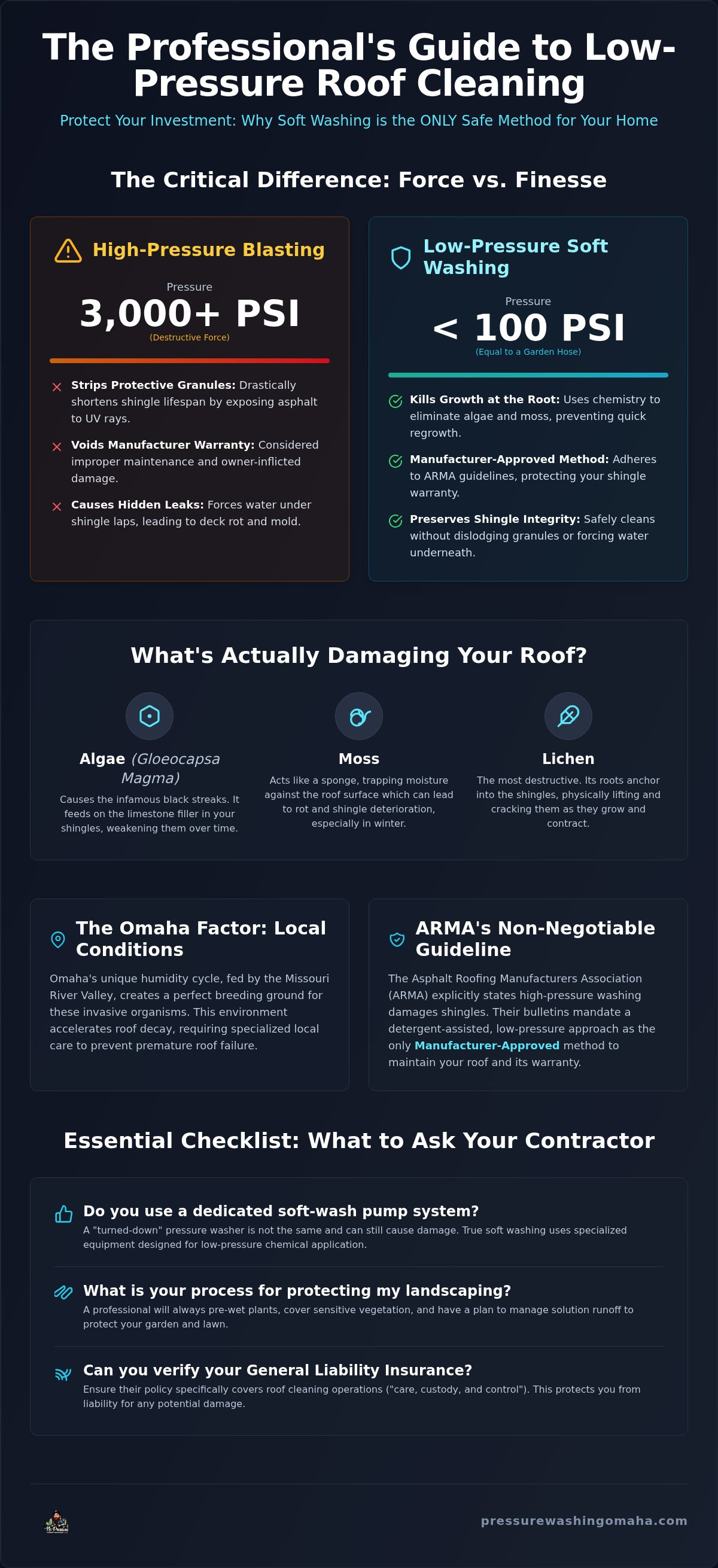
Soft washing isn't just a "gentle" version of pressure washing; it's a completely different technology designed to protect your home. While a standard pressure washer might blast water at 3,000 PSI or higher, low pressure roof cleaning operates at less than 100 PSI. This is roughly the same pressure as a standard garden hose. The goal isn't to use brute force to knock dirt off. Instead, we use a specialized delivery system to apply cleaning solutions that decompose organic matter at the source. This shifts the focus from mechanical blasting to chemical cleaning, which is far safer for your roofing materials.
By using biodegradable surfactants, the cleaning solution clings to the surface rather than running off into your gutters. These surfactants act as a wetting agent, allowing the treatment to penetrate the deep pores of the shingles. This ensures the biological growth is actually killed at the root, preventing it from returning quickly. It's a methodical process that prioritizes the structural integrity of your home over a fast, aggressive finish. We've seen many homeowners attempt to "blast" their roofs clean, only to find they've significantly shortened the lifespan of their shingles in the process.
The Biological Culprits: Algae, Moss, and Lichen
Those black streaks on your roof aren't just soot or dirt; they are a living organism called Gloeocapsa Magma. This cyanobacteria feeds on the limestone filler used in modern asphalt shingles. As it grows, it creates a dark, protective sheath to shield itself from UV rays, which causes the discoloration you see from the street. If left untreated, these streaks provide a base for moss and lichen to take hold. Lichen is especially dangerous because its roots anchor into the shingles. When these organisms dry out, they contract and can physically lift or crack the shingles. Understanding How to Remove Black Streaks from Your Roof starts with recognizing that you are fighting a biological invasion, not just a cosmetic issue.
Why Pressure is the Enemy of Asphalt Shingles
Asphalt shingles are covered in ceramic granules that serve as a protective shield against UV radiation. High pressure cleaning strips these granules away, which effectively ages your roof by several years in a single afternoon. Once this protective layer is gone, the underlying asphalt is exposed to the sun, leading to brittle shingles that curl and fail. Beyond surface damage, high pressure can force water up and under the shingle laps. This water injection can soak your wooden decking and lead to hidden attic leaks or mold growth. Professional Roof Cleaning must always prioritize shingle health over speed. Using the right equipment ensures the algae is gone without compromising the very barrier that keeps your home dry.
Low Pressure vs. High Pressure: The Warranty Battle
Your roof is likely the single most expensive component of your home's exterior. While it's designed to withstand Nebraska thunderstorms and heavy snow, it isn't built to survive a concentrated blast of water from a power washer. Many homeowners don't realize that choosing an aggressive cleaning method can instantly turn a 30-year shingle warranty into a worthless piece of paper. The physical damage caused by high pressure is often permanent, stripping away the very materials that keep your home dry and insulated.
Manufacturer Standards (ARMA & GAF)
The Asphalt Roofing Manufacturers Association (ARMA) is the leading authority on shingle care, and their technical bulletins are clear. They explicitly state that high-pressure washing can damage shingles and should be avoided at all costs. Instead, they mandate a detergent-assisted, low-pressure approach as the only "Manufacturer Approved" method for roof maintenance. If you ever need to file a hail damage claim, an insurance adjuster will look specifically for granule loss. If they see the distinct patterns and scarring caused by a pressure washer, they may deny your claim, citing improper maintenance or owner-inflicted damage. It’s a "clean today, leak tomorrow" scenario that simply isn't worth the risk to your investment.
The Myth of the "Low Pressure" Power Washer
Some contractors claim they use "low pressure" by simply turning down the dial on their power washer or using a wider fan tip. This is a dangerous compromise. Even at a reduced setting, a standard pressure washer can still produce enough force to inject water under the shingle laps, soaking your wooden decking and leading to mold. A true low pressure roof cleaning system uses a dedicated, low-volume pump that never exceeds 100 PSI. It relies on the biodegradable solution to do the heavy lifting, not the impact of the water. If you're unsure about a contractor's methods, ask for a detailed explanation of their equipment before they step onto your ladder to ensure they aren't using a modified power washer.
The long-term return on investment for soft washing is undeniable. While a premature roof replacement can cost tens of thousands of dollars, a professional Roof Cleaning extends the life of your shingles by keeping them cool and structurally sound. By removing the algae that eats away at the limestone filler, you're ensuring your roof reaches its full expected lifespan. It's a proactive step that protects your wallet just as much as it protects your shingles, maintaining your home's value without the threat of a voided warranty.
The Essential Low Pressure Roof Cleaning Checklist
When you hire a specialist for low pressure roof cleaning, you aren't just paying for a technician to spray your shingles. You're investing in a multi-step preservation process that treats your home with the care it deserves. A professional service should be methodical and transparent, following a strict protocol to ensure the safety of your property and the effectiveness of the treatment. We've developed this checklist to help you understand exactly what a high-quality soft-wash visit looks like from start to finish.
- Step 1: Comprehensive Pre-Inspection. Before any water touches the roof, we perform a health audit of your shingles, flashings, and gutters. This identifies pre-existing damage or loose components that might be vulnerable during the cleaning process.
- Step 2: Plant and Property Protection. This is the most critical safety step. We pre-saturate all surrounding landscaping and cover sensitive plants to ensure the cleaning solutions only affect the target algae, not your garden.
- Step 3: Precision Application. Using specialized low-pressure equipment, we apply biodegradable surfactants. This isn't a random spray; it's a calculated application designed to coat every affected shingle evenly.
- Step 4: Controlled Dwell Time. We allow the solution to sit and work. This "dwell time" is where the biological decomposition happens, neutralizing the algae roots that have anchored into your roofing material.
- Step 5: Low-Pressure Final Rinse. Once the organisms are neutralized, we use a gentle rinse to clear away the debris and ensure your gutters are free of any residual cleaning solution.
Property Preparation and Safety
In Omaha, our landscaping is a point of pride, but it's also vulnerable. We take extra care to pre-saturate lawns and hostas because thirsty plants are more likely to absorb runoff. By soaking the soil and leaves with fresh water first, we create a natural barrier that prevents chemical burn. We also monitor local weather windows closely. High winds can cause solution drift, while sudden rain can wash away the treatment before it has time to work. Many homeowners find that Safe Siding Cleaning is a perfect companion to a roof treatment, as it ensures the entire exterior is protected and refreshed during a low pressure roof cleaning visit.
Post-Cleaning Inspection and Care
Transparency is vital regarding final results. While the black streaks usually disappear immediately, thicker growths like moss and lichen may take several rain cycles to fully shed. This is because their root systems have physically attached to the shingles; forcing them off instantly would cause the very damage we're trying to avoid. We verify that the algae "roots" have been neutralized, turning them a white or light tan color, which indicates they are no longer feeding on your roof. A professional cleanup means leaving your property exactly as we found it, with clean windows, clear gutters, and healthy plants.
Why Omaha Roofs Require Specialized Care
Omaha presents a unique set of environmental challenges that many national cleaning franchises simply don't understand. The Missouri River Valley acts as a massive moisture source, pumping humid air into our neighborhoods and fueling the rapid spread of biological growth across asphalt shingles. This localized "humidity cycle" creates an ideal incubator for algae, which thrives in the damp mornings and hot afternoons characteristic of a Nebraska summer. Effective low pressure roof cleaning requires an understanding of these local variables to ensure the treatment is both safe and long-lasting. We've spent over 30 years navigating this specific climate, learning exactly how these conditions impact the durability of your home's exterior.
The Impact of Nebraska Seasons
Our intense freeze-thaw cycles are particularly brutal on roofing materials. As moisture gets trapped in the limestone filler of your shingles and then freezes, it causes microscopic expansions that make the material increasingly brittle over time. This fragility is why low pressure roof cleaning is so vital; using high pressure on a shingle that has survived ten Nebraska winters is a recipe for immediate cracking. The best time of year for an Omaha Soft Wash is typically during the late spring or early autumn when temperatures are moderate, allowing our cleaning solutions to dwell effectively without evaporating too quickly. In Nebraska, our summer humidity levels frequently spike well above the national average, making mold and algae growth a persistent threat that requires a proactive, local approach.
Environmental Responsibility in Our Community
Being a neighborly specialist means protecting more than just your roof; it means protecting the ecosystem of your backyard. Omaha families often invest heavily in their landscaping, and we recognize that your hostas, hydrangeas, and manicured lawns are part of your home's value. Our commitment to using non-toxic, biodegradable solutions ensures that we neutralize the algae on your roof without poisoning the ground below. Professional run-off management is a cornerstone of our process, especially in established neighborhoods across Papillion, Elkhorn, and Gretna where mature trees and sensitive gardens are common. We treat your property as if it were our own, ensuring that local groundwater remains safe and your flora stays vibrant long after we've finished the job. It's about more than just looks; it's about the long-term health of your home and community.
Choosing an Omaha Professional: What to Ask Before You Book
Hiring someone to walk on your roof is a significant decision that carries both physical and financial risks. You need more than just a technician with a ladder; you need a professional who understands the liability and technical requirements of the job. Start by verifying insurance. General Liability and Workers Comp are non-negotiable for anyone performing low pressure roof cleaning. If a contractor lacks these, any accident on your property could become your financial burden. Don't be afraid to ask for a copy of their current certificates before they start the work. It's a simple step that provides immense peace of mind.
Beyond insurance, you should look closely at their gear. A dedicated soft-wash pump is a specialized tool that delivers the cleaning solution at high volume but low force. If you see a standard gas-powered pressure washer on their truck, they aren't equipped for true soft washing. Ask about their cleaning agents too. You want complete transparency regarding the chemicals being applied to your home. The solutions should be biodegradable and safe for your pets and family once the process is complete. Finally, prioritize local experience. A company with a deep track record in the Omaha metro will understand our specific humidity and shingle types better than a national chain.
The Risk of Unqualified Contractors
We often see "splash and dash" companies pop up during the summer months. These outfits typically use high pressure to get fast results, which can permanently ruin your shingles and void your warranty. They often operate without proper coverage, putting you at risk. A Professional Pressure Washing Estimate should be more than just a price on a napkin. It should include a detailed scope of work, explaining exactly how they will protect your plants and what chemicals they intend to use. If the quote seems too good to be true, it's likely because they are cutting corners on safety, insurance, or specialized equipment.
The No Pressure Power Washing Advantage
Our 30-year legacy in Omaha is built on a foundation of quality and precision. We've spent three decades acting as a trusted guardian for local homes, ensuring that every roof we touch is preserved, not just cleaned. For us, "No Pressure" isn't just a catchy name; it's our entire methodology. We focus on doing the job correctly the first time, using specialized equipment and biodegradable solutions that respect both your home and our local environment. We take pride in our craftsmanship and the long-term value we provide to our neighbors, prioritizing personal relationships over high-volume output. It's the difference that three decades of local expertise makes for your property.
Schedule your free Omaha roof inspection today
Protecting Your Home’s Long-Term Value
Protecting your roof is about more than just washing away black streaks; it's about extending the life of your investment through a methodical, science-based approach. We've seen how low pressure roof cleaning preserves the structural integrity of your shingles while satisfying the strict requirements of manufacturer warranties. By choosing a specialized soft-wash treatment, you ensure that invasive algae are neutralized at the root without the destructive force of high-pressure equipment. It's a choice that prioritizes durability and peace of mind over a quick, aggressive fix.
Our team brings over 30 years of local experience to every home in the Omaha area. We operate as a fully insured professional team, prioritizing the safety of your family and the environment by using biodegradable, pet-safe solutions. We take pride in being the trusted guardian of your property, treating every shingle and garden plant with the meticulous care they deserve. Your home is your most valuable asset, and it deserves a maintenance plan that builds value rather than causing hidden damage.
We look forward to helping you restore your roof's beauty and ensuring it protects your family for decades to come. Taking the right steps today means a safer, cleaner home tomorrow.
Frequently Asked Questions
Is low pressure roof cleaning safe for my plants and lawn?
Yes, our soft-wash process is safe for your landscaping because we follow a strict "plant-first" protection protocol. We pre-saturate all surrounding greenery with fresh water to ensure that thirsty roots don't absorb the cleaning solution. By using biodegradable, non-toxic agents and providing a thorough final rinse, we ensure your Omaha lawn and garden remain vibrant and healthy throughout the service.
How long does a soft wash roof cleaning last compared to power washing?
A professional soft wash typically lasts two to three times longer than traditional power washing. This longevity is due to the fact that we kill the biological growth at the root rather than just shearing off the visible surface layer. By neutralizing the spores, we prevent the rapid regrowth often seen after aggressive pressure cleaning, keeping your roof clean and healthy for several years.
Will soft washing remove the black streaks on my roof instantly?
Yes, the dark streaks caused by Gloeocapsa Magma usually disappear as soon as our cleaning solution is applied. You'll see a dramatic improvement in your home's curb appeal before we even finish the job. While the algae vanishes quickly, heavier biological growth like moss or lichen may take a few rain cycles to detach completely from the shingle granules once they've been neutralized.
Can I clean my roof myself using a low-pressure nozzle on my power washer?
We strongly advise against DIY roof cleaning because of the high risk of personal injury and permanent shingle damage. Even with a low-pressure nozzle, a standard power washer can still produce enough force to strip protective granules or inject water into your attic. Professional low pressure roof cleaning requires dedicated, low-volume pumps and precise chemical ratios that consumer equipment simply cannot replicate safely.
How often should I have my Omaha roof professionally cleaned?
Most Omaha homeowners find that a professional cleaning every three to five years is sufficient to manage our local humidity levels. However, if your home is surrounded by heavy tree cover or sits near the moisture-rich Missouri River Valley, you might require more frequent maintenance. Regular inspections help catch algae growth before it turns into a more destructive and difficult-to-remove moss or lichen infestation.
Does low pressure roof cleaning work on moss and lichen as well as algae?
Yes, our soft-wash method is highly effective against moss and lichen, though the process requires more patience than algae removal. The cleaning solution neutralizes these organisms, causing them to turn white and die. Because their root systems are physically anchored to the shingles, we allow them to weather off naturally over time. This prevents the granule loss that occurs if you try to force them off instantly.
Will cleaning my roof void my shingles manufacturer warranty?
Cleaning your roof will only void the warranty if you use unapproved, aggressive methods like high-pressure washing. In fact, low pressure roof cleaning is the only method recommended by major manufacturers like GAF and organizations like the Asphalt Roofing Manufacturers Association. By following these industry standards, you're actually protecting your warranty and ensuring your roofing materials reach their full expected lifespan.


