

A house wash is only gentle when the method matches the siding. For soft wash house cleaning in Bellevue, the right approach depends on the material: vinyl, aluminum, fiber cement, stucco, and wood each call for careful treatment. Low-pressure application and a thorough rinse help clean exterior surfaces without relying on force alone.
It makes sense to want a clean exterior without risking damage to the finish or siding. This guide explains how siding type affects the cleaning method, what soft washing involves, and how to think about buildup, timing, and service costs. You’ll also learn what a professional house wash typically addresses and how to assess whether the method suits your home. The goal is practical guidance for choosing exterior cleaning that respects your home’s materials and keeps the process clear from the start.
Key Takeaways
- Match the cleaning approach to your siding material; vinyl, fiber cement, stucco, and wood don’t all respond the same way.
- Use shade and moisture exposure to judge whether your home may need attention sooner than a less exposed property.
- Learn how Bellevue neighborhoods and local conditions can shape exterior-cleaning needs.
- See why the cleaning solution and application method matter, especially on more delicate siding.
- Find out when professional house washing can help remove exterior buildup while caring for your home’s surfaces.
How Bellevue’s damp climate affects house-washing frequency
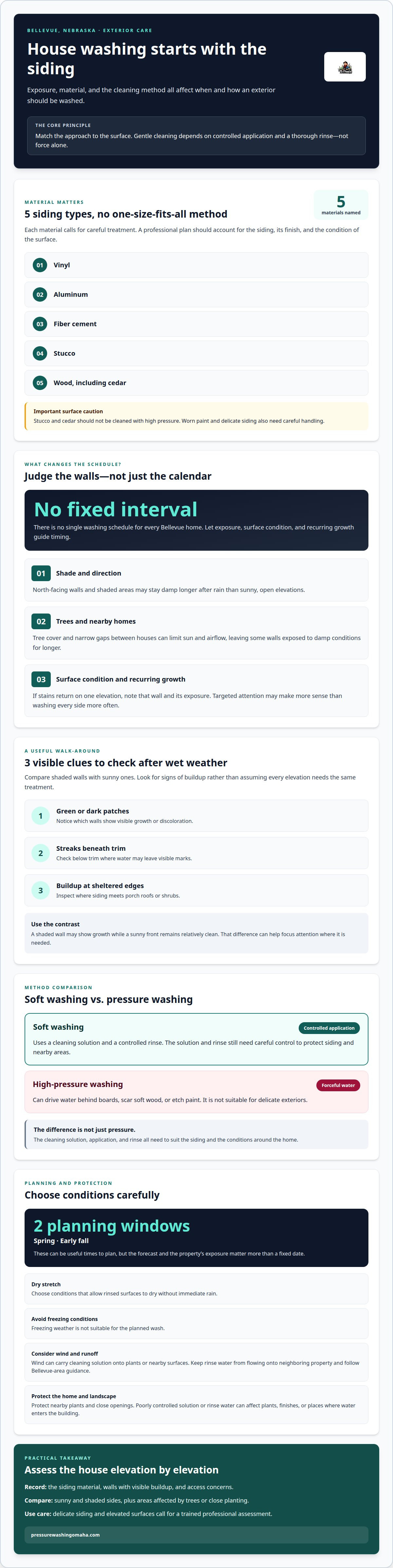
Moisture affects how quickly grime and organic growth show up on exterior walls. In shaded parts of Bellevue, siding may stay damp longer after rain. North-facing walls, tree cover, and narrow gaps between homes may need closer attention than sunny, open elevations. Base your washing schedule on the surfaces and exposure around your house, not just the calendar.
For a practical inspection, walk around your home after a wet stretch and compare the walls. Look for green or dark patches, streaks beneath trim, and buildup where siding meets porch roofs or shrubs. A shaded wall may show growth while the sunny front remains relatively clean. That contrast helps set expectations and avoid washing areas that still look sound.
There’s no single washing interval for every Bellevue home. Shade, nearby trees, surface condition, and recurring growth all affect timing. If stains return soon after cleaning, note which wall is affected and how much exposure it gets before shortening the whole-house schedule. Persistent growth on one elevation may call for targeted attention rather than more frequent washing everywhere.
Soft washing cleans siding with a controlled application and rinse, not forceful water. High pressure can drive water behind boards, scar soft wood, or etch paint, so it isn’t suitable for delicate exteriors. The cleaning solution and rinse still need careful control. Stucco and cedar should not be cleaned with high pressure.
How does soft washing compare with pressure washing for siding? Soft washing uses a cleaning solution and a controlled rinse, while pressure washing relies on stronger water force. That difference matters because force can push water behind joints or damage vulnerable finishes.
Wood decks, roofs, and mesh screening also need surface-specific care. Forceful washing may roughen wood grain, while roofs and screens have construction details that call for a suitable method. A professional assessment helps match the approach to each surface and reduce the chance of damage.
Choose a mild, dry stretch when rinsed surfaces can dry without immediate rain. Spring and early fall are useful planning windows, but the forecast and exposure matter more than a fixed date. Avoid freezing conditions, and consider whether wind could carry cleaning solution onto plants or nearby surfaces.
Do Bellevue or King County rules affect exterior house washing or wastewater runoff? In Bellevue, Nebraska, consider where rinse water drains and keep it from flowing onto neighboring property. Runoff requirements depend on local guidance, so follow Bellevue-area rules rather than guidance for another location.
What are the risks of soft washing, and how can homeowners prevent damage? Poorly controlled solution or rinse water can affect plants, finishes, or areas where water enters the building. Protect nearby landscaping, close openings, and use a trained professional for delicate siding or elevated surfaces.
Bellevue neighborhoods served
Bellevue, Nebraska homes can have different exterior-cleaning needs, even on nearby streets. An open lot may get more sun and airflow than a home screened by mature trees. Closely spaced houses can also leave side walls shaded for much of the day. These conditions affect where grime gathers and which elevations need closer attention.
Assess the house itself rather than relying on a neighborhood label. Note shaded walls, roof edges that shed water, and shrubs growing close to the siding. For example, a north-facing wall behind dense planting may show streaks while the sunny front remains clean. That comparison is more useful than assuming every nearby home needs the same treatment.
Soft washing should account for siding, access, and nearby surfaces. Boards with worn paint need different handling from sound vinyl, while narrow passages call for controlled application. A thorough house washing plan considers trim, porch ceilings, and corners where dirt collects. Before work begins, move outdoor items and close windows and doors to prepare the property.
Features around a Bellevue property can affect how quickly buildup returns. Dense tree cover, persistent shade, and limited airflow may keep siding damp longer. Overhanging branches can drop debris onto roofs and walls, while shrubs pressed against boards can trap moisture. After washing, keep vegetation from resting against siding to reduce sheltered areas where grime and growth collect.
Properties across Bellevue, Nebraska, vary in age, layout, landscaping, and siding. Those differences matter more than the subdivision name alone. A home with open exposure and clear access presents a different cleaning job from one with narrow side yards, extensive planting, or several shaded elevations. Describe the specific house conditions when arranging an assessment, rather than relying only on an address or neighborhood name.
For exterior-cleaning planning, record the siding material, walls with visible buildup, and any access concerns. A short walk around the property can identify each. These observations help clarify the work and focus attention on surfaces that need it. If buildup appears on one side only, note that rather than treating the entire exterior as equally affected.
- Compare exposure: Note which walls receive sun and which remain shaded.
- Check contact points: Look for branches or shrubs touching siding and boards.
- Prepare access: Move patio furniture and clear the area beside the house.
These details make it easier to describe your Bellevue, Nebraska property and its cleaning needs. Include the siding type and areas needing attention when discussing the work.
Cleaning frequency for different siding materials
Siding material helps set a sensible cleaning interval in Bellevue. Vinyl, aluminum, fiber cement, stucco, and painted wood each have different surfaces and finishes. A schedule should also reflect visible stains and the home’s exposure. Use the interval below as a planning starting point, not a reason to wash siding that remains clean and sound.
Vinyl and aluminum: Plan to wash these siding types every 12 months in Bellevue. Their smooth faces can show grime and streaks, especially beneath roof edges or around trim. During a walk around the house, compare the sunny and shaded walls. If one elevation shows noticeable buildup, record its location and condition before arranging cleaning services.
Fiber cement: Bellevue fiber cement siding is recommended for washing every 12 to 18 months. Check for stains around joints, lower courses, and places where water drains from trim. A longer interval may suit a clean, exposed wall; visible buildup is a reason to assess it sooner. The material’s finish and current condition matter alongside the calendar.
Stucco: Plan on washing every 12 to 18 months, using gentle care. Stucco’s textured face can hold dust and show uneven discoloration in grooves and recessed areas. Low-pressure application is preferable to directing strong water force at the surface. A professional can adapt the cleaning method to the texture, condition, and visible staining rather than treating stucco like smooth siding.
Painted wood: Bellevue painted wood siding is recommended for washing every 12 months. Paint can be marked or worn by forceful cleaning, so the method should respect the coating and wood beneath it. Look closely at peeling, cracked, or bare patches before washing. Those areas need attention as surface conditions, not simply a shorter cleaning interval.
Use these material intervals as a comparison, then inspect the house elevation by elevation. For example, vinyl on a shaded side may show stains before sun-exposed vinyl. That calls for a closer look at the affected area, not an automatic change to every wall’s schedule. A home beside a bridle trail may also collect dust or debris, so check exposed siding after dry, windy conditions.
Before booking a wash, note the siding type, walls with visible buildup, and any damaged finish. Share those details with the cleaning service so the method suits the actual surfaces. Keep a simple record of when each wash was completed and where stains returned. That history helps you judge whether the recommended interval still fits your home, rather than relying on a generic schedule.
Recommended cleaning intervals by exposure
Exposure can make two homes with similar siding need different washing schedules. A shaded Bellevue wall dries more slowly than a sunlit wall, while nearby water can keep surfaces damp. Heavily shaded homes or homes near water may need washing every 6 to 9 months. Use that interval as a guide for inspecting vulnerable elevations, not as a reason to wash clean surfaces automatically.
Start with a walk around the house after a wet stretch. Compare north-facing walls with sunnier sides, then note where trees block airflow. Check behind shrubs, below roof edges, and beside windows where water may leave streaks. If buildup is limited to one elevation, record its location and condition. This gives you a clearer basis for deciding whether the whole exterior needs washing.
Watch how quickly stains return after cleaning. If growth reappears in under a year, a twice-yearly washing plan is recommended. First note whether the same wall is affected again and whether shade, nearby vegetation, or water exposure contributes. This pattern helps distinguish a persistently damp spot from general buildup across the home.
Season also matters. Late spring or early fall is recommended for house washing in Bellevue, with soft washes recommended between April and October. Choose suitable weather and allow rinsed surfaces to dry. Avoid freezing conditions, and check for rain that could interrupt the work or leave surfaces wet.
Use these exposure clues to plan your next inspection:
- Deep shade: Check shaded walls and lower courses for recurring stains; consider the 6 to 9 month interval for heavily shaded homes.
- Nearby water: Inspect damp-facing elevations more closely, since homes near water may need more frequent attention.
- Growth returns early: If it returns in under a year, consider the recommended twice-yearly schedule.
- Seasonal timing: Plan for late spring or early fall, within the April-to-October soft-washing window.
More forceful washing isn’t a substitute for adjusting the schedule. Strong water force can push water behind siding or damage paint, so match the method to the surface and finish. Soft washing applies cleaning solutions and rinses carefully. For a thorough result, the timing, solution, and rinse should suit both the material and its exposure.
Keep a simple record after each completed wash: the date, affected elevations, and any stains that return. Compare those notes during your next seasonal inspection. For example, if the shaded side shows growth again while the sunny side stays clean, focus on that exposure instead of assuming every wall needs the same interval.
Soft wash chemicals and cleaning method
Soft washing combines a cleaning solution with controlled application and a thorough rinse. The solution loosens organic buildup; water force alone isn’t the whole method. In Bellevue, the siding material, visible growth, and nearby surfaces should guide the work. Sound vinyl and weathered cedar don’t call for identical handling. A careful process treats the surface, not just the stain.
Cleaning solution needs controlled application. Wind can carry spray toward plants, windows, or outdoor furniture, so the work should account for nearby surfaces. A professional assesses the siding and surroundings, then applies and rinses methodically. Stucco and cedar should not be cleaned with high pressure, which can damage delicate surfaces or push water behind siding joints.
Assess the result after rinsing, not just while the solution is working. Stains may need careful assessment to distinguish organic growth from dirt or a worn finish. Repeatedly increasing pressure isn’t a sound fix: it can scar soft wood or etch paint. If growth recurs, consider the shaded or damp conditions that support it instead of assuming stronger force will solve the problem.
How can homeowners compare soft wash companies, reviews, insurance, and warranties? Read reviews for specific details about surface care, preparation, and cleanup. Compare written insurance and warranty terms by their stated coverage, exclusions, and limits. Don’t assume every service includes the same protections.
How should homeowners prepare for a soft wash service? Close windows and doors, move patio items, and clear access around the house. Keep pets indoors, and point out delicate plants or damaged siding before work begins.
A professional house wash should account for the siding, cleaning solution, application, and rinse. For example, a shaded wall with green growth needs a different assessment from a lightly dusty, sun-exposed wall. A measured approach avoids treating every elevation as though it has the same buildup. It also gives the cleaner a chance to notice cracked caulk or worn paint before water reaches those areas. A careful house washing method starts with those surface details.
Before scheduling, note the siding material, where stains appear, and any recurring growth. Those details help tailor the work to your home’s actual condition. The key point is simple: soft washing avoids reliance on force, but the solution, controlled application, and complete rinse still require care. Delicate or elevated surfaces are best handled by a trained professional.
No Pressure Power Washing matches its soft-washing approach to the surface, including stucco and cedar in Bellevue.
No Pressure Power Washing: House Washing
No Pressure Power Washing provides Residential House Washing with soft washing. The process uses biodegradable and non-toxic cleaning agents, with zero risk of high-pressure damage, to remove grime and organic buildup while caring for delicate siding.
Turn to professional house washing when stains cover multiple elevations, growth keeps returning, or the siding needs careful handling. The right approach depends on the surface, its condition, and where buildup appears. For a broader exterior cleanup, No Pressure Power Washing also offers Deck Cleaning, Driveway Cleaning, and Concrete Cleaning.
Share your siding type and the areas needing attention when describing the work. Contact No Pressure Power Washing for a free, no-obligation estimate for house washing.
Choose a Careful Next Step for Your Home
Before arranging soft washing for your home, decide which exterior areas need attention first. Is the priority a shaded elevation, a particular siding surface, or a broader refresh? Clear priorities help shape a practical conversation about your property.
No Pressure Power Washing offers House Washing, Deck Cleaning, and Driveway Cleaning. These services can address buildup on the home and nearby outdoor surfaces. Share the siding material, areas of concern, and what you want the finished space to look like.
When you’re ready to plan the next step, discuss your property’s needs with No Pressure Power Washing.
A thoughtful plan starts with your home’s actual surfaces and priorities. When you’re ready, arrange careful soft washing with No Pressure Power Washing.
Frequently Asked Questions
What is soft washing for house cleaning, and how does it work?
Soft washing cleans exterior surfaces with biodegradable and non-toxic cleaning agents and a careful rinse, rather than relying on forceful water. No Pressure Power Washing performs soft washing with zero risk of high-pressure damage. The process helps remove mold, mildew, algae, and grime from house exteriors. The surface and its condition guide the approach, so delicate siding and roofs receive appropriate care.
What siding materials and exterior surfaces can be safely soft washed?
Soft washing suits delicate exterior surfaces such as siding and roofs, with the material’s condition and finish guiding the approach. No Pressure Power Washing also cleans wood and composite decks, wood and vinyl fences, concrete, and pavers. Peeling paint or damaged siding needs careful assessment before cleaning. Share details about the surface and existing damage so the method can be matched to it.
What cleaning solutions do soft wash companies use, and are they safe for plants and pets?
No Pressure Power Washing uses biodegradable and non-toxic cleaning agents. That description doesn’t mean pets or plants should be exposed during application. Keep pets indoors, move food and water bowls, and point out garden beds before work begins. Ask the cleaning professional how nearby plants will be protected and follow any preparation instructions. Keeping people and animals clear of the work area is a sensible precaution.
How often should a Bellevue home be soft washed given the local climate?
Set the schedule by watching how quickly buildup returns on your Bellevue, Nebraska home. Shaded walls, nearby trees, and limited airflow can create different conditions from one side of a house to another. Note where stains reappear and use that pattern to plan future cleaning. No Pressure Power Washing serves Omaha, Gretna, Bennington, Elkhorn, Ashland, Valley, Waterloo, Springfield, Bellevue, Plattsmouth, West-Omaha, La Vista, Papillion, and surrounding Nebraska communities.
Do Bellevue, Nebraska rules affect exterior house washing or wastewater runoff?
Keep rinse water from flowing onto neighboring property and storm drains. Runoff requirements depend on local Sarpy County and Nebraska environmental guidance, so follow local municipal rules to ensure compliant cleaning practices.
What factors affect soft wash house cleaning prices in Bellevue?
Pricing for soft wash house cleaning in Bellevue depends on the total square footage, the height and accessibility of the structure, the specific type of siding material, and the severity of organic growth like algae or mold. Additional features such as attached decks, porches, or outbuildings can also influence the overall quote provided by No Pressure Power Washing.
Which local professionals offer soft wash house washing in Bellevue, Nebraska?
No Pressure Power Washing provides professional soft wash house washing and exterior cleaning services throughout Bellevue, Nebraska and the surrounding local communities.


