

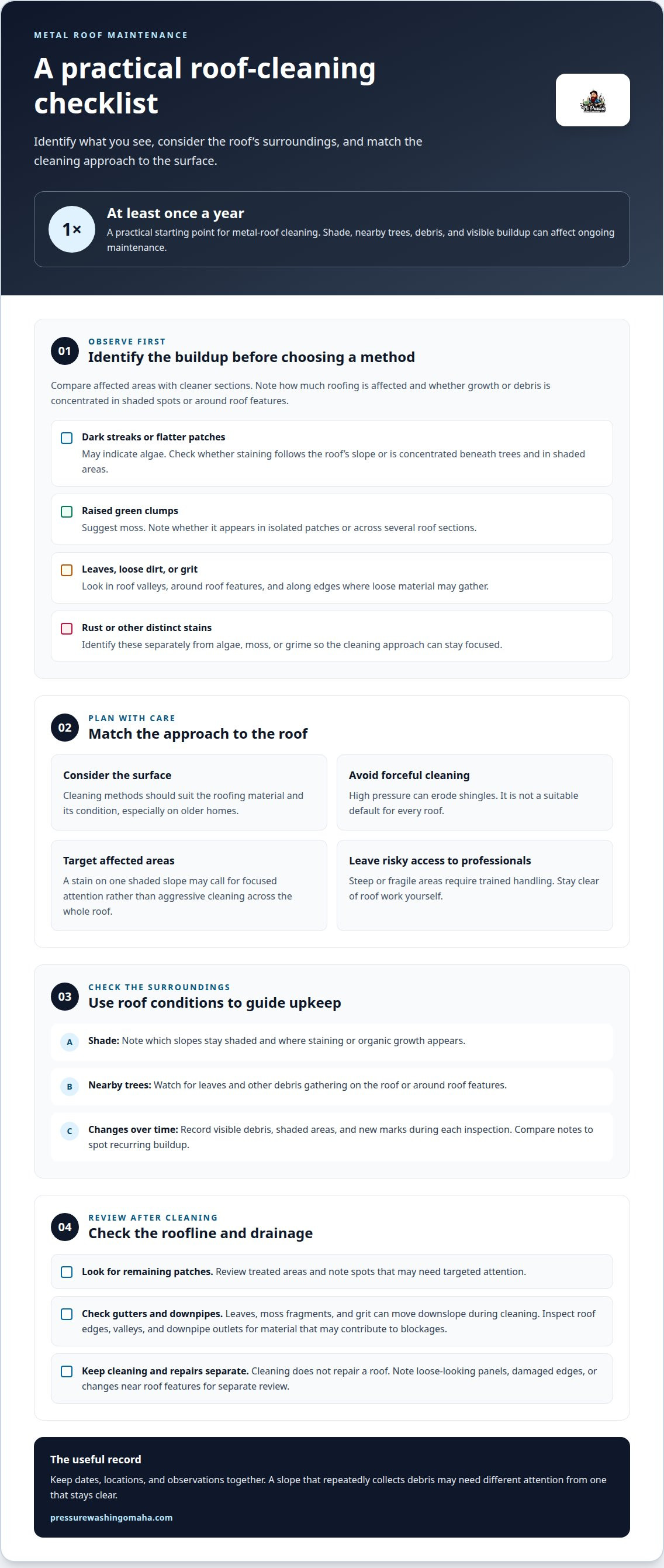
Metal roofs need cleaning at least once a year, although shade, nearby trees, and accumulated debris can affect the schedule. For homeowners considering roof maintenance, these conditions help show how quickly a roof may need attention.
Moss, algae, and lichen can affect a roof’s appearance, while loose debris may also reach gutters. The cleaning method should match the roofing material, particularly on older homes where preserving the surface matters. This guide explains how organic growth is treated, what influences metal-roof maintenance, and how cleaning can support gutter drainage and curb appeal. It also looks at why pressure and cleaning solutions matter, and how roof materials guide the choice of method. A careful approach by No Pressure Power Washing begins with understanding the roof’s surface and visible condition, rather than treating every roof the same way.
Key Takeaways
- Metal roofs should be cleaned at least once a year, with shade, tree debris and organic growth influencing their upkeep needs.
- Moss, algae and lichen affect roof appearance; the right cleaning approach helps address buildup without relying on harsh pressure.
- Roof debris can reach gutters, so keeping both surfaces clear supports drainage and a tidier exterior.
- Cleaning methods should suit the roof material, since high pressure can erode shingles.
- Thoughtful exterior cleaning can help maintain a cared-for look across the roof and surrounding surfaces.
Algae, moss, mold, and lichen removal
Organic growth appears in different ways, so identify the deposit before choosing a cleaning approach. On an older home, note where growth sits, how much roofing it covers, and whether debris is caught around roof features.
Roof Algae Identification and Removal
Algae often appears as dark streaks or patches that follow the roof’s slope. Compare affected areas with cleaner sections and check whether the staining is concentrated beneath trees or in shaded spots. This helps distinguish widespread staining from isolated deposits before cleaning.
Address visible growth without treating every roof surface alike. A suitable method loosens organic staining while protecting the roofing material. For example, a streak on one shaded slope calls for focused attention, not aggressive cleaning across the entire roof.
Manual Moss and Dirt Removal
Moss forms raised clumps, while loose dirt and leaves may gather in valleys or behind roof features. Note whether moss covers several sections or remains in isolated patches. This helps identify where careful removal is appropriate.
On older roofing, forceful scraping can disturb the surface or dislodge material. A professional can remove accessible moss and debris methodically, taking the roof’s condition into account. Stay clear of roof work yourself, since steep or fragile areas require trained handling.
Moss, Mildew, and Grime Removal
Different kinds of growth and dirt may appear on a roof, and identifying what is present can help guide cleaning. A green, raised patch suggests moss; flatter dark staining may be algae, while dirt often gathers around edges and roof transitions. Identifying each area helps guide a more precise clean.
Cleaning should remove buildup without relying on excessive force. Pressure washing can erode shingles, so high-pressure systems aren’t a suitable default for every roof. For durable surfaces, pressure washing may remove stubborn stains, but the roofing material and its condition must guide the method.
After growth and loose debris are removed, inspect the treated areas for remaining patches and trapped material. This final review helps identify spots that need targeted attention rather than another pass over the whole roof. On an older home, preserving sound roofing matters as much as improving its appearance.
Organic marks are not the only concern: the Dundee, KY, roof-cleaning service states that it can remove tough stains such as rust. Identifying such deposits separately from algae, moss, or grime keeps the cleaning approach focused.
For upkeep, the page recommends that most homes in Chapel Hill receive a full roof wash every 1-3 years, depending on shade coverage, tree debris, and algae exposure. These conditions help guide timing, while inspection can still catch isolated buildup between washes.
Q: How often should I have my metal roof cleaned?
Cleaning frequency can vary with shade, nearby trees, and debris. For homes in Omaha, Papillion, Elkhorn, Gretna, Bennington, Bellevue, Valley, and Wahoo, note which roof slopes stay shaded and where leaves gather. This makes maintenance responsive to the roof’s surroundings, not appearance alone.
For a historic home, check whether the property has a local designation before planning exterior work. Requirements can depend on the property’s status and whether the work changes its materials or appearance. Cleaning and repairs are different tasks, so describe the planned work accurately when reviewing local requirements.
No Pressure Power Washing uses an ARMA-recommended roof-cleaning process. That identifies its roof-cleaning method, while insurance is a separate matter. Don’t infer insurance coverage from an accreditation or a cleaning technique.
A maintenance plan gives owners a practical way to track changes. Record visible debris, shaded areas, and new marks on the metal surface during each inspection. Comparing notes helps distinguish recurring buildup from a one-time issue, such as leaves collecting after nearby trees shed.
Cleaning visits can also provide useful opportunities to observe the roof. Look from the ground before and after cleaning, and note where staining or debris remains. If one slope repeatedly collects material while another stays clear, use that difference to guide future maintenance instead of applying the same routine everywhere.
Maintenance also affects curb appeal. A clean metal roof can make an exterior look better cared for, particularly when staining contrasts with siding or trim. Check nearby trees and surrounding areas to understand why one section looks different. These observations help plan upkeep without assuming every roof needs the same work.
Cleaning doesn’t repair a roof. During a scheduled visit, note loose-looking panels, damaged edges, or changes near roof features. Arrange repairs separately rather than treating washing as a fix. A record with dates, locations, and observations gives owners a useful reference when reviewing the roof’s condition over time.
Annual cleaning is a practical starting point for metal-roof care in Omaha. Shade and tree debris can affect ongoing maintenance, so keep notes on changes between visits and tailor future care to the roof’s condition.
Roof cleaning benefits for gutters and roof appearance
Roof cleaning can improve the appearance of roofing and help keep debris from collecting in gutters. Leaves, moss fragments, and grit may move downslope during cleaning, so check gutters and downpipes too. For homes in Omaha, Papillion, Elkhorn, Gretna, Bennington, Bellevue, Valley, and Wahoo, inspect roof edges, valleys, and downpipe outlets. Clear drainage helps reduce blockages that can contribute to overflow.
A clear roofline makes exterior maintenance easier to assess. Dark staining across one slope, for example, can stand out against clean siding and trim. Removing organic buildup may restore a more even appearance, while clearing loose debris helps reveal the roof’s condition. Cleaning does not repair damaged roofing or paint, so treat those as separate issues.
Gutter cleaning may use ground-based poles or vacuums to reach debris from below. The method depends on access, gutter design, and the material collected. Dry leaves differ from wet, compacted debris, which can cling inside a channel. Ground-based equipment can help where access allows, but it may not reach every roofline or blockage.
Clogged gutters can interrupt rainwater flow toward downspouts. A gutter packed with leaves may hold water instead of carrying it away, and a blocked downpipe can stop the flow even after the channel is clear. Check the outlet as well as the gutter run to keep the drainage route open from the roof edge.
Roof cleaning and gutter cleaning address different parts of exterior upkeep. Roof cleaning targets surface growth and grime, while packed material inside a gutter or downpipe needs separate removal. After roof debris is cleared, inspect the channel for leaves, sediment, and outlet obstructions. This connects the roof’s appearance with the working condition of its drainage system.
Gutter-cleaning work depends on the property and the scope of the job. Factors include gutter length, height, access, debris type, and whether downpipes need clearing. A short, accessible run with loose leaves differs from a long gutter containing compacted material. Request a free, no-obligation estimate based on the work involved.
For an Omaha-area exterior, assess the roof surface, gutter channel, and downpipe outlets together. Note where debris collects and whether staining follows a particular roof edge. A roof cleaning service can address surface buildup, while gutter inspection helps identify drainage needs. Keep appearance improvements distinct from repairs to roofing or drainage components.
Are Your Cleaning Methods Or Chemicals Environmentally Safe?
Environmental care starts with the cleaning solution and how it is applied to the roof. No Pressure Power Washing uses biodegradable and non-toxic cleaning agents for exterior cleaning, including roof treatments. The roof material and treatment plan still guide the work. On a historic home, identify the tile or metal surface first, then choose an approach that addresses buildup without unnecessary force.
Soft washing is a gentler cleaning approach that targets surface growth and grime without relying on high pressure. The method should suit the roofing material and its condition. For example, a tile roof with organic staining needs a different level of care than a durable ground surface with stubborn marks.
Metal roofs also need a method selected for their surface. Cleaning practices designed for metal roofs aim to remove deposits while avoiding damage. Look at the roof’s finish, seams, and areas where dirt gathers before selecting a treatment. A careful assessment helps distinguish removable grime from a change in the material itself.
Traditional cleaning may involve manually lifting loose moss and debris before treating remaining surface growth. This step can reduce the need to force material across tiles. On an older roof, a worker should focus on accessible deposits and avoid aggressive scraping that could disturb the roofing. The goal is a measured clean, not a stripped or abraded surface.
Environmental responsibility also depends on managing the cleaning process around the home or business. Identify nearby surfaces such as siding, walkways, and planted areas before work begins. Apply the selected treatment carefully and manage runoff during cleaning to keep the work focused on the roof and limit the spread of solution or loosened debris.
A useful way to choose a cleaning method is to identify the roofing material, assess its condition, and match the treatment to the deposit. A tile roof with light grime may need a different approach from metal roofing with accumulated debris. A fragile or weathered surface also calls for more care than a durable one. Material-led decisions help reduce avoidable wear.
For a Dundee property, ask what solution and method suit the specific roof, then look for a clear explanation of the planned treatment. Biodegradable, non-toxic cleaning solutions provide a more responsible basis for exterior care, while careful application helps protect roofing and surrounding surfaces. No single method fits every roof, so the material and visible condition should guide each cleaning decision.
Which roof cleaning methods are suitable for different roof materials?
Start by identifying the roofing material and inspecting its condition. Asphalt shingles, metal panels, and tile surfaces respond differently to cleaning pressure and handling. A method suitable for a durable surface may disturb a more delicate roof. On a historic home, the cleaning plan should reflect the existing material, visible wear, and type of buildup.
High-pressure cleaning can erode shingles and shorten a roof’s life. A strong spray may remove staining quickly, but it can also wear the surface. For shingle roofing, do not treat force as the default solution. Choose a gentler method suited to the roof’s condition to address organic growth without unnecessary force.
Soft washing is a gentler cleaning method intended not to damage the roof. It can be considered when the aim is to treat surface growth rather than blast it away. The method still needs to match the material and the roof’s condition. For example, a weathered section calls for more care than an intact area with similar staining.
Metal roofing needs a method suited to its surface. Before cleaning, inspect panels, seams, and the finish for visible changes. Distinguish surface grime from marks that may reflect wear, then choose a treatment suited to the metal rather than automatically applying an approach designed for shingles.
Tile roofs also need material-led care. First check whether the tiles appear sound or visibly worn, then consider how the cleaning method will affect their surface. Avoid forceful cleaning that could shift or abrade roofing. Targeting moss or dirt in a specific area can limit unnecessary contact with unaffected tiles.
A practical selection process has three parts: identify the material, assess the buildup, and match the method to both. A roof with loose debris and isolated growth needs a different approach from one with widespread staining. Include roof condition in the decision, since the same material may need different handling when weathered or damaged.
Ask for a clear explanation of the method before roof work begins. The explanation should name the material, describe how the treatment addresses the visible buildup, and explain why pressure is appropriate or avoided. That discussion helps owners understand how the approach is intended to protect the roof while restoring its appearance.
No Pressure Power Washing: House Washing
No Pressure Power Washing also cleans house exteriors, including siding. Roof cleaning addresses buildup above, while grime on the walls can still make a home look neglected. Treating both as part of exterior upkeep creates a more consistent appearance while keeping roof cleaning distinct from siding care.
Consider house washing when dirt or organic residue is visible on exterior walls, especially alongside a freshly cleaned roof. Siding material and buildup should guide the cleaning approach. Deck Cleaning, Driveway Cleaning, and Concrete Cleaning can address other exterior surfaces as needed.
For a practical next step, describe the surfaces you want cleaned and the buildup you see. Contact No Pressure Power Washing for a free, no-obligation estimate for exterior cleaning.
Choose a thoughtful next step for your roof
A roof that needs cleaning deserves an approach based on its material and condition, not a one-size-fits-all treatment. For roof cleaning in Dundee, consider the roof alongside the rest of the exterior, especially if siding or outdoor surfaces also need attention. No Pressure Power Washing offers Residential House Washing, Deck Cleaning, and Driveway Cleaning to address those separate areas as part of broader exterior upkeep.
If you’re planning exterior cleaning, describe the surfaces that need attention and what you’ve noticed. That gives No Pressure Power Washing a clear starting point for a free, no-obligation estimate.
With a careful plan, you can take the next step toward a cleaner, well-cared-for home.
Frequently Asked Questions
Is That Black Stuff On My Roof Really Not Dirt?
Black roof marks may be algae, but dirt and other deposits can also darken roofing. Look for streaks that follow the roof’s slope or gather on shaded sections. A uniform coating may have a different cause from isolated marks beside a chimney or roof edge. Identifying the pattern before cleaning helps distinguish surface staining from loose debris and guides a suitable treatment.
What roof cleaning services are available in Dundee?
No Pressure Power Washing provides roof cleaning in Omaha, Gretna, Bennington, Elkhorn, Ashland, Valley, Waterloo, Springfield, Bellevue, Plattsmouth, West-Omaha, La Vista, Papillion, and surrounding Nebraska communities. Dundee is outside this service area. The company uses soft washing with zero risk of high-pressure damage and biodegradable and non-toxic cleaning agents. No Pressure Power Washing prioritizes the environment by using biodegradable and non-toxic cleaning agents.
How often should roofs in Dundee be cleaned, and what affects the schedule?
Metal roofs need cleaning at least once a year, with environmental factors affecting the schedule. For other roofing materials, watch for fresh staining, accumulated tree debris, and areas that remain shaded. Record the date and roof sections needing attention to identify recurring buildup. Owners of older homes can also note whether nearby branches repeatedly leave debris along the same roof edge.
What are the risks of pressure washing a roof?
High-pressure cleaning can erode shingles and shorten a roof’s life. Force can also disturb fragile or weathered roofing, so the risk depends partly on material and condition. Do not treat every roof like concrete or another durable surface. If shingles appear worn or tiles look loose, do not climb up to test them. Roof cleaning involves working at height and requires suitable professional handling.
What steps are involved in professional roof cleaning?
A professional roof cleaning begins by identifying the roofing material and inspecting visible buildup. The cleaner then selects a suitable method, addresses debris and growth, and reviews the surface for remaining deposits. On an older roof, the inspection should also note visible wear so cleaning is not mistaken for repair. No Pressure Power Washing uses an ARMA-recommended soft-wash roof-cleaning process with biodegradable and non-toxic cleaning agents.
What local regulations or permissions apply to roof cleaning in Dundee?
For a historic home, check whether the property has a local designation before planning exterior work. Requirements can depend on the property’s status and whether the work changes its materials or appearance.
Are roof cleaners in Dundee insured and accredited?
The service uses an ARMA-recommended roof-cleaning process, but that does not establish whether it is insured.
Do roof cleaning companies in Dundee offer moss removal, gutter cleaning, and treatment?
Moss can be removed carefully, and the Dundee service offers soft washing and gutter cleaning. Its gutter service helps improve drainage and prevent overflow.


