

Did you know that a standard high-pressure nozzle can actually age your concrete by a decade in just a few minutes? With Bellevue averaging 37 to 42 inches of rain annually, most homeowners struggle with the slick green moss and stubborn black algae that thrive in the persistent dampness. You want a bright, sanitized space for your next summer gathering, yet the fear of gouging the concrete cream coat often leads to hesitation. Effective concrete patio washing Bellevue homeowners can rely on requires a shift from brute force to a scientific, soft-wash approach that preserves the surface while eradicating organic root systems.
We understand that your home is your most significant investment. Protecting its long-term value means using methods that are both effective and environmentally responsible. This checklist outlines the essential steps and professional standards required to restore your patio to a like-new condition safely. We'll preview the calibrated equipment needed to avoid permanent etching, explain why specialized surfactants beat high pressure, and cover the latest 2026 local regulations regarding stormwater runoff to keep your property compliant and beautiful.
Key Takeaways
- Understand how the Missouri River Valley climate fosters biological growth and why proper timing is essential for a lasting restoration.
- Learn the equipment standards that prevent "zebra striping" and cream coat damage by prioritizing chemistry over high-pressure water.
- Prepare your property with a professional-grade safety protocol that protects sensitive Bellevue landscaping and local pet environments.
- Identify the critical local compliance factors for concrete patio washing Bellevue to ensure all wastewater is handled according to municipal stormwater codes.
- Discover why professional-grade penetrating sealers are the final, necessary step to shield your concrete from future moisture and salt damage.
Bellevue Concrete Patio Washing: Why Timing and Technique Matter
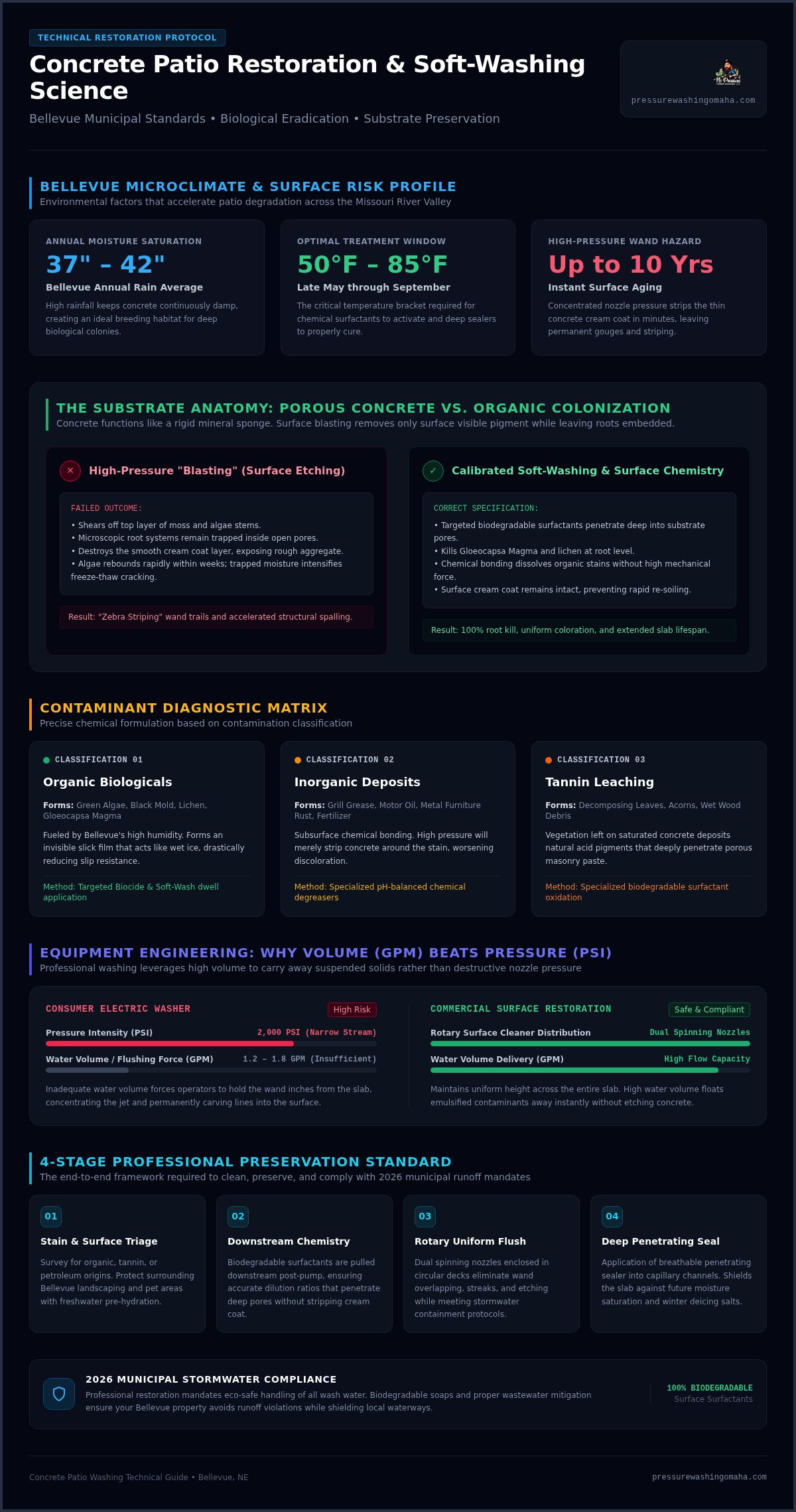
Professional concrete patio washing Bellevue residents invest in is far more than a simple rinse with a garden hose. It's a restoration process designed to reverse the effects of Bellevue's unique local climate. Because our area averages between 37 and 42 inches of rain annually, our local concrete surfaces spend much of the year saturated. This moisture, combined with high humidity, creates an ideal environment for Gloeocapsa Magma and mold to thrive. When these organisms take root, they do more than just discolor your patio; they create a legitimate safety hazard. A wet, algae-covered patio is essentially a sheet of ice, significantly reducing slip resistance for family and guests. Effective maintenance requires a strategic window, typically between late May and September, when temperatures consistently remain between 50°F and 85°F for optimal cleaning and sealing results.
The Biological Enemy: Algae, Mold, and Lichen
Concrete is a porous material that acts like a sponge for organic spores. Algae, mold, and lichen don't just sit on top; they weave their root systems into the tiny pores of the slab. Simply blasting the surface with high-pressure water often leaves these roots intact, leading to rapid regrowth within weeks. Over time, these biological colonies trap even more moisture against the surface, which can accelerate the freeze-thaw cycle damage common in our region. Professional restoration uses targeted biocides to kill these organisms at the source. This ensures the concrete remains structurally sound and visually clean for much longer than a standard DIY attempt.
Stain Identification Checklist
Before starting any concrete cleaning project, No Pressure Power Washing must identify the specific contaminants present. Organic stains, which appear as green or black streaks, require different chemical treatments than inorganic stains like rust or oil. Rust often stems from metal patio furniture or fertilizer overspray, while oil deposits from grills or vehicles penetrate deep into the substrate. Standard high pressure is rarely enough to lift these inorganic marks without risking damage to the concrete’s cream coat. By identifying the stain type first, we can apply the correct biodegradable surfactants to lift the pigment safely without relying on destructive brute force.
- Organic Stains: Green algae, black mold, and stubborn lichen growth fueled by Bellevue's humidity.
- Inorganic Stains: Oil, grease, rust, and mineral deposits that require specific pH-balanced degreasers.
- Tannin Stains: Brownish marks caused by fallen leaves or wood debris left to rot on the surface.
Pressure vs. Soft Washing: The Professional Equipment Checklist
Choosing the right method for concrete patio washing Bellevue properties requires understanding that more pressure isn't always better. Consumer-grade electric washers often boast high PSI (pounds per square inch) ratings but lack the water volume, or GPM (gallons per minute), necessary to actually flush away contaminants. Professionals prioritize GPM because volume is what carries debris off the surface. Our "No Pressure" philosophy focuses on using specialized chemistry to do the heavy lifting, effectively breaking down organic bonds before the water even touches the slab. While a 2000 PSI electric unit might seem safe, its narrow stream forces the user to hold the nozzle too close, leading to permanent "wand marks" or "zebra striping." In contrast, professional gas-powered units combined with rotary surface cleaners distribute water evenly across a wider path, ensuring a uniform finish without the risk of concentrated etching.
The Professional Gear Checklist
Achieving a professional-grade restoration requires a specific kit that goes beyond a standard wand and nozzle. We utilize specialized tools to ensure the job is done right the first time without compromising the integrity of your masonry.
- Rotary Surface Cleaners: These circular decks house dual spinning nozzles that maintain a consistent distance from the concrete, providing a streak-free, uniform clean across the entire patio.
- Downstream Injectors: This hardware allows us to pull biodegradable soaps into the water stream after it leaves the pump, ensuring precise chemical ratios for every square foot.
- Specialized Nozzles: We use specific orifice sizes to regulate pressure, allowing us to pivot from high-volume cleaning to low-pressure soft washing for delicate edges and corners.
Why DIY Often Leads to Damage
Many homeowners rent machines capable of 4000 PSI, assuming that higher numbers mean faster results. This is a dangerous misconception. Excessive pressure can easily etch the surface, leaving permanent scars that no amount of cleaning can fix. Damage to the concrete's delicate cream coat exposes the underlying aggregate and leads to premature spalling as water and salt penetrate the weakened slab. Beyond the physical damage to your home, DIY attempts carry hidden costs like equipment rental fees and fuel, not to mention the risk of high-pressure injection injuries that require immediate medical attention. If you'd rather avoid the equipment hassle and ensure your property's safety, you can request a professional assessment from a specialist who understands local conditions.
The Homeowner’s Pre-Cleaning Checklist: Preparing for Your Bellevue Service
A successful concrete patio washing Bellevue appointment starts long before our service truck pulls into your driveway. When a site is properly staged, our technicians can focus entirely on the restoration process rather than moving heavy objects or navigating avoidable hazards. This preparation isn't just about efficiency; it's a critical component of property preservation. We recommend a joint walkthrough before we begin to identify any existing structural issues. Spotting hairline cracks or areas of spalling early allows us to adjust our techniques and ensure that water doesn't penetrate weakened sections of the slab. We also need to confirm access to a functional exterior spigot that can provide the consistent flow required to keep professional pumps running smoothly and prevent equipment cavitation.
External Surface Preparation
Please clear the patio of all furniture, grills, and potted plants before our arrival. These items can trap soap residue or create "shadows" where the concrete doesn't receive a uniform clean. Check your exterior electrical outlets next. While most modern Bellevue homes have weatherproof covers, we suggest ensuring they're fully closed or taped to prevent moisture from tripping a breaker. Finally, point out any known low spots. In our region, shifting soils can cause concrete to settle, creating pooling areas that require extra attention during the rinsing phase to ensure no dirty water or sediment remains behind. This proactive approach ensures a faster, more thorough cleaning process for your home.
Environmental Protection Checklist
Protecting your landscaping is a core part of our "No Pressure" philosophy. We utilize a pre-wetting technique, saturating surrounding grass and garden beds with fresh water before applying any cleaning agents to prevent thirsty roots from absorbing surfactants. Our process strictly adheres to the City of Bellevue Municipal Code (BCC 24.06) regarding illicit discharge. We manage all runoff to ensure it doesn't enter sensitive local waterways or storm drains, often directing neutralized water to vegetated areas for safe infiltration. By using biodegradable, non-toxic solutions, we keep your outdoor space sanitized and safe for pets and children as soon as the surface is dry. This methodical care protects both your private investment and the broader Bellevue ecosystem.
Vetting Your Bellevue Concrete Cleaning Contractor: A Quality Checklist
Local experience matters because Bellevue's environment is unique. A national franchise might use a "one size fits all" approach, but a local specialist understands how the Missouri River Valley humidity affects slab longevity. When you're looking for concrete patio washing Bellevue homeowners can trust, you want a partner who treats your home as a long-term investment, not just a quick stop on a high-volume schedule. This specialized knowledge is at the heart of our Professional Concrete Cleaning Pillar, which details the nuances of surface restoration. Choosing a neighborly expert ensures that the person on your property cares about the community's standards as much as you do.
Watch out for red flags like door-to-door solicitors or pricing that seems too good to be true. These operators often lack the necessary safety training required by OSHA, putting both their workers and your property at risk. High-pressure equipment isn't a toy; in the wrong hands, it can cause severe injury or permanent structural damage to your masonry. A professional contractor will always provide proof of their credentials without hesitation, demonstrating a commitment to safety and peace of mind.
The Credentials Checklist
Never hire a contractor who can't produce a valid General Liability Insurance certificate. For 2026, reputable Bellevue contractors should carry at least $200,000 in public liability and $50,000 in property damage insurance to meet professional standards. You should also verify their compliance with EPA and local municipal codes, such as BCC 24.06, which strictly prohibits illicit discharge into storm drains. Check Google Reviews for consistency over several years. Look for testimonials from Bellevue neighbors that mention meticulousness, punctuality, and care for the local ecosystem.
The Professional Quote Checklist
A professional estimate is detailed and transparent. It should explicitly state whether pre-treatment and post-treatment for algae are included, as these steps are vital for a long-lasting clean. If you have deep-set oil or rust, the quote must outline the specific terms for their removal or specify any limitations based on the age of the deposit. Avoid the "hidden fees" trap by ensuring the price covers wastewater containment and disposal according to local environmental rules. This level of clarity protects you from unexpected costs and ensures the contractor is committed to a high standard of craftsmanship and integrity.
Beyond the Wash: The Concrete Preservation and Maintenance Checklist
Cleaning is only the first half of the equation. While a professional concrete patio washing Bellevue service removes the immediate eyesore of algae and grime, it leaves the pores of the concrete open and vulnerable. Without a protective barrier, the porous structure of your slab remains susceptible to the 37 to 42 inches of annual rainfall we receive; this moisture eventually leads to deep-seated organic growth and structural weakening. Preservation is about closing those pores to ensure your investment stays bright and durable for years to come. Integrating this care with other routine services, such as house washing or paver cleaning, creates a comprehensive shield for your home’s exterior.
The Sealing Decision Checklist
Choosing the right sealer is critical for Nebraska’s specific climate. Topical sealers, like acrylics, create a "wet look" film on the surface, but they can often trap moisture vapor beneath the skin, leading to unsightly clouding or peeling. We generally recommend deep-penetrating silane-siloxane sealers. These products chemically bond beneath the surface to create a hydrophobic barrier while remaining "breathable," allowing internal moisture to escape without damaging the bond. This is especially important during our freeze-thaw cycles where trapped water can cause the concrete face to pop or spall. For the best results, fresh-washed concrete must dry for at least 24 to 48 hours to reach a moisture content below 5% before any sealer is applied.
Ongoing Maintenance Tips
A proactive 12-month schedule prevents minor issues from becoming permanent stains. We recommend a monthly sweep to remove leaves and organic debris, as tannins from rotting vegetation can dye the concrete and require chemical treatment to lift. During winter, avoid using harsh de-icing salts on your clean patio; these chemicals can accelerate the scaling of the concrete surface and compromise the sealer’s integrity. Instead, use sand for traction or magnesium chloride-based products sparingly. Most Bellevue properties benefit from a professional refresh every two years to maintain the protective barrier and keep the surface sanitized. Following these steps ensures your patio remains a welcoming space for hosting rather than a source of maintenance stress.
- Spring: Inspect for winter damage and perform a light rinse to remove salt residue.
- Summer: Check for oil or grease spots near grill areas and spot-clean immediately.
- Fall: Clear fallen leaves weekly to prevent tannin staining before the wet season begins.
- Winter: Avoid rock salt and use plastic shovels to prevent mechanical scratching of the surface.
Preserving Your Bellevue Investment for Years to Come
Restoring your patio is about more than just aesthetics; it's a commitment to the longevity and safety of your home. By understanding the unique environmental challenges of the Missouri River Valley and prioritizing a "No Pressure" philosophy, you protect your concrete from the destructive etching and biological regrowth that often follow DIY attempts. True restoration combines meticulous cleaning with deep-penetrating preservation to ensure your outdoor space remains a source of pride rather than a maintenance burden.
When you choose a local specialist with 30+ years of Omaha area experience, you gain the peace of mind that comes from environmentally responsible practices and a 100% satisfaction guarantee. We've spent decades as trusted guardians of local property, ensuring that every project meets the highest professional standards. Investing in professional concrete patio washing Bellevue homeowners can rely on is the first step toward a sanitized, hosting-ready space that stands the test of time.
We look forward to helping you restore the beauty and value of your outdoor living area.
Frequently Asked Questions
Is pressure washing safe for my concrete patio in Bellevue?
Pressure washing is safe only when performed with calibrated equipment and professional technique. High-pressure water, specifically above 3,500 PSI, can etch the concrete cream coat, leading to permanent damage and spalling. Professional concrete patio washing Bellevue services utilize rotary surface cleaners that distribute pressure evenly. This prevents the "zebra striping" often seen with DIY wand use. Our method prioritizes surface preservation while ensuring a deep, uniform clean that protects your masonry's structural integrity.
How often should I have my concrete patio professionally cleaned?
Most Bellevue properties benefit from a professional cleaning every two years. However, if your patio is surrounded by dense tree cover or sits in a low-lying area with poor drainage, you might require annual service to manage biological growth. The high humidity in the Missouri River Valley fosters rapid algae and mold colonization. Regular maintenance prevents these organisms from rooting deep into the concrete pores, making each subsequent cleaning more effective and less intensive.
Will the cleaning chemicals harm my grass or my dog?
Our process is safe for your landscape and pets because we use biodegradable, non-toxic solutions and follow strict safety protocols. We pre-wet all surrounding vegetation to prevent roots from absorbing the cleaning agents and perform a thorough post-service rinse. Once the patio surface is completely dry, it's perfectly safe for pets and children to enjoy. Our "No Pressure" philosophy extends to environmental responsibility, ensuring your local Bellevue landscape remains healthy while your concrete gets sanitized.
Can you remove old oil stains from my concrete patio?
We can significantly fade or completely remove oil stains depending on how long they've been sitting. Because concrete is porous, oil penetrates deep into the slab over time. We utilize professional-grade degreasers and specialized surfactants to lift the oil to the surface before washing. While we can't always guarantee 100% removal for stains that have set for years, our restoration process achieves the best possible result without damaging the underlying concrete.
Do I need to be home when the patio washing service is performed?
You don't need to be present as long as we have access to a functional exterior water spigot and the patio area is cleared of furniture. We do recommend a pre-service walkthrough if you have specific concerns, but many of our Bellevue clients prefer the convenience of having the work completed while they're away. We provide a thorough inspection and ensure your property is secured and the site is tidy before we depart.
What is the difference between a standard wash and a soft wash?
A standard wash uses pressurized water to mechanically remove surface dirt, while a soft wash relies on specialized chemistry to kill organic growth at the root. Soft washing uses less than 500 PSI, making it ideal for delicate masonry or areas with heavy algae infestations. For concrete patio washing Bellevue projects, we often combine both methods. We apply a soft-wash biocide to sanitize the pores and follow with a surface cleaner for a uniform finish.
Why does my concrete have white fuzzy powder on it (efflorescence)?
That white powder is efflorescence, which occurs when water-soluble salts migrate to the surface of the concrete and evaporate. This is common in the humid Nebraska climate where moisture frequently moves through the slab. While it isn't structurally damaging, it can be an eyesore. We use specific acidic cleaners designed to dissolve these mineral deposits safely. Following up with a penetrating sealer can help reduce the moisture migration that causes this powder to return.
How long does it take for a concrete patio to dry after washing?
On a typical Bellevue summer day with moderate humidity, your patio should be dry enough for foot traffic within 2 to 4 hours. However, if you plan to apply a sealer, the concrete needs a much deeper dry time. We recommend waiting at least 24 to 48 hours before sealing to ensure the internal moisture content has dropped below 5%. Proper airflow and direct sunlight will naturally accelerate this drying process.


