

Oil and grease can cling to construction equipment in places a quick rinse won’t reach, while unsuitable cleaning can damage surfaces or spread residue. Construction equipment cleaning in Elkhorn should account for the type of buildup, the machine’s condition, and the space available to work.
If you’re planning a service, it helps to know what cleaning can cover and what affects the estimate. This guide explains how oil and grease are approached, why access and equipment placement matter, and which job details shape the scope. A machine parked in a clear, open area presents different practical considerations from one surrounded by active work, tight clearances, or sensitive surfaces. Understanding those factors makes it easier to plan the work and set realistic expectations before cleaning begins.
Key Takeaways
- Identify the equipment type and the areas carrying the heaviest buildup to clarify the cleaning scope.
- Oil and grease require attention to where residue has collected, not just the visible surfaces.
- Jobsite layout, equipment placement, and ongoing work can shape how cleaning is planned.
- Staged cleaning can help keep finished areas presentable while work continues elsewhere.
- An estimate reflects the equipment’s condition, buildup, access, and requested scope.
Cleaning construction vehicles and industrial machinery
Construction equipment collects different soils across the undercarriage, tracks, tires, and body. A tracked excavator can carry packed clay between its shoes, while a wheel loader may gather mud around its tires and axles. Grease often clings near pivot points, fittings, and hydraulic components. Concrete residue on a mixer drum or chute needs attention before it becomes harder to remove. Identifying the material and location helps trained professionals determine an appropriate cleaning approach.
For mud, grease, and concrete, the method should match both the residue and the surface. Trained professionals can assess whether loose soil needs rinsing, stubborn mud requires careful agitation, or greasy deposits call for a suitable cleaning solution and controlled rinsing. Concrete buildup calls for timely, surface-conscious removal, especially around mixer drums and discharge chutes. Aggressive pressure or unsuitable chemicals can harm coatings, seals, or nearby components, so specialized cleaning is best handled by trained professionals.
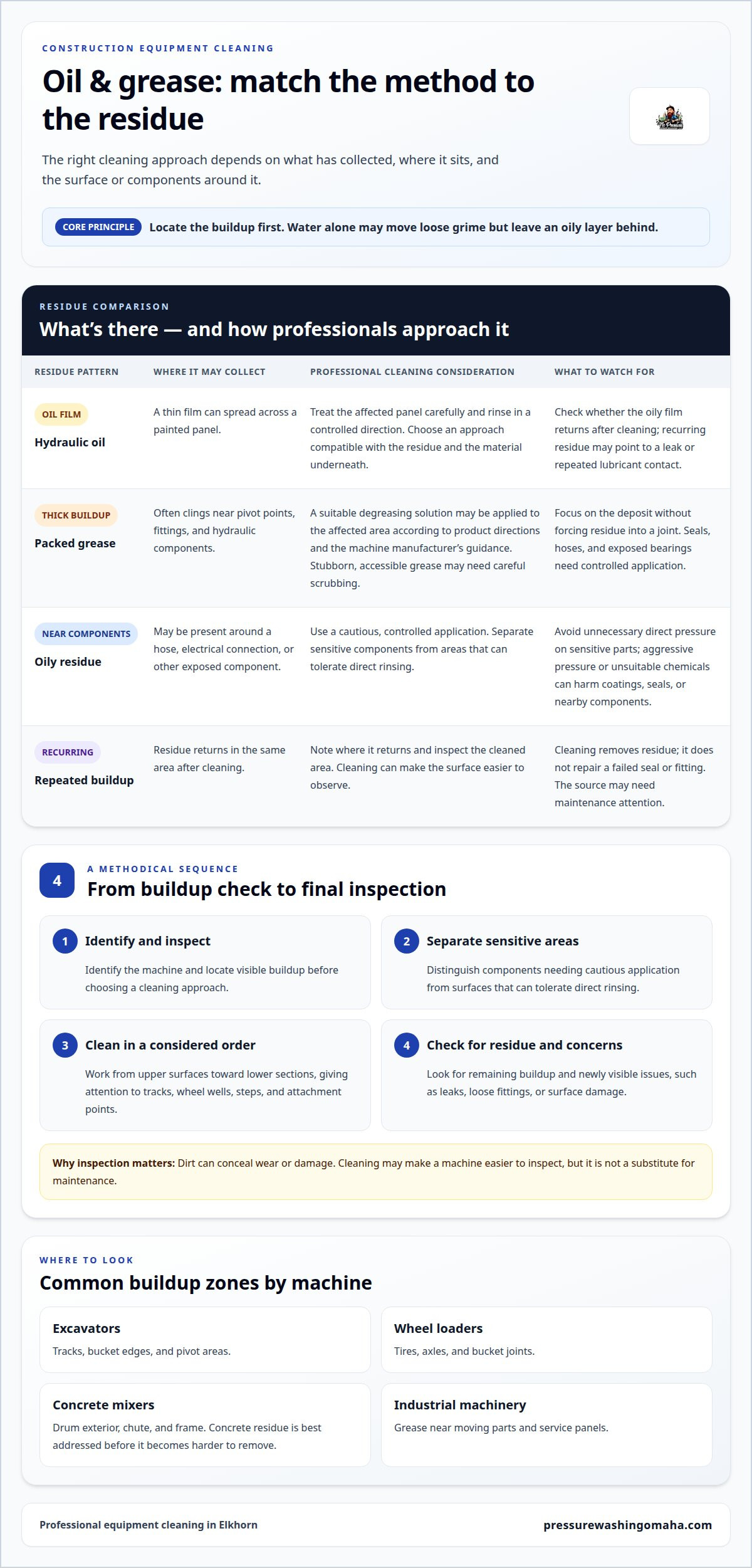
Trained professionals follow a methodical cleaning sequence to keep missed areas to a minimum. They first identify the machine and inspect visible buildup. Next, they separate sensitive components from areas that can tolerate direct rinsing. They clean from upper surfaces toward lower sections, then pay close attention to tracks, wheel wells, steps, and attachment points. On a skid steer, for example, accumulated soil around the tracks can obscure wear or damage during a visual check. They finish by looking for remaining residue and any newly visible concerns.
- Excavators: check tracks, bucket edges, and pivot areas.
- Wheel loaders: look around tires, axles, and bucket joints.
- Concrete mixers: inspect the drum exterior, chute, and frame.
- Industrial machinery: note grease near moving parts and service panels.
How often should equipment be cleaned and inspected? Trained professionals can base the routine on the material handled, operating conditions, and visible buildup. A practical approach is for them to inspect machines before and after use, then clean when soil or residue accumulates. Equipment working in wet ground may need attention sooner than a machine operating on a dry, clean surface. Cleaning can also make inspections easier by exposing leaks, loose fittings, or surface damage that dirt might conceal.
Keep the cleaning scope focused on the machine’s actual condition. A light coating of dry dust differs from packed clay, oily residue, or hardened concrete. For equipment used across changing jobsites, trained professionals can note where buildup appears and whether it returns after operation. Those observations help plan suitable cleaning intervals without applying one schedule to every excavator, loader, mixer, or industrial machine.
Specialized cleaning solutions for oil and grease
Oil and grease behave differently from ordinary dirt on construction machinery. A hydraulic-oil film can spread across a painted panel, while thick grease stays packed around a pivot or fitting. Water alone may move loose grime but leave an oily layer behind. The right cleaning approach depends on the residue, the material underneath, and nearby components. Treating each deposit alike can spread contamination or put unnecessary stress on a surface.
A professional cleaning process starts by locating the buildup. On an excavator, that might mean checking the boom, track frame, and accessible hinge areas. On a loader, a professional may inspect around the bucket linkage and wheel hubs. Loose residue should be managed before broad rinsing, so it doesn’t wash across cleaner surfaces. A suitable degreasing solution can then be applied by a professional to the affected area, following its product directions and the machine manufacturer’s guidance.
Allowing a cleaner to work as directed helps loosen oily deposits before rinsing. A professional may scrub accessible, stubborn grease, using tools and pressure suited to the surface. For example, a painted panel needs different care from a heavy steel attachment. Seals, electrical connections, hoses, and exposed bearings also call for controlled application. A professional cleaning plan accounts for these details rather than directing force at every part of the machine.
- Hydraulic-oil film: A professional treats the affected panel carefully and rinses in a controlled direction.
- Grease around a pivot: A professional focuses cleaning on the buildup without forcing residue into the joint.
- Oily residue near a hose: A professional uses a cautious application that avoids unnecessary direct pressure.
- Repeated buildup: A professional notes its location to help distinguish a cleaning need from a maintenance concern.
Oil or grease that returns after cleaning may point to an active leak or recurring contact with lubricant. Cleaning can make the area easier to observe, but it doesn’t repair a failed seal or fitting. That distinction matters: removing residue reveals the surface, while maintenance addresses the source. For machinery with widespread oily buildup, heavy equipment cleaning can address multiple exterior areas with attention to exposed components. The aim is a measured professional process: identify the residue, select a compatible method, control application, and inspect the cleaned area.
Cleaning equipment with jobsite access considerations
Access shapes the cleaning plan before equipment is approached. A compact skid steer near a gate presents different constraints from a parked excavator beside stacked materials. Narrow lanes, active vehicle routes, overhead obstructions, and uneven ground can affect where work can happen. The cleaning team considers the machine’s position, its surroundings, and the route needed to reach it. That assessment helps avoid disrupting nearby tasks or moving equipment through a crowded work zone.
Machine placement matters, too. A loader backed against a temporary fence may have limited access to its rear frame. An excavator parked beside a trench may not allow safe approach to every side. The team can prioritize accessible surfaces and coordinate a workable position when relocation is appropriate. Cleaning around an active crew requires attention to changing site conditions, such as trucks entering a haul route or workers moving materials.
Before work begins, the practical access review can cover:
- Entry route: Check gates, turning space, and obstacles along the approach.
- Working clearance: Identify sides blocked by fences, stockpiles, or parked vehicles.
- Surface condition: Note soft ground, slopes, and areas where equipment could become stuck.
- Nearby activity: Account for moving trucks, crews, and adjacent work in progress.
- Cleaning position: Choose a location that allows access without obstructing essential site movement.
Water management is another site-specific consideration. Cleaning a muddy machine beside a material pile can make the immediate area harder to use. Concrete residue or oily grime also calls for deliberate handling rather than uncontrolled rinsing. The cleaning plan should account for the surface beneath the machine and where wash water and loosened debris may travel. A designated, suitable work area can make the process more orderly than cleaning beside a busy entrance.
Ongoing projects may benefit from staged cleaning. For example, a contractor can schedule one machine or work area while crews continue elsewhere. This can help keep completed areas presentable without requiring the entire site to pause. A clear access route also makes it easier to position equipment for later work. For Elkhorn jobsites, useful details include the machine’s location, nearby obstacles, surface conditions, and current site activity. Together, these factors shape a practical cleaning sequence and help limit interference with ongoing operations.
On properties with ongoing contractor activity, teams can schedule cleaning around work areas that are ready, rather than treating every machine as a separate task. For example, a machine near a gate or haul route may be easier to clean when that area is clear. If site activity changes, the sequence can shift to another accessible area, helping crews continue work without requiring the entire site to pause.
Construction equipment cleaning
Construction equipment cleaning in Elkhorn, Nebraska, starts with the machine, its condition, and the work area. A compact loader used on a paved lot needs a different scope from a tracked excavator returning from muddy ground. Cleaning may cover exterior surfaces, wheels or tracks, attachments, and accessible areas carrying jobsite residue. The scope should distinguish removable buildup from damage or maintenance concerns. Cleaning can expose a leak, but it cannot repair a failed hose.
Wash water needs planning alongside the cleaning itself. The site surface, residue, and destination of runoff affect how the work area should be managed. For example, cleaning a muddy machine beside a material pile can spread debris into an active work zone. A designated area with suitable access can make the job more orderly. The cleaning plan should account for where loosened residue and water will travel.
Construction equipment cleaning services in Elkhorn, Nebraska, address machinery used at local jobsites. The machine’s condition, requested scope, and access help shape the work. The location matters: this article’s service information is for Elkhorn, Nebraska.
Reviews can offer context when choosing a cleaning service, but they don’t define the scope for a particular machine. Feedback about comparable equipment, residue, and jobsite conditions is more relevant than general praise. A review also can’t establish the result for a different machine or work area.
A wash bay near Elkhorn may suit equipment that can be transported safely and accommodated at the facility. Onsite cleaning may be more practical when moving a machine is difficult. For a tracked excavator on a restricted jobsite, the available space and wash-water handling can influence the suitable arrangement.
- Identify the machine: Describe its type, attachments, and areas needing attention.
- Describe the residue: Distinguish mud, concrete, oil, and grease.
- Plan access: Note gates, overhead obstacles, and nearby site activity.
- Consider water handling: Account for the ground surface and runoff destination.
These details help define a practical scope for an excavator, loader, mixer, or other construction machine. They also help determine whether cleaning can take place at the equipment’s current location or in a suitable wash area.
Equipment cleaning estimates
A heavy equipment cleaning estimate reflects the work required, not just the machine’s name. A compact skid steer with light surface dirt differs from a loader carrying packed mud and oily residue. The estimate considers equipment type, visible condition, buildup, and requested cleaning scope. Attachments can add areas needing attention. Clear details help define the work before it begins. For construction equipment cleaning in Elkhorn, those details also connect the estimate to actual jobsite conditions.
Access can change the plan. A machine beside an open work area presents different conditions from one behind a fence or near active construction. The estimate may account for site access, available working clearance, and whether equipment can be positioned conveniently. Wash-water handling and surrounding surfaces matter, especially where residue could spread beyond the cleaning area. A machine parked beside a busy entrance, for example, may need a different cleaning arrangement.
Useful details for preparing an estimate include:
- Machine: Identify whether it’s an excavator, loader, mixer, or another type.
- Condition: Describe buildup such as dried mud, concrete residue, oil, or grease.
- Areas involved: Note whether the request covers the exterior, tracks, wheels, or attachments.
- Site access: Describe gates, obstructions, ground conditions, and nearby activity.
- Scope: Explain whether the request covers one machine or several.
For example, an excavator with muddy tracks and an oily boom needs a different scope from a road-ready loader with dust on its body. Describing each machine separately helps avoid treating different cleaning needs as identical. Photos can clarify visible buildup and site conditions, while a written description can identify areas hidden from view. Together, these specifics help outline the requested work.
The price depends on the case and is provided after a quote request. The main factors are equipment condition, residue type, scope, access, and wash-water handling. An estimate should make those elements understandable, so the planned work can be considered against the actual need. If the requested scope changes, such as adding another attachment or machine, the estimate may need to reflect that change.
For construction equipment cleaning in Elkhorn, describe the machine, its buildup, the areas to be cleaned, and jobsite access. A concise description of an excavator parked beside active work gives more context than its model name alone. These details help define a suitable scope for the equipment and its location.
No Pressure Power Washing: Heavy Equipment Cleaning
No Pressure Power Washing provides Heavy Equipment Cleaning for construction machinery with exterior buildup. The service is useful when mud, dust, grease, or jobsite residue covers equipment surfaces. A tracked excavator returning from wet ground may need different attention from a loader carrying road dust. Naming the machine and describing its condition helps define a useful cleaning scope.
Cleaning needs depend on more than the equipment label. A skid steer with buildup around its tracks presents different areas to address than a mixer with residue on its exterior. The machine’s condition, the surfaces involved, and the amount of accessible space all inform the work. Cleaning is not mechanical repair, so a visible leak or damaged component remains a maintenance matter.
Jobsite details help connect the requested service to real conditions. An excavator parked beside a fence may have limited access on one side. A loader near active work may require a cleaning plan that accounts for nearby movement. Equipment location, attachments, and areas needing attention help describe the task clearly. So does identifying whether buildup is mainly mud, oil, grease, or concrete residue.
Before arranging equipment cleaning, bring these details together:
- Equipment type: Describe the machine, such as an excavator, loader, or mixer.
- Visible buildup: Identify the residue and the surfaces it covers.
- Access: Note gates, obstacles, ground conditions, and active site work.
- Requested scope: Specify the machine or exterior areas that need attention.
This information turns a general request into a defined service need. For example, “loader with oily residue around the exterior” gives clearer context than “dirty equipment.” Mentioning attachments or restricted access can also explain why the job requires a particular scope. Heavy equipment cleaning is a practical next step when accumulated residue makes exterior surfaces harder to inspect or leaves a machine looking unclean.
No Pressure Power Washing also offers House Washing, Deck Cleaning, and Driveway Cleaning. Those services address separate property-cleaning needs; Heavy Equipment Cleaning is the relevant offering for construction machinery. Each request should focus on the equipment and the condition that prompted cleaning.
Contact No Pressure Power Washing to discuss heavy equipment cleaning for your machinery.
Frequently Asked Questions
What are mobile construction equipment washing prices in Elkhorn, Nebraska?
No Pressure Power Washing provides a free estimate for mobile equipment washing in Elkhorn, Nebraska; it doesn’t publish a fixed price. Equipment washing can be arranged as a per-visit or recurring service. If the request also involves work vehicles, fleet washing is a separate service to consider. The estimate follows a quote request and clarifies the proposed service before work is arranged.
What does it cost to wash excavators, skid steers, and loaders near Elkhorn?
There’s no single published price for washing excavators, skid steers, and loaders near Elkhorn. No Pressure Power Washing provides heavy equipment cleaning and gives a free estimate after a quote request. For a contractor managing several machines, recurring equipment washing may be an option alongside a per-visit service. The estimate provides the relevant pricing for the requested arrangement, without relying on a generic industry price range.


