

Replacing siding can cost far more than cleaning it, but staining alone doesn’t mean the siding needs to come off. The cost to replace siding versus professional cleaning depends first on whether the siding is dirty or damaged.
It’s reasonable to weigh the house’s appearance against the cost and disruption of a larger project. Material, the area being replaced, wall access, and concealed damage can affect a replacement estimate. Cleaning, by contrast, addresses surface buildup, not structural problems.
This guide explains what affects siding replacement costs, how common materials compare, and when cleaning, repair, or replacement may make sense. Vinyl siding’s condition and upkeep matter: careful cleaning can refresh sound siding, but it can’t restore failing boards or resolve moisture damage behind them.
Key Takeaways
- Compare siding materials and project scope to understand why replacement estimates can vary from one home to another.
- Learn how layout, removal, permits, and other project details can affect the budget and timeline.
- Consider moisture, visible damage, and the condition of existing siding before deciding whether cleaning or replacement is the better fit.
- See how siding material, weather exposure, appearance, and insulation can shape long-term upkeep decisions.
- Understand when professional house washing can refresh exterior surfaces, and when siding damage calls for a different solution.
Vinyl, wood, fiber cement, and aluminum replacement costs
Material, exterior wall area, and labor all affect an estimate, so compare the project scope as well as the totals.
Professional cleaning addresses surface buildup, while repairs address damaged siding. Cleaning fees depend on the home and the work involved.
Yes, cleaning can damage siding if the method or pressure doesn’t suit the material. Elevated work also involves access and fall risks, so choose professionals who use appropriate methods and safe access practices.
Whole-Home Replacement Cost Benchmarks
A whole-home estimate covers siding across the house, unlike a limited repair or a material-only purchase. A broader estimate for most U.S. homes provides a benchmark for comparing full replacement projects, but actual costs vary with the home’s size, materials, labor, and project scope.
Home Size and Exterior Wall Area
Home size affects replacement costs because larger exterior wall areas generally require more siding and installation labor. U.S. examples of different home sizes can help with budgeting, but floor area differs from siding area. Wall height, openings, and design affect how much siding is needed.
Labor Costs and Contractor Rates
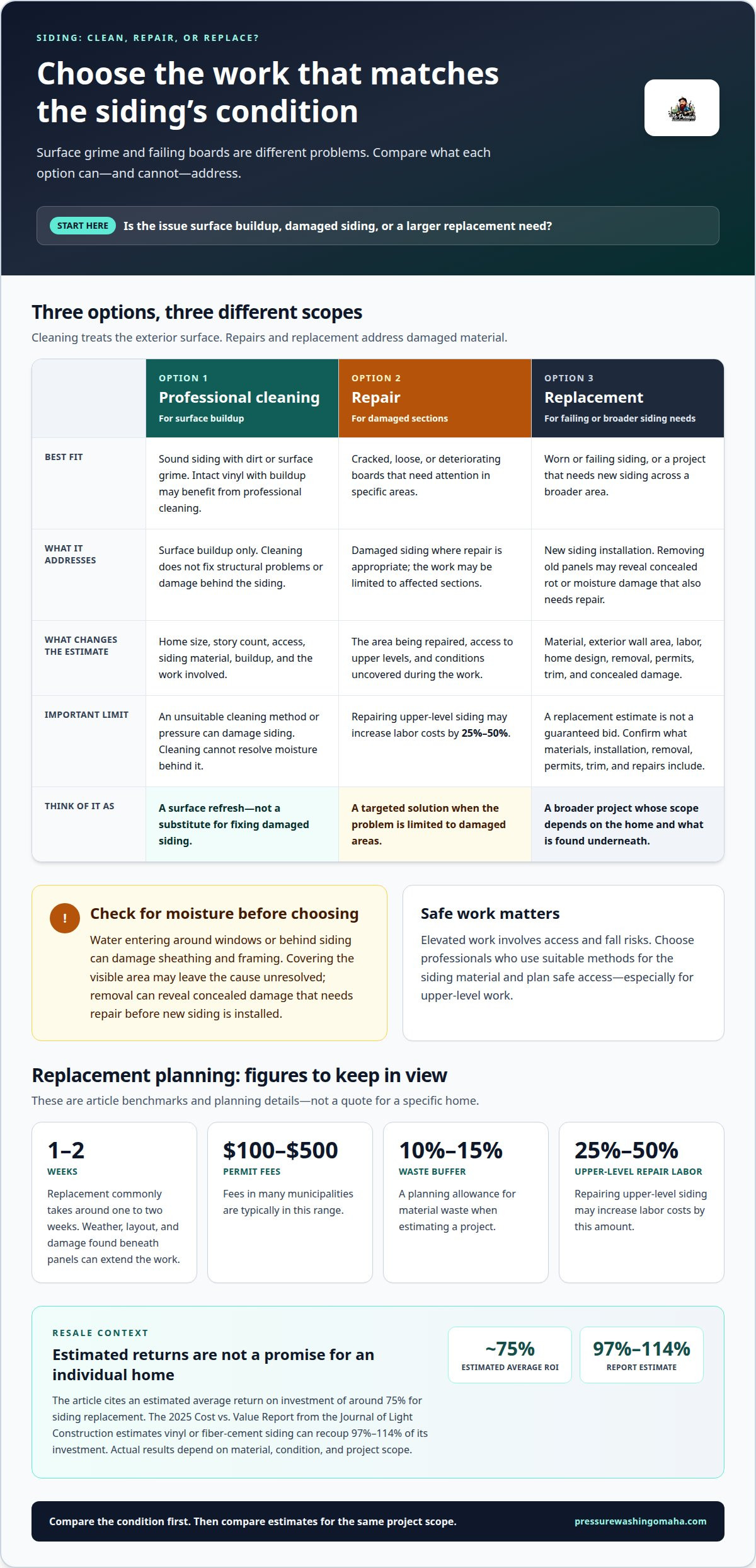
These rates cover different kinds of work, so compare them only with estimates for a similar project. A clear estimate separates labor, materials, and removal, helping homeowners see how each part contributes to the replacement total. Repairing upper-level siding may also increase labor costs by 25% to 50%.
Material-specific estimates add another way to compare a project.
These estimates offer reference points, not guaranteed bids. When reviewing proposals, compare whether materials, installation, permits, trim, and removal are included, and confirm the quoted home configuration matches the project. A per-square-foot figure does not automatically represent the final installed total.
What Affects the Cost of Siding Replacement?
Home size, exterior design, material, and hidden conditions all shape a siding estimate. Cleaning fees also depend on house size, story count, access, siding material, and buildup. Safe work requires suitable methods and careful access planning.
Warranties depend on their written terms, while insurance coverage and tax incentives depend on the policy or program. Don’t assume either will cover replacement costs.
Home Size and Design Factors
Home size and design affect the amount of siding, installation time, and access work a project requires. A two-story home with dormers, corners, and detailed trim takes more precise panel fitting than a simple, low-profile exterior. Climate and existing wall conditions also factor into estimates, since exposure and concealed moisture can change the work needed.
Replacement commonly takes around one to two weeks. Weather, the home’s layout, and damage discovered beneath existing panels can extend the work. An inspection before installation helps identify trouble spots, but some rot or moisture damage becomes visible only after old siding is removed. Planning for suitable conditions and choosing a material that fits the home can help avoid changes and unnecessary expense.
Project Extras, Permits, and Expenses
Extras are costs beyond new siding and installation, and they matter because they can raise the final project total. Permit fees in many municipalities are typically $100 to $500.
Trim repairs, disposal, and replacement around openings may also affect the estimate. Homeowners can plan for material waste by allowing a 10%-15% buffer. Asking for an estimate that separates panels, removal, barriers, permits, and repairs makes additions easier to understand before work begins.
Cost-saving choices should preserve the wall assembly, not simply reduce the materials line. Keeping sound components, limiting replacement to areas that need it, and choosing material suited to the exterior can avoid unnecessary work. A professional should assess damaged sections and elevated areas, where unsuitable access or rushed installation can create safety risks and poor panel fit.
Potential return on investment
Siding replacement can support resale appeal and protect the wall assembly, but the return depends on material, condition, and project scope. The average return on investment for siding replacement is estimated at around 75%. The 2025 Cost vs. Value Report from the Journal of Light Construction estimates vinyl or fiber-cement siding can recoup 97% to 114% of its investment. Those figures are estimates, not a promise of what a specific home will recover.
Resale value is only one part of the decision. Replacing worn siding can address failing boards and improve the exterior’s appearance, while keeping sound material in place avoids unnecessary removal. For example, intact vinyl siding with surface grime may benefit from professional cleaning. Cracked, loose, or deteriorating boards need repair or replacement instead. The cost to replace siding vs professional cleaning comparison is most useful once you know whether the problem is surface-level or structural.
Address moisture before estimating a project’s return. Water entering around windows or behind siding can damage sheathing and framing, so covering the visible area may leave the underlying cause unresolved. Removing affected boards can expose concealed damage that needs repair before installation. Although this adds to the project scope, addressing the source of deterioration helps protect the new siding and wall assembly.
Material choice also affects upkeep and resale presentation. Vinyl siding looks and performs differently from fiber cement, so the right selection depends on the home and the owner’s priorities. A replacement estimate should break out siding, removal, window-area repairs, and moisture-related work. That breakdown helps homeowners compare the investment with the actual repairs and improvements included.
Before deciding, consider whether the siding is structurally sound, whether the concern is limited to grime or discoloration, and whether damage is localized or widespread. Sound vinyl with surface buildup may call for cleaning; isolated damaged boards may call for repair; widespread deterioration or moisture issues may support replacement. The cost to replace siding vs professional cleaning comparison should reflect these different outcomes, rather than treating cleaning and replacement as interchangeable.
Siding lifespan and upkeep
Clean siding when the surface is dirty but the material remains sound; repair isolated damage, and consider replacement when deterioration is widespread. Cracked or loose boards, recurring damage in different areas, and visible moisture problems can signal that cleaning alone won’t address the issue.
Choosing Between Cleaning, Repair, and Replacement
Cleaning removes surface buildup, repair addresses localized damage, and replacement renews siding with widespread deterioration. The distinction matters because cleaning won’t restore broken boards or resolve structural damage behind them. If damage affects only a small section and the rest is in good condition, repair may be appropriate. If problems recur across several areas, consider replacement.
Material also shapes upkeep expectations. Vinyl siding typically lasts 20-40 years and may need occasional cleaning to prevent mold buildup. Wood siding can last up to 30 years, but requires regular sealing or painting to limit moisture and insect damage. Fiber cement can last up to 50 years and may need repainting every 10-15 years. Brick and stone can last 50+ years, with upkeep typically limited to occasional mortar repairs.
Signs Damage Requires Replacement
Widespread damage, siding near the end of its lifespan, or repeated repairs in different areas are signs to consider full replacement. One damaged board doesn’t automatically mean the whole exterior needs new siding. But cracks, loose panels, or deterioration across multiple walls can point to broader failure. A professional inspection can identify hidden moisture or structural issues that aren’t visible from outside.
Moisture behind existing siding can lead to mold, rot, and insulation failure. Damage around windows or lower wall sections may indicate water intrusion, so an assessment should consider the wall behind the panels, not just their appearance. Removing affected boards may reveal concealed problems that need correction before new siding is installed. Cleaning can improve a dirty surface, but it cannot repair a compromised wall assembly.
Measurements help define the project accurately. Siding is typically estimated by exterior wall area in square feet, rather than a home’s interior floor area. A detailed measurement accounts for walls, openings, and sections needing work. The estimate can distinguish a limited repair from broad replacement. This matters because sound siding may stay in place while damaged areas receive focused attention, avoiding unnecessary removal.
Vinyl siding cost and maintenance
For vinyl siding on a 2,000-square-foot U.S. home, the cost estimate offers a planning reference, but it also depends on exterior wall area, design, removal, and installation conditions. Floor area alone doesn’t show how much siding the project requires.
Weather exposure affects vinyl’s appearance over time. Sun, moisture, and changing temperatures can contribute to fading, surface buildup, or damage. A professional assessment can distinguish discoloration from cracked or loose panels. The cost to replace siding vs professional cleaning is not an apples-to-apples comparison: cleaning addresses surface grime, while replacement changes the siding itself.
Maintenance depends on the siding material and its condition. Vinyl may need occasional cleaning to limit mold buildup, while damaged or loose panels need repair rather than surface treatment. For example, intact panels with dirt beneath a downspout may need cleaning; broken panels need repair or replacement. Cleaning cannot resolve moisture problems behind the exterior.
Insulation is another factor in a vinyl decision. Insulated vinyl siding typically costs 20% to 50% more than standard vinyl siding. That added material cost may matter to homeowners considering insulation as part of an exterior update. An estimate should distinguish standard from insulated panels, so the options can be compared on the same basis.
Appearance matters, too. Vinyl siding comes in different colors and profiles, and how it fits the house can influence curb appeal. Replacement may make sense when panels are extensively damaged or the exterior needs a broader update. If the material remains sound, the cost to replace siding vs professional cleaning comparison may favor cleaning when surface buildup is the main concern.
Review a vinyl estimate by square foot and note whether it includes materials, labor, old siding removal, and insulation. Then compare that scope with the condition of the existing panels. This helps clarify whether the project involves surface cleaning or a full siding change, rather than assuming every faded-looking wall needs replacement.
Repair costs offer another point of comparison when panels are damaged but the project doesn’t call for a full exterior update. These figures describe different ways of estimating repair work, so check what each quote includes before comparing totals. The damaged area and stated scope should be clear, including whether materials and labor are covered.
Consider siding age, how long you expect to stay in the home, energy efficiency, maintenance, and resale goals when choosing between repair and replacement. A limited repair may suit a smaller scope, while replacement estimates can help frame a broader project. Compare the work covered, not just the total, and weigh your homeownership timeline and longer-term goals alongside the siding’s condition.
No Pressure Power Washing
No Pressure Power Washing helps homeowners distinguish surface buildup from siding damage that calls for a different solution. Its exterior cleaning uses soft-washing, a low-pressure method, with biodegradable, non-toxic cleaning agents. This approach suits surface grime, mold, mildew, and algae, not cracked panels or moisture damage behind siding. Cleaning can address buildup, but it can’t restore failed materials or correct a structural problem.
For intact siding with visible grime, House Washing may help refresh the home’s exterior. The appropriate choice depends on the surface and its condition. A clean appearance doesn’t establish that siding is structurally sound, so damaged or loose panels still need repair or replacement. If the issue is surface buildup rather than failing material, exterior cleaning may be the more relevant service to consider.
Cleaning needs may extend beyond the siding itself. Deck Cleaning addresses buildup on deck surfaces, while Driveway Cleaning and Concrete Cleaning address grime on hard surfaces around the home. These are separate surfaces and concerns; none of these services replaces siding repair or resolves hidden moisture behind exterior panels.
Start by identifying where the problem appears and whether the siding itself is damaged. Surface grime on intact siding may suit soft-washing, while cracked boards, loose panels, or signs of concealed moisture need attention beyond cleaning. No Pressure Power Washing uses biodegradable, non-toxic agents and a low-pressure method to clean exterior surfaces with care.
Choose the work according to the affected surface: house washing for exterior buildup, deck cleaning for a deck, or driveway and concrete cleaning for hardscape areas. Cleaning can improve the appearance of dirty surfaces, but it shouldn’t be mistaken for a repair. If surface buildup is the concern, contact No Pressure Power Washing to discuss House Washing.
Frequently Asked Questions
What is the average total cost to replace siding on a typical house?
For a 2,000-square-foot U.S. home, the total cost depends on the siding material and project scope; these examples do not provide a single typical-home price. A home’s layout and project scope also influence the estimate, so use material-specific figures as comparison points rather than assuming any one figure applies to every house.
How much does professional house siding cleaning cost?
Professional siding cleaning fees depend on the home’s square footage and the surface being cleaned. No Pressure Power Washing bases residential exterior cleaning fees on those factors and uses soft-washing for delicate surfaces such as siding. For example, different siding materials or heavier buildup may call for a different cleaning scope. Cleaning addresses surface grime, not damage to the siding or the structure behind it.
Do siding replacement costs vary by region, labor rates, permits, or disposal fees?
Yes. Regional labor markets and local permit requirements can affect estimates, and disposal arrangements may vary by project. Access matters, too: a home with difficult-to-reach exterior walls may need a different installation plan from one with straightforward access. Compare estimates by included work, such as removal, disposal, and permit handling, so differences in scope are clear rather than hidden in a single total.


