

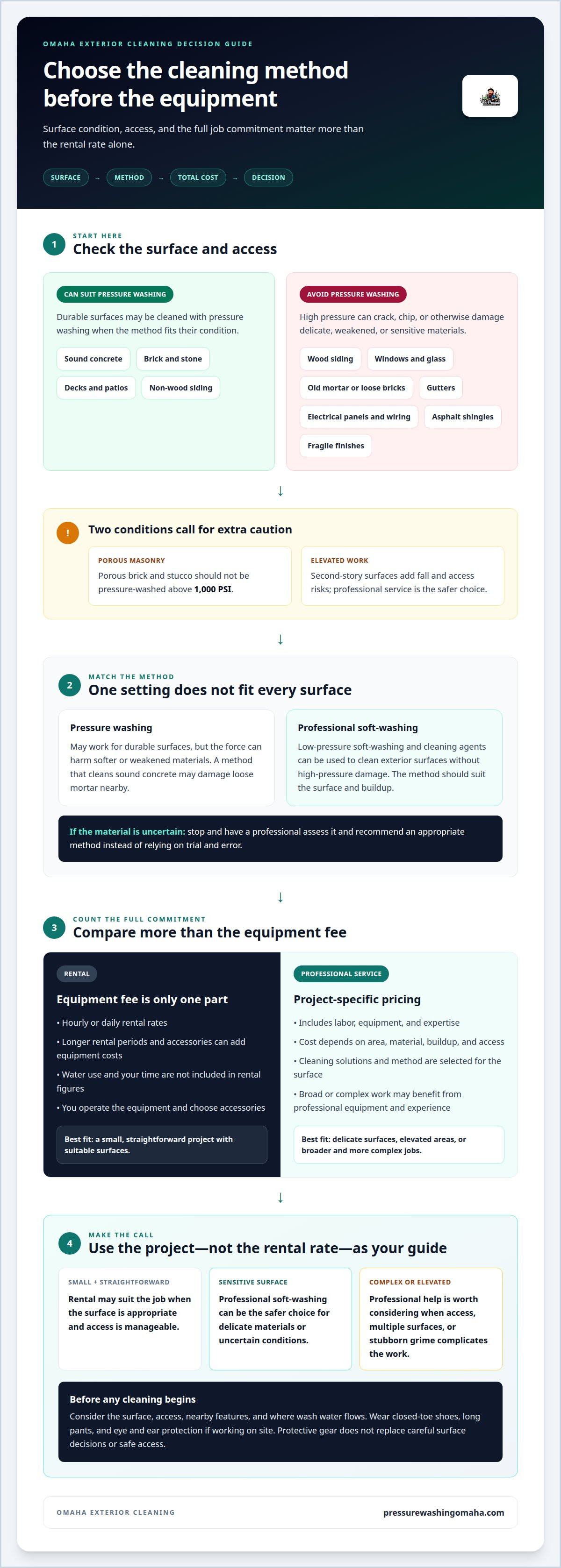
The cheaper-looking option can become more costly if the wrong method damages a surface. Renting a pressure washer versus hiring a pro in Omaha depends on more than equipment cost: a rental may suit a small, straightforward job, while professional soft-washing can be the safer choice for delicate materials, elevated areas, or stubborn grime. Wood siding, windows and glass, old mortar, gutters, asphalt shingles, and fragile finishes can be damaged by high pressure.
It’s understandable to think renting saves money when you need to clean just one area. But equipment, your time, the surface material, and the risk of damage all shape the real trade-off. This article explains how to compare a rental with professional soft-washing, why some surfaces need a gentler method, and when project size makes expert help worthwhile. You’ll have a practical way to weigh cost, safety, and time for your Omaha-area property.
Key Takeaways
- Compare the full rental commitment, including equipment, accessories, water, and the time needed to finish, rather than judging by the daily rental rate alone.
- Match the cleaning method to the material: fragile finishes and elevated areas can make professional care the safer choice.
- Consider the project’s size and variety of surfaces; larger or more complex work can make professional equipment and experience especially valuable.
- Learn how professionals adjust equipment and cleaning methods to tackle grime while protecting the surface.
- Use the decision guide to weigh cost, time, and risk, then identify when professional house, deck, driveway, or concrete cleaning fits your project.
Cost comparison between pressure washer rental and professional service
Rental costs vary by machine and rental period, while professional service includes labor, equipment, and expertise. In Omaha, the choice between renting a pressure washer and hiring a pro depends on the project’s size, surface, and demands.
Pressure Washer Rental Costs Compared With Professional Service
Longer rental periods and accessories can increase equipment costs.
These figures cover rental equipment, not water use or your time.
Professional Service Costs
Professional exterior cleaning includes labor, equipment, and expertise. That differs from renting, where the equipment fee is only one part of the job’s total demands. A professional brings cleaning solutions and chooses a method suited to the surface, rather than leaving equipment selection and operation to the property owner.
The area, material, buildup, and access all affect the work involved. A broad concrete driveway and a delicate exterior need different methods. Professional service costs depend on these project details, so a national rental average cannot predict the price of a specific cleaning job.
Professional Equipment Selection and Support
A suitable cleaning method depends on the surface and the type of buildup. Durable concrete and sensitive exterior materials do not call for the same treatment. No Pressure Power Washing uses low-pressure soft-washing and biodegradable, non-toxic cleaning agents to clean exterior surfaces without high-pressure damage.
This distinction matters because high pressure can crack, chip, or otherwise damage a surface. Professional service brings equipment and cleaning solutions to the job, avoiding a separate rental and accessory decision. Renting may suit a small, straightforward project; professional soft-washing is a better fit when surfaces are delicate or the work is more complex.
| Option | Typical cost basis | Equipment and support | Best fit |
|---|---|---|---|
| Rental | Hourly or daily rates | Renter operates equipment | Small, straightforward work |
| Professional service | Project-specific pricing | Labor, equipment, expertise | Complex surfaces or broader jobs |
Choose rental for a manageable project with suitable surfaces; choose professional service when the method, access, or surface condition calls for expert judgment.
Safety and surface-damage risks of DIY pressure washing
In Omaha, permits, water-use restrictions, and wastewater-disposal rules can matter depending on the site and runoff. A professional considers where wash water flows and applicable local conditions before work begins.
Pressure washing can clean durable surfaces, including concrete driveways and sidewalks, brick, stone, decks, patios, and non-wood siding. But the same force can damage softer or weakened materials. On a driveway, for example, the method that removes grime from sound concrete may harm loose mortar nearby.
Surfaces to avoid pressure-washing include wood siding, windows and glass, old mortar, loose bricks, gutters, electrical panels and wiring, asphalt shingles, and fragile finishes. Porous brick and stucco should not be pressure-washed above 1,000 PSI. Hot water can help with grease, oil, and stubborn grime, but temperature-sensitive materials need a different approach.
Second-story surfaces add fall and access risks, so professional service is the safer choice there. Incorrect pressure can crack, chip, or otherwise damage a surface, making the repair part of the DIY cost. For concrete areas, professionals can tailor concrete cleaning to the material and condition rather than applying one setting across the property.
Equipment safety matters, too. Consumer Reports advises against using a zero-degree nozzle for any pressure-washing job. It also says almost all pressure washers are loud enough to require hearing protection. Closed-toe shoes, long pants, and eye and ear protection help reduce exposure, but protective gear cannot prevent damage caused by poor technique or unsafe access.
Before cleaning, consider the surfaces, access, and nearby features. Windows, wiring, and aging masonry need particular care because forceful water can cause damage quickly. No Pressure Power Washing uses low-pressure soft-washing and biodegradable, non-toxic cleaning agents to clean exterior surfaces without high-pressure damage.
Professional cleaning prices depend on the area, surface, access, and buildup, and are provided after a quote request. For sensitive surfaces, uncertain material condition, or elevated work, hiring a professional helps limit avoidable risk.
Before work begins, consider whether the surface and equipment are suited to the job. If it is unclear whether a surface can be pressure washed, stop and have a professional assess the material and recommend an appropriate method. For projects involving sensitive surfaces, consult a qualified professional rather than relying on trial and error. Anyone at the work site should wear closed-toe shoes, long pants, and protective gear for their eyes and ears; suitable clothing and protection are part of preparation, not a substitute for careful decisions about the surface or safe access.
A poor choice of pressure or method can damage property and raise the overall cost of a DIY job, so the possibility of repair belongs in the decision before work begins. Hot-water pressure washers are recommended for grease, oil, and stubborn grime, but should not be used on temperature-sensitive surfaces. Where the material's response is uncertain, stop and have a professional assess the material and method before cleaning.
Project size, materials, and time considerations
A professional brings the machines and cleaning solutions, transports them to the property, and handles equipment setup. The time required depends on the area, access, surface materials, and soil, such as a wide driveway with stubborn buildup versus a smaller, clear section.
Project size changes the value of each option. Renting may offer more control for a small or medium task involving one suitable surface. For a larger area, such as a long driveway or broad building exterior, professional soft-washing can be more practical because equipment and experience are part of the service.
Mixed surfaces complicate the choice. A single rental machine may not suit every material or cleaning need, while a professional can select equipment and methods for each area. For example, porous brick and stucco should not be pressure-washed above 1,000 PSI. A property with both masonry and concrete calls for attention to those different surface requirements.
Time involves more than the minutes spent cleaning. A rental requires arranging transport, moving the machine into position, setting it up, and returning it. The work itself can take longer if the area is large, access is awkward, or several materials are involved. With professional service, the property owner avoids rental transport and setup.
Consider how the work flows across the site. A broad, open concrete area is simpler to plan than several sections separated by narrow access points or landscaping. Different surfaces may need different cleaning methods. For larger buildings or areas, professional service can be more practical; renting may make sense when a smaller or medium project is manageable and the surface is suitable.
Time pressure can also affect the decision. A rental ties the work to the equipment’s return schedule, while a professional handles the cleaning as part of the service. If the job expands beyond one small area, equipment transport, setup, and managing several surfaces can take a larger share of your day. Project size and surface variety, not just visible grime, help determine which option fits.
For heavy equipment, the size and shape of each machine affect access and cleaning needs. A professional can plan around the equipment’s surfaces and the spaces between components. In Omaha, Papillion, Elkhorn, Gretna, Bennington, Bellevue, Valley, and Wahoo, a small, open task may suit a rental; a large site, mixed materials, or complex access generally makes professional help more practical.
Benefits of hiring a professional
A professional brings equipment, biodegradable, non-toxic cleaning agents, and experience matching the method to the property. That matters when one job includes different materials: durable concrete and fragile trim need different treatment. Low-pressure soft-washing allows No Pressure Power Washing to clean exterior surfaces without relying on high pressure.
For Omaha homeowners comparing contractors, consider insurance, the work described in customer reviews, and whether the proposed cleaning method fits the surface. Some professional pressure-washing providers are insured, but coverage is not guaranteed. Ask the contractor to verify their insurance before work begins. Reviews that describe the work, property type, and care taken offer more useful context than vague praise.
A suitable method can also prevent avoidable rework. Different types of buildup may call for different cleaning approaches, and a delicate surface should not be treated like concrete. No Pressure Power Washing uses low-pressure soft-washing and biodegradable, non-toxic cleaning agents to remove exterior grime without high-pressure damage.
Time and logistics are practical considerations, too. Professionals bring their equipment and cleaning solutions, so property owners avoid arranging equipment transport, setup, and return. For a large building or an area with several sections, professional service can be more practical than managing the entire process alone.
Property protection involves planning the work area, identifying sensitive features, and keeping people clear of active cleaning. Windows, wiring, and aging masonry need particular care because forceful water can damage them. Professionals can adapt their technique around those features, rather than applying the same pressure throughout the job.
Professional service is especially useful when a project combines difficult access and different surface materials. A second-story exterior, for instance, raises access and safety concerns that a ground-level patio does not. Professional soft-washing brings the method and equipment together, rather than leaving the owner to manage both the cleaning and the access.
Hiring a professional isn’t automatically the better fit for every small, simple job. But it brings a trained operator, equipment, and method selection into one service, which can be important when mistakes risk property damage or personal injury. For Omaha homeowners, the decision should reflect the actual surfaces, access, and complexity of the work, not equipment cost alone.
Professional exterior cleaning brings equipment and biodegradable, non-toxic cleaning agents to the job, so property owners do not need to arrange separate equipment logistics.
Which Omaha pressure-washing contractors offer the right services, and what are their rates and terms?
Omaha property owners can compare professional cleaning by matching the job to the service offered. A house exterior, commercial pavement, and a vehicle fleet involve different surfaces and working conditions. Start by identifying the area, material, buildup, and access needs; these details help define a useful estimate.
Professional cleaning rates depend on the project and are provided after a quote request. Key cost factors include the area’s size, surface material, access, and buildup. A compact concrete section and a large commercial site are different jobs, even when both need cleaning. Rental prices also vary by machine and term, while a damage deposit typically roughly matches the total rental fee.
Terms matter alongside rates. A rental is time-based, so account for the rental period and equipment return. Professional service is scoped around the work itself. For example, a property with separate paved areas may need a different plan from one continuous driveway. A clear scope helps define the work and the surfaces included.
Compare the type of work each contractor describes, not just the general label “pressure washing.” A provider handling residential exteriors may approach a house differently from a commercial team cleaning a broad paved area. Fleet work is another distinct category, since vehicles have different shapes and finishes than building materials. Matching experience and service scope to the actual project supports a more relevant comparison.
Before comparing estimates, organize the project details: list each area, note its surface, describe visible buildup, and identify access constraints. A steep approach, narrow side passage, or combination of masonry and concrete can affect the work plan. These details give a professional a consistent basis for describing the proposed scope and terms.
Reviews can add context when they describe comparable work. For instance, feedback about a residential exterior is more relevant to a house than a review focused on fleet cleaning. Insurance also matters because pressure washing carries a risk of property damage. Do not assume a provider is insured; ask the contractor to verify current coverage before work begins.
Use a simple comparison: match the service and cleaning method to the surface, compare the scope and project-specific estimate, then consider access, timing, and rental return obligations. An Omaha homeowner with one manageable area may prefer a rental. A property with multiple surfaces or complex access may be better suited to professional cleaning.
No Pressure Power Washing
No Pressure Power Washing is a professional option when a rental leaves you managing equipment, technique, and surface risks yourself. The right choice depends on the project: a simple, suitable area may be manageable with rented equipment, while mixed surfaces, difficult access, or uncertainty about safe pressure can make expert service more practical.
The work is matched to the property rather than treated as one uniform cleaning task. A house exterior, deck, driveway, and concrete area each present different surface considerations. No Pressure Power Washing provides House Washing, Deck Cleaning, Driveway Cleaning, and Concrete Cleaning, with pressure washing and soft-wash methods available for residential and commercial properties.
This distinction matters when a property has more than one cleaning need. For example, a homeowner considering a rental for the driveway may also need the house exterior cleaned. The surfaces should be considered separately: a method suitable for durable concrete may not be appropriate for delicate exterior materials.
Professional service also changes what you need to manage. Instead of arranging a rental, transporting the machine, setting it up, and doing the work, you can have the cleaning handled as a service. No Pressure Power Washing uses low-pressure soft-washing and biodegradable, non-toxic cleaning agents, helping protect exterior surfaces while supporting environmentally responsible cleaning.
Experience can inform decisions about how to approach a cleaning project. No Pressure Power Washing has served the Omaha area for over 30 years, with an emphasis on precision and protecting property. That background is relevant when material, buildup, and access all affect the choice between a rental and professional cleaning.
Before deciding, identify the surfaces involved and the main concern: cost, time, access, or avoiding damage. A straightforward concrete area may present a different decision from a project involving a deck and house exterior. If the project is outside the four services described here, this section is not a reason to assume otherwise.
For a professional assessment of your house-washing needs, contact No Pressure Power Washing.
Frequently Asked Questions
How much does it cost to rent a pressure washer in Omaha, Nebraska?
Omaha rental charges depend on the machine and booking length. Before choosing a rental, identify whether the project needs attachments and how much working time it may take. A longer booking can affect the total even if the cleaning area stays the same. This helps you compare the rental commitment with the project, rather than focusing only on the machine.
What are typical professional pressure washing prices in Omaha for driveways, siding, decks, and patios?
Professional pricing is project-specific, so there isn't one reliable price for every Omaha driveway, house exterior, deck, or patio. Residential estimates may be based on square footage or surface type. The estimate reflects the particular work requested, rather than a general price for the surface category. Describing each area that needs cleaning helps define the scope for a tailored estimate.
How do DIY pressure washing costs compare with hiring a professional in Omaha?
For Omaha homeowners weighing renting a pressure washer against hiring a pro, consider what happens if the job takes longer than planned. With a rental, you manage the equipment and schedule yourself; professional service includes labor, equipment, and expertise. A rental may suit a contained project, while professional soft-washing can be more practical when timing, access, or several surfaces make the job harder to manage.
What surfaces can be damaged by pressure washing, and how can damage be avoided?
Weathered or fragile finishes can be vulnerable because forceful water may loosen material that is already compromised. Avoid treating an aged surface as though it were sound concrete. The right method depends on the material and its condition; low-pressure soft-washing can suit delicate exterior cleaning. No Pressure Power Washing uses biodegradable, non-toxic cleaning agents for exterior cleaning, and professional help is safer than experimenting when you cannot identify a surface or its condition.


