

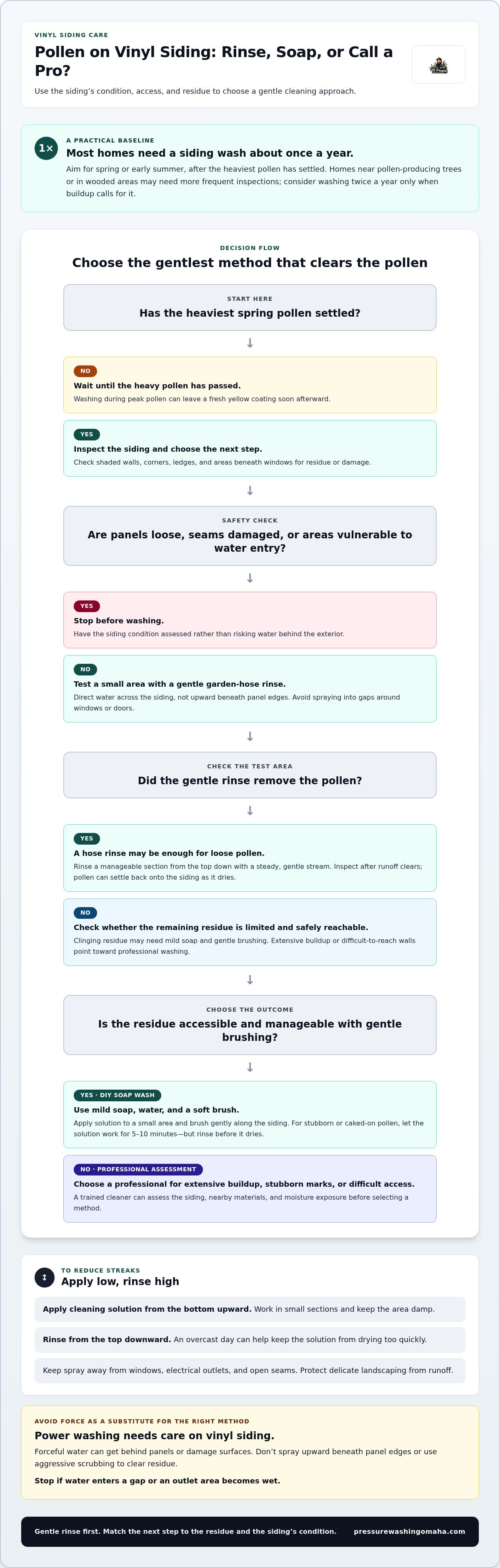
For most homes, clean vinyl siding once a year, ideally in spring or early summer after the heaviest pollen has settled. Knowing how to clean pollen off vinyl siding starts with a gentle rinse to remove loose dust, followed by mild dish soap and a soft brush for residue that clings. Power washing can also remove pollen, but pressure and spray direction matter because forceful water can get behind panels or damage surfaces.
That yellow film can return quickly during pollen season, so it’s understandable to wonder whether a hose is enough or whether washing should wait. This guide explains how to clean pollen off vinyl siding and how often to wash it, from a simple rinse to soap-and-water scrubbing or power washing. You’ll also learn how to work in small sections, rinse without leaving streaks, and avoid turning a straightforward cleaning job into a siding problem.
Key Takeaways
- For most homes, plan to clean vinyl siding once a year, ideally after peak spring pollen has passed.
- A garden hose can wash away loose pollen, but residue left after humid days may need mild soap and gentle brushing.
- Work in small sections on an overcast day, applying cleaner from the bottom up and rinsing from the top down.
- Use care with power washing: forceful water can get behind siding panels or damage surfaces.
- Learn when a simple DIY wash is enough and when professional house washing can help with more extensive buildup.
How do I remove pollen from my house without a pressure washer?
To clean pollen off vinyl siding without a pressure washer, start with a garden hose and use mild soap where residue remains. Gentle rinsing and brushing help remove pollen while reducing the chance of forcing water behind panels.
- Prepare the area before wetting the siding. Close windows, move outdoor items away from the wall, and note nearby outlets and delicate plants. Choose an overcast day so cleaning solution won’t dry too quickly. Work from a stable surface, and don’t climb or lean from a ladder to reach high areas. A hose-end siding cleaner can reach about 25 feet without a ladder.
-
Rinse Siding With a Garden Hose
Start at the top of a manageable wall section and rinse downward with a garden hose. Use a steady, gentle stream, directing water across the siding rather than upward beneath panel edges. This loosens surface pollen before scrubbing and carries it toward the ground. Check corners and seams as you go, and avoid spraying directly into gaps around windows or doors.
-
Understand Hose-Rinsing Limitations
Rinse first, then inspect the siding after the runoff clears. Pollen suspended in rinse water can settle back onto the wall as it dries, leaving a yellow film. A simple rinse may remove fresh, loose grains, but not residue that has clung to damp siding. If a test area still looks dusty, try a suitable cleaning solution and gentle brushing.
- Mix a mild soap solution for pollen that remains after rinsing. Apply it to a small area with a soft brush, working gently along the siding rather than scrubbing aggressively. Keep the area damp while cleaning, then rinse thoroughly before moving on. This is a practical way to clean pollen without relying on forceful water, especially when residue has remained through humid weather.
-
Prevent Streaks and Protect Nearby Areas
Apply cleaning solution from the bottom upward, then rinse from the top downward. Work in small sections so soap doesn’t dry on the siding; an overcast day can help reduce rapid drying and streaks. Keep spray away from windows, electrical outlets, and open seams. Protect delicate landscaping from runoff, and stop if water enters a gap or an outlet area becomes wet.
How Often Should You Clean Vinyl Siding?
For most homes, clean vinyl siding about once a year, ideally in spring or early summer. Let the siding’s condition, nearby trees, and the amount of residue guide whether a simple DIY wash is enough.
- Set an annual inspection and look at the siding after spring pollen settles. Check shaded walls, corners, and areas beneath windows, where dirt can linger. A light coating may need only a gentle wash, while visible grime or green film can call for more attention. Cleaning during peak pollen can mean fresh grains settle on the siding again soon afterward.
- Adjust the schedule to your home’s surroundings. If it sits near pollen-producing trees or in a wooded area, inspect the siding more often and consider washing twice a year. That doesn’t mean every home needs two full cleanings. Base the decision on buildup: pollen that rinses away easily may not need the same approach as stubborn residue.
- Choose DIY washing when the affected area is accessible and the buildup is light. A garden hose and mild soap can work for a small section; use a soft brush where residue clings. Follow the siding manufacturer’s care guidance, and don’t try to make up for a poor cleaning method with forceful water. Stop if you find loose panels, damaged seams, or spots where water could enter the wall.
- Hire a professional for extensive buildup, stubborn marks, or walls that are difficult to reach safely. A trained cleaner can assess the siding, surrounding materials, and moisture exposure before choosing a washing method. This matters near windows, trim, and openings, where forceful spray or careless application can send water behind the exterior. Professional washing is also a practical option when the job involves several walls or requires specialized equipment.
- Compare the work involved before deciding whether to handle the wash yourself. The cost of professional siding cleaning depends on the home’s size, access, buildup, and cleaning method; pricing is provided after a quote request. If you’d rather have the condition assessed before choosing a method, request a professional cleaning quote.
For Omaha, Papillion, Elkhorn, Gretna, Bennington, Bellevue, Valley, and Wahoo homeowners, time the wash for after the heaviest local pollen has settled. Cleaning while pollen is still falling can leave a fresh yellow coating soon afterward.
Can I remove pollen from my siding myself with a hose and dish soap?
Yes. For an accessible area, use a garden hose, mild dish soap, and a soft brush, and avoid forceful water on vinyl panels.
For stubborn or caked-on pollen, wet the siding, apply mild soap solution, and gently brush the affected area. Let the solution work for 5-10 minutes, but rinse before it dries.
-
Check for Pollen on Siding Surfaces
Inspect vertical siding and horizontal ledges separately before washing. Pollen often runs down vertical panels, while window trim, light fixtures, and other flat surfaces can hold a thicker layer. Check shaded sides and ledges for concentrated buildup in spring. Start with a gentle hose rinse on a small test area, then compare it with the surrounding siding.
-
Clean Pollen From Seams and Channels
Look closely at panel seams and channels, where pollen can settle instead of running off. Direct the hose across the siding, not upward beneath panel edges, then use a soft brush to loosen residue in accessible grooves. Avoid sharp tools or forceful scrubbing, which can scratch vinyl or push debris deeper. Rinse each channel so loosened pollen doesn’t remain behind.
-
Address Stubborn Pollen and Other Buildup
Mix 1/3 cup of dish soap with 1 gallon of warm water for a mild cleaning solution. Apply it to the affected exterior with a soft brush, working a small section at a time. Let it sit for 5-10 minutes without drying, then brush gently and rinse. For stains that remain, repeat the gentle method rather than increasing pressure.
- Identify the residue before choosing a stronger cleaning approach. A yellow film that lifts with soap and water differs from green growth or dark dirt. Treat only the affected area first, then check the vinyl after rinsing. If a mark remains, repeated hard scrubbing may damage the surface without removing the stain.
- Finish by rinsing the cleaned wall from top to bottom, including the lower panels and nearby flat surfaces. Once the water runs clear, check seams, channels, and ledges for soap or loosened pollen. If residue remains, repeat the mild soap-and-brush method on that spot. This approach addresses each mark without treating every type of buildup the same way.
Pollen, dirt, algae, and mildew on siding
Identify the residue before choosing a cleaner: spring pollen, ordinary dirt, and green growth need different attention. A green film appearing on a north-facing wall by June can point to algae or mildew rather than pollen alone.
- Inspect the wall in daylight and compare each mark with nearby clean vinyl. Pollen usually appears as a dusty yellow coating, while dirt often collects below windows or along trim. Green or dark patches, especially on shaded sections, may indicate algae or mildew. Identifying the pattern first helps prevent unnecessary scrubbing or using the wrong cleaning solution.
- Rinse loose pollen and dirt from a small test area before treating remaining marks. If yellow residue washes away, use a mild soap solution and soft brush on the affected siding. Pollen can cling more firmly after humid weather, so work gently rather than increasing force. Rinse the test area fully and compare its appearance before cleaning the rest.
- Use a mild vinegar mixture only for suitable surface residue: combine 70% water with 30% white vinegar. Apply it to a small vinyl section, avoid letting it dry, and rinse thoroughly. Keep this mixture separate from bleach. Never mix bleach with ammonia, because the combination creates toxic fumes. Follow the siding manufacturer’s care instructions before applying any cleaner.
- Treat visible green film as a different problem from fresh pollen. A cleaning solution for outdoor organic residue may be appropriate; one stated dilution for Simple Green Oxy outdoor cleaner is one part cleaner to 15 parts water. Follow the product label for preparation and use, test an inconspicuous patch, and rinse according to its directions. Don’t combine cleaners or assume a stronger mixture will work better.
- Remove loose surface residue first, then address mold and mildew without scraping the vinyl. Brush gently with a soft tool and rinse the area completely. If growth covers a broad wall, returns quickly, or appears alongside persistent dampness, arrange a professional assessment. Cleaning the visible film alone won’t fix a moisture source that continues feeding growth.
- Check the exterior regularly after spring cleaning, especially on shaded, north-facing walls. Look again later in the season for green film, and inspect trim, lower panels, and areas that stay damp. Cleaning a small patch promptly is easier than letting buildup spread across several panels. Note recurring spots so you can see whether the same area remains wet after rainfall.
How power washing removes pollen
Power washing can rinse pollen from vinyl siding, but pressure alone isn’t the cleaning method to rely on. CertainTeed advises against pressure washing vinyl because water can intrude behind panels or damage the surface. If using pressure, keep it below 1,500 PSI and direct the spray at a 90-degree angle to the siding.
- Choose the method based on the residue, not on a machine’s maximum force. Loose pollen may rinse away, while pollen bonded to damp siding needs a cleaning solution to loosen it. Soft washing applies cleaner at low pressure, lets it work, then rinses it away. This targets the film without depending on a forceful stream.
- Inspect vinyl panels, seams, windows, and trim before cleaning. Look for loose panels or gaps where water could travel behind the siding. Forceful water can enter those openings, strip caulking, or damage nearby finishes. If you see damaged seams, don’t direct a strong stream at them.
- Apply cleaner in manageable sections, following the product label and siding-care instructions. Give the solution time to loosen pollen, but don’t let it dry on the surface. Rinse from the top down, keeping the spray directed across the panels rather than upward beneath their edges. A thorough rinse carries loosened residue away instead of redistributing it.
- Keep the machine’s pressure below 1,500 PSI if you use pressure on vinyl. Hold the spray at a 90-degree angle to the siding, and begin on a discreet test area. Avoid concentrating the stream on seams, window frames, or one spot for too long. These precautions reduce the risk of moisture intrusion, but CertainTeed’s advice against pressure washing remains important.
- Plan a thorough exterior wash after the heaviest pollen drop, rather than during peak season. Washing while fresh pollen is still falling can leave a new yellow coating soon afterward. If the siding is high, extensive, or difficult to clean safely, a professional can choose a suitable soft-washing method.
No Pressure Power Washing: House Washing
No Pressure Power Washing offers House Washing for homeowners facing widespread pollen or buildup that’s difficult to reach safely. A garden hose and gentle soap may suit a small, accessible patch; a full exterior or stubborn residue can require a more thorough approach. Professional house washing is a practical next step when the siding covers multiple stories, the cleaning area is extensive, or you’re concerned about water reaching seams and openings. It can also help when a careful DIY wash hasn’t removed the surface film. The goal is to address the exterior buildup while treating the siding with care. Contact No Pressure Power Washing to discuss house washing for your home.
Make Exterior Care Part of Your Routine
Think of siding care as one part of protecting your home’s exterior. After cleaning, note which areas collect residue again, such as shaded walls or surfaces beneath trees. That pattern can help you plan future upkeep instead of waiting for buildup to spread. When deciding how to clean pollen off vinyl siding, choose a method suited to both the residue and the panels’ condition. A small, accessible area may be manageable at home; extensive or hard-to-reach siding needs a careful plan.
No Pressure Power Washing offers Residential House Washing, Deck Cleaning, and Driveway Cleaning, helping homeowners address several exterior surfaces as part of their maintenance plans.
A thoughtful approach keeps exterior upkeep practical and helps your home look cared for.
Frequently Asked Questions
Does pollen permanently stain siding if it’s left too long?
Pollen itself usually washes off vinyl, but residue left through damp weather can mix with dirt and become harder to remove. Treat yellow deposits as soon as practical, especially beneath eaves or on ledges where runoff doesn’t clear them. Test your cleaning method on a small, less visible patch first. If a mark remains after gentle cleaning, it may be algae, mildew, or another stain rather than pollen alone.
How often should I clean my home exterior during pollen season?
For most homes, one thorough exterior cleaning after the heaviest spring pollen has settled is more practical than repeated washing during the season. Pollen can land again after a wash, so look at the siding and other surfaces before deciding whether another rinse is useful. Homeowners in Omaha, Papillion, Elkhorn, Gretna, Bennington, Bellevue, Valley, and Wahoo can use visible buildup, shade, and nearby trees to guide their timing.
When Is the Right Time to Power Wash for Pollen?
Wash after the main pollen drop, when fresh grains are no longer coating the exterior each day. Cleaning too early can leave a new layer soon afterward. Choose an overcast day when possible, and don’t let cleaning solution dry on the siding. For vinyl, soft washing is gentler than relying on a forceful stream.
What tools and cleaning supplies work best for pollen on vinyl siding?
Use a garden hose, a bucket, mild dish soap, and a soft-bristled brush for accessible vinyl siding. A long-handled brush can help reach higher sections from the ground, but don’t lean from a ladder to extend your reach. Keep a clean cloth for checking a test area and use a separate brush for ground-level grime. Avoid abrasive pads that can scratch the siding’s finish.
What cleaning solution removes pollen from vinyl siding without damaging it?
A mild dish-soap solution in warm water is a straightforward choice for pollen on vinyl. Apply it to a small test area first, then follow the siding manufacturer’s cleaning instructions. Don’t let the cleaner dry on the surface, and rinse it away thoroughly. Avoid combining products: never mix bleach with ammonia, as that combination creates toxic fumes.
How do you clean vinyl siding with a garden hose and soft brush?
First wet a manageable section, then apply mild soapy water and gently brush the panels. Work carefully around trim and seams, and rinse the section before moving on. If pollen has collected beneath a window ledge, brush that flat area separately rather than scrubbing harder across the wall. Keep the hose stream directed across the siding, not upward beneath panel edges.
Can bleach, vinegar, or dish soap damage vinyl siding or nearby plants?
Diluted dish soap is a mild option when rinsed thoroughly, while bleach and vinegar can affect surfaces or nearby landscaping if misused. Follow the siding maker’s instructions and test any cleaner discreetly before treating a broad area. Wet nearby plants with clean water before cleaning, and rinse them afterward to clear runoff. Never mix bleach with ammonia, which creates toxic fumes.
How often should vinyl siding be cleaned during pollen season?
Most homes don’t need repeated full siding washes throughout pollen season. Plan one wash after the heaviest drop, then inspect as pollen settles. A fresh coating on a small ledge may need only a targeted rinse, not another complete cleaning. If yellow residue returns quickly across several walls, wait until pollen fall eases before washing again. This timing helps avoid cleaning the same surfaces twice unnecessarily.


