

Algae and mildew don’t have to become permanent features of a paver patio. Professional paver patio cleaning in Papillion can remove biological growth and loosen many surface stains, with the method suited to the pavers and the buildup. Cleaning also clears grime, while protecting against future staining and moisture may require a separate step.
If green patches or dark marks have made your patio less inviting, you can get it cleaned without putting the pavers at unnecessary risk. This guide explains how cleaning addresses algae, mildew, and stubborn stains, why paver joints need care, and how optional sealing may help preserve color and resist moisture once the surface is fully dry. You’ll also learn what affects the process and when professional service can help.
Key Takeaways
- Cleaning can lift algae, mildew, and many surface stains, but the right approach depends on the patio material and the kind of buildup.
- Cleaning may displace joint sand; allow the pavers to dry thoroughly before re-sanding the joints.
- Sealing is optional and can help enhance paver color and protect against stains and moisture damage when the surface is fully dry.
- Regular sweeping, rinsing, and topping up joint sand as needed can help keep a paver patio in good condition.
- Oil, grease, rust, and biological marks need different treatment, so identifying the stain helps guide the cleaning method.
Protection from fading, stains, and moisture damage
Cleaning removes grime and organic growth; sealing is a separate, optional step. For Papillion homeowners, protecting pavers starts with matching the treatment to their condition, joint stability, and drying conditions.
Preventing Surface Fading and Stains
Sun exposure and embedded dirt can make paver color look uneven. Cleaning lifts surface grime, while a suitable sealer may enhance color and help protect against stains and moisture. Before sealing, inspect for worn areas, existing coatings, and discoloration. A clean, evenly prepared surface makes it easier to assess the pavers’ condition and decide whether sealing is appropriate.
Managing Algae and Moisture Damage
Algae holds moisture against pavers, especially in shaded areas or joints that stay damp. After removing growth, check for lingering wet patches, loose joint sand, and pavers that shift underfoot. Water in the joints can freeze and expand in cold weather, putting pressure on paver edges and existing cracks. Clearing biological buildup helps the surface dry, but drainage and joint condition matter too.
Safe Paver Power Washing
Power washing can remove stubborn growth, but excessive pressure or a concentrated spray can dislodge joint sand and mark a paver’s face. A careful approach uses a controlled, consistent spray and avoids directing force into the joints. The right method depends on material, surface wear, and the type of stain. Professional cleaning is a sound choice when pavers are fragile, uneven, or already damaged.
Sealing requires a fully dry patio. Temperature and precipitation affect drying, so plan cleaning, drying, and any sealing in sequence. Sealing is not a substitute for cleaning: it may help resist stains and moisture, but dirt and algae must be removed first. Inspect the joints too, since cleaning may carry away sand that supports paver stability.
Cracked or badly damaged pavers don’t always mean the whole patio needs rebuilding. A damaged section may be repaired by replacing individual pavers while leaving the surrounding surface in place. Before cleaning, note cracks, rocking stones, and chipped edges. These details can guide a careful approach and flag repairs to address first. Matching replacement pavers by material and pattern helps the repaired area blend in.
After cleaning, let pavers dry thoroughly before restoring joint sand or applying sealer. This helps prevent moisture from being trapped beneath a protective coating and makes remaining stains easier to assess. If algae returns quickly in a shaded corner, address the damp conditions rather than relying on repeated cleaning. Careful inspection protects the surface and joints.
Cleaning concrete, brick, paver, and flagstone patios
For paver patio cleaning in Papillion, the material and buildup determine the cleaning approach. Concrete, brick, pavers, and flagstone each need attention to surface texture, joints, and existing wear.
DIY care can handle loose leaves and light surface dirt with sweeping and rinsing. For algae, mildew, deep grime, or delicate and uneven stone, professional cleaning can match the method to the patio and reduce the risk of surface or joint damage.
Start by identifying the material. Concrete is usually a continuous slab, while brick and concrete pavers have joints that can hold soil and organic debris. Flagstone varies in texture and may have uneven edges, so a forceful spray can affect softer or weathered areas differently. A cleaning plan should account for those differences rather than treating every patio as one uniform surface. For a solid slab with dark traffic marks or grime, concrete patio cleaning focuses on a different surface structure than cleaning pavers.
Annual patio cleaning helps remove accumulated grime before it settles deeper into textured surfaces. In Papillion, dirt can build up in patio grout lines over three Nebraska winters, making the joints as important as the visible pavers. A careful inspection should note shaded areas, drainage paths, loose pieces, and stains before cleaning begins.
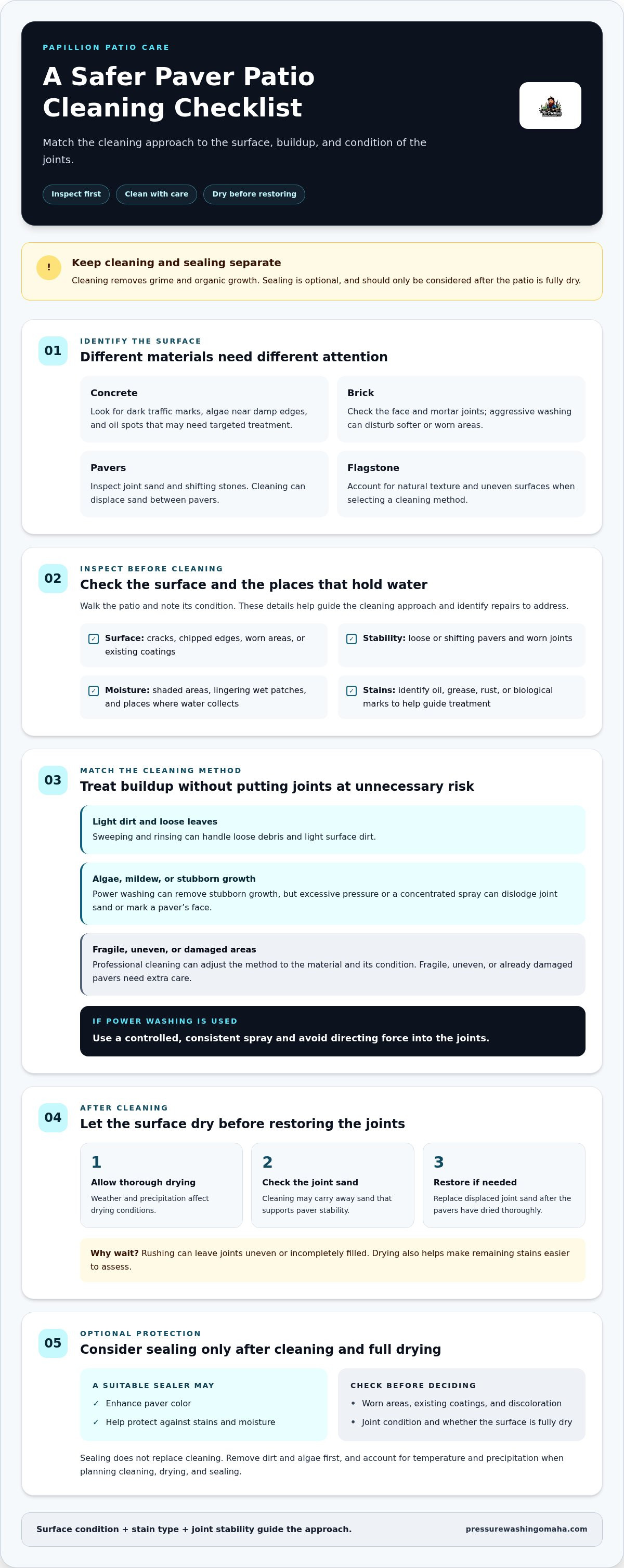
- Concrete: Look for dark traffic marks, algae near damp edges, and oil spots that may need targeted treatment.
- Brick: Check the face and mortar joints, since aggressive washing can disturb softer or worn areas.
- Pavers: Inspect joint sand and shifting stones; cleaning can remove sand between pavers.
- Flagstone: Account for natural texture and uneven surfaces when selecting a cleaning method.
After cleaning pavers, let the surface dry thoroughly before restoring joint sand. Replacing displaced sand helps support the stones; rushing can leave joints uneven or incompletely filled. For a patio with loose pavers, deep buildup, or fragile stone, professional service is practical because the method can be adjusted to the material and its condition.
Papillion Nebraska paver patio cleaning reviews and ratings are most useful when they describe similar surfaces and specific results, such as algae removal or care around paver joints. Look for detailed accounts of the cleaning process rather than relying on a rating alone.
For paver and concrete cleaning, the surface, joint condition, stain type, and access all shape the work. A patio with open joints needs different attention from a solid concrete slab. Sharing whether the patio is brick, flagstone, or concrete helps focus the cleaning approach on the surface and its needs.
Patio cleaning process and inspection
A careful patio cleaning process starts with inspection, not the pressure washer. For Papillion pavers, the two-step cleaning and sanding process depends on weather, surface condition, and whether the joints need fresh sand.
Inspect before cleaning
Walk the patio and note loose pavers, cracked edges, worn joints, and places where water collects. A shaded corner with algae needs different attention from a sunny walkway marked by soil. Check where runoff travels, too. This identifies vulnerable areas and gives the cleaning work a clear focus.
Identify the paver material and visible buildup. Concrete pavers, brick, and natural stone differ in texture and condition, so the same approach may not suit every area. Look for old stains, previous sealer, and joint sand that appears low or uneven. These observations help determine the cleaning method and whether sanding or sealing should be considered.
Clean in a controlled sequence
Remove loose leaves and debris before cleaning so organic material isn’t pushed into the joints. Work in manageable sections, using a method suited to the pavers rather than concentrating force in one spot. Pay attention to edges, steps, and joints, where dirt can remain even after the broad surface looks clean.
After cleaning, inspect the patio while it’s wet and again as it dries. Wet pavers can make remaining marks harder to judge, while drying reveals uneven color or missed buildup. If cleaning has removed joint sand, let the pavers dry thoroughly before restoring it. This sequence is especially important before sealing, because moisture should not be trapped beneath a coating.
Plan around weather
Temperature and precipitation affect drying and restoration work. Rain can interrupt cleaning or delay drying, while cool or damp conditions can keep moisture in joints. For that reason, the cleaning and sanding stages should be planned together, with sealing considered only after the pavers are fully dry. The weather influences the schedule, not just the choice of cleaning method.
- Inspect: Note damaged stones, loose joints, stains, and drainage patterns.
- Clean: Remove debris, then wash with care around paver faces and joints.
- Dry: Let the surface dry thoroughly before adding joint sand.
- Finish: Re-sand as needed, then assess whether optional sealing suits the patio.
For example, cleaning just before a rainy stretch may leave a patio damp for longer and delay sanding or sealing. A dry-weather window can support the process, but the pavers’ actual condition matters too. A final inspection can reveal loose stones or missed areas to address before the patio returns to regular use.
Paver lifespan and maintenance benefits
Routine care helps preserve an outdoor patio’s appearance and function, but it can’t correct poor installation or severe damage. Properly installed and maintained concrete pavers can last 20-30 years or more. Properly installed and maintained natural stone pavers may last more than 50 years. Those figures describe potential lifespans, not a promise for every patio.
Regular care helps maintain the conditions that support a long-lasting patio. Sweep leaves and grit before they collect in joints, and rinse away loose soil. Check for sinking stones, gaps, or persistent damp areas as you clean. A small joint gap is easier to address before nearby pavers begin shifting.
Routine paver patio maintenance includes sweeping debris, rinsing the surface, and restoring joint sand as needed. The goal isn’t constant intervention. It’s to notice gradual changes and respond before loose joints or trapped debris affect how the patio is used. A shaded seating area, for example, may need closer observation for recurring organic growth than a sunny, open section.
- Sweep: Clear leaves, dirt, and grit from the paver faces and joints.
- Rinse: Wash away loose debris without directing excessive force into joints.
- Inspect: Look for movement, low spots, missing sand, and recurring dampness.
- Restore: Reapply joint sand where inspection shows it’s needed.
Joint material contributes to a stable-looking surface and affects routine upkeep. Polymeric sand can harden between pavers and help block weed growth. It won’t remove weeds already growing above the surface, and it should be applied only after the joints are prepared. Match the joint product and installation method to the patio’s condition rather than filling every gap automatically.
Paver surfaces are commonly cleaned and resealed every 3-5 years, depending on usage, climate, and exposure. Sealing remains optional. Its benefit can include enhancing paver color and helping protect against stains and moisture. Consider how much sun, foot traffic, and organic debris the patio receives, then assess the pavers’ condition before deciding. Sealing won’t repair unstable stones or replace missing joint sand.
Keep a simple maintenance record of the date, changes noticed, and work completed. It can help distinguish a recurring issue from a one-time spill or patch of growth. If the same joints lose sand after repeated cleaning, for example, inspect how water moves across that area. The pattern may point to a drainage or surface problem that sweeping alone won’t address.
Regular care helps homeowners spot wear early and plan appropriate maintenance. Concrete pavers and natural stone have different potential lifespans, but both depend on installation, exposure, and upkeep. Track the surface and joints together, since appearance alone won’t show every developing issue.
Removing oil, grease, rust, and biological stains
Different stains need different treatment because oil, rust, and organic growth leave distinct residues. Identify the stain and affected pavers before cleaning. A single harsh method across the exterior could damage the surface without removing the mark.
For oil or grease near a grill or parked vehicle, blot fresh residue instead of spreading it, and avoid scrubbing it deeper into textured pavers. Older spots may need targeted treatment because residue can settle into pores and remain visible after general cleaning. Persistent oil marks are a reason to seek professional care rather than increase force or apply an unknown product.
Rust stains often appear below metal furniture, planters, or tools left on wet pavers. Remove the metal source first, then choose a treatment suited to the paver material and stain. Rust removers can affect some surfaces, so applying one broadly without testing may create a lighter patch or another visible change. Established stains may need specialist attention.
To address weeds, moss, and algae, clear loose growth, then clean affected joints and paver faces with a method suited to the material. Pulling weeds can leave gaps or loosen joint sand, so inspect the joints afterward. Algae and moss often return where shade and dampness persist; addressing the source of moisture may help limit regrowth.
Eco-friendly paver cleaners aren’t automatically safe for every plant or pet. Read the product label, follow its directions, and keep pets away from treated areas as instructed. Protect nearby plants from cleaner and runoff. Don’t mix cleaning products, since combinations can create hazards or harm the pavers.
Before applying a stain treatment, test it on an inconspicuous paver and inspect the result after rinsing. This can reveal unwanted color changes before the treatment reaches the patio’s visible center. Don’t combine a spot cleaner with another product or seal over a stain, as this can leave discoloration beneath the coating.
For rust that remains after careful cleaning, professional rust removal can address the mark with treatment selected for the surface. Likewise, professional paver cleaning can help when stains are extensive, the joints are fragile, or repeated attempts haven’t restored the patio. Keep a note of where the stain began, such as beneath a planter or grill, to help identify its source.
No Pressure Power Washing: House Washing
No Pressure Power Washing helps homeowners address exterior grime with Residential House Washing using soft washing, performed with zero risk of high-pressure damage. The service can complement patio care when nearby siding also shows algae or dirt, especially along shaded areas and lower walls. The company prioritizes the environment by using biodegradable and non-toxic cleaning agents.
For related exterior projects, No Pressure Power Washing also offers Deck Cleaning, Driveway Cleaning, and Concrete Cleaning. These services can help homeowners address buildup across several outdoor surfaces, not just the patio. Choose the service that matches the surface needing attention.
For house washing or another exterior cleaning need, contact No Pressure Power Washing to discuss your project.
Plan your patio’s next refresh
Before arranging paver patio cleaning in Papillion, consider how you use the space. A patio used for outdoor meals may need attention around the table and grill, while a shaded walkway may call for a closer look at recurring growth. Naming your priorities helps focus the work on areas that affect everyday use.
Walk the patio in daylight and note spots that bother you, such as a dark mark near a planter or uneven-looking pavers by the steps. Photos can help you describe the surface and track changes after care. If the patio has loose stones or visible damage, include those details in your project discussion. For a patio that needs professional attention, paver cleaning can address the surface as part of that next step.
A well-kept patio can make the whole outdoor area feel more welcoming. Choose care that suits your property and enjoy making the space your own.
Frequently Asked Questions
Can you remove algae and mildew from a Papillion patio?
Yes, cleaning can remove algae and mildew from many Papillion patios. A method suited to the paver material helps address growth while protecting the joints. No Pressure Power Washing provides Paver Cleaning using soft washing, performed with zero risk of high-pressure damage. The company prioritizes the environment by using biodegradable and non-toxic cleaning agents. Persistent dampness or shade can encourage growth to return.
How Do I Handle Weed Growth and Joint-Sand Loss?
Remove weeds carefully, then inspect the gaps for missing or loose sand. Pulling a rooted weed can widen a joint, so avoid yanking hard against a paver edge. If weeds are widespread or stones move underfoot, professional assessment can help distinguish a joint maintenance issue from a deeper surface problem. Homeowners in Elkhorn and Gretna can use these signs to decide whether routine upkeep is enough.
How Frequently Should I Clean and Reseal Pavers?
Clean pavers annually, and consider resealing every 3-5 years based on use, climate, and exposure. A patio under trees may collect leaves and organic residue faster than an open, sunny area. Before sealing, check for remaining stains, worn joints, and moisture; a coating won’t correct those underlying issues. In Omaha, seasonal debris and shade around the patio can help guide when maintenance is due.
How are weeds prevented from growing between the pavers?
Keep joints filled and clear of debris, since open gaps can give weed seeds room to settle. Polymeric sand can harden between pavers and help block weed growth, but it won’t remove established plants or correct loose joints. Check the patio after cleaning and address gaps where sand has washed away. In Bennington or Bellevue, local shade and moisture patterns can influence where weeds appear first.
How much does patio cleaning cost in Papillion, NE?
Paver patio cleaning pricing depends on the project. No Pressure Power Washing provides a free, no-obligation estimate. Patio size, paver material, stain severity, access, and any joint-sand work can shape the estimate. Describe the surface and problem areas, such as algae along a shaded edge or oil near a grill, to help clarify the work involved.
Looking for help with Paver Maintenance?
No Pressure Power Washing offers Paver Cleaning for homeowners who need help with buildup or routine surface care. Professional help can be useful when pavers are uneven, stains persist, or cleaning may disturb the joints. The company serves Papillion and nearby communities, including Valley and Wahoo. Share what you’ve noticed, such as recurring growth or loose stones, to focus the discussion on your patio’s condition.
What maintenance is required for a paver patio throughout the year?
Maintain a paver patio by sweeping debris, rinsing the surface, and checking joints for lost sand. After storms or heavy leaf fall, clear material that holds moisture against the pavers. Inspect for shifting stones and spots that stay damp, then address them before problems spread. In Valley and Wahoo, let the patio’s exposure and drainage patterns guide upkeep rather than relying only on the calendar.
What is the paver patio cleaning cost in Papillion, Nebraska?
The estimate depends on the patio’s condition and the work involved. Size, material, staining, access, and any needed joint-sand work can affect it. A separate concern, such as rust near metal furniture, may call for targeted treatment. No Pressure Power Washing provides a free, no-obligation estimate so homeowners can discuss the specific surface and cleaning needs.


