

Safe roof cleaning methods use a roof-compatible treatment and gentle application rather than aggressive washing. Excessive pressure can strip protective granules from asphalt shingles or drive water beneath roofing materials. The right approach also depends on the roof material and the cause of the staining.
It’s understandable to want moss, algae, and dark streaks gone without risking damage to the roof or nearby plants. This guide explains how to recognize common roof growth and stains, choose an appropriate cleaning approach, and reduce risks from chemicals, runoff, ladders, and slippery surfaces. You’ll also learn when a roof’s condition makes professional cleaning the more prudent choice.
Key Takeaways
- Identify whether discoloration is algae, moss, or another stain before choosing how to treat it.
- Match the cleaning solution to the roofing material, since the wrong chemistry can damage surfaces and metal components.
- Protect people and property by accounting for fall hazards, runoff, nearby plants, and gutters before cleaning begins.
- Let roof condition guide the decision: leaks, loose materials, or a fragile surface call for professional assessment before washing.
- Learn what to watch for after cleaning, including signs that shingles may have lost granules or sustained damage.
1. What’s The Best Way To Clean A Roof?
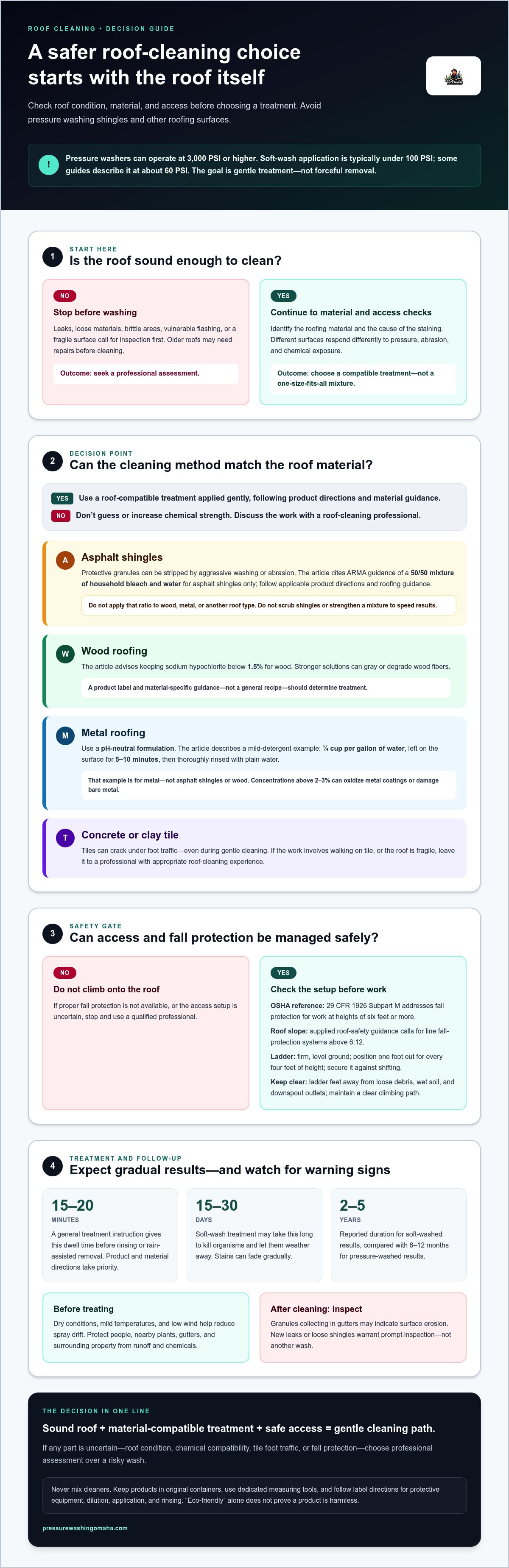
For many roofs, soft washing is safer than pressure washing because it applies a roof-compatible cleaning solution with a low-pressure stream. Chemical application typically stays under 100 PSI, while some guides describe soft washing at about 60 PSI. The solution targets algae and other growth without using force to scrape stains from the surface. Asphalt shingles, in particular, can lose protective granules under aggressive washing.
A pressure washer may operate at 3,000 PSI or higher, far beyond the pressure used to apply a soft-wash treatment. That force can erode roofing materials, loosen shingles, strip granules, or drive water beneath shingles and flashing. If granules collect in gutters after washing, the roof may have suffered surface erosion. New leaks or loose shingles after cleaning also warrant prompt inspection, not another wash.
Soft washing takes patience. Treatment can take 15-30 days to kill organisms and let them weather away naturally, so stains may fade gradually rather than disappear during the visit. Soft-washed results can last 2-5 years, while pressure-washed results are described as lasting 6-12 months. Those ranges help explain why forceful washing may deliver a quick visual change without being the better long-term choice.
Consider the roofing material and its condition before choosing a method. Asphalt shingles are sensitive to pressure and abrasion; concrete or clay tiles can crack under foot traffic, even during gentle cleaning. Metal roofing also requires careful treatment. An inspection should identify existing leaks, loose materials, brittle areas, and vulnerable flashing. Older roofs may need repairs before cleaning.
How often should different types of roofs be cleaned? Base cleaning on visible buildup, roof material, and condition rather than a fixed schedule. Roofs generally need cleaning every 3-5 years, but shaded, wet areas may need attention sooner; an inspection helps determine whether growth calls for treatment.
Weather and application technique matter as much as the cleaning product. Dry conditions, mild temperatures, and low wind help reduce the chance of spray drifting beyond the roof. Avoid scrubbing shingles, since gentle application minimizes abrasion. If the work involves walking on tile, treating a fragile roof, or working around active leaks, leave it to a professional with appropriate roof-cleaning experience.
2. Cleaning solutions and chemical concentrations
A roof cleaner must suit both the stain and the roofing material. Asphalt shingles, wood, and metal respond differently to chemical exposure, so don’t assume one mixture works for every surface. A product intended for roofs and compatible with the specific material is a safer starting point than a household cleaner. Lichen can cling tightly, but scraping or using an overly strong chemical may damage the roof.
Sodium hypochlorite is used in some roof treatments, but concentration matters. Professional cleaners may use concentrations of 3-5% for severe contamination. For wood roofing, guidance advises staying under 1.5%, since stronger solutions can gray or degrade wood fibers. Concentrations above 2-3% can oxidize metal coatings or damage bare metal. These figures aren’t a universal recipe: the roof material, product directions, and severity of growth determine the appropriate treatment.
Asphalt shingles need particular care because their protective granules can be disturbed by abrasion and harsh treatment. The Asphalt Roofing Manufacturers Association (ARMA) recommendation cited for asphalt shingles is a 50/50 mixture of household bleach and water. Follow the applicable product directions and roofing-material guidance rather than applying that ratio to wood, metal, or another roof type. Don’t increase a mixture’s strength to speed up results.
For metal roofing, use a pH-neutral formulation. A mild-detergent mixture described for metal roofs uses 1/4 cup of detergent per gallon of water; it should stand on the surface for 5 to 10 minutes before thorough rinsing with plain water. That example applies to metal, not asphalt shingles or wood. Use a soft sponge, washcloth, or soft-bristle brush when manual cleaning is appropriate. Avoid abrasive pads and tools that can scratch coatings.
For a more environmentally considerate approach, choose a biodegradable roof-cleaning product that identifies its intended surface and use. The label “eco-friendly” alone doesn’t establish that a product is harmless to plants, people, or roofing. Check directions for protective equipment, dilution, application, and rinsing. Keep products in their original containers, measure with dedicated tools, and never mix cleaners. In particular, don’t combine bleach-based products with other chemicals.
Apply solution gently and follow its stated dwell time; a general roof-treatment instruction gives 15-20 minutes before rinsing or rain-assisted removal. Don’t let that interval override the product label or material-specific directions. If choosing a compatible solution or handling chemical application feels uncertain, discuss the roof-cleaning work with a professional before treating the surface.
3. Fall protection and ladder safety
A clean roof isn’t worth a fall. Roof washing combines height, water, cleaning solutions, hoses, and slippery organic growth, so plan access before starting. The Occupational Safety and Health Administration identifies 29 CFR 1926 Subpart M with fall-protection practices for work at heights of six feet or more. Roof slopes above 6:12 require line fall-protection systems, according to the supplied roof-safety guidance. If you can’t use proper fall protection, don’t climb onto the roof.
Inspect the ladder, ground, and roof edge before carrying up equipment. Set the ladder on firm, level ground and position it one foot out for every four feet of height. Keep its feet clear of loose debris, wet soil, and downspout outlets. Secure the ladder so it can’t shift, and maintain a clear path while climbing. A hose caught on a ladder rung can pull equipment or the person holding it off balance.
Never step onto a wet roof. Water and cleaning solutions can make shingles, tile, and metal dangerously slippery, while moss adds another slick layer. A safety harness and a partner are important precautions for manual roof work, but they don’t make an unsuitable roof safe to climb. Tile can crack underfoot, and an older roof with loose materials may not support foot traffic. Hire a professional for steep slopes, fragile surfaces, or roofs with existing leaks.
How can homeowners protect landscaping and manage runoff during roof cleaning? Cover nearby plants, direct runoff, and check gutters during and after washing. Keep cleaning solutions from pooling around vegetation, and clear debris that could block drainage. Plan for runoff before applying any treatment, not after leaves begin wilting or water spills over a clogged gutter.
Choose conditions that help control slips and spray: dry weather, mild temperatures, and low wind are recommended for roof washing. Wind can carry spray toward people, plants, or neighboring surfaces. Stop if rain begins or the roof becomes wet. Keep children and pets away from the work area, and store cleaning products securely while tools are in use.
When deciding whether to clean a roof yourself, consider more than whether the stains seem reachable from a ladder. Loose shingles, active leaks, a steep pitch, or a need to walk on tile are reasons to leave roof access to trained workers. Safe setup protects people; runoff control and gutter checks also help protect the roof’s drainage system and long-term condition.
4. Identifying moss, algae, and roof stains
Start by examining the pattern and texture of the discoloration, not by reaching for a washer. Algae often appears as dark streaks running down the roof, while moss forms raised, green clumps. Lichen can look like pale, crusty patches attached firmly to the surface. From the ground, binoculars can help you compare color and shape without climbing onto the roof.
Black streaks commonly indicate roof algae, which can spread across asphalt shingles when moisture and shade persist. Moss is easier to distinguish: it grows into visible cushions or tufts, often along shingle edges or in roof valleys. It can hold moisture against roofing materials; on tile roofs, that moisture can deteriorate tiles and supporting mortar. A raised clump is not just a stain to scrub away.
Not every mark is organic growth. Before choosing a treatment, compare color, location, and texture: a streak running downhill differs from a localized patch, and a crusty deposit differs from a flat discoloration. From the ground, also look for missing or lifted shingles, damaged flashing, or excessive granules in gutters. These signs can point to wear or damage, so cleaning shouldn’t be the first response.
Use a simple assessment before selecting a removal method:
- Dark, flat streaks: Consider algae, especially on shaded asphalt shingles.
- Raised green growth: Treat it as moss, which retains moisture against the roof.
- Crusty patches: Lichen may be attached firmly; scraping can harm the surface.
- Loose material or granules: Pause cleaning and arrange a roof inspection.
Algae and moss need treatment suited to the roof material, not forceful scraping. A compatible treatment can kill organisms, but visible change may take time as dead growth loosens and weathers away. Don’t use a pressure washer on stubborn patches on shingles: pressure and abrasion can strip protective granules. If growth covers a fragile roof or is near loose materials, have a qualified professional assess it before treatment.
Regrowth depends partly on moisture, shade, and the treatment used. Overhanging branches can limit sunlight and slow drying, while debris in roof valleys can hold damp organic material against the surface. Keep gutters and drainage paths clear, and trim vegetation where it shades the roof. A treatment may help prevent moss and algae from returning, depending on the product, but cleaning can’t remove the conditions that encourage growth.
5. What are the risks of roof cleaning to people, shingles, plants, and gutters?
Roof cleaning can put people at risk before any treatment touches the shingles. A wet roof, loose debris, hoses, and equipment create hazards for anyone climbing or working below. Spray can drift beyond the roof edge, so keep people and pets away from the work area. If a worker can’t maintain secure footing or control the equipment, stop and use a professional.
Excessive pressure or unsuitable chemical treatment can cause lasting roof damage. A pressure washer may strip protective granules from asphalt shingles, eroding the surface. Strong or incompatible chemicals can weaken shingles and corrode metal components such as flashing. Water forced beneath shingles or flashing can contribute to leaks. After cleaning, watch for loose or missing shingles, new leaks, or unusual amounts of granules in gutters.
Protect nearby plants from chemical spray and runoff. Before cleaning, cover vulnerable landscaping and plan where runoff will travel. Keep the solution from pooling around garden beds, and direct its flow rather than letting it drain across plants. For example, a downspout beside a flower bed can concentrate runoff in one spot. Remove protective covers after cleaning so plants aren’t covered unnecessarily.
Gutters can collect cleaning runoff and loosened roof material. Check them before washing so debris doesn’t block drainage, then inspect them again afterward. Excessive granules in the gutter can signal surface erosion, not just ordinary dirt. If runoff spills over the edge or backs up near a downspout, pause and clear the drainage path before continuing. A clean roof shouldn’t come at the cost of blocked drainage.
Reduce avoidable risks with a property check before treatment:
- People: Keep bystanders away from the roof edge and spray area.
- Roofing: Look for existing leaks, loose materials, and vulnerable flashing.
- Plants: Cover landscaping and direct runoff away from beds and shrubs.
- Gutters: Clear obstructions, then look for excess granules after washing.
Stop if the roof begins leaking, shingles loosen, metal components show damage, or runoff can’t be controlled. These signs call for a roof assessment before further cleaning. A careful inspection helps protect the roof, people, landscaping, and drainage system.
Asphalt shingles are especially sensitive to pressure and abrasion, while metal and tile roofs still require careful chemical selection. Pressure washing asphalt shingles can remove their protective granules, so manufacturer-approved chemical soft-wash treatments are the recommended alternative. One afternoon of aggressive pressure washing can cause as much shingle granule loss as ten years of natural weather exposure. Loose or missing shingles after washing may signal pressure damage; maintained asphalt shingles typically last 20-30 years. Cleaning gutters after fall leaves drop supports drainage and can help prevent ice dams where ice and snow are common.
No Pressure Power Washing: House Washing
No Pressure Power Washing provides Residential House Washing for exterior surfaces affected by dirt and organic buildup. Roof cleaning concerns can also reveal staining on siding, where a separate, surface-appropriate treatment may refresh the home’s exterior. House washing is right when siding needs attention; it doesn’t replace a roof inspection or repair if shingles are loose, leaks are present, or the roof is fragile.
Keeping roof and exterior care distinct helps protect your property: roofs need treatment suited to their material, while siding needs its own appropriate approach. If you’re considering exterior cleaning alongside roof maintenance, contact No Pressure Power Washing about Residential House Washing or visit pressurewashingomaha.com.
Make Your Next Exterior-Care Decision With Confidence
Choosing safe roof cleaning methods is only one part of protecting your home. Treat roof maintenance and exterior cleaning as separate tasks, each suited to the surface and its condition. If an inspection points to repairs, address those concerns before planning a wash. For a sound roof, record visible changes so future maintenance decisions start with a clear picture.
No Pressure Power Washing can help with other exterior surfaces through Residential House Washing, Deck Cleaning, and Concrete Cleaning. These services address buildup on siding, decks, and concrete without confusing surface cleaning with roof repairs or roof treatment. A practical next step is to decide which surface needs attention first and describe that need clearly.
Thoughtful maintenance doesn’t require rushing. Choose work that suits your property, then move forward with care.
A well-cared-for home begins with informed choices, and you’re ready to make yours.
Frequently Asked Questions
What’s The Best Way To Clean A Roof?
The best approach depends on the roof material, visible growth, and surface condition. Among safe roof cleaning methods, choose one that addresses the actual buildup without relying on abrasion. Before arranging work, take ground-level photos of each stained slope and note where discoloration is concentrated. That record gives you a useful baseline for assessing the result. A roof cleaning service can assess the roof as a whole.
What is the safest way to clean asphalt shingle roofs?
Use a treatment intended for asphalt shingles, and avoid abrasive scrubbing. A practical first step is to document the roof’s appearance from the ground, noting differences between shaded and exposed slopes. This can help you distinguish localized discoloration from a broader pattern without climbing up. If you see signs of deterioration, prioritize an inspection over cosmetic cleaning.
Is soft washing safer than pressure washing for roofs?
Soft washing is generally the safer choice for roofs because it avoids forceful water application. The cleaning method still needs to suit the particular roof and its condition. A useful decision point is whether the work can be done without walking on vulnerable areas or directing water beneath roofing components. If the answer is uncertain, leave roof access and treatment to a professional.
What cleaning solutions are safe for roof shingles, metal, tile, and wood?
Choose a solution whose label identifies the roofing material it is intended for. Don’t rely on a general-purpose description or assume a product safe for one surface also suits another. Keep the label available during application, and follow its directions for use and protective measures. If the label doesn’t clearly match the roof material, don’t apply the product.
What are the step-by-step precautions for cleaning a roof safely?
Before work begins, move outdoor items away from the runoff area and identify where downspouts discharge. Keep the product label and emergency instructions accessible, and establish a clear boundary around the work zone. Afterward, check that water drains normally and that no cleaning residue remains on nearby surfaces. If gutter buildup is part of the problem, gutter cleaning can address that separate maintenance need.
When should roof cleaning be done by a professional instead of DIY?
Choose professional help if you can’t identify the roofing material, safely reach the work area, or manage the treatment process with confidence. A professional can also help when roof staining coincides with concerns that need assessment before cleaning. If siding also needs attention, house washing is a separate exterior-care option; it doesn’t replace roof treatment or repairs.


