

What if the best way to remove spider webs isn’t to reach for the strongest spray or pressure washer? For spider web removal from house exterior Papillion homeowners need an approach that clears visible webs without risking siding or an unsafe climb. It’s frustrating when webs reappear after sweeping, especially around sheltered corners, light fixtures, and high eaves. Those spots can offer spiders shelter and access to insects, so removing a web may not stop another from being built.
A careful cleanup can still make a noticeable difference. This guide explains why webs gather in certain areas, what you can safely remove yourself, and when a garden hose or professional house wash is the more practical choice. You’ll also learn why high-pressure spraying can be unsuitable for some exterior surfaces and why washing can remove visible webs and related debris without promising pest control or permanent prevention. With more than 30 years of Omaha-area experience, No Pressure Power Washing serves Papillion homeowners with careful, surface-conscious house washing and biodegradable, non-toxic cleaning solutions.
Key Takeaways
- Webs near doors, lights, eaves, and porches can affect curb appeal; note where they gather to guide a focused cleanup.
- Start from the ground, identify the surface, and remove only reachable webs with a soft, compatible tool.
- Spider web removal from house exterior Papillion homes can often be a DIY task for small, accessible areas, but high or difficult spots call for professional help.
- Before cleaning, record surface types and access concerns, and move or protect nearby outdoor items where practical.
- Professional house washing can clean exterior surfaces where webs and related debris are visible, but it can’t promise webs won’t return.
Why Spider Webs Keep Appearing on Papillion Home Exteriors
Webs around doors, light fixtures, eaves, and porches can quickly distract from a well-kept exterior. Exterior spider-web removal means clearing visible webs and associated debris from accessible outdoor surfaces. That can tidy a siding panel or entryway, but it doesn’t remove the conditions that may draw spiders back.
Spiders build webs where they can anchor silk and catch prey. Protected edges and quiet corners offer convenient locations, which helps explain why webs often show up beneath overhangs or beside exterior lights. Removing the web clears what’s visible; it doesn’t determine whether a spider will return or build elsewhere.
Where webs commonly collect around a house
Check eaves, soffits, porch ceilings, window corners, light fixtures, and sheltered trim. These spots are often protected from disturbance and provide edges where webs can attach. Before cleaning, scan the exterior from the ground and note which areas need attention. Don’t climb or stretch just to inspect a location more closely.
Why removing a web may not stop it from returning
Clearing a web removes visible material, not the spider or its movement around the home. Sheltered areas can remain convenient, and nearby insects may provide a food source. A clean surface today therefore isn’t a promise it will stay web-free.
For spider web removal from house exterior Papillion homeowners can start by noting recurring locations and checking them again during routine exterior upkeep. If webs and debris appear across broader areas, professional house washing can clean appropriate exterior surfaces. It removes visible webs and related debris, but it isn’t pest control and can’t guarantee spiders won’t return.
How to Remove Spider Webs from Siding, Eaves, and Entryways Safely
A small web beside a doorway may be simple to clear. A cluster under a high eave is a different job. For spider web removal from house exterior Papillion homeowners should match the method to the surface and the reach required, rather than treating every web with a hose or scraper.
A careful approach for reachable webs
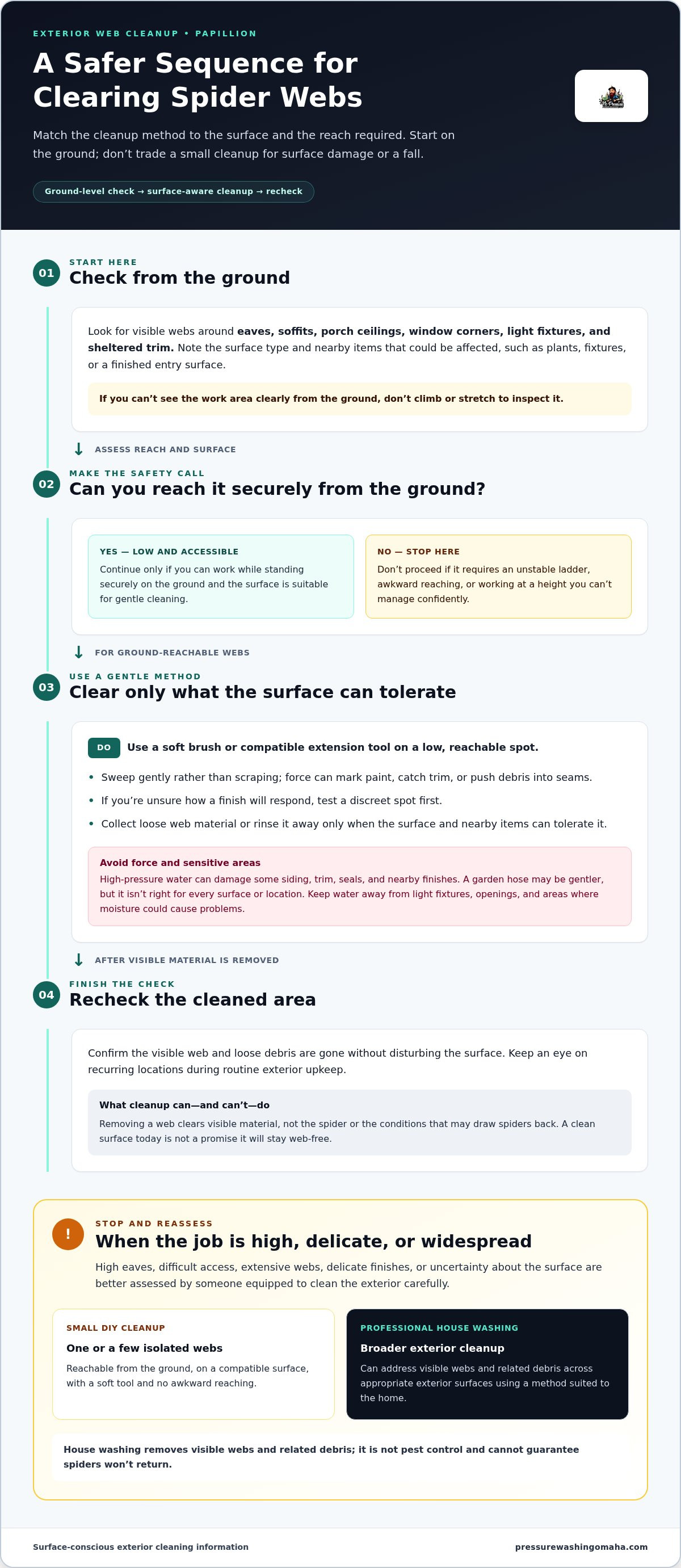
Start with a ground-level visual check. Note the web’s location, the siding or trim material, and anything nearby that could be affected, such as a light fixture, plant, or finished entry surface. If you can’t see the work area clearly or reach it while standing securely on the ground, don’t stretch or climb to get closer.
For a low, accessible spot, use a soft brush or extension tool only if it’s suitable for that surface. Sweep gently instead of scraping; force can mark paint, catch on trim, or push debris into seams. Collect loose web material or rinse it away only when the surface and nearby items can tolerate it. Avoid directing water at light fixtures, openings, or areas where moisture could cause problems. Recheck the spot once the debris is gone.
When DIY cleanup is not the safe option
Stop if the task calls for an unstable ladder, reaching over obstacles, or working at a height you can’t manage confidently. The risk of a fall isn’t worth removing a web. High-pressure water also isn’t a shortcut: concentrated force can damage some siding, trim, seals, and nearby finishes. A garden hose may be gentler, but it still isn’t right for every surface or location.
Delicate or uncertain finishes, extensive webs, and high eaves are better assessed by someone equipped to clean the exterior carefully. Professional house washing can address visible webs and related debris across appropriate exterior surfaces, with the method suited to the home rather than relying on force. Learn more about house washing for exterior surfaces.
If you’re weighing a DIY attempt against professional cleaning, you can request a house-washing estimate and describe the surfaces and access concerns. The right choice is the one that clears the debris without putting you or the home at unnecessary risk.
DIY Web Removal vs. Professional House Washing in Papillion
A few webs within easy reach may call for a simple cleanup. Webs spread across several exterior surfaces or clustered high under the eaves make access and surface care bigger concerns. Compare the scope of the job before choosing between a gentle DIY approach and professional house washing.
| Consideration | DIY cleanup | Professional house washing |
|---|---|---|
| Reach | Small areas reachable while standing securely on the ground | Broader areas assessed for safe access |
| Surface area | One or a few isolated webs | Visible webs and debris across exterior surfaces |
| Access risks | Low when no climbing or awkward reaching is needed | A better fit for elevated or difficult areas |
| Likely scope | Loose, visible web material | Webs and related debris as part of exterior cleaning |
When a homeowner can handle a small cleanup
DIY makes sense for a small web on a compatible surface that you can reach safely from the ground. Use a soft tool and try it on a discreet spot first if you’re uncertain how the finish will respond. Don’t work around wiring or fragile fixtures, and don’t climb to reach eaves. A quick cleanup should never come at the cost of surface damage or a fall.
When professional house washing is a better fit
If visible webs are part of wider dirt and buildup, house washing can address more of the exterior than brushing isolated strands. No Pressure Power Washing serves Papillion with careful house washing and brings more than 30 years of Omaha-area experience. Its biodegradable, non-toxic cleaning solutions are part of its surface-conscious approach. Explore the house washing service for information about broader exterior cleaning.
Neither approach prevents spiders from returning. Choose based on the surfaces, amount of visible debris, and whether you can reach the area safely.
A Papillion Homeowner’s Checklist Before Exterior Web Cleanup
A quick assessment helps you choose a sensible cleaning method and avoid surprises around the home. Before starting spider web removal from house exterior Papillion homeowners can map the visible webs, note the surfaces involved, and flag anything that could make access or rinsing difficult. Keep the inspection at ground level; this is a planning step, not a reason to climb for a closer look.
What to inspect before choosing a cleaning approach
Make a simple note of where webs appear, such as siding, eaves, entryways, and exterior lights. Then consider whether you’re dealing with a few isolated strands or webs alongside broader dirt and buildup across the house. A small, reachable area may need only careful spot cleanup, while widespread debris could point to a larger exterior-cleaning need.
- Surface: Identify the visible material, including siding, painted trim, or another finish. Mark any areas that seem delicate or whose care requirements are unclear.
- Access: Note high eaves, sloped ground, obstacles, or locations that would require an awkward reach. Don’t attempt risky ladder work just to complete the inspection.
- Fixtures: Mark exterior lights, wiring, and other fragile fixtures near the webs so they can be treated cautiously.
- Surroundings: Notice plants or other areas where cleaning runoff could land, along with furniture and belongings near the wall.
These details help distinguish a straightforward cleanup from work that calls for a more careful, surface-conscious approach. They also give you a useful description of the job if you decide to discuss professional house washing.
How to prepare the exterior area
Before cleaning, move outdoor furniture, lightweight décor, and other movable belongings away from the immediate work area where practical. If an item can’t be moved, note its location so it can receive appropriate protection. Point out delicate landscaping, finished surfaces, or fixtures that need particular care. This preparation helps keep attention on the actual cleaning area and its surroundings.
Set a realistic expectation, too. Cleaning can remove visible webs and related debris from exterior surfaces, but it doesn’t control spider movement or prevent new webs from appearing. Sheltered spots may need another inspection later. If the web locations, surface types, or access concerns make the right approach unclear, a professional assessment can help you weigh the next step.
Professional Spider Web Removal in Papillion: What to Expect Next
For webs across several exterior areas or high above a porch, professional house washing can be a practical option. An assessment considers the home’s surfaces, where webs and related debris are visible, and what access is safe. That helps match the cleaning approach to the exterior rather than relying on force or treating every material the same way.
How professional exterior cleaning can help
Different finishes can call for different care, particularly around painted trim, seals, and fixtures. No Pressure Power Washing serves Papillion with house washing and brings more than 30 years of Omaha-area experience. The company emphasizes careful workmanship and biodegradable, non-toxic cleaning solutions.
House washing can remove visible webs and related debris from appropriate exterior surfaces. It isn’t pest control, though, and can’t prevent spiders from returning. Learn more about the house washing service and how it addresses broader exterior-cleaning needs.
Choosing a practical next step for your home
A small web that’s safely reachable from the ground may be a reasonable DIY cleanup. For high eaves, extensive buildup, or surfaces you’re unsure how to clean, professional help is the safer choice. Consider the locations and materials involved, and keep expectations realistic: the aim is to clean visible exterior debris, not guarantee a web-free home.
Choose a Careful Next Step for Your Papillion Home
Effective spider web removal from house exterior Papillion homeowners can rely on starts with matching the cleanup to the surface and access involved. A small web within easy reach may be cleared gently, while extensive buildup, delicate finishes, or high eaves are better left to professional exterior cleaning. Either way, removing visible webs and debris doesn’t guarantee spiders won’t return, so occasional inspection may still be needed.
No Pressure Power Washing serves Papillion with house washing backed by more than 30 years of Omaha-area experience. The team emphasizes careful workmanship and biodegradable, non-toxic cleaning solutions to help clean exterior surfaces with attention to your home. If you’re unsure whether the job calls for a simple cleanup or broader washing, an estimate can help you consider a practical next step.
With a surface-conscious approach and realistic expectations, you can clear the visible mess while taking good care of your home.
Frequently Asked Questions
Can I remove spider webs from my house exterior with a garden hose?
Yes, a gentle rinse may clear loose webs from an accessible, water-compatible surface. First consider where the water will go and avoid spraying directly into light fixtures, openings, or delicate trim. A hose may not remove debris that’s caught on a surface, and it isn’t a safe reason to climb or stretch toward high eaves. For spider web removal from house exterior Papillion homeowners should prioritize safe access and the siding’s care needs.
Will pressure washing remove spider webs from siding?
Pressure washing can dislodge visible webs, but high pressure may also damage siding, trim, seals, or nearby finishes. The safest method depends on the siding material and its condition, so avoid aiming a powerful spray at the house as a quick fix. For larger cleaning needs, professional house washing can address visible webs and related debris with a surface-conscious approach. It cleans the exterior, but it doesn’t control spiders.
Why do spider webs keep coming back after I remove them?
Removing a web clears the structure, but it doesn’t stop spiders from moving through the area or building another one. Sheltered corners, eaves, and spots near exterior lights can remain suitable places for web building; nearby insects may also be a food source. If webs repeatedly appear in one location, note that pattern and check it again during routine exterior inspections. Cleaning can remove visible webs, not guarantee they won’t return.
Is it safe to remove spider webs from high eaves myself?
Not if you’d need an unstable ladder, lean over an obstacle, or reach beyond a secure position. A fall risk outweighs the benefit of removing a web yourself. Check high eaves from the ground and leave cleanup that requires hazardous access to professionals. For homeowners in Papillion and the Omaha area, professional exterior cleaning can address visible debris in hard-to-reach areas without asking you to attempt unsafe ladder work.
Can house washing remove webs around windows, lights, and entryways?
House washing can help remove visible webs and related debris from suitable exterior surfaces around windows, lights, and entryways. These locations need care because fixtures, seals, and finished trim may be vulnerable to forceful water or careless rinsing. The cleaning approach should account for the material and condition of the surface. House washing is exterior cleaning, not pest treatment, so it won’t prevent spiders from returning to those spots.
How often should I remove spider webs from my home’s exterior?
There isn’t one schedule that fits every home. Inspect the exterior when you notice webs or during ordinary outdoor upkeep, paying particular attention to sheltered corners, eaves, and entryways where webs are visible. Clear small, reachable webs as needed with a gentle method suited to the surface. If webs appear across broad areas or in places you can’t safely reach, consider professional house washing for the visible exterior debris.
Does professional house washing prevent spiders from returning?
No. House washing can remove existing visible webs and related debris from exterior surfaces, but it isn’t designed to control spider activity or keep spiders from returning. Spiders may rebuild in sheltered areas after cleaning. No Pressure Power Washing serves Papillion with residential house washing and brings more than 30 years of Omaha-area experience, using biodegradable, non-toxic cleaning solutions. The realistic benefit is a cleaned exterior, not permanent web prevention.


